- Starting price
- ~$17 paperback
- Free tier
- No
- Platforms
- Print · Kindle
- Developer
- David C. Cook
- Launched
- 2010
- Updated
- May 31, 2026
The verdict
On Guard is the most usable on-ramp to William Lane Craig’s style of argument - the heavyweight philosopher rebuilt for the person in the pew. If you want to learn to reason through the cosmological, fine-tuning, moral, and resurrection arguments rather than just nod along to them, this is the book that teaches the moves. Just know going in that it reads like a logic textbook on purpose.
Try On Guard ↗Opens reasonablefaith.org
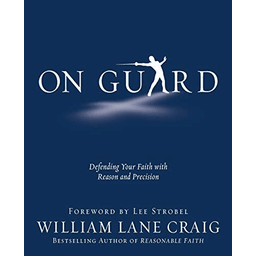
On Guard has quietly become the book a youth pastor reaches for when a sharp seventeen-year-old comes back from a philosophy class with questions nobody at church can answer. William Lane Craig is an analytic philosopher - two doctorates, decades of formal debates against the most prominent atheist thinkers of his generation, and a heavyweight academic textbook called Reasonable Faith that most laypeople will never finish. On Guard is the version he wrote for everyone else.
It is not a memoir. It is not a feel-good defense of belief. It does not try to win you over with warmth. What it does instead is unusual for a popular Christian book: it treats apologetics as a teachable skill, lays each argument out as a numbered chain of premises, and draws the logic as an actual flowchart so you can see exactly where each step does its work - and exactly where a critic would attack. Craig wants you to leave able to reconstruct the argument on a napkin, not just remember that it exists.
Published in 2010 by David C. Cook, the book walks through the headline arguments Craig is known for: the Kalam cosmological argument (the universe began to exist, so it has a cause), the fine-tuning argument from the physical constants, the moral argument, the problem of the absurdity of life without God, and the historical case for the resurrection of Jesus. Each chapter ends with an argument map and discussion questions, and a companion study guide and DVD curriculum exist for groups. It is the on-ramp to Craig’s thought - the place you start before deciding whether you want the full Reasonable Faith.
✓ The good
- Teaches apologetics as a skill - the argument maps and flowcharts show you how each argument is built, not just what it concludes, so you can reconstruct it yourself
- The single best lay-level on-ramp to William Lane Craig - it distills the formal arguments from the much heavier Reasonable Faith into chapters a motivated high-schooler can follow
- Rigorous where most popular apologetics is vague - Craig states premises explicitly and is candid about exactly where each argument can be challenged
- Strong on the Kalam cosmological argument specifically - the chapter on the beginning of the universe is the clearest popular presentation of the argument Craig is most associated with
- Genuinely engages the strongest skeptical objections - Craig has debated the leading atheist philosophers for decades, and he brings their best counterarguments into the room rather than knocking down strawmen
- Built for groups - the end-of-chapter argument maps, discussion questions, and the companion study guide and DVD make it a natural fit for a class or small group
- Covers a lot of ground in one volume - cosmology, fine-tuning, ethics, meaning, and the resurrection are usually four or five separate books
✗ Watch out
- Reads like a logic textbook - the numbered-premise, flowchart-driven format is rigorous but can feel dry and clinical next to a more narrative apologetic
- Leans heavily philosophical and abstract - chapters on cosmology, infinity, and metaphysics ask for real concentration, and some readers bounce off the abstraction
- Presents Craig’s particular formulations - the Kalam, his version of the moral argument, his molinist leanings - which other philosophers, Christian and non-Christian, actively debate
- Light on the cultural and relational side of doubt - it answers intellectual objections precisely but says little to a reader whose struggle is emotional rather than logical
- The science chapters age fastest - fine-tuning and Big Bang cosmology are live research areas, and a few specifics will feel dated as physics moves
Best for
- Students heading into a secular university philosophy or science course
- Youth leaders and parents who want to teach the arguments, not just assert them
- Analytically minded readers who like premises, logic, and structure
- Anyone deciding whether to commit to the heavier Reasonable Faith
Avoid if
- You want a warm, narrative, story-driven defense of faith
- Your doubts are emotional or relational rather than intellectual
- You want a journalistic, interview-based historical case for Jesus
- You bounce off abstract philosophy and numbered premise-by-premise arguments
What On Guard is
On Guard is a roughly 290-page lay-level apologetics primer written by William Lane Craig and published in 2010 by David C. Cook. Craig is a research professor of philosophy known for his work on the philosophy of time, the cosmological argument, and decades of formal public debates on the existence of God. The book is the accessible distillation of the arguments he develops at length in his academic textbook Reasonable Faith, rebuilt for a reader with no background in philosophy.
The structure walks through Craig’s signature arguments one chapter at a time: why the existence of God matters, the absurdity of life without God, the cosmological argument from the beginning of the universe (the Kalam), the moral argument, the fine-tuning argument from physics, the problem of evil, the identity and claims of Jesus, and the historical case for the resurrection. What sets it apart on the page is the presentation - each argument is laid out as an explicit chain of premises and rendered as a flowchart or "argument map," with end-of-chapter discussion questions aimed squarely at group study.
Why analytically minded readers reach for On Guard
The single biggest practical difference between On Guard and most popular apologetics is that Craig is not trying to make you feel something - he is trying to teach you to do something. Most books in this genre give you conclusions to hold and a few quotable lines to repeat. On Guard gives you the scaffolding underneath the conclusions. It states each argument as numbered premises, shows you which premise carries the weight, and draws the whole thing as a map so you can trace the logic with your finger. The goal is that you leave able to rebuild the argument from memory and defend each step on its own.
That makes it the thoughtful student’s primer rather than a book you read once and shelve. It respects the reader who wants to understand why an argument works, not merely that a credentialed person says it does. Craig is candid about where each premise is contested and who contests it, so the reader is handed the live debate rather than a tidy victory. For someone heading into a classroom where their beliefs will be challenged by people who have read the other side, that transparency is exactly the point - and it is rarer in this genre than it should be.
The argument maps: apologetics drawn as flowcharts
The signature feature of On Guard is literally on the page: every major argument is rendered as a flowchart. The cosmological argument, for instance, is not just described - it is diagrammed as a branching tree. Did the universe begin to exist or not? If it began, did the cause come from something or nothing? Each fork is drawn, each premise is numbered, and the conclusion sits at the bottom where all the branches converge. The discussion questions at the end of each chapter then send the reader back into the map to test whether they can reconstruct it without looking.
This sounds like a small thing. In practice it is the book’s whole pedagogy. Apologetics is usually transmitted as a set of conclusions you either remember or forget; the map turns it into a structure you can hold in your head and rebuild on demand. A reader who works through the diagrams comes away able to say not just "the universe had a cause" but "here is premise one, here is premise two, here is the inference, and here is the exact point a critic would push on." That is the difference between owning an argument and merely having heard it - and it is why the book is built for classrooms and small groups rather than a single passive read.
The Kalam cosmological argument: Craig’s signature move
If On Guard has a centerpiece, it is the chapter on the cosmological argument - the argument Craig has spent his career associated with. The structure he presents is deceptively simple: whatever begins to exist has a cause; the universe began to exist; therefore the universe has a cause. The chapter spends most of its pages defending the second premise, drawing on both philosophical arguments about the impossibility of an actual infinite regress and scientific arguments from Big Bang cosmology and the expansion of the universe. It then reasons toward the properties such a cause would have to possess - beginningless, spaceless, timeless, immensely powerful.
What makes the chapter valuable is not that it settles the question - philosophers on every side have written volumes responding to each premise, and Craig knows it. Its value is that it shows the reader exactly how a formal argument is assembled and stress-tested. Craig walks through the standard objections he has faced across decades of debates and shows where he thinks each one succeeds or fails, without pretending the matter is closed. A reader finishes the chapter understanding both the case and the live controversy around it, which is a more honest place to land than a triumphant Q.E.D.
The moral, meaning, and resurrection arguments: the rest of the toolkit
Beyond cosmology, On Guard assembles the rest of Craig’s standard toolkit. The chapter on the absurdity of life without God argues that, on a purely naturalistic view, the universe and human life lack ultimate meaning, value, and purpose - a framing Craig borrows in part from existentialist writers and turns toward his own conclusion. The moral argument follows: if objective moral values and duties exist, they require a foundation, and Craig argues that God is the best candidate for that foundation. The fine-tuning chapter surveys the physical constants that appear calibrated for life and weighs design against chance and physical necessity.
The book closes on the historical case for the resurrection of Jesus, where Craig shifts from pure philosophy to historical reasoning - arguing from a set of facts he contends most historians grant (the empty tomb, the post-mortem appearances, the origin of the disciples’ belief) toward the resurrection as the best explanation. Each of these arguments is contested by philosophers and scholars across the spectrum, including other Christians who prefer different formulations, and Craig presents his particular version. Taken together, the chapters give a reader a cumulative case spanning metaphysics, ethics, physics, and history in a single volume - which is the practical appeal of the book.
Pricing
Paperback
~$17
The standard David C. Cook edition with the full argument maps and diagrams. The copy most readers own.
Kindle
~$10
Identical text, searchable, highlights sync across devices. Usually a few dollars cheaper than print.
Study Guide
~$10
Separate companion workbook with chapter-by-chapter exercises - the standard add-on for a class or small group.
DVD curriculum
~$30
A video set with Craig teaching the material, designed to pair with the study guide for group settings.
On Guard is not free, and it sits a little above the typical trade-paperback price - call it around seventeen dollars new - partly because the print edition carries all the diagrams and argument maps that are the point of the book. Used copies circulate widely and turn up cheaply, and the Kindle edition usually runs a few dollars under the paperback.
For most readers the paperback is the right pick precisely because of those maps. The flowcharts are central to how the book teaches, and they are easier to study laid flat on a desk than scrolled on a phone. If you mostly read on a device and underline heavily, the Kindle edition is fine, but the print layout is the intended experience.
The separate study guide (around ten dollars) is the add-on you only need if you are running an organized class or small group. It turns each chapter’s argument map into structured exercises and saves a leader from inventing discussion questions. Worth it for a teacher, optional for a solo reader.
The DVD curriculum (around thirty dollars) puts Craig himself on screen teaching the material and is built to run alongside the study guide for a multi-week group. It is the most expensive piece and the most situational - useful for a Sunday-school class, unnecessary for an individual working through the book alone.
Where On Guard falls behind
Reads like a textbook. The numbered-premise, flowchart-driven format is the book’s great strength and also the thing some readers cannot get past. It is methodical, occasionally dry, and structured for study rather than for pleasure. A reader hoping for the narrative warmth of a Lewis or the conversational ease of a Keller will find On Guard comparatively clinical.
Heavily philosophical and abstract. The chapters on infinity, cosmology, and metaphysics demand real concentration, and the abstraction is a genuine barrier for some readers. This is a book about arguments, and if you do not enjoy following a chain of premises closely, the experience can feel more like coursework than reading.
It presents Craig’s particular formulations. The Kalam, his specific version of the moral argument, his read of the historical evidence for the resurrection - these are Craig’s own positions, and they are actively debated by philosophers and scholars across the spectrum, including Christians who favor different arguments entirely. The book is upfront that the premises are contested, but a reader should understand they are getting one influential thinker’s case, not a neutral survey of the field.
Thin on emotional and relational doubt. On Guard answers intellectual objections with precision and says comparatively little to a reader whose struggle with faith is rooted in suffering, church wounds, or relationship rather than logic. That is a deliberate scope choice - it is an argument book - but it means the book only meets one kind of doubter.
The science dates fastest. Fine-tuning and Big Bang cosmology are live areas of physics, and some of the specific scientific claims that support the cosmological and design chapters will feel dated as the research moves. The philosophical core is more durable, but the empirical surface ages on the timescale of the science.
On Guard vs. Reasonable Faith vs. The Case for Christ
These three are the natural shortlist when someone wants Craig-style, evidence-and-argument apologetics, and they sit at very different depths. On Guard (2010) is the lay-level primer - the same arguments, drawn as flowcharts, written for a reader with no philosophy background. Reasonable Faith (Craig’s academic textbook, available alongside his ministry site of the same name) is the heavyweight version of the identical material, with the full philosophical apparatus, the footnotes, and the technical defenses that On Guard deliberately leaves out. The Case for Christ (Lee Strobel, 1998) is the journalistic cousin - a former investigative reporter interviewing scholars about the historical reliability of the gospels and the resurrection.
Different strengths. On Guard is the most teachable - the diagrams make it the best book for actually learning to reconstruct an argument. Reasonable Faith is the deepest and most rigorous, the right move once you have decided you want the formal philosophy and can handle it. Strobel is the most accessible and the most narrative, built around interviews rather than premises, and focused on the historical question specifically rather than the philosophical ones. If you want to learn the arguments as skills, start with On Guard. If you want the full scholarly defense, go to Reasonable Faith. If your question is narrowly "did the resurrection actually happen as history," Strobel is the easier read.
All three are read across Christian traditions, though they come from particular vantage points. Craig writes as an evangelical analytic philosopher and presents his own formulations of each argument; Strobel writes from an evangelical perspective but the historical material he gathers is cited broadly. None of the three is a Catholic, Orthodox, or Latter-day Saint apologetic specifically - a reader looking for tradition-specific arguments will need to go elsewhere - but the existence-of-God and historical-Jesus arguments they develop are debated and used widely beyond any single tradition.
The bottom line
On Guard is the best place to start if you want to learn William Lane Craig’s arguments rather than just hear about them. The flowcharts and numbered premises turn apologetics into a skill you can practice, and the single volume covers cosmology, fine-tuning, ethics, meaning, and the resurrection in a way that usually takes a shelf of books. It reads like a logic textbook, it leans abstract, and it presents Craig’s particular and contested formulations - those are real limits worth knowing going in rather than dealbreakers. For an analytically minded reader, a student heading into a hostile classroom, or a group that wants to actually understand the moves, it is the on-ramp to reach for.
Alternatives to On Guard
 Reasonable FaithWilliam Lane Craig’s ministry site and academic textbook of the same name - the heavyweight, fully-footnoted version of the arguments On Guard distills for the layperson.
 The Case for ChristLee Strobel’s journalistic walk through the historical case for Jesus and the resurrection. More narrative and accessible, focused on the historical question rather than the philosophical ones.
 TacticsGreg Koukl’s field manual for navigating conversations about faith. Less about formal arguments, more about how to ask good questions and stay in the discussion graciously.
 Evidence That Demands a VerdictJosh and Sean McDowell’s encyclopedic evidential reference. Broader and more documentary than On Guard, heavier on historical and manuscript evidence than on philosophy.
Frequently asked questions
What is the difference between On Guard and Reasonable Faith?
They cover the same arguments at different depths. On Guard is the lay-level primer - the arguments redrawn as flowcharts for a reader with no philosophy background. Reasonable Faith is Craig’s academic textbook, with the full philosophical apparatus, technical defenses, and footnotes. Most readers start with On Guard and move to Reasonable Faith only if they want the heavier version.
Is On Guard hard to read?
It is more demanding than a typical popular Christian book. Craig writes clearly, but the format is deliberately textbook-like - numbered premises, flowcharts, and chapters on cosmology and metaphysics that ask for real concentration. Readers who enjoy following a logical argument tend to love it; readers who want a narrative or devotional tone often find it dry.
What arguments does the book actually cover?
The main chapters cover why God’s existence matters, the absurdity of life without God, the cosmological argument from the beginning of the universe (the Kalam), the moral argument, the fine-tuning argument from physics, the problem of evil, the identity of Jesus, and the historical case for the resurrection. Each is presented as a chain of premises with an argument map.
Are Craig’s arguments universally accepted?
No. Craig presents his own particular formulations, and each is debated by philosophers and scholars across the spectrum - including other Christians who prefer different arguments. The book is candid that the premises are contested and walks through the major objections. Readers should understand they are getting one influential thinker’s case rather than a neutral survey of the field.
Is there a study guide or video version for groups?
Yes. A separate study guide turns each chapter’s argument map into structured exercises, and a DVD curriculum features Craig teaching the material on screen. Both are built for classes and small groups; a solo reader can work through the book without either.
Who is On Guard best for?
Analytically minded readers who like structure and logic, students heading into a secular philosophy or science course, and youth leaders or parents who want to teach the arguments rather than simply assert them. It is also the right book for anyone deciding whether to commit to the heavier Reasonable Faith.
Should I read On Guard or The Case for Christ first?
It depends on the question you are wrestling with. On Guard is the better pick if you want the philosophical arguments for God’s existence laid out as teachable steps. The Case for Christ is the easier and more narrative read if your specific question is whether the resurrection happened as a historical event. Many readers eventually read both.
Sources & further reading
More Apologetics Books
 The Reason for GodTim Keller’s 2008 apologetic has quietly become the default gift for the smart, secular friend who has questions - and it earns the reputation.
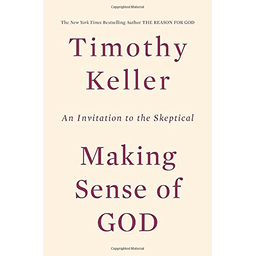 Making Sense of GodTim Keller’s 2016 “prequel” to The Reason for God doesn’t argue that God exists - it argues that the things you already want make more sense inside Christianity than outside it, and it’s the book for the skeptic who isn’t ready for the argument yet.TacticsGreg Koukl wrote the book that teaches you how to talk about faith without it turning into an argument - the one most people reach for when "I never know what to say" is the real problem.The Case for ChristLee Strobel’s investigative-journalist apologetic has quietly become the default gift book for skeptical friends - and the on-ramp into apologetics for an entire generation of readers.
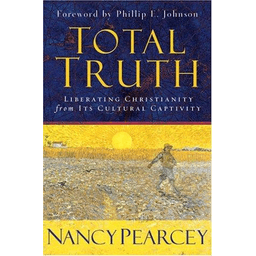 Total TruthThe book that taught a generation of evangelicals to think in terms of worldview - and to stop letting their faith get filed under "private values" while everyone else got "public facts."
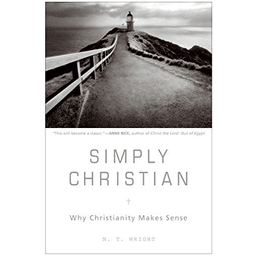 Simply ChristianN.T. Wright's accessible case for the faith - the book reviewers reach for when they want a modern Mere Christianity, built not on a single argument but on four longings every human being already carries.