
- Starting price
- ~$18 paperback
- Free tier
- No
- Platforms
- Print · Kindle · Audiobook
- Developer
- Zondervan
- Launched
- 2009
- Updated
- May 31, 2026
The verdict
Tactics has quietly become the default first book for Christians who freeze up in conversations about faith. It is not about what to believe - it is about how to talk, gracefully and without pressure, when the subject comes up. If your problem is nerve and method rather than content, this is the book to start with.
Try Tactics ↗Opens zondervan.com
Tactics has quietly become the book people hand to a Christian who says "I never know what to say." Greg Koukl wrote it in 2009 after decades of doing exactly the thing most people dread - talking with strangers about the deepest questions there are, on the radio, on campuses, on planes - and the book is essentially the field manual he wished someone had handed him when he started. It is not a book about arguments. It is a book about conversations, and the difference turns out to matter enormously.
It does not hand you a script. It does not turn you into a debater. It does not promise you will win. Koukl is explicit that the goal is not to corner anyone or rack up converts on the spot - the goal is to "put a stone in someone's shoe," to leave a person thinking a little longer than they meant to, and to do it in a way that keeps the relationship intact. The whole book is built to lower the temperature of a conversation rather than raise it, which is a strange thing for a book with a title like Tactics to do, and is the first sign that the title is doing more work than it looks like.
The centerpiece is a method Koukl calls the Columbo tactic, named after the rumpled TV detective who solved cases by acting a little confused and asking one more question. Instead of asserting, you ask. "What do you mean by that?" "How did you come to that conclusion?" "Have you ever wondered…?" The questions do most of the work - they slow things down, they put the burden of explanation on the person making the claim, and they keep you from blurting out something you cannot back up. More than fifteen years and a 10th-anniversary updated edition (2019) later, Tactics sits on the short list of books youth pastors, campus ministers, and ordinary churchgoers actually press into people's hands.
✓ The good
- Best-in-class for the Christian who freezes up - the whole book is engineered to give a nervous person a calm, repeatable way to engage rather than avoid
- The Columbo tactic is genuinely usable the same afternoon you read it - "What do you mean by that?" and "How did you come to that conclusion?" are easy to remember and work in almost any conversation
- Lowers the temperature on purpose - Koukl repeatedly steers away from winning, scoring points, or cornering people, which makes the method safe to use on friends and family
- Models intellectual honesty - he tells you to concede good points, admit what you do not know, and never bluff, which is rarer in this genre than it should be
- Reframes the goal sensibly - "put a stone in someone's shoe" replaces "close the deal," and that lower bar is both more realistic and less stressful
- Short, concrete, and example-driven - most chapters are built around real or composite dialogues you can picture yourself in rather than abstract theory
- The 10th-anniversary edition (2019) freshened the examples and added material, so the version in print does not feel like a decade-old artifact
✗ Watch out
- It teaches method, not content - Tactics shows you how to steer a conversation but assumes you will get the actual answers somewhere else (pair it with a content book)
- The "tactics" framing can feel like debate-coaching to some readers - the language of game plans, maneuvers, and putting people "in the hot seat" lands as adversarial for people who came looking for something gentler
- The examples reflect Koukl's own apologetic positions - when he illustrates a tactic in action, the conclusions he reaches are his, and readers from different traditions will sometimes want different content in the same conversational frame
- Light on the hardest objections - the book is about the shape of dialogue, so it does not work through suffering, the resurrection, or science at the depth a content-focused reader will eventually need
- A few tactics can be misused - in the wrong hands the questioning method becomes a way to trap people rather than understand them, and Koukl's warnings against this are easy to skim past
Best for
- Christians who avoid faith conversations because they freeze up
- Youth groups, campus ministries, and adult classes on talking about faith
- Parents fielding hard questions from skeptical teenagers
- Anyone who wants method and nerve more than a stack of arguments
Avoid if
- You want the actual arguments for God, the Bible, or the resurrection
- You want a tradition-specific apologetic rather than a general method
- You dislike the framing of conversations as tactics or game plans
- You already converse comfortably and just need deeper content
What Tactics is
Tactics is a general-audience guide to having conversations about Christian faith, written by Gregory Koukl and published by Zondervan in 2009, with an expanded 10th-anniversary edition released in 2019. Koukl is the founder and president of Stand to Reason, a teaching ministry focused on training Christians to think clearly and engage gracefully, and the book distills the conversational approach he has taught on his radio program and in seminars for years. It is roughly 200 pages and reads quickly.
The premise is that most Christians stay quiet about their faith not because they lack convictions but because they lack a plan - they dread being asked a question they cannot answer, or being drawn into an argument they do not know how to end. Tactics supplies the plan. Rather than loading the reader with arguments to memorize, it teaches a handful of conversational maneuvers - chief among them the question-driven Columbo tactic - designed to keep a dialogue calm, honest, and moving, while shifting the burden of proof onto whoever is making a claim. It is a book about method, not a book about content.
Why nervous Christians reach for Tactics
The single biggest practical difference between Tactics and most other apologetics books is what it is trying to fix. Almost every other book in the category assumes your problem is information - that if you just knew the arguments for the resurrection or the moral law, you would be ready. Koukl assumes your problem is nerve and footing. You may already know enough; you just seize up, or you blurt out more than you can defend, or the conversation slides into a fight and you back away from the whole topic for another year. Tactics is built for that person, and that is a different person than most apologetics writers picture.
The method respects the reader and the person across the table in equal measure. Koukl's core move is to ask rather than assert - to lead with "What do you mean by that?" instead of a counterargument - which does two things at once. It keeps you from having to defend a claim you have not thought through, and it treats the other person as someone whose view is worth understanding before it is worth answering. That posture is exactly what makes the book usable on people you love. You can try the Columbo tactic on a skeptical brother-in-law at Thanksgiving without bracing for the table to go cold, because the whole technique is designed to keep things curious rather than combative.
The Columbo tactic: ask, do not assert
The heart of the book is a method Koukl names after Lieutenant Columbo, the TV detective who solved cases by seeming a little baffled and asking just one more question. The tactic has three moves, each anchored by a kind of question. The first - "What do you mean by that?" - gathers information and, crucially, slows the conversation down before you commit to a response. The second - "How did you come to that conclusion?" - gently puts the burden of proof where it belongs, on the person making the claim, rather than leaving you scrambling to disprove an assertion no one has actually defended yet. The third is a softer, leading question ("Have you ever considered…?") that lets you make a point in the form of a question rather than a lecture.
What makes the Columbo tactic the killer feature is that it is immediately usable and almost impossible to misfire badly. You do not need to have memorized anything. You do not need to be quick on your feet. A genuine question buys you time, keeps you honest, and signals that you are listening - and a conversation in which someone feels listened to is a conversation that stays open. Koukl's repeated point is that the questions themselves do the persuasive work; you are not arguing the person into a corner, you are inviting them to examine the floor they are standing on. Readers consistently report that this one chapter changes how they talk the same week they read it.
The Ambassador model: representing well, not winning
Underneath the techniques is a frame Koukl calls being an Ambassador, and it is the part that keeps the book from becoming a manual for winning fights. An ambassador, he argues, needs three things: knowledge (an accurately informed mind), wisdom (an artful method), and character (an attractive manner). Tactics is mostly about the second of those, but Koukl is insistent that wisdom without character is worthless - that a person who is clever in conversation but condescending, defensive, or eager to humiliate has failed at the actual job, no matter how the argument went. The point of representing someone is to represent them well.
This sounds like a small thing. In practice it is the thing that makes the rest of the book safe to use. The risk with any conversational toolkit is that it becomes a way to corner people, and Koukl spends real pages warning against exactly that - telling the reader to stay gracious, to concede a good point when the other person makes one, to be willing to say "I don't know," and to measure success by whether the relationship survived rather than whether you got the last word. The Ambassador model is what turns "tactics" from a word about combat into a word about diplomacy, and it is why pastors are comfortable handing the book to teenagers.
Spotting bad reasoning - and staying calm when you find it
The back half of the book turns to recognizing weak arguments and self-defeating claims without losing your footing or your manners. Koukl walks through a set of named tactics - "Suicide" (statements that refute themselves, like "there is no truth"), "Taking the Roof Off" (following a claim to its logical conclusion to show where it leads), "Sibling Rivalry" and others - each illustrated with a worked dialogue. The aim is not to arm the reader with gotchas but to help them notice when a conversation has quietly gone off the rails, so they can ask a clarifying question instead of getting flustered.
The value here is steadiness. Many people abandon a faith conversation the moment it gets confusing, because confusion feels like losing. Koukl's named tactics give the reader a mental filing system: when an objection lands, you have a way to categorize what just happened and a calm next move, usually another question. It is worth flagging that the specific conclusions Koukl reaches in these worked examples are his own apologetic positions, and a reader from another tradition might steer the same tactic toward different content. The transferable skill - staying composed and curious when an argument turns slippery - is the part that belongs to everyone.
Pricing
Paperback (10th-anniversary)
~$18
The standard Zondervan edition, expanded and updated in 2019. The copy most groups standardize on.
Kindle
~$13
Searchable, highlight-syncs to your account. Handy for a book this full of memorized question-phrasings.
Audiobook
~$18
Narrated reading of the full text, available on Audible and elsewhere. Good for a commute, though the dialogues are easier to absorb on the page.
Study Guide
~$11
A separate companion workbook with chapter-by-chapter exercises - the standard add-on for small-group and classroom use.
Used / earlier edition
~$5 and up
The original 2009 edition turns up cheap secondhand. Fine for the core method, though it lacks the updated examples.
Tactics is not free. Used copies of the original 2009 edition turn up secondhand for a few dollars and are perfectly serviceable for the core method, which is the way a lot of students still get their first copy. A new paperback of the 10th-anniversary edition runs around eighteen dollars - call it the everyday default - and is the version with the freshened examples and the added material, so it is the one most current quotations and study groups are keyed to.
The Kindle edition runs a few dollars cheaper than paperback and is genuinely useful here, because this is a book whose value is in a handful of exact question-phrasings you will want to find and re-read. Highlighting syncs across devices. The audiobook runs around the same as paperback or comes with an Audible membership; it works for a commute, though the book leans on printed dialogues and is a little easier to absorb with your eyes than your ears.
There is a separate Study Guide, an eleven-dollar workbook with chapter-by-chapter exercises, that you only need if you are running an organized group. It tracks the book and turns it into a multi-week class, which is exactly how a lot of youth groups and adult classes use Tactics. Most individual readers do not need it.
If you are buying for a group, standardize on the 10th-anniversary paperback and add the Study Guide for the leader. If you are buying for yourself, the paperback is the balanced default - and unlike a lot of books in this genre, this is one you will hand around, so a physical copy you can lend earns its place on the shelf.
Where Tactics falls behind
Method, not content. This is the defining limit of the book, and Koukl says so himself. Tactics teaches you how to steer a conversation, not what to say when someone asks why a good God allows suffering or whether the resurrection actually happened. The Columbo questions buy you time and footing, but eventually a real question deserves a real answer, and for that you will need a content book like The Reason for God or On Guard sitting next to this one.
The framing reads as adversarial to some. The vocabulary - tactics, game plan, maneuvers, putting someone in the hot seat - is borrowed from chess and combat, and for readers who came looking for a gentle way to share their faith, that language can feel off even though the actual method is disarming. Koukl is at pains to insist the goal is grace, not victory, but the packaging works against him for a certain kind of reader.
Examples carry Koukl's positions. When a tactic is demonstrated in a worked dialogue, the conclusion it arrives at reflects Koukl's own apologetic commitments. The conversational skill transfers cleanly to anyone; the specific content of the example does not always, and a reader from a different tradition will sometimes want to point the same question toward a different answer.
Thin on the deep objections. Because the book is organized around conversational moves rather than topics, it does not work systematically through the major intellectual challenges to faith. A reader whose own doubts are substantive - rather than a reader who simply wants to talk to doubters - will find the book helps with the how but barely touches the what.
A tool that can be misused. The questioning method is powerful, and in the hands of someone who wants to trap people rather than understand them it becomes exactly the kind of cornering Koukl warns against. The warnings are in the book, but they are easy to skim, and an impatient reader can walk away with a clever technique and the wrong spirit.
Tactics vs. The Reason for God vs. On Guard
These three come up together whenever someone asks what to read about defending the faith, and they are doing genuinely different jobs. Tactics (Koukl, 2009) is about method - how to carry a conversation gracefully and where to put the burden of proof. The Reason for God (Tim Keller, 2008) is about engaging the specific objections of a contemporary secular reader in a warm, conversational register. On Guard (William Lane Craig, 2010) is about the arguments themselves - a popular-level walk through the formal cases for God's existence and the resurrection, with the diagrams to match.
Different strengths. Koukl is better at the shape of the conversation - what to say first, how to ask, how to stay calm when it gets slippery. Keller is better at the actual content of the everyday objections (suffering, exclusivity, hell, the church's record) in prose a skeptic will finish. Craig is better at the rigorous, premise-by-premise structure of the underlying arguments for a reader who wants the logic laid out. If your problem is freezing up and not knowing how to engage, start with Koukl. If your problem is the objections a friend keeps raising, reach for Keller. If your problem is wanting the arguments built out step by step, reach for Craig.
The natural pairing is Tactics plus one of the others. Tactics gives you the how; Keller or Craig gives you the what. A reader who owns only Tactics will be confident in a conversation right up until it turns to a question that needs a substantive answer - which is exactly why Koukl points readers toward content books rather than pretending his is the whole shelf. Buy Koukl for the conversation, Keller for the objections, and Craig for the arguments - and recognize that the first one works best with one of the other two beside it.
The bottom line
Tactics is the book to start with when the obstacle is not what you believe but how to talk about it. Koukl gives a nervous person something most apologetics books never offer - a calm, repeatable, genuinely gracious way to enter a conversation and stay in it without it turning into a fight. The Columbo tactic alone is worth the price, and the Ambassador frame keeps the whole method pointed at understanding rather than winning. Its one real limitation is by design: it teaches method, not content, so pair it with a book like The Reason for God or On Guard. Read with that expectation, it is the most useful first step there is for an ordinary Christian who wants to stop avoiding the subject.
Alternatives to Tactics
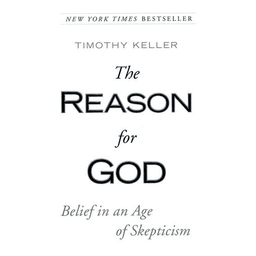 The Reason for GodTim Keller's conversational walk through the toughest modern objections. The content companion to Koukl's method - pair the two.
 Mere ApologeticsAlister McGrath's accessible introduction to the whole field - a gentle on-ramp if you want the lay of the land before the techniques.
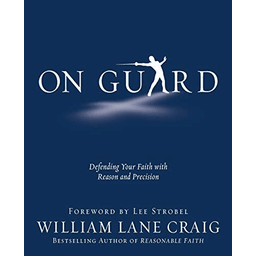 On GuardWilliam Lane Craig's popular-level case for the arguments themselves - heavier on the formal logic than Koukl's conversational approach.
 Stand to ReasonKoukl's own teaching ministry - articles, podcasts, and videos that extend the Tactics method with worked examples and current topics.
Frequently asked questions
What is the Columbo tactic in Tactics?
It is the central method of the book, named after the TV detective who solved cases by asking one more question. Instead of asserting your view, you ask questions - "What do you mean by that?" to gather information, "How did you come to that conclusion?" to put the burden of proof on the person making the claim, and a leading question to make a point gently. The questions slow the conversation down, keep you honest, and keep things curious rather than combative.
Is Tactics a book of arguments for Christianity?
No, and that is the most important thing to know before buying it. Tactics teaches conversational method - how to talk about faith gracefully and where to place the burden of proof - not the actual arguments for God, the Bible, or the resurrection. Koukl assumes you will get the content elsewhere, which is why most readers pair it with a content-focused book like The Reason for God or On Guard.
Does the 'tactics' framing make it confrontational?
The framing borrows language from chess and combat - tactics, game plans, maneuvers - which can read as adversarial. But the actual method is the opposite: Koukl repeatedly steers the reader away from winning or cornering people and toward asking questions, conceding good points, and keeping the relationship intact. The goal he sets is to "put a stone in someone's shoe," not to defeat them. The packaging is more aggressive than the contents.
Who is Greg Koukl?
Gregory Koukl is the founder and president of Stand to Reason, a teaching ministry focused on training Christians to think clearly and engage graciously about their faith. He has hosted a long-running radio program, written several books, and taught the conversational approach in Tactics through seminars for many years. The book grows out of that hands-on teaching experience.
What is the difference between the 2009 and 2019 editions?
The original Tactics was published by Zondervan in 2009. A 10th-anniversary updated and expanded edition followed in 2019, with freshened examples and additional material while keeping the core method intact. The 2019 edition is the one most current study groups standardize on; the older edition is fine and cheaper secondhand if you mainly want the Columbo tactic and the Ambassador model.
Is Tactics good for a small group or class?
Yes - it is one of the more popular picks for youth groups, campus ministries, and adult classes on talking about faith, precisely because the method is concrete and immediately practical. There is a separate Study Guide workbook with chapter-by-chapter exercises that turns the book into a multi-week course. Standardize the group on the 10th-anniversary paperback and add the Study Guide for the leader.
What should I read alongside Tactics?
Pair it with a content book, since Tactics handles the how and not the what. The Reason for God by Tim Keller is the natural companion for the conversational objections a skeptic raises, and On Guard by William Lane Craig is the pick if you want the formal arguments laid out. Koukl's own ministry, Stand to Reason, is also a free way to see the method applied to current questions.
Sources & further reading
More Apologetics Books
The Reason for GodTim Keller’s 2008 apologetic has quietly become the default gift for the smart, secular friend who has questions - and it earns the reputation.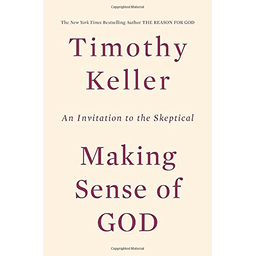 Making Sense of GodTim Keller’s 2016 “prequel” to The Reason for God doesn’t argue that God exists - it argues that the things you already want make more sense inside Christianity than outside it, and it’s the book for the skeptic who isn’t ready for the argument yet.On GuardWilliam Lane Craig’s 2010 primer takes the formal arguments from his heavyweight Reasonable Faith and redraws them as flowcharts a layperson can actually follow - apologetics taught like a skill, not a sermon.
 The Case for ChristLee Strobel’s investigative-journalist apologetic has quietly become the default gift book for skeptical friends - and the on-ramp into apologetics for an entire generation of readers.
 Total TruthThe book that taught a generation of evangelicals to think in terms of worldview - and to stop letting their faith get filed under "private values" while everyone else got "public facts."
 Simply ChristianN.T. Wright's accessible case for the faith - the book reviewers reach for when they want a modern Mere Christianity, built not on a single argument but on four longings every human being already carries.