- Starting price
- ~$18 paperback
- Free tier
- No
- Platforms
- Print · Kindle
- Developer
- Baker Books
- Launched
- 2012
- Updated
- May 31, 2026
The verdict
Mere Apologetics is the rare book in the category that teaches you how to do apologetics rather than just feeding you arguments to repeat. McGrath - an Oxford theologian and former atheist - is calm, broadly read, and consciously working in Lewis's "mere" tradition of the shared center. Read it for method; pair it with a content book for the actual case.
Try Mere Apologetics ↗Opens bakerpublishinggroup.com
Mere Apologetics has quietly become the book seminary professors assign when they want students to understand apologetics as a craft rather than a collection of comebacks. Alister McGrath wrote it in 2012, drawing on a strange double career - a hard-science PhD in molecular biophysics from Oxford, a youth spent as a convinced atheist, and then decades as one of the most published theologians in the English-speaking world. The book is the distillation of how he actually commends the faith, which turns out to be far more about listening than about winning.
It is not a catalog of proofs. It does not march through the cosmological argument, the fine-tuning argument, and the historical case for the resurrection one after another. It does not hand you a script for the doorstep conversation. Instead it steps back and asks the prior questions almost every other apologetics book skips: what is apologetics actually for, who are you talking to, what does that particular person find plausible, and which tool - an argument, an image, a story - will reach them. The title is a deliberate echo of C.S. Lewis. McGrath spent years writing Lewis's biography, and the "mere" is borrowed on purpose: the shared center of Christian belief that nearly every tradition holds in common, commended to an outsider rather than disputed among insiders.
What you actually get is a slim, well-organized field guide to apologetic method. McGrath opens with what apologetics is and is not, walks through its theological basis, surveys the great practitioners (the early apologists, Aquinas, Pascal, Lewis), and then gets practical - the role of reason, the role of imagination, the importance of knowing your audience, and a closing toolkit of the points where the Christian faith connects with human longing. The voice is donnish but warm, the kind of Oxford tutor who has heard your objection many times and is genuinely curious how you arrived at it. It is the most useful single introduction to the discipline of apologetics in print, precisely because it refuses to do the part most readers expect.
✓ The good
- Teaches method, not memorization - the only popular apologetics book that focuses on how to commend the faith rather than which argument to deploy, which is what most people actually lack
- Audience-first throughout - McGrath's central insistence is that you tailor the approach to the person in front of you, and the book models that discipline on every page
- Genuinely ecumenical framing - consciously built on Lewis's "mere" shared-center approach, so a reader from almost any Christian tradition can use it without tripping over distinctives
- Reason and imagination get equal weight - McGrath argues apologetics fails when it is all logic, and recovers story, image, and beauty as legitimate tools (the Lewis influence shows clearly here)
- Written by someone who has stood on both sides - McGrath was a committed atheist before his conversion, and he understands the skeptic's position from the inside rather than as a caricature
- Short and well-structured - around 200 pages, clearly organized, easy to teach from, with each chapter doing one job
- Theologically literate without being academic - McGrath has written graduate textbooks, but here he keeps the jargon out and the ideas accessible
✗ Watch out
- Light on the actual arguments - by design, this is a book about how to do apologetics, so you finish it knowing the method but still needing a content book for the case itself
- More conceptual than practical for some readers - those wanting scripts, role-plays, or a step-by-step doorstep playbook will find McGrath operating one level up from that
- Assumes you will supply the case elsewhere - the resurrection, the problem of evil, and the science questions are framed as territory to be handled, not walked through in detail here
- Academic register in places - McGrath is an Oxford professor and the prose, while accessible, is more measured and less conversational than Keller or Strobel
- Lewis comparisons set a high bar - readers expecting Lewis's sentence-level sparkle should know McGrath is teaching about that tradition, not writing inside it
Best for
- Pastors, teachers, and ministry leaders learning to think about apologetic method
- Seminary and Bible-college students taking an intro apologetics course
- Small-group leaders who want to train others rather than just answer questions
- Thoughtful Christians who keep losing conversations and suspect the problem is approach, not facts
Avoid if
- You want a ready-made list of arguments and rebuttals to memorize
- You want a hard historical-evidence case for the resurrection specifically
- You want a conversational doorstep script with sample dialogues
- You already have a firm grasp of apologetic method and want fresh content instead
What Mere Apologetics is
Mere Apologetics is Alister McGrath's 2012 introduction to the theory and practice of Christian apologetics, published by Baker Books and running around 200 pages. It is not a survey of arguments for God's existence; it is a guide to the discipline itself - what apologetics is for, how it is grounded theologically, who has done it well across history, and how to do it winsomely today. McGrath is Andreas Idreos Professor of Science and Religion at Oxford (a chair he held while writing), a former atheist, and the author of both technical theology textbooks and popular works, which gives the book unusual range.
The structure moves from foundations to practice. Early chapters define apologetics and distinguish it from evangelism, set out its biblical and theological basis, and survey the tradition from the second-century apologists through Aquinas, Pascal, and Lewis. The back half turns practical: the proper place of reason, the recovery of imagination and story, the discipline of understanding your audience, and a closing set of "points of contact" where the faith meets human experience. The title borrows Lewis's "mere" deliberately - the focus is the shared center of Christian belief commended to outsiders, not the distinctives debated among traditions.
Why teachers reach for McGrath
The single biggest practical difference between Mere Apologetics and almost everything else on the shelf is that it answers a different question. Most apologetics books answer "what do I say?" McGrath answers "how do I think about saying it?" He is convinced - and the whole book is the argument - that handing people a list of arguments produces brittle apologists who fall apart the moment a conversation leaves the script. What lasts is judgment: the ability to read a person, sense what they actually find unbelievable, and choose the right tool for that moment, whether that is a reasoned case, a vivid image, or simply a better question.
That makes it the thoughtful teacher's apologetics book. It does not assume the reader is dim or the skeptic is a fool. It treats apologetics as a craft to be learned rather than a weapon to be issued, and it trusts the reader to supply the specific content once they understand the method. McGrath's years writing Lewis's biography show throughout - like Lewis, he wants to commend the shared Christian center to an outsider winsomely, and like Lewis he believes imagination and reason are partners rather than rivals. It is the rare book a Catholic catechist, a Protestant youth pastor, and an Orthodox layperson could all hand to a volunteer and trust to train them well.
Method over arguments: the discipline McGrath actually teaches
The organizing idea of Mere Apologetics is that apologetics is a skill, not an inventory. McGrath spends the early chapters defining the discipline carefully - distinguishing it from evangelism (apologetics clears the ground and answers objections; evangelism issues the invitation), locating its basis in passages like the call in 1 Peter to give a reason for the hope you have, and insisting that its goal is to make faith plausible and attractive, not to club an opponent into submission. The historical survey that follows is not decoration: by walking through the early apologists, Aquinas, Pascal, and Lewis, McGrath shows that there has never been one approved method, only practitioners who matched their case to their moment.
This is the move that makes the book unusual and the move that frustrates some readers. You will not close Mere Apologetics with a memorized rebuttal to the problem of evil. You will close it understanding that the problem of evil is felt before it is argued, that the person raising it is usually carrying a wound rather than a syllogism, and that your first job is to discern which. For a reader who already owns three books full of arguments and keeps losing conversations anyway, this reframing is worth the price by itself. For a reader who wanted the arguments themselves, it can feel like being taught to hold the brush without being given any paint.
Reason and imagination: recovering Lewis's second tool
McGrath devotes substantial space to two faculties he says apologetics must use together: reason and imagination. The chapter on reason makes the case that Christianity is rational and that arguments have a real, if limited, role - they can remove obstacles and show that faith is not absurd, but they rarely convert anyone on their own. The chapter on imagination is the one that bears Lewis's fingerprints most plainly. Here McGrath argues that human beings are moved by story, image, and beauty as much as by logic, and that an apologetic which speaks only to the intellect leaves most of the person untouched. A picture of the world that makes sense of longing, grief, and wonder can do what a proof cannot.
This is where the "mere" in the title earns its keep. Lewis commended the faith through fiction, analogy, and the argument from desire as readily as through the moral law, and McGrath consciously recovers that breadth for a generation of apologists trained to think only in propositions. The payoff is practical: it gives a teacher permission to use a film, a novel, a piece of music, or a personal story as a legitimate point of entry rather than a soft warm-up to the "real" arguments. Readers across traditions tend to mark this section heavily, because it names something they had sensed but lacked the vocabulary to defend.
Knowing your audience: the chapter that changes how you talk
The most distinctive practical contribution of the book is its insistence that there is no generic apologetic, only apologetics aimed at specific people. McGrath draws on his own history here - he remembers being an atheist, remembers what he found persuasive and what merely annoyed him - and he turns that memory into method. Before you answer, he argues, you have to understand: Is this person's difficulty intellectual, emotional, or relational? Are they a hardened skeptic, a curious agnostic, a wounded ex-churchgoer, or simply someone who has never thought about it? The same true statement lands completely differently depending on who is hearing it and why they are asking.
He frames the positive side of this as "points of contact" - the places in ordinary human experience (the longing for meaning, the sense of beauty, the awareness of moral obligation, the fear of death) where the Christian story connects with what a person already feels. The apologist's art is to find the live point of contact for this particular listener and start there. It is a deeply pastoral way to think about the work, and it is the antidote to the canned-argument problem. Get the audience wrong, McGrath says in effect, and the best argument in the world bounces off. Get it right, and a single well-placed question can do more than an hour of debate.
Pricing
Paperback
~$18
The standard Baker Books edition and the copy most readers and classes own.
Kindle
~$13
Identical text, highlights sync across devices, and usually a few dollars under the paperback.
Used paperback
~$6-10
Widely available secondhand because it is a common course text - the cheapest way in.
Audiobook
Limited
Audio availability is spotty for this title; check current listings rather than assuming an edition exists.
Mere Apologetics is not free, and as a book about a discipline rather than a current product it tends to hold its price. A new Baker Books paperback runs around eighteen dollars - call it the everyday default and the edition most classes standardize on. The Kindle edition usually sits a few dollars under that, with highlights syncing across devices, which is handy for a book you will likely annotate and return to.
Because it is a common course text in Bible colleges and seminaries, used copies circulate widely and turn up secondhand for six to ten dollars. That is the cheapest sensible way in, and for an individual reader rather than a group the condition rarely matters. Audio availability is inconsistent for this title, so confirm a current edition exists before assuming you can listen rather than read.
There is no separate study guide that is as standard as the discussion guides attached to some other books in the category, though the chapter structure is clean enough that a leader can build their own questions from the headings without much effort. For most readers the paperback is the balanced default - easy to teach from, easy to lend, and the copy you will reach for when you are preparing to train someone else.
One pricing note specific to this book: you are buying method, and method does not date the way a topical argument does. The eighteen dollars buys a framework you will reuse across many conversations and many years, which is a different value proposition from a book whose cultural references age. Most readers do not need anything beyond the paperback.
Where Mere Apologetics falls behind
Light on the arguments themselves. This is the headline limitation and it is fully intentional. McGrath teaches you how to commend the faith, not the detailed case for the resurrection, the fine-tuning argument, or a worked response to the problem of evil. You finish equipped with method and still needing a content book - Keller, Strobel, or a topical apologetics volume - to supply the actual material you will deploy.
More conceptual than practical for some. Readers hoping for sample dialogues, role-plays, or a doorstep script will find McGrath operating one altitude above that. He gives you the principles for any conversation rather than a transcript of a particular one. For some that is exactly the gift; for others it feels abstract, and they would be better served pairing it with a more tactical companion.
Assumes you will supply the case elsewhere. The book repeatedly gestures at hard questions - suffering, science, the historical Jesus - as terrain the apologist must learn to handle, without walking through the answers in depth. That is the correct scope for a methods book, but it means Mere Apologetics is a starting point and a framework, not a one-stop resource.
A measured, academic voice. McGrath is an Oxford professor and the prose, while accessible and jargon-light, is calmer and more analytical than the conversational warmth of a Keller or the journalistic momentum of a Strobel. Readers who want to be swept along may find it more like a very good lecture than a page-turner.
The Lewis comparison cuts both ways. Invoking "mere" in the title invites comparison to one of the great prose stylists of the century. McGrath is teaching about Lewis's tradition and explaining its tools, which is valuable - but a reader expecting Lewis's aphoristic sparkle should know they are getting the able guide to the craft rather than a fresh exhibit of it.
Mere Apologetics vs. The Reason for God vs. Tactics
These three are the natural shortlist for someone building an apologetics shelf, and they do genuinely different jobs. Mere Apologetics (McGrath, 2012) is the method book - it teaches the craft of commending the faith, how to read an audience, and how to balance reason and imagination, but leaves the specific arguments to other volumes. The Reason for God (Keller, 2008) is the content-and-conversation book - it actually walks through the seven hardest objections a modern skeptic raises and makes the positive case, in a tone built for lending to a doubting friend. Tactics (Greg Koukl) is the in-the-moment book - it gives you a game plan for the live conversation, including questions that keep you from getting trapped and ways to make a point without being pushy.
Different strengths. McGrath is best at the prior questions - what is apologetics for, who am I talking to, which tool fits this person. Keller is best at supplying the actual answers to the actual objections. Koukl is best at the conversational mechanics, the moment-by-moment moves that keep a discussion productive. They stack rather than compete: McGrath gives you the philosophy of the work, Koukl gives you the field tactics, and Keller (or a book like it) gives you the material you are deploying. A reader who owns all three is well covered from theory to practice to content.
All three are read across Christian traditions. McGrath writes from a broadly evangelical Anglican perspective and, like Lewis, consciously aims at the shared center, which makes Mere Apologetics the most tradition-neutral of the three in framing. Keller writes from a Reformed Presbyterian background that surfaces gently in places, and Koukl from an evangelical one focused on conversational method. If you want one book and your gap is approach rather than information, start with McGrath; if your gap is the arguments themselves, start with Keller.
The bottom line
Mere Apologetics is the best single introduction to apologetics as a discipline rather than a stockpile of arguments, and that is exactly why it is worth owning even though - by design - it does not contain the arguments. McGrath, a former atheist turned Oxford theologian, teaches you to read your audience, to use reason and imagination together in Lewis's "mere" tradition, and to commend the shared Christian center winsomely rather than combatively. Buy it for the method, then pair it with a content book like The Reason for God and a conversational one like Tactics. The limitation is real and clearly labeled: this is the framework, not the full case.
Alternatives to Mere Apologetics
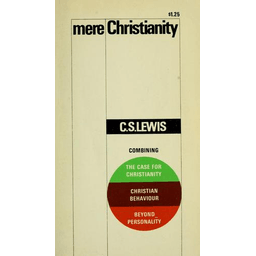 Mere ChristianityC.S. Lewis's 1952 classic and the conscious inspiration for McGrath's title - the shared-center approach McGrath teaches, demonstrated by the master.
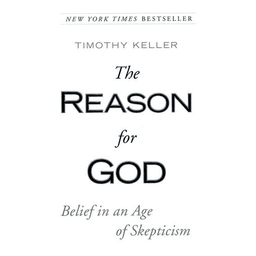 The Reason for GodTim Keller's 2008 apologetic that actually walks through the objections and makes the case - the content companion to McGrath's method.
 TacticsGreg Koukl's game plan for the live conversation - questions and moves for the in-the-moment exchange, where McGrath supplies the broader philosophy.
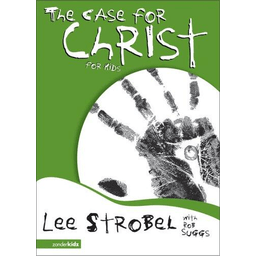 The Case for ChristLee Strobel's journalistic walk through the historical case for Jesus - the evidential content a method book like McGrath's deliberately leaves to others.
Frequently asked questions
Is Mere Apologetics a list of arguments for Christianity?
No, and that is the most important thing to know before buying. It is a book about apologetic method - how to commend the faith, read your audience, and use reason and imagination together. It deliberately leaves the detailed arguments (resurrection, fine-tuning, the problem of evil) to other books. Read it for the approach, then pair it with a content book for the case itself.
How is it related to C.S. Lewis's Mere Christianity?
The title is a deliberate echo. McGrath wrote a biography of Lewis and borrows the word "mere" on purpose - the shared center of Christian belief that nearly every tradition holds in common, commended to outsiders rather than disputed among insiders. McGrath also recovers Lewis's conviction that imagination and story are legitimate apologetic tools alongside reason.
Who is Alister McGrath?
McGrath is an Oxford theologian who held the Andreas Idreos Professorship of Science and Religion. He has a doctorate in molecular biophysics, was a committed atheist before his conversion, and has written widely across both academic theology and popular books. That science-and-faith background and his former atheism inform how he understands the skeptic's position.
Who is this book best for?
Pastors, teachers, ministry leaders, and seminary students who want to understand apologetics as a craft, plus thoughtful Christians who keep losing conversations and suspect the issue is their approach rather than the facts. It is especially useful for anyone training others, because it teaches a transferable method rather than a set of answers.
Is it written from one particular tradition?
McGrath writes from a broadly evangelical Anglican perspective, and like Lewis he consciously aims at the shared center of Christian belief rather than denominational distinctives. That makes the framing unusually tradition-neutral, and the book is read and assigned across Catholic, Protestant, and other Christian settings.
What should I read alongside it?
Pair the method McGrath teaches with a content book that supplies the actual arguments - Tim Keller's The Reason for God is the natural companion, and Lee Strobel's The Case for Christ adds the historical-evidence angle. For the in-the-moment conversational mechanics, Greg Koukl's Tactics complements it well.
Is Mere Apologetics still relevant in 2026?
Yes, and arguably more than a topical book, because method ages slowly. The cultural references will shift, but the core questions - what is apologetics for, who am I talking to, which tool reaches this person - are the same in every generation. That durability is part of what makes the framework worth owning.
Sources & further reading
More Apologetics Books
The Reason for GodTim Keller’s 2008 apologetic has quietly become the default gift for the smart, secular friend who has questions - and it earns the reputation.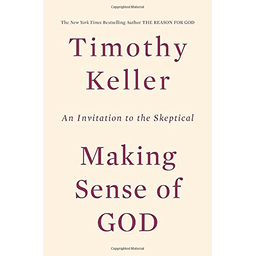 Making Sense of GodTim Keller’s 2016 “prequel” to The Reason for God doesn’t argue that God exists - it argues that the things you already want make more sense inside Christianity than outside it, and it’s the book for the skeptic who isn’t ready for the argument yet.TacticsGreg Koukl wrote the book that teaches you how to talk about faith without it turning into an argument - the one most people reach for when "I never know what to say" is the real problem.
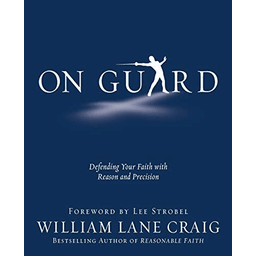 On GuardWilliam Lane Craig’s 2010 primer takes the formal arguments from his heavyweight Reasonable Faith and redraws them as flowcharts a layperson can actually follow - apologetics taught like a skill, not a sermon.The Case for ChristLee Strobel’s investigative-journalist apologetic has quietly become the default gift book for skeptical friends - and the on-ramp into apologetics for an entire generation of readers.
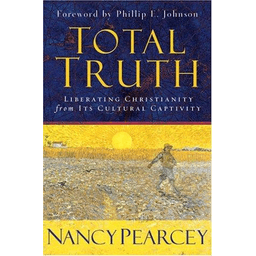 Total TruthThe book that taught a generation of evangelicals to think in terms of worldview - and to stop letting their faith get filed under "private values" while everyone else got "public facts."