- Starting price
- $11.99 paperback
- Free tier
- No
- Platforms
- Print · Kindle · Audiobook · Audible
- Developer
- Riverhead Books (Penguin)
- Launched
- 2008
- Updated
- May 24, 2026
The verdict
The single most-recommended modern apologetic for a reason - Keller is patient, intellectually generous, and writes for the skeptic rather than at them. If you are going to buy one book in this category, buy this one.
Try The Reason for God ↗Opens penguinrandomhouse.com
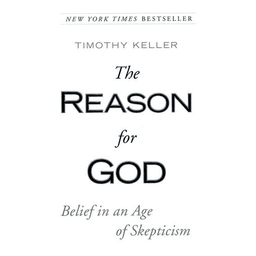
The Reason for God has quietly become the default book Christians hand to a smart, secular friend who is asking real questions. Timothy Keller wrote it in 2008 after twenty years of pastoring Redeemer Presbyterian Church in Manhattan - a church planted in the most aggressively secular zip code in America - and the book is essentially the distilled answer file from two decades of Sunday-night Q&A with NYU grad students, skeptical lawyers, and lapsed Catholics who walked in to argue.
It is not a textbook. It does not read like a debate transcript. It does not condescend. Keller had heard the same seven or eight objections so many times that he could anticipate the follow-up question before the questioner finished asking the first one, and the book is structured around exactly that pattern - Part 1 takes the seven hardest objections to Christianity one by one (suffering, exclusivity, hell, the church’s record, literalism, science, the trustworthiness of the Bible), and Part 2 turns the table and makes the positive case.
Over a million copies later, it sits on a New York Times bestseller list shelf alongside C.S. Lewis’s Mere Christianity - and the comparison is the one almost every reviewer reaches for. Mere Christianity for the 21st century is the standard line. It is mostly right. Keller is doing for the post-2000 secular reader what Lewis did for the post-war BBC listener, and the book has earned a permanent place in the apologetics canon.
✓ The good
- Best-in-class for the genuinely skeptical reader - Keller writes as if the skeptic is sitting across the table, not as if they are wrong on the internet
- Part 1’s objection chapters are unusually fair - he steel-mans each objection before answering it, and frequently concedes ground other apologists would die on
- Quotes everyone - Nietzsche, Tolkien, Tim Wolfe, Annie Dillard, Flannery O’Connor, Czeslaw Milosz, plus the expected Lewis and Chesterton - so the cultural register feels educated rather than insular
- The tone is winsome rather than confrontational - Keller wants you to actually consider Christianity, not lose an argument to him
- Part 2’s positive case is structured around clues rather than proofs - a more modern epistemology that lands better with a post-foundationalist reader
- Pairs beautifully with a discussion group - the published Discussion Guide tracks chapter-by-chapter and is the standard small-group companion
- Audiobook narration (read by Keller himself in the original edition, then by Lloyd James) is excellent for commute listening
✗ Watch out
- Manhattan-coded - the imagined skeptic is an educated coastal professional, which can feel distant for rural or working-class readers
- Light on historical-evidence apologetics - if you want detailed arguments for the resurrection or biblical reliability, this is not the book (Case for Christ is)
- Some chapters lean philosophical - the moral argument chapter and the chapter on hell take real work
- Reformed Presbyterian assumptions surface gently in Part 2 - not aggressively, but readers from other traditions will notice
- No footnote section in the paperback - endnotes are present but the reading experience can feel light on citation for an academic reader
- Now seventeen years old - the cultural references (mostly mid-2000s New Atheism) are dated even though the underlying arguments hold up
Best for
- The skeptical friend, sibling, or coworker
- Adult Sunday school and small-group studies on apologetics
- Returning prodigals processing intellectual doubts
- Pastors and ministry leaders who need a recommended-reading shelf
Avoid if
- You want a hard evidentialist resurrection case
- You want a Catholic, Orthodox, or LDS apologetic specifically
- You want a short read - this is a 250-page commitment
- You already own and have absorbed Mere Christianity and want something genuinely new
What The Reason for God is
The Reason for God is a 250-page general-audience apologetic for the Christian faith, written by Timothy Keller and published in 2008 by Riverhead Books, an imprint of Penguin. Keller was the founding pastor of Redeemer Presbyterian Church in Manhattan from 1989 until his retirement in 2017, and the book grew directly out of the questions he fielded at Redeemer’s long-running Sunday-evening open Q&A.
The structure is two halves of seven chapters each. Part 1 takes the most common objections to Christianity - there can’t be just one true religion, a good God couldn’t allow suffering, Christianity is a straitjacket, the church is responsible for so much injustice, a loving God wouldn’t send people to hell, science has disproved Christianity, you can’t take the Bible literally - and walks through each one. Part 2 flips and offers the positive clues: the existence of beauty, the moral law, the historical case, the meaning of the cross, and the reality of the resurrection.
Why thoughtful readers prefer The Reason for God
The single biggest practical difference between Keller and most other modern apologists is tone. Keller does not write as if he is winning. He writes as if he is sitting in a coffee shop with a person he genuinely likes and wants to understand. He concedes things. He admits the church’s historical failures candidly. He treats the strongest version of an objection rather than the weakest version, and he is comfortable letting the reader sit with a hard question for a few pages before he answers it.
That tone is the model that respects your work. It does not assume you are a fool for doubting. It does not assume you have already decided. It treats you as the thoughtful person’s skeptic - someone capable of reading Nietzsche and following a real argument - and that posture is exactly what makes the book lendable. You can hand it to a coworker without bracing for them to be insulted by chapter three. Most apologetics books fail that test. This one passes it cleanly.
Part 1: the objections - suffering, exclusivity, hell, science
The first half of the book is the part most readers remember. Seven chapters, seven of the most common objections to Christianity that Keller heard in twenty years of pastoring in Manhattan, each handled in roughly thirty pages. Suffering gets the longest and most careful treatment - Keller refuses the easy free-will-defense shortcut and works instead through the resources Christianity actually offers a sufferer (the suffering God, the resurrection, the long view). The chapter on exclusivity opens with the observation that every framework, including pluralism, is itself an exclusive truth-claim, and goes from there. The chapter on hell is the most philosophically demanding and may be the one readers most often skip.
What makes Part 1 work is the steel-manning. Keller spends real pages explaining why the objection is strong before he answers it. By the time he turns to the answer, the reader has already been given a fair version of their own argument back - which is the only posture that actually persuades anyone of anything. It is also why the book travels well across traditions: he is not defending a denominational distinctive, he is defending the existence of God, the historical Jesus, and the basic Christian claim about the cross and resurrection.
Part 2: the positive case - clues, not proofs
Part 2 turns the table. Instead of defending against objections, Keller offers what he calls clues - the existence of the universe, the fine-tuning of cosmic constants, the reality of moral obligation, the persistence of beauty, the universal sense that something is broken and needs to be put right. He explicitly does not call these proofs. The framing is deliberate: a post-foundationalist reader is suspicious of geometric-proof apologetics, but is much more willing to consider a cumulative case built from clues that converge.
The back half of Part 2 narrows in on Jesus specifically - the problem of sin, the meaning of the cross, the historical case for the resurrection. The resurrection chapter is shorter than what you would get in Case for Christ or N.T. Wright’s longer treatments, but it covers the core argument competently and points the curious reader to the deeper sources. The final chapter is an invitation rather than a closer, and the appendix on the dance of the Trinity is, depending on your taste, either the most moving prose in the book or the place where Keller’s Reformed Presbyterian instincts come through most clearly.
Keller’s winsome tone - the quiet superpower
The third thing worth flagging is not a chapter at all. It is the prose itself. Keller writes in a register that is almost unheard of in apologetics: patient, slightly self-deprecating, generous to opponents, comfortable quoting non-Christian writers approvingly, willing to admit when a Christian thinker got something wrong. He has clearly read everything the skeptic has read - Nietzsche, Sartre, Freud, the New Atheists - and engages on the reader’s home turf rather than dragging them onto his.
This sounds like a small thing. In practice it is transformative. The standard complaint about apologetics is that it is written for people who already agree. Keller’s book is the rare entry in the genre that a non-believer will actually finish without feeling preached at. That is the whole job of an evangelistic book, and it is why pastors keep ordering it by the case. Most users do not need a more aggressive apologetic. They need the one that gets read.
Pricing
Paperback
~$11.99
The standard edition. Most-purchased format and the one most small groups standardize on.
Hardcover
~$24
The original 2008 hardcover. Still in print, mostly for gift giving and library shelves.
Kindle
~$11
Identical text, highlights sync across devices. Good for travelers and underliners.
Audible
~$15
Roughly 8.5 hours, narrated by Lloyd James. The audio version is excellent for commutes and walks.
Discussion Guide
~$10
Slim companion booklet with chapter-by-chapter questions - the standard small-group add-on.
Pricing on a book is simple, and The Reason for God prices roughly where every other Penguin trade paperback prices - around twelve dollars for the standard edition, fifteen on Audible, a couple dollars cheaper on Kindle when it goes on sale.
For most readers the paperback is the right pick. It is the version small groups standardize on, it is easy to lend (and you will lend it), and the page count is friendly for a book club pace of two or three chapters per week.
The Discussion Guide is a separate ten-dollar booklet that you only need if you are running an organized group study. It tracks the chapters one for one and gives you the questions so you do not have to invent them. Worth it for a leader, optional for everyone else.
Audible is the sleeper pick. The book is conversational enough that it works in audio, the runtime is reasonable at about eight and a half hours, and the production quality is solid. If you commute or walk, this is a perfectly good way to consume it.
Where The Reason for God falls behind
Light on hard historical evidence. If your skeptic’s primary objection is whether the resurrection actually happened as a datable historical event - not whether it is meaningful, but whether the tomb was empty - The Reason for God will gesture at the case but not walk it through in detail. Lee Strobel’s Case for Christ or N.T. Wright’s much longer Resurrection of the Son of God are better evidentialist reads for that specific question.
Manhattan-coded throughout. The implied reader is an educated coastal professional who has read some philosophy and is wrestling with belief on intellectual grounds. That is a real audience, but it is not the only audience. A reader whose objections to Christianity are rooted in church abuse, family wounds, or working-class skepticism may find Keller’s framing of the objections recognizable but the texture slightly off.
No serious engagement with non-Christian religions beyond a paragraph or two. The chapter on exclusivity is about the meta-question of whether there can be one true religion - it does not actually engage Buddhist, Muslim, or Hindu truth-claims at any length. A reader looking for comparative-religion apologetics will need to go elsewhere.
Showing its age in places. The cultural references skew mid-2000s - there are nods to the New Atheist authors who were ascendant when the book was written, and a few examples that have aged less well than the arguments around them. The underlying philosophy is unchanged, but the surface lighting feels seventeen years old in places.
Reformed Presbyterian undertones in Part 2. Keller was a PCA pastor, and while he works hard to keep the book broadly Christian rather than denominationally narrow, careful readers from Catholic, Orthodox, Anabaptist, Wesleyan, or Latter-day Saint backgrounds will notice the Reformed framing on a few specific points - most visibly in the chapter on sin and the appendix on the Trinity.
The Reason for God vs. Mere Christianity vs. The Case for Christ
These three are the standard recommendations when someone asks for one apologetics book, and they are doing genuinely different jobs. Different strengths. Lewis is better at moral imagination and prose at the sentence level. Strobel is better at journalistic, evidence-by-evidence reconstruction of the historical case. Keller is better at the actual conversational objections a 21st-century skeptic will raise across a dinner table.
Mere Christianity, written from BBC radio talks in the 1940s, is shorter, more aphoristic, and the prose is genuinely beautiful in a way Keller’s functional prose is not trying to be. But it presumes a 1940s British listener - someone roughly Christian-adjacent by cultural default - and the objections it answers are not always the objections a modern secular reader actually raises. Lewis answers questions about morality. Keller answers questions about exclusivity, hell, and the church’s record.
The Case for Christ, by contrast, is journalism. Lee Strobel walks through interviews with scholars on the historical reliability of the gospels, the resurrection, and the identity of Jesus. It is the right gift for the skeptic whose primary objection is historical - did this actually happen - rather than philosophical. If you do not know which book your reader needs, The Reason for God is the safest pick because it covers the broadest surface area of the modern skeptical objection set. Buy Lewis if you want the artistry. Buy Strobel if you want the evidence. Buy Keller if you want the conversation.
The bottom line
The Reason for God is the modern apologetics book to beat, and seventeen years on no one has clearly beaten it. Keller’s combination of intellectual seriousness, conversational tone, and genuine respect for the skeptic’s objections produces a book that a non-believer will actually finish - which is the only metric that matters in this genre. If you are going to buy one apologetics book in 2026, for yourself or for the friend you keep meaning to talk to, this is the one. The gaps are real, but they are gaps worth knowing about going in rather than dealbreakers.
Alternatives to The Reason for God
 Mere ChristianityC.S. Lewis’s 1952 classic, originally BBC radio talks. Shorter, more aphoristic, and the prose is unmatched. The book Keller is most often compared to.
 The Case for ChristLee Strobel’s journalistic walk through the historical case for Jesus and the resurrection. The right pick when the objection is evidential rather than philosophical.
 Reasonable FaithWilliam Lane Craig’s academic-leaning site and book of the same title. Heavier on formal philosophical arguments - the Kalam, fine-tuning, the moral argument - than Keller is.
 Knowing GodJ.I. Packer’s 1973 modern classic. Not strictly apologetics - it is a theology of God’s character for the lay reader - but the natural next book after The Reason for God.
Frequently asked questions
Is The Reason for God still worth reading in 2026?
Yes. The cultural references are dated in spots, but the underlying objections Keller addresses - suffering, exclusivity, hell, science, the church’s record - are exactly the same objections a thoughtful skeptic raises today. It remains the most-recommended modern entry-level apologetic.
How does it compare to Mere Christianity?
They do different jobs. Lewis is shorter, more imaginative, and addresses a roughly Christian-adjacent 1940s reader. Keller is longer, more conversational, and addresses the specific objections of a contemporary secular reader. Most pastors recommend reading both, in either order.
Is this a good book to give to a non-Christian friend?
It is arguably the single best modern book for that purpose. Keller writes for the skeptic, steel-mans their objections before answering, and never condescends. Pair it with a willingness to talk about it afterward.
What tradition is Tim Keller writing from?
Keller was a Presbyterian Church in America (PCA) pastor in the Reformed tradition, but he deliberately wrote The Reason for God as a broadly Christian apologetic rather than a denominational one. His Reformed framing shows up gently in a few spots in Part 2, but the book is widely read and recommended across Catholic, Protestant, and Orthodox circles.
Is there a small-group version?
Yes. Keller published a separate Discussion Guide that tracks the book chapter by chapter, and a six-session DVD curriculum was released by Zondervan. Both are the standard companions for adult Sunday school and small-group studies.
How long does it take to read?
About eight to ten hours of reading time at a steady pace, or roughly eight and a half hours on Audible. Most small groups cover it in six to eight weeks at two chapters per week.
If I only buy one apologetics book, should this be it?
For most readers, yes. The Reason for God covers the broadest surface area of modern skeptical objections in the most conversational tone. Buy Lewis for the artistry, Strobel for the historical evidence, and Craig for the formal philosophical arguments - but if you want one book that does the most jobs reasonably well, this is it.
Sources & further reading
More Apologetics Books
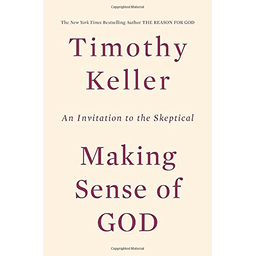 Making Sense of GodTim Keller’s 2016 “prequel” to The Reason for God doesn’t argue that God exists - it argues that the things you already want make more sense inside Christianity than outside it, and it’s the book for the skeptic who isn’t ready for the argument yet.
 TacticsGreg Koukl wrote the book that teaches you how to talk about faith without it turning into an argument - the one most people reach for when "I never know what to say" is the real problem.
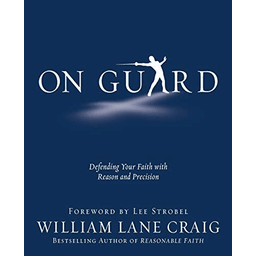 On GuardWilliam Lane Craig’s 2010 primer takes the formal arguments from his heavyweight Reasonable Faith and redraws them as flowcharts a layperson can actually follow - apologetics taught like a skill, not a sermon.The Case for ChristLee Strobel’s investigative-journalist apologetic has quietly become the default gift book for skeptical friends - and the on-ramp into apologetics for an entire generation of readers.
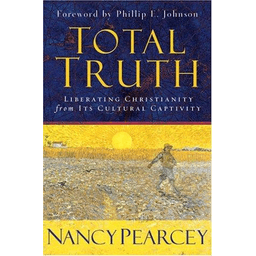 Total TruthThe book that taught a generation of evangelicals to think in terms of worldview - and to stop letting their faith get filed under "private values" while everyone else got "public facts."
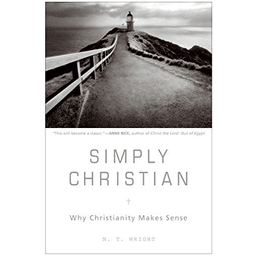 Simply ChristianN.T. Wright's accessible case for the faith - the book reviewers reach for when they want a modern Mere Christianity, built not on a single argument but on four longings every human being already carries.