Head-to-head comparison
Mere Christianity vs The Reason for God
Ratings, pricing, platforms, real-world strengths, and a clear pick for each kind of user.
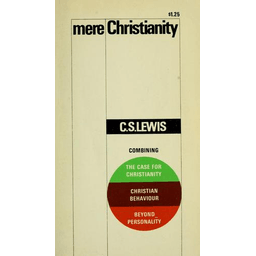
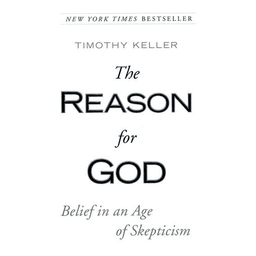
Both are modern apologetics written for skeptics rather than believers, designed to make the Christian faith plausible to thoughtful doubters. C.S. Lewis's Mere Christianity (1952, from BBC radio talks) and Tim Keller's The Reason for God (2008, from Manhattan Q&A) occupy similar shelf space but address different audiences across different eras.
Lewis wrote for a war-tired 1940s Britain where Christianity was still culturally assumed. Keller writes for a post-Christian 2000s America where Christianity needs to be argued for from the ground up. Both are widely recommended across traditions; both have sold over a million copies. They are not competitors. They are siblings across a generation.
The bottom line
Choose Mere Christianity if you want the most eloquent and timeless introduction to Christian thought, the book that established the genre, and prose that will reward re-reading forever. Choose The Reason for God if you want the most contemporary objection-handling, the book that meets modern secular readers where they actually are, and an author who spent twenty years listening to skeptics before writing. Both are essential; read Lewis first, then Keller.
The core difference: Mere Christianity argues from the universal human sense of right and wrong toward God, addressing a reader still culturally Christian in default. The Reason for God addresses objections head-on (suffering, exclusivity, hell, science), written for a reader culturally post-Christian who is not assuming Christianity is true.
Mere Christianity vs The Reason for God: at a glance
| Mere Christianity | The Reason for God | |
|---|---|---|
| Rating (source) | 4.3 / 5 (Open Library rating) | 4.8 / 5 (Editor rating) |
| Starting price | $10.99 paperback | $11.99 paperback |
| Free tier | No | No |
| Platforms | Print · Kindle · Audiobook · Audible | Print · Kindle · Audiobook · Audible |
| Developer | HarperOne | Riverhead Books (Penguin) |
| Launched | 1952 | 2008 |
| Best for | Anyone curious about Christianity who wants one book to start with | The skeptical friend, sibling, or coworker |
How they compare, point by point
Target reader
Mere Christianity
Broadly Christian-adjacent listener (1940s), willing to be reasoned with, already assumes some shared moral vocabulary; skepticism is intellectual, not personal
The Reason for God
Post-Christian, educated, secular skeptic (2000s-2020s), often carrying personal wounds or philosophical objections; skepticism is both intellectual and cultural
Approach
Mere Christianity
Moral argument (universal sense of right/wrong points to God) → core Christian claims → Christian behavior → doctrine of God; moves forward from shared ground
The Reason for God
Objections first (seven chapters on why people reject Christianity) → then positive case; addresses what's keeping the reader from believing
Prose style
Mere Christianity
Conversational, aphoristic, brief analogies (tin soldiers, fleets of ships), shaped for radio, with short sentences, concrete, imaginative
The Reason for God
Longer conversational argument, patient with objections, generous to opponent positions, quotes contemporary writers (Nietzsche, poets, novelists)
Tone
Mere Christianity
Slightly clipped, very British, slightly funny, assumes listener's goodwill; does not flatter but does not attack
The Reason for God
Winsome, self-aware, openly concedes ground, treats objections seriously before answering; positioned as a conversation partner, not a debater
Key strength
Mere Christianity
Book 1 (the moral argument) is the cleanest popular version ever written and still taught in apologetics courses; Book 4 on the doctrine of God opens up language all traditions can hear in
The Reason for God
Part 1 objection chapters are unusually fair, steel-manning each one before answering; the actual objections are modern ones; tone of respect for the skeptic's thinking
Price & format
Mere Christianity
Paperback $10.99, Kindle $9.99, Audible $14.95 (Geoffrey Howard narration excellent), annotated edition $30; used copies at thrift stores for $2-5
The Reason for God
Paperback $11.99, Kindle $11, Audible $15 (Lloyd James narration), Discussion Guide $10; similar pricing structure, slightly longer runtime
Which should you choose?
Mere Christianity
Choose Mere Christianity if you want timeless beauty, prose that will stick with you for decades, a book that works across every tradition, or the philosophical-imaginative approach to belief.
The Reason for God
Choose The Reason for God if you want the book that meets contemporary objections head-on, written by someone who listened to 20 years of skeptical questions, or if your doubt is rooted in suffering, church failure, or intellectual objections specific to our era.
Both are short reads (225 pages, 250 pages), both work on Audible, both are under $12 paperback. Both have sold over a million copies. Many pastors recommend reading both in sequence: Lewis for the foundation, Keller for the contemporary update. Neither is wasted shelf space.
Strengths at a glance
Mere Christianity
- The single most-recommended modern intro to Christianity - across Catholic, Protestant, Orthodox, and LDS readers, almost everyone has read it or had it pressed on them
- Genuinely ecumenical by design - Lewis worked his manuscript past clergy of multiple traditions to scrub out anything denominationally distinctive
- Prose that has aged remarkably well - the sentences are short, the analogies are concrete, and the vocabulary is still legible to a modern reader
- The moral argument in Book 1 is the cleanest popular statement of it ever written - used in apologetics courses to this day
The Reason for God
- Best-in-class for the genuinely skeptical reader - Keller writes as if the skeptic is sitting across the table, not as if they are wrong on the internet
- Part 1’s objection chapters are unusually fair - he steel-mans each objection before answering it, and frequently concedes ground other apologists would die on
- Quotes everyone - Nietzsche, Tolkien, Tim Wolfe, Annie Dillard, Flannery O’Connor, Czeslaw Milosz, plus the expected Lewis and Chesterton - so the cultural register feels educated rather than insular
- The tone is winsome rather than confrontational - Keller wants you to actually consider Christianity, not lose an argument to him
Watch-outs
Mere Christianity
- Lewis is a layman, not a trained theologian - some passages (on free will, on the Trinity, on atonement) read more as illustration than as careful dogmatic statement
- The 1940s register shows in places - examples about wartime, marriage, and "the modern world" occasionally feel dated
- A few passages on women in marriage (Book 3, chapter 6) reflect mid-century assumptions and tend to land awkwardly with modern readers regardless of tradition
The Reason for God
- Manhattan-coded - the imagined skeptic is an educated coastal professional, which can feel distant for rural or working-class readers
- Light on historical-evidence apologetics - if you want detailed arguments for the resurrection or biblical reliability, this is not the book (Case for Christ is)
- Some chapters lean philosophical - the moral argument chapter and the chapter on hell take real work
Frequently asked questions
Is Mere Christianity or The Reason for God better?
Different excellence. Lewis is more beautiful prose and more universally true. Keller is more contemporary and more conversational. Most readers benefit from both: Lewis once, Keller when the objections are modern ones.
Which one should I give to a skeptical friend?
If your friend is intellectually curious and open: either works. If they are carrying church wounds or contemporary skepticism (science, hell, exclusivity): The Reason for God. If they want pure moral imagination and philosophy: Mere Christianity.
Is Mere Christianity dated?
A few examples have aged (wartime, gender roles), but the moral argument, the doctrine of God, and the challenge of Christian living are timeless. Lewis anticipated most modern objections even if he did not address them in modern vocabulary. Still worthy.
Does The Reason for God replace Mere Christianity?
No. Keller was shaped by Lewis and quotes him constantly. The Reason for God is the contemporary sibling, not the replacement. Keller himself would tell you to read Mere Christianity first.
Is Mere Christianity free?
Mere Christianity starts at $10.99 paperback; there's no free tier.
Is The Reason for God free?
The Reason for God starts at $11.99 paperback; there's no free tier.
Seventy-plus years on, Mere Christianity is still the single most-recommended modern introduction to the Christian faith. The single most-recommended modern apologetic for a reason - Keller is patient, intellectually generous, and writes for the skeptic rather than at them.