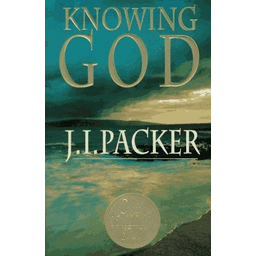
- Starting price
- $13.99 paperback
- Free tier
- No
- Platforms
- Print · Kindle · Audiobook
- Developer
- IVP
- Launched
- 1973
- Updated
- May 24, 2026
The verdict
The modern classic on the doctrine of God for non-theologians - dense, devotional, and unhurried. If you have ever wanted serious theology that still reads like a pastor talking, this is the book.
Try Knowing God ↗Opens ivpress.com
Knowing God has quietly become the favorite of pastors who get asked, “What should I read after I finish the Bible itself?” J.I. Packer’s 1973 collection of 22 essays on the doctrine of God has crossed 1.5 million copies, been translated into dozens of languages, and shows up on more recommended-reading lists than almost any other twentieth-century theology book aimed at a general audience.
It is not a quick read. It does not give you life hacks. It does not chase a felt need. It moves, one chapter at a time, through who God is - his majesty, his wisdom, his love, his wrath, his grace - and asks the reader to slow down enough to actually think about each one. Packer was an Anglican theologian trained at Oxford, and the prose carries that pedigree: careful, measured, a little formal, never showy.
The book is doctrinal - unapologetically so - and Packer wrote from a Reformed Anglican vantage point that shaped how he frames election, propitiation, and justification. But the central concern of the book, the difference between knowing God and merely knowing about God, is the kind of thing readers across Catholic, Orthodox, Protestant, and Latter-day Saint traditions tend to recognize as a real distinction. That is part of why it has held up.
✓ The good
- The single best modern primer on the doctrine of God for non-theologians - nothing else in the category really competes
- Twenty-two short, self-contained essays - you can read one a week for half a year and finish without losing the thread
- Packer’s prose is unusually clear for the subject matter - dense but never deliberately obscure, and never condescending
- The “knowing God” vs. “knowing about God” framing in the opening chapters is genuinely reorienting for most readers
- Treats hard doctrines (wrath, propitiation, election) head-on rather than skipping them - you finish with a more furnished mind
- Has aged remarkably well - written in 1973 but reads as if it could have been published last year
- Cheap to own in print - the IVP paperback runs around fourteen dollars and the audiobook is widely available
✗ Watch out
- Dense - short chapters but every paragraph wants to be reread, which is not what every reader is looking for
- Distinctly Reformed Anglican on chapters like election and propitiation - readers from other traditions may want to read those chapters alongside their own tradition’s commentary
- No discussion questions, no study guide built in - you supply your own pace and your own group structure
- The mid-1970s prose register is formal - not stuffy, but not the conversational tone newer Christian publishing trends toward
- Not a Bible study - it cites Scripture constantly but it is theology of God, not chapter-by-chapter exposition
Best for
- Lay readers ready for serious theology in plain prose
- Small groups that want a six-month doctrine-of-God curriculum
- New pastors and seminary students wanting one trustworthy primer
- Anyone who feels they know about God more than they know God
Avoid if
- You want a quick, breezy devotional you can finish in a weekend
- You want a book that avoids doctrinal stances entirely
- You want chapter-by-chapter Bible exposition rather than topical theology
- You want a fully ecumenical book with no Reformed Anglican accent
What Knowing God is
Knowing God is a book-length argument that the goal of the Christian life is to know God himself - not just to know correct things about him - and that the way you get there is by slowly, carefully, prayerfully thinking through who he actually is. It is structured as 22 short essays, most originally published in Evangelical Magazine in the 1960s, grouped into three parts: “Know the Lord,” “Behold Your God,” and “If God Be For Us.”
Packer was an English theologian (1926-2020), ordained in the Church of England and later teaching at Regent College in Vancouver. He wrote from a broadly evangelical, Reformed-leaning Anglican position, and that vantage point shapes the book - most visibly in the chapters on election, propitiation, and adoption. The book’s subject is theology proper, the doctrine of God, but its tone is pastoral throughout.
Why pastors keep handing this book out
The single biggest practical difference between Knowing God and most other popular theology books is that Packer refuses to flatten the subject. He will spend a whole chapter on a single attribute - God’s majesty, God’s wisdom, God’s jealousy - and treat it as worth thinking about for its own sake, not as a setup for a life application bullet at the end. The reader is expected to slow down. Most modern Christian books bring the doctrine to the reader; Packer asks the reader to come up to the doctrine.
This sounds like a small thing. In practice it is transformative. Readers who finish Knowing God consistently report that what changed was not the amount of information they now have - it is that they have spent twenty-two weeks thinking carefully about who God is, one attribute at a time, and that habit of attention seems to carry over. That is the book’s actual product: not facts, but a cultivated way of paying attention to God.
The 22-essay structure: one doctrine at a time, in order
Knowing God is built as 22 short chapters, most between ten and twenty pages, arranged in three movements. Part one (“Know the Lord”) sets the table - the difference between knowing God and knowing about God, what it means to study God, the incomprehensibility of God, the problem of idolatry, God as Trinity, God’s unchanging character. Part two (“Behold Your God”) walks the attributes - majesty, wisdom, truthfulness, love, grace, judgment, wrath, goodness, jealousy. Part three (“If God Be For Us”) lands on what those attributes mean for the believer - the heart of the gospel, propitiation, the sons of God, the adequacy of God, and the closing chapter on the adequacy of God in suffering.
The architecture is the feature. You can read one chapter a week for half a year and feel the cumulative weight build. The Trinity chapter is short on purpose; the wrath chapter is long on purpose. Packer is not writing a systematic theology textbook - he is writing 22 sermons-as-essays that, taken together, give a lay reader the closest thing to a real doctrine-of-God education they are likely to get outside of seminary. Most small groups that adopt the book run it at one chapter per meeting, which is the pace it was clearly designed for.
Packer’s prose: Anglican-formal, but never showing off
Packer’s prose is the second thing readers tend to mention. It is recognizably mid-century Anglican - long-ish sentences, semicolons, a willingness to use a word like “propitiation” without apology - but it is not academic in the bad sense. He defines his terms. He repeats key points. He uses metaphors that stick (the most famous, from chapter two, is the picture of Christians as “high on biblical doctrine” but “dwarfs at the feet of God”). The result is theology that reads like a thoughtful pastor talking to an adult.
For modern readers raised on punchier Christian publishing, the register can take a chapter or two to settle into. After that it tends to become the point - the slowness of the prose is what gives the doctrine room to land. Packer is not trying to keep your attention with cliffhangers. He is trying to keep your attention by being worth listening to. The book’s longevity is largely owed to the fact that this style does not date the way trend-chasing prose does.
Knowing God vs. knowing about God: the framing the book is famous for
The most-quoted thing in the book is in chapter two: the distinction between knowing God and knowing about God. Packer’s argument is that it is entirely possible - in fact common - to accumulate accurate theological information without ever meeting the God that information describes, and that this is a spiritual problem the book is trying to address. He frames the rest of the chapters as an attempt to bridge that gap: not less doctrine, but doctrine pursued as a means of actual acquaintance with God himself.
This framing is what makes Knowing God durable across traditions. Readers from Catholic, Orthodox, Protestant, and Latter-day Saint backgrounds all tend to recognize the diagnosis - that there is a real difference between studying God and knowing God - even when they would describe the remedy somewhat differently. Packer’s answer is recognizably Reformed Anglican; the question he’s asking is broader than any one tradition. That gap between the question and his particular answer is part of why so many readers across the spectrum still find the book worth reading.
Pricing
Paperback
~$13.99
The standard IVP paperback - the edition most readers actually own, and the one most small groups buy in bulk.
Hardcover
~$24
Heavier binding, better for marking up and keeping on a shelf for decades. The edition pastors tend to gift.
Kindle
~$11
Full text, searchable, syncs with the Kindle highlights workflow. Useful if you read theology with notes apps.
Audible
~$15
Roughly fourteen hours of audio. Slower listen than most modern Christian audiobooks because the prose is dense.
Anniversary Edition
~$25
Expanded edition with study questions and a new foreword. The version pick if you want guided reflection built in.
The standard IVP paperback runs around fourteen dollars in 2026 and is the edition most readers actually own. It is also what most small groups buy in bulk, and what most pastors hand out. If you are only going to own one copy, this is the copy.
The hardcover at around twenty-four dollars is worth it if you mark up your theology books and want one that will survive twenty years of margin notes. It is the version pastors tend to give as a gift to seminary students or new elders.
The Kindle edition at around eleven dollars is the cheapest way in, and the searchable text is genuinely useful for a book this dense - being able to grep for “propitiation” across the whole book pays off the first time you go back looking for a half-remembered passage. Audible at around fifteen dollars runs roughly fourteen hours; it is a slower listen than most modern Christian audiobooks because the prose was not written to be skimmed.
The Anniversary Edition at around twenty-five dollars adds study questions and a new foreword. It is the pick if you want guided reflection built in or if you are running the book as a group curriculum and do not want to write your own questions.
Where Knowing God falls behind
No built-in study guide in the standard edition. The base paperback gives you the essays and nothing else - no discussion questions, no leader’s notes, no recommended reading schedule. The Anniversary Edition fixes this but most copies in circulation do not have it.
No accommodation for readers who want to skip the harder doctrines. Packer treats wrath, propitiation, and election as load-bearing chapters, not optional ones. Readers who want a book that softens those topics will find it less than they bargained for.
Distinctly Reformed Anglican accent in places. The chapters on election (chapter 11) and propitiation (chapter 18) are written from a Reformed evangelical position. Readers from Catholic, Orthodox, Wesleyan, Anabaptist, or Latter-day Saint backgrounds may want to read those chapters alongside their own tradition’s commentary rather than as the final word.
Not a Bible exposition. If you want a book that walks Genesis to Revelation, this is not it - Knowing God cites Scripture constantly but it is organized topically around the doctrine of God, not around books of the Bible.
No real updating for the cultural questions of the last fifty years. Packer wrote in 1973 and the book does not address contemporary debates that have emerged since. That is part of why it has aged well, but it does mean you will not find Packer on, say, deconstruction or modern apologetic flashpoints.
Knowing God vs. Mere Christianity vs. The Pursuit of God
Different books, different goals. Mere Christianity (C.S. Lewis, 1952) is apologetics - it is trying to argue someone toward Christianity from the outside. Knowing God (Packer, 1973) is doctrine - it assumes you are already in and tries to deepen what you know about God. The Pursuit of God (A.W. Tozer, 1948) is devotional - it is shorter, more lyrical, and aimed at the affections more than the intellect.
If you have never read any of the three, most pastors would tell you to start with Mere Christianity for the apologetic foundation, move to Knowing God for the doctrinal depth, and read Tozer alongside or after for the devotional warmth. Packer is the longest and densest of the three. Tozer is the shortest and most prayerful. Lewis is the most readable and the most quotable.
Mere Christianity is better at arguing for the faith. Tozer is better at warming a cold heart. Knowing God is broader and deeper than either on the actual content of who God is - it is the book to read when the question is “What is God like?” rather than “Why should I believe?” or “How do I want him more?”
The bottom line
Knowing God is still the modern classic on the doctrine of God for non-theologians, and the case for reading it has not weakened in fifty years. It is dense, it is Reformed Anglican in places, and it expects work from the reader - those are real things to know going in rather than dealbreakers. If you want serious theology that reads like a pastor talking, want to spend six months thinking carefully about who God is, and are willing to read with a pen in hand, almost nothing else in the category competes. Buy the paperback, read one chapter a week, and let it do what it does.
Alternatives to Knowing God
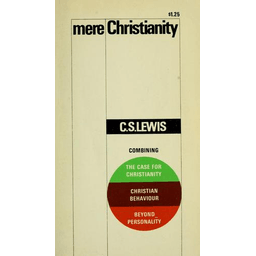 Mere ChristianityC.S. Lewis’s 1952 apologetic classic. Shorter, more readable, aimed at arguing the faith rather than deepening doctrine. The natural pairing.
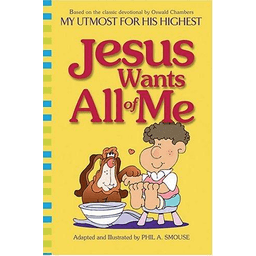 My Utmost for His HighestOswald Chambers’s daily devotional. Affective rather than doctrinal - the book to read alongside Knowing God for the devotional warmth Packer is not really trying to provide.
 ESV Study BibleIf Knowing God makes you want a Bible with serious doctrinal notes underneath every verse, the ESV Study Bible is the most-recommended option in that lane.
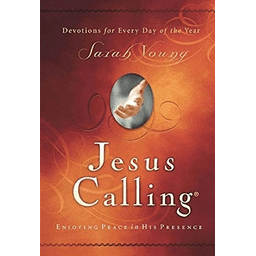 Jesus CallingSarah Young’s first-person devotional. The opposite end of the spectrum from Packer - short, intimate, voice-of-Jesus framing. Different book for a different reader.
Frequently asked questions
Is Knowing God hard to read?
It is dense but not technical. Packer defines his terms and writes in clear English, but the prose is mid-century Anglican - longer sentences, theological vocabulary used without apology, and the expectation that you will reread paragraphs. Most readers find it takes a chapter or two to settle into the rhythm.
What tradition was J.I. Packer writing from?
Packer was an Anglican theologian, ordained in the Church of England and broadly within the Reformed evangelical stream of Anglicanism. That vantage point most visibly shapes the chapters on election, propitiation, and adoption. The rest of the book is doctrine of God that overlaps substantially with Catholic, Orthodox, and broader Protestant understandings.
How long does it take to read?
At one chapter per week, six months. At a chapter per day, about three weeks. Most readers and most small groups go with the weekly pace - the book was originally serialized in a magazine and the chapters were designed to be read one at a time with space in between.
Is there a study guide?
The Anniversary Edition includes study questions and a new foreword. The standard paperback does not. If you are running the book as a small group, the Anniversary Edition is the version to buy; otherwise the standard paperback is fine.
How does it compare to Mere Christianity?
Different goals. Mere Christianity is apologetics - arguing for the Christian faith. Knowing God is doctrine - deepening what a Christian knows about God. Lewis is more readable, Packer is more thorough on theology proper. Most pastors recommend reading Lewis first, then Packer.
Is the audiobook worth it?
It is if you are an audio learner, but the prose is dense enough that most listeners end up rewinding. A lot of readers do both - audiobook on a commute, paperback in the evening to mark up the parts that stood out.
Why has this book lasted so long?
Two reasons. The subject - the doctrine of God - is one most popular Christian publishing does not actually treat at length. And the framing in chapter two, the difference between knowing God and knowing about God, names a problem that readers across traditions tend to recognize as real. Most books in the category are either shallower or more academic; Knowing God is the rare middle.
Sources & further reading
More Modern Christian Classics
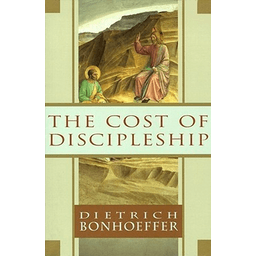 The Cost of DiscipleshipDietrich Bonhoeffer’s 1937 exposition of the Sermon on the Mount, written for pastors training under a regime that wanted them silent - and still the sharpest book in print on what following Jesus actually costs.
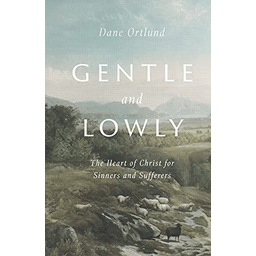 Gentle and LowlyDane Ortlund’s 23 short chapters on Matthew 11:29 have quietly become the most-given new Christian book of the decade - and the reason is not what you’d guess.
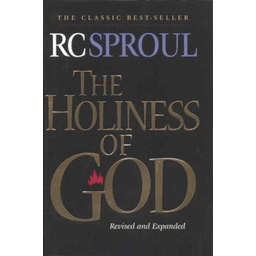 The Holiness of GodR.C. Sproul’s career-defining book on the one attribute of God the church most forgets - and the vision in Isaiah 6 he believed everything else flows from.
 The Weight of GloryThe 1941 sermon many call Lewis's single finest piece of writing - "there are no ordinary people" - gathered with eight other addresses into one slim, uneven, unforgettable collection.
 The Pursuit of GodA.W. Tozer’s ten-chapter wake-up call on knowing God personally - short, severe, and the one devotional Reformed, Wesleyan, Catholic, and Orthodox readers all seem to keep on the nightstand.
 Life TogetherA 120-page field manual on Christian community, written by a pastor running an underground seminary in the shadow of the Third Reich - and still the book people quote when they finally give up on their fantasy of church.