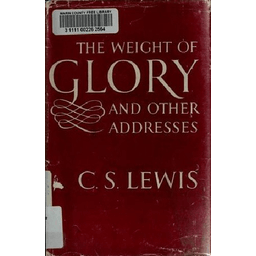
- Starting price
- ~$15 paperback
- Free tier
- No
- Platforms
- Print · Kindle · Audiobook
- Developer
- HarperOne
- Launched
- 1949
- Updated
- May 31, 2026
The verdict
The Weight of Glory is a collection, so it is uneven by nature - but the title sermon is, by wide agreement, the best thing C.S. Lewis ever wrote. On desire, longing, and the staggering destiny of ordinary human beings, it reaches a register most theology never touches. Buy it for that essay; stay for "Learning in War-Time" and "The Inner Ring." Read across every tradition.
Try The Weight of Glory ↗Opens cslewis.com
The Weight of Glory has quietly become the book Lewis readers reach for when Mere Christianity is not enough - when they want the man at full altitude rather than the patient apologist explaining the basics. It is a collection of shorter addresses, most delivered as sermons or lectures during and just after the Second World War, and like every collection it is uneven. But the title piece is something else. Ask a room of Lewis readers for his single finest page and a startling number will name the same sermon, the one this book is named for.
It did not begin as a unified book. It began as occasional pieces - a sermon preached at the Church of St Mary the Virgin in Oxford in 1941, a wartime address to students, an essay defending a position Lewis held against the pacifism of his day. They were collected, in various forms over the decades, into the volume readers now buy. It is not a treatise. It does not build an argument across chapters. It does not pretend to be systematic. It is nine doors into nine different rooms, and you may walk through them in any order.
What you get in the common modern edition is nine addresses: above all "The Weight of Glory" itself, plus "Learning in War-Time," "Why I Am Not a Pacifist," "Transposition," "Is Theology Poetry?," "The Inner Ring," "Membership," "On Forgiveness," and "A Slip of the Tongue." The voice is the mature Lewis - denser in places than the radio talks, occasionally soaring, occasionally tied to concerns of 1941 that take a footnote to recover. The title sermon is the reason the book is a classic. The rest is the reason it rewards a second visit.
✓ The good
- The title sermon is, by wide consensus, Lewis's single best piece of writing - its passage on desire, glory, and human destiny is quoted across every Christian tradition
- "There are no ordinary people" - the sermon's closing movement on the weight of every human soul lands with the same force on first and fiftieth reading
- "Learning in War-Time" is a small masterpiece on how to do ordinary work under the shadow of crisis, and it has outlived its 1939 occasion completely
- "The Inner Ring" is the sharpest short essay on the human craving to be on the inside - read in business schools that have no interest in Lewis the apologist
- Mature Lewis prose - the sentences carry more weight than the radio talks, and the title sermon reaches a height his other popular work rarely attempts
- Short and re-readable - a slim volume you can read in an evening and return to for life, with different essays rising to meet different seasons
- Genuinely ecumenical reach - Lewis stays on themes (longing, vocation, forgiveness, belonging) that readers across traditions all hear in their own vocabulary
✗ Watch out
- It is a collection, so it is uneven by nature - the title sermon towers over the rest, and a first-time reader may feel the drop-off to the lesser pieces
- A couple of essays are tied to WWII-era concerns - "Why I Am Not a Pacifist" is a period argument, and "Learning in War-Time" wears its 1939 setting openly
- Some pieces are denser than the famous title address - "Transposition" and "Is Theology Poetry?" ask more of the reader and reward slower, repeated reading
- Editions vary - different printings have carried different numbers of essays, so two readers' copies may not contain exactly the same contents
- Not an introduction - this is Lewis for someone who already has a foothold, not the first book to hand a curious skeptic (that is still Mere Christianity)
Best for
- Readers who already love Lewis and want him at full height
- Anyone who wants the single best essay he ever wrote
- People drawn to themes of longing, desire, and human destiny
- Leaders and students wrestling with ambition, belonging, and vocation
Avoid if
- You want one book to introduce Christianity from scratch
- You want a single sustained argument rather than a collection
- You bounce off mid-century British prose at its densest
- You want every essay to hit as hard as the title piece
What The Weight of Glory is
The Weight of Glory is a collection of nine shorter addresses and essays by C.S. Lewis, gathered under the name of its most famous piece. The title sermon was preached at the University Church of St Mary the Virgin in Oxford in 1941, and the surrounding pieces were delivered as sermons, lectures, and talks largely during and just after the Second World War. The common modern edition runs slim - well under 200 pages - and contents have varied across printings, with the title essay the constant anchor of every version.
It is not a single argument and it is not a confession of faith for any one tradition. Lewis was Anglican, but the addresses here stay on broadly Christian ground - desire and longing, vocation and ordinary work, the craving to belong, forgiveness, the destiny of the human person. The title sermon is the reason the collection endures: its claim that every person you meet is an immortal whose final state is either unspeakable glory or unspeakable horror, and that there are therefore no ordinary people, is among the most-quoted passages in all of Lewis. The rest of the book gives you more of his mind at work.
Why readers reach for the title sermon specifically
Most of Lewis's popular work is explanatory - he is showing you something, patiently, with an analogy a non-specialist can follow. "The Weight of Glory" does something different. It takes the ordinary experience of longing - the desire for something we cannot name, that no achievement or relationship ever quite satisfies - and treats it not as a problem to be managed but as a clue to the kind of creatures we are and the destiny we are made for. It is less an argument than an unveiling, and it climbs to a height his other popular writing rarely attempts.
The sermon's final movement is the part everyone remembers. Lewis argues that because every human being is bound for an eternal weight of glory or its opposite, there are strictly no ordinary people - the dullest, least interesting person you will ever talk to is a being whose final state you can scarcely imagine. A Catholic reader hears the language of the beatific vision. An Orthodox reader hears theosis. A Latter-day Saint reader hears their own teaching about human destiny. A Protestant reader hears glorification. Lewis leaves the great theme standing in plain English so each tradition can hear its own vocabulary in it - and that openness is exactly why the sermon travels everywhere.
"The Weight of Glory": the sermon many call his single best page
The title sermon, preached in Oxford in 1941, opens by challenging the modern assumption that unselfishness - not love, not joy - is the highest Christian virtue, and that desire for reward is somehow vulgar. Lewis flips it: the trouble is not that our desires are too strong but that they are far too weak - we are like a child making mud pies in a slum because he cannot imagine what is meant by the offer of a holiday at the sea. From there he turns to the strange, unsatisfied longing that runs underneath ordinary life, the desire for a place we have never visited and a beauty that always seems to be on the far side of what we can actually grasp.
The sermon climbs toward its famous close: the promise of "glory" is, in the end, the promise of being known, welcomed, and received - of finally being on the inside of the door we have stood outside of all our lives. And because every person we meet is headed toward either that glory or its terrible reverse, Lewis arrives at the line the book is remembered for: there are no ordinary people; you have never talked to a mere mortal. Whatever you think of his apologetics, this is the piece readers across every tradition come back to - short, exalted, and doing in a few pages what most spiritual writing never manages at any length.
"Learning in War-Time" and "The Inner Ring": the essays that outgrew their occasion
Two of the surrounding pieces have escaped the book and now circulate on their own. "Learning in War-Time," an address to Oxford students in 1939, asks how anyone can justify studying poetry or mathematics while a war is on and the world is burning - and Lewis's answer, that human beings have always pursued knowledge and beauty in the shadow of death because the crisis only makes vivid a condition that was always true, has made the essay perennial reading for anyone trying to do faithful ordinary work in anxious times. "The Inner Ring," a 1944 lecture, dissects the human hunger to be inside some exclusive circle, and the quiet corruption that hunger can lead a decent person into.
What is striking is how far these have traveled from Lewis the Christian apologist. "The Inner Ring" turns up on business-school syllabi and in leadership writing by people with no interest in his theology, because its diagnosis of ambition and belonging is simply accurate. "Learning in War-Time" speaks to any student who has wondered whether their work matters against the scale of the world's troubles. They are the clearest evidence that this collection is more than a pendant to the title sermon - Lewis at this length, on these human subjects, is hard to put down.
The denser pieces: "Transposition," "Is Theology Poetry?," and the rest
Not every essay reaches the title sermon's altitude, and a couple ask noticeably more of the reader. "Transposition" takes up a difficult question - how a richer reality can express itself through a poorer medium, the way a whole world of color has to be rendered in the limited vocabulary of a pencil drawing - and uses it to think about how the spiritual life shows up inside ordinary physical experience. "Is Theology Poetry?" weighs whether Christians believe their faith merely because it is beautiful. "Why I Am Not a Pacifist" is the most tied to its moment, a wartime argument against a position common in Lewis's circles. "Membership," "On Forgiveness," and "A Slip of the Tongue" round out the volume.
This is where being a collection shows. The pieces vary in weight and in how well they have aged - "Why I Am Not a Pacifist" is a period argument, and "Transposition" repays slow, repeated reading in a way the title sermon does not demand. None is filler, exactly; Lewis is incapable of a dull sentence. But a reader who comes for "The Weight of Glory" and expects every piece to hit equally hard will feel the unevenness. The honest way to read this book is to treat the title sermon as the main event and the rest as a generous set of extras, some of which - "Learning in War-Time," "The Inner Ring" - turn out to be nearly as good.
Pricing
Paperback
~$15
The standard HarperOne edition gathering the nine addresses. The copy most people own.
Kindle
~$12
Searchable, highlight-syncs to your account. Handy for a book this quotable.
Audiobook
~$15
Read-aloud editions exist; the title sermon in particular was built to be spoken and carries beautifully.
Hardcover
~$24
Gift-grade edition. The one you give to someone you want to introduce to the title sermon.
The Weight of Glory is not free. Used paperbacks turn up at library sales and secondhand shops, which is how a lot of readers acquire their first copy after meeting the title sermon in an anthology or a sermon. A new HarperOne paperback runs around $15 - call it the everyday default - and gathers the full nine-address collection most quotations are keyed to.
The Kindle edition runs a little under the paperback and is genuinely useful for a book this quotable; highlights sync across devices, which matters when you keep returning to the same passages of the title sermon. Audiobook editions run around $15 or come with an Audible membership, and Lewis's prose - the title sermon above all - was written to be spoken aloud and carries beautifully in that form.
One thing to check before buying: editions vary. Different printings over the years have carried different numbers of essays, so it is worth confirming a given edition contains the pieces you want (the title sermon is in all of them; the surrounding contents are less consistent). If you are buying a gift, the ~$24 hardcover is the natural pick. Most readers do not need it - the paperback is the balanced default and the copy you will reach for again.
Where The Weight of Glory falls behind
Unevenness. It is a collection, and collections are uneven by nature. The title sermon is extraordinary; a handful of the surrounding pieces are merely very good, and one or two are minor. A reader who comes expecting a sustained book-length experience, the way Mere Christianity reads, will feel the seams between addresses written years apart for different audiences.
Period concerns. A couple of the essays are tied to the Second World War. "Why I Am Not a Pacifist" is a wartime argument against a position common in Lewis's circles, and "Learning in War-Time" is explicitly addressed to students in 1939. They have survived their occasion better than you would expect, but the dating is on the surface in a way the title sermon's is not.
Density. Some pieces ask more of the reader than the famous title address does. "Transposition" and "Is Theology Poetry?" are knottier, more philosophical, and reward slow rereading rather than a single pass. A reader who fell for the soaring, accessible title sermon may be surprised by the gear-shift these demand.
Not a starting point. This is Lewis for someone who already has a foothold - a reader who has met him before, or who is drawn specifically to the title sermon's themes. It is not the book to hand a curious skeptic from a standing start; that role still belongs to Mere Christianity, and Lewis would likely say so himself.
The Weight of Glory vs. Mere Christianity vs. The Great Divorce
These three are the entry points most readers debate, and they do different jobs. Mere Christianity (1952) is the patient, systematic introduction - the book to read first to understand what Christians believe and why, argued from the moral law in prose pitched at a general radio audience. The Weight of Glory (collection, title sermon 1941) is the opposite shape: not an argument across chapters but a set of shorter addresses, anchored by the single best thing Lewis ever wrote, on desire and the destiny of the human person. The Great Divorce (1945) is the imaginative one - a dream-vision of a bus ride from hell to the outskirts of heaven, fiction carrying its theology in story rather than essay.
Different strengths. Mere Christianity is the broadest and the best first book - start there if you are starting from zero. The Weight of Glory is the highest - the title sermon reaches a register the others rarely attempt, and it is the one to read if you already know Lewis and want him at full altitude. The Great Divorce is the most vivid - read it if you think best in images. If you can only own one, own Mere Christianity. If you already have it, The Weight of Glory is the natural next purchase.
All three are read widely across Catholic, Protestant, Orthodox, and Latter-day Saint readers. Lewis was Anglican, and across all three he keeps to broadly shared Christian ground rather than denominational distinctives - which is exactly why the title sermon's theme of human glory and destiny can be heard in each tradition's own vocabulary without friction.
The bottom line
The Weight of Glory is uneven, because every collection is - but you do not buy it for evenness. You buy it for the title sermon, which a remarkable number of readers will tell you is the finest single thing C.S. Lewis ever wrote, and which earns that praise on desire, longing, and the staggering worth of every ordinary person. "Learning in War-Time" and "The Inner Ring" are nearly as good. If Mere Christianity is the book you hand a curious friend, The Weight of Glory is the book you keep for yourself and reread when you need reminding what you are made for.
Alternatives to The Weight of Glory
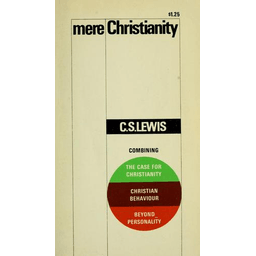 Mere ChristianityLewis's compiled wartime radio apologetic - the standard first book on the faith, and the one to read before this collection.
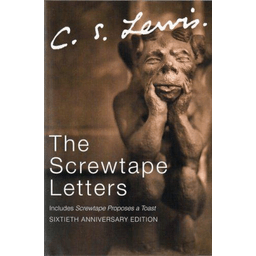 The Screwtape LettersLewis's satirical letters from a senior devil to a junior tempter - his most beloved work of imaginative theology.
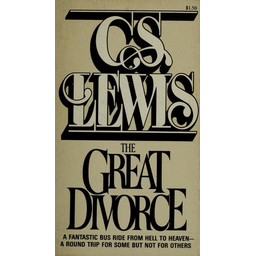 The Great DivorceA dream-vision bus ride from hell to the edge of heaven - Lewis carrying the doctrine of the afterlife in story.
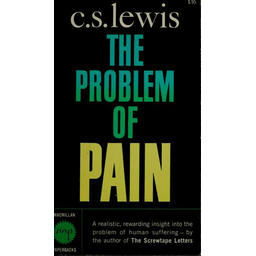 The Problem of PainLewis's sustained treatment of why a good God allows suffering - the argumentative companion to the title sermon's longing.
Frequently asked questions
What exactly is in The Weight of Glory?
It is a collection of shorter addresses and essays by C.S. Lewis, named for its most famous piece. The common modern edition gathers nine addresses, including "The Weight of Glory," "Learning in War-Time," "Why I Am Not a Pacifist," "Transposition," "Is Theology Poetry?," "The Inner Ring," "Membership," "On Forgiveness," and "A Slip of the Tongue." Editions have varied over the years, but the title sermon is in all of them.
Is the title essay really Lewis's best writing?
Many readers think so. "The Weight of Glory," preached in Oxford in 1941, is the piece most often named when Lewis readers are asked for his single finest page - especially its closing movement on desire and the destiny of the human person ("there are no ordinary people"). It is short, exalted, and unlike most of his popular work it reads less as an argument than as an unveiling.
Should I read this before or after Mere Christianity?
After, for most readers. Mere Christianity is the patient introduction to what Christians believe and is the better first book. The Weight of Glory is Lewis at full height for someone who already has a foothold - drawn to his themes, or specifically to the title sermon. If you are starting from zero, begin with Mere Christianity and come here next.
Why are the essays so different from each other?
Because they were written separately, as occasional sermons, lectures, and talks largely during and after the Second World War, and only later gathered into one volume. The book is not a single argument; it is nine doors into nine rooms. That makes it uneven by nature - the title sermon towers over the rest - but it also means different essays rise to meet different seasons of a reader's life.
Do the WWII-era essays still hold up?
Mostly, with a couple of exceptions worth knowing about going in. "Learning in War-Time" wears its 1939 setting openly but its core point - how to do faithful ordinary work under the shadow of crisis - has outlived the occasion completely. "Why I Am Not a Pacifist" is the most tied to its moment, a wartime argument against a position common in Lewis's circles, and reads more as a period piece.
Do readers outside Protestant traditions read this book?
Yes, widely. The title sermon's theme of human glory and destiny is heard in each tradition's own vocabulary - a Catholic reader hears the beatific vision, an Orthodox reader hears theosis, a Latter-day Saint reader hears their own teaching about human destiny, a Protestant reader hears glorification. Lewis, an Anglican, keeps to broadly shared Christian ground, which is why the book travels comfortably across traditions.
Which edition should I buy?
The standard HarperOne paperback (~$15) is the right default for almost everyone and contains the full nine-address collection. The Kindle edition (~$12) is handy for a book this quotable. Pick the audiobook (~$15) if you commute - the title sermon was built to be spoken aloud. Just confirm a given edition's contents before buying, since printings have varied over the years.
Sources & further reading
More Modern Christian Classics
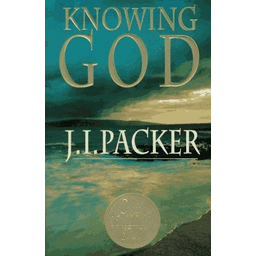 Knowing GodJ.I. Packer’s 1973 classic on the doctrine of God has sold more than 1.5 million copies and is still the book most pastors hand to laypeople who want theology that goes somewhere - here’s what it actually does and who it’s for.
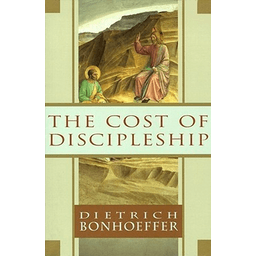 The Cost of DiscipleshipDietrich Bonhoeffer’s 1937 exposition of the Sermon on the Mount, written for pastors training under a regime that wanted them silent - and still the sharpest book in print on what following Jesus actually costs.
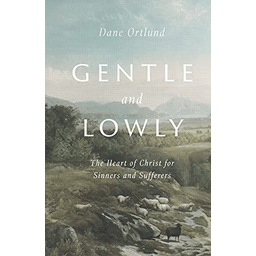 Gentle and LowlyDane Ortlund’s 23 short chapters on Matthew 11:29 have quietly become the most-given new Christian book of the decade - and the reason is not what you’d guess.
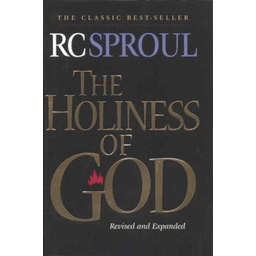 The Holiness of GodR.C. Sproul’s career-defining book on the one attribute of God the church most forgets - and the vision in Isaiah 6 he believed everything else flows from.
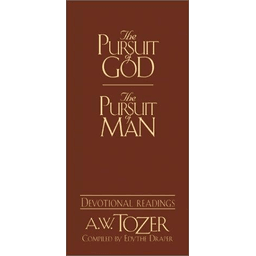 The Pursuit of GodA.W. Tozer’s ten-chapter wake-up call on knowing God personally - short, severe, and the one devotional Reformed, Wesleyan, Catholic, and Orthodox readers all seem to keep on the nightstand.
 Life TogetherA 120-page field manual on Christian community, written by a pastor running an underground seminary in the shadow of the Third Reich - and still the book people quote when they finally give up on their fantasy of church.