- Starting price
- $15.99 paperback
- Free tier
- No
- Platforms
- Print · Kindle · Audiobook · Audible
- Developer
- Tyndale House / Reformation Trust
- Launched
- 1985 (Expanded 1998)
- Updated
- May 25, 2026
The verdict
The book Sproul gave away more than any other, and the one he considered his most important. If you’ve only ever read one book about God’s character, this is the one most pastors will hand you next.
Try The Holiness of God ↗Opens ligonier.org
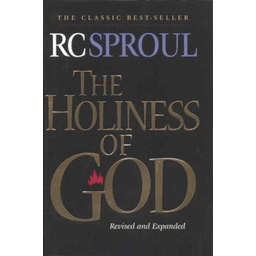
The Holiness of God has quietly become the book that pastors put in your hands when they sense you’ve mistaken a tame God for the God of Scripture. Published in 1985 by Tyndale, expanded in 1998, and reissued in hardcover by Reformation Trust, it is by a wide margin the book R.C. Sproul gave away most often during his life - and the book he himself called his most important. He died in 2017 still saying it.
It is not a survey of God’s attributes. It doesn’t try to be a systematic theology. It doesn’t even pretend to be balanced - Sproul argues, openly and without apology, that holiness is the one attribute of God the church most needs to recover, and that everything else in Christian life downstream of that recovery starts to come right. Love, justice, grace, wrath, the cross, worship, fear, joy - all of them, in Sproul’s telling, look different the moment you’ve actually seen the holy.
The book is built around Isaiah 6 - the prophet’s vision of the Lord high and lifted up, the seraphim crying "Holy, holy, holy," the temple shaking, the coal on the lips. Sproul circles that passage the way a planet circles a sun. Every chapter pulls back into it. That single chapter of Isaiah, in his hands, becomes the lens for reading the whole Bible - and for understanding why so much modern worship and preaching feels strangely weightless.
✓ The good
- The book Sproul himself called his most important - the one work he was most insistent that ordinary Christians read
- Isaiah 6 treatment is the most accessible serious exposition in print - pastors quote it from memory decades after first reading
- "The Trauma of Holiness" chapter alone is worth the price - the most-cited single chapter in Sproul’s entire body of work
- Reads like Sproul talks - warm, illustrative, story-driven, never academic-feeling despite real theological weight
- Pairs with a companion video teaching series (Ligonier) so small groups can run it as a 10-week study without extra curriculum
- Treats the "hard" passages - Uzzah, Nadab and Abihu, the destruction of Jericho - head-on rather than smoothing them over
- Short enough to finish in a weekend (around 220 pages) but dense enough to underline on the second pass
✗ Watch out
- Sproul writes from a confessional Reformed perspective - readers from other traditions will notice the frame even when the central thesis on holiness translates broadly
- The "Holy Space, Holy Time, Holy People" chapter leans into Old Testament categories some readers will want more bridge-work for
- Not a balanced treatment of God’s attributes - by design - so it shouldn’t be the only book on God a new believer reads
- The 1998 expanded edition adds material some long-time readers find less essential than the original chapters
- Audiobook narration is competent but not Sproul himself - for his voice you have to buy the companion teaching series separately
Best for
- Christians who suspect their picture of God has gone soft
- Small groups looking for a 6-10 week study with a paired video series
- Pastors and teachers preparing on Isaiah 6 or the fear of the Lord
- New seminarians being assigned it in their first systematic theology course
Avoid if
- You want a balanced, attribute-by-attribute survey of God
- You’re looking for an academic monograph with footnotes and engagement with the secondary literature
- You want a devotional with daily readings and reflection questions built in
- You’ve read Sproul’s other works and are looking for material that doesn’t overlap
What The Holiness of God is
The Holiness of God is a book-length argument that the holiness of God is the foundational attribute the Christian church has most thoroughly forgotten, and that recovering a vision of it - the kind Isaiah saw in the temple - is the recovery believers most urgently need. Sproul founded Ligonier Ministries in 1971, taught for decades at Reformed Theological Seminary, and held a confessional Reformed position throughout his life. The book carries that frame, but the thesis itself - that God is holy in a sense that ought to rearrange how we worship and live - is not a Reformed-only claim. Catholic, Orthodox, Wesleyan, charismatic, and evangelical readers have all adopted it.
Structurally the book moves through ten chapters, each one returning to Isaiah 6 from a different angle. The chapters on the meaning of holy, the trauma of encountering it, the holiness of Christ, holy justice in the Uzzah and Nadab passages, and the war between Christian and unbeliever over holiness are the ones most readers underline. The 1998 expanded edition added supplementary material at the back. The companion teaching series tracks the book’s outline almost chapter for chapter.
Why readers across traditions keep returning to this one
The single biggest practical difference between The Holiness of God and most books on God’s character is that Sproul isn’t trying to convince you of a doctrine - he’s trying to make you feel what Isaiah felt. The book is shaped less like a treatise and more like a slow, sustained orientation toward one passage of Scripture until the reader actually sees it. Pastors who have given the book away for forty years describe the same pattern: readers come back not citing arguments but describing a shift in how they pray.
That experiential aim is also why the book translates beyond its Reformed home. A Catholic reader can pick it up and find the Isaiah 6 exposition resonant with the Sanctus of the Mass. An Orthodox reader hears the seraphim of the iconostasis. A Wesleyan reader finds the holiness emphasis familiar from a different angle. The denominational frame is visible if you know to look - but the central claim, that God is holy and that the church has forgotten what that means, is one most traditions have been making in their own languages for centuries.
Isaiah 6 and the "Holy, Holy, Holy" thesis
The structural spine of the book is Isaiah’s vision in the temple - the Lord high and lifted up, the train of His robe filling the place, the seraphim covering their faces and crying "Holy, holy, holy, is the Lord of hosts; the whole earth is full of his glory." Sproul spends the opening chapters establishing what the Hebrew triplet does grammatically (the only attribute of God repeated three times in Scripture, the superlative of superlatives) and then refuses to leave the passage. Every subsequent chapter - on justice, on Christ, on the war between holiness and sin - circles back to Isaiah on the floor of the temple, crying "Woe is me."
This sounds like a small thing. In practice it’s transformative. Most books on God’s attributes give holiness one chapter among many. Sproul gives it the whole book and lets every other doctrine refract through it. Readers report that after finishing, the Sanctus in liturgy, the Trisagion in Eastern worship, the "Holy, Holy, Holy" hymn, and Revelation 4’s four living creatures all read as one continuous testimony rather than scattered fragments. The Bible begins to feel more unified around this note than they had noticed before.
"The Trauma of Holiness": the most-quoted chapter Sproul ever wrote
If The Holiness of God has a single famous chapter, it is "The Trauma of Holiness." Sproul walks through the moments in Scripture where humans encounter God’s holiness directly - Isaiah undone, Job repenting in dust and ashes, Peter falling at Jesus’ knees in the boat, the disciples on the Mount of Transfiguration, John collapsing as though dead in Revelation 1. In every case, Sproul observes, the response is not warmth but terror, not familiarity but undoing. The chapter argues that something has gone deeply wrong with a Christianity in which encounter with God produces only comfort.
The chapter is also where Sproul takes on the passages many readers want to avoid - Uzzah struck dead for steadying the ark, Nadab and Abihu consumed for offering strange fire, Ananias and Sapphira falling at Peter’s feet. He does not soften these accounts. He argues, instead, that they are the Bible’s most honest depictions of what holiness actually is, and that our discomfort with them is itself the diagnosis. The chapter is the one most often photocopied and handed around - and the one critics most often single out as the heart of the book.
The companion teaching series and the small-group ecosystem
Sproul recorded a video teaching series of the same name through Ligonier Ministries - ten roughly 23-minute sessions tracking the book’s chapter outline. The series predates the book in some ways; Sproul taught the material in seminars for years before writing it down, and the recordings preserve the voice and rhythm the book is written in. For small groups, the standard pattern is one chapter and one video per week over ten weeks, with the video as the lecture and the book chapter as the reading.
The ecosystem extends further: a study guide, a teaching series workbook, audio versions on the Renewing Your Mind podcast feed, and conference talks Sproul gave on the same material that surface periodically in Ligonier’s archive. None of this is required - the paperback alone is sufficient - but for groups that want a turnkey ten-week study with a built-in lecturer, the bundle is one of the most polished products in modern evangelical publishing. The companion series, sold around $30 for DVD or streaming access, is what most groups end up buying together with the book.
Pricing
Paperback
~$15.99
The standard edition most readers buy - expanded 1998 text, ~220 pages, the version pastors hand out.
Hardcover
~$22
Reformation Trust hardcover reissue - same text, sturdier binding, the gift edition.
Kindle
~$11
Digital edition with highlighting and search - useful for re-reads when you can’t remember which chapter the Uzzah passage is in.
Audible / Audiobook
~$15
Unabridged audio, narrated by a professional reader (not Sproul). About 8 hours.
Companion Teaching Series
~$30 (DVD/streaming)
Sproul’s original Ligonier video series of the same name - 10 sessions, his voice, used by countless small groups as a 10-week study.
Paperback at around $15.99 is the version most readers buy and the one pastors hand out. For a book this widely gifted, the paperback is the right format - the hardcover at around $22 is mostly a gift edition for people who want it on the shelf for the long haul.
Kindle around $11 is genuinely useful for a re-read, because the book is the kind you come back to and search for a specific story. The Audible edition, around $15 and roughly eight hours, is well narrated but not by Sproul himself - for that voice, you have to buy the companion teaching series.
The companion DVD or streaming series at around $30 is the one upgrade most groups end up making. It turns the book into a packaged ten-week curriculum with Sproul as the lecturer, and is the path most small groups take when they want a study but don’t want to design one.
Most readers do not need the full bundle. A paperback for around $16 is enough. The teaching series is the upgrade that matters; everything else is convenience.
Where The Holiness of God falls behind
Not a survey of God’s attributes. By design, this is a book about one attribute, and one attribute only. Readers looking for a balanced treatment of God’s love, justice, mercy, omniscience, and so on in a single volume will want Tozer’s The Knowledge of the Holy or Packer’s Knowing God alongside this one. Sproul is making a case, not surveying a field.
Not a devotional. There are no daily readings, no reflection questions at the end of chapters, no journaling prompts. It is a book to be read through, not paced through forty days. Groups that want devotional pacing have to build that scaffold themselves or use the companion study guide.
Not a recent book. The first edition is from 1985, the expanded edition from 1998 - meaning the cultural examples and contemporary references are dated. The theological argument has aged remarkably well; the illustrations occasionally feel like they belong to a different era of American evangelicalism.
Confessional frame is visible. Sproul is writing as a Reformed theologian and never pretends otherwise. Readers from Catholic, Orthodox, Wesleyan, charismatic, or LDS backgrounds will find the central thesis broadly resonant but will occasionally notice the frame - particularly in the chapters touching on justification and the war between Christian and unbeliever.
No engagement with secondary literature. The book has almost no footnotes and barely interacts with other writers on holiness - Otto’s Idea of the Holy gets a passing nod, and that’s about it. For students who want academic engagement with the broader literature on holiness, this is not the volume.
The Holiness of God vs. The Knowledge of the Holy vs. Knowing God
These three books form the trio most often recommended to Christians who want to think seriously about God’s character without reading a systematic theology. They overlap, but they’re not interchangeable.
Different strengths. The Holiness of God is the deepest on one attribute - holiness - and the most experiential, built around Isaiah 6 and aimed at producing the response Isaiah had. Tozer’s The Knowledge of the Holy is the broader survey, a brief chapter on each of God’s major attributes, more meditative in tone and shorter overall. Packer’s Knowing God is the longest and most pastoral, covering not only God’s attributes but the practical shape of knowing Him, with extended sections on adoption, guidance, and the Christian life.
For most readers the right order is Sproul first (to recalibrate the picture), Tozer second (to broaden it), Packer third (to live in it). Many pastors do exactly that as a three-book recommendation for someone serious about understanding God. All three are written from broadly Protestant frames, with Sproul the most explicitly Reformed and Tozer the most ecumenical in tone.
The bottom line
The Holiness of God is the book to read when your picture of God has gone soft. Sproul does not try to be balanced, does not try to be comprehensive, and does not try to be original. He tries to bring you to the floor of Isaiah’s temple and let the seraphim do the rest. Four decades after publication it is still the book most often handed across a counseling desk, still the book most often assigned in a first systematics course, and still the one Sproul himself was proudest of. If you read one book on God this year, the case for making it this one is hard to argue against.
Alternatives to The Holiness of God
 The Knowledge of the HolyTozer’s short, meditative survey of God’s attributes - broader scope, gentler tone, the natural pairing with Sproul.
 Knowing GodJ.I. Packer’s pastoral classic on God’s character and the Christian life - longer, more practical, the third in the standard trio.
 Mere ChristianityC.S. Lewis’s gateway book - broader in scope than Sproul, the entry point most readers come from before going deeper.
 Gentle and LowlyDane Ortlund on the heart of Christ - the deliberate complement to Sproul, emphasizing Christ’s tenderness rather than holiness.
Frequently asked questions
Is The Holiness of God hard to read?
No. It is one of the most accessible serious theology books in print. Sproul writes like he talks - story-driven, illustrative, warm - and the chapters are short. A motivated reader can finish it in a weekend. The depth is in the re-read.
Do I need the companion teaching series?
Not to read the book - the paperback stands on its own. But if you’re running a small group, the ten-session video series tracks the book chapter-by-chapter and gives you Sproul as the lecturer, which is the experience the book is written out of. Most groups buy both.
Is this a Reformed book?
Sproul was a confessional Reformed theologian and founded Ligonier Ministries within that tradition, so the frame is visible. The central thesis - that God’s holiness is the attribute the church most needs to recover - is broadly shared across Catholic, Orthodox, Wesleyan, and evangelical readers, which is why the book has traveled so far beyond Reformed circles.
Which edition should I buy?
The 1998 expanded paperback is the standard edition and the one most readers and pastors use. The hardcover reissue from Reformation Trust contains the same text in a sturdier binding - pick it if you want the gift edition or expect to re-read it for years.
How does it compare to Knowing God by J.I. Packer?
Different aims. Sproul is deep on one attribute (holiness) and experiential; Packer is broader and more pastoral, covering God’s character and the Christian life across more ground. Many pastors recommend Sproul first to recalibrate the picture and Packer second to live in it.
Is "The Trauma of Holiness" chapter really as good as everyone says?
It is the chapter most often singled out by readers, most often photocopied, and most often referenced in sermons drawing on the book. Whether it lands as hard for you as it has for forty years of readers depends on the season you’re in - but yes, by reputation and reception, it earns the attention.
Did Sproul really consider this his most important book?
He said so consistently throughout his life, in interviews, on his podcast, and in conversation with friends. He wrote dozens of books - including a systematic theology and many short doctrinal works - and still kept naming this one as the book he most wanted ordinary Christians to read.
Sources & further reading
More Modern Christian Classics
Knowing GodJ.I. Packer’s 1973 classic on the doctrine of God has sold more than 1.5 million copies and is still the book most pastors hand to laypeople who want theology that goes somewhere - here’s what it actually does and who it’s for. The Cost of DiscipleshipDietrich Bonhoeffer’s 1937 exposition of the Sermon on the Mount, written for pastors training under a regime that wanted them silent - and still the sharpest book in print on what following Jesus actually costs.Gentle and LowlyDane Ortlund’s 23 short chapters on Matthew 11:29 have quietly become the most-given new Christian book of the decade - and the reason is not what you’d guess.
 The Weight of GloryThe 1941 sermon many call Lewis's single finest piece of writing - "there are no ordinary people" - gathered with eight other addresses into one slim, uneven, unforgettable collection.
 The Pursuit of GodA.W. Tozer’s ten-chapter wake-up call on knowing God personally - short, severe, and the one devotional Reformed, Wesleyan, Catholic, and Orthodox readers all seem to keep on the nightstand.
 Life TogetherA 120-page field manual on Christian community, written by a pastor running an underground seminary in the shadow of the Third Reich - and still the book people quote when they finally give up on their fantasy of church.