- Starting price
- $9.99 paperback
- Free tier
- No
- Platforms
- Print · Kindle · Audiobook · Audible
- Developer
- HarperOne / HarperCollins
- Launched
- 1961
- Updated
- May 24, 2026
The verdict
The Knowledge of the Holy has quietly become the default first book on the doctrine of God for general readers - short, prophetic, devotional, and almost impossible to read distractedly. If a believer is going to read one book about who God actually is, this is still the one most pastors hand them.
Try The Knowledge of the Holy ↗Opens harpercollins.com
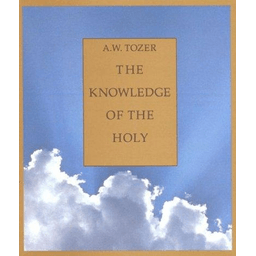
A.W. Tozer published The Knowledge of the Holy in 1961, the year before his death, after a lifetime of pastoring and writing in the Christian and Missionary Alliance tradition. It is a small book - twenty-three chapters, each a short essay on a single attribute of God: self-existence, self-sufficiency, eternity, infinitude, immutability, omniscience, wisdom, omnipotence, transcendence, omnipresence, faithfulness, goodness, justice, mercy, grace, love, holiness, sovereignty, and the rest. The whole thing fits in a coat pocket and can be read straight through in an evening, though almost no one who takes it seriously actually reads it that way.
It doesn’t argue. It doesn’t systematize. It doesn’t footnote. Tozer writes in the cadence of a preacher who has spent forty years in his Bible and his prayer closet and has decided that the most pressing problem in modern Christianity is not bad behavior or weak strategy but a small, sentimental, manageable picture of God. The book’s opening line - "What comes into our minds when we think about God is the most important thing about us" - has been quoted so often in sermons, study Bibles, and Christian leadership books that it can be hard to remember it came from a particular author in a particular pulpit at a particular moment.
Sixty-plus years later, the book still sells in volume that would embarrass most new releases. It shows up on seminary first-year reading lists, in megachurch small-group studies, in monastic libraries, and on the nightstand of more than one Reformed pastor who would otherwise have little in common with a mid-century Alliance preacher. The reason is not marketing - HarperOne barely touches the cover. The reason is that the book does something almost no other modern theology book attempts: it tries to make the reader stand still in front of God long enough to be changed by the seeing.
✓ The good
- The most-quoted devotional theology book of the modern era - Tozer’s opening line alone has shaped how a generation talks about God
- Twenty-three short chapters on the attributes of God - a structure that doubles perfectly as a daily devotional or a 23-week small-group study
- Prose that is simultaneously prophetic and accessible - the rare theology book that reads like a sermon and instructs like a textbook
- Draws on the deep well of classical Christian theism - the language of Augustine, Aquinas, Anselm, and the Puritans, but in a voice a modern reader can follow
- Almost impossible to read distractedly - Tozer’s indictment of the modern church’s shrunken view of God lands hard and sticks
- Pairs naturally with The Pursuit of God as a one-two devotional-theology gateway - many readers do them back to back
- At 128 pages and around ten dollars, the lowest barrier-to-entry serious book on the doctrine of God currently in print
✗ Watch out
- No footnotes, no index, no Scripture index - readers who want to trace Tozer’s sources have to do the work themselves
- Mid-20th-century prose register - the "Thee" and "Thou" of the closing prayers will read as archaic to some
- Leans classical-theist on immutability, sovereignty, and impassibility - readers from open-theist or some Wesleyan frames will find points to push back on
- Almost no engagement with biblical criticism, modern philosophy of religion, or the questions a skeptic would actually ask - this is in-house devotional theology, not apologetics
- Short to a fault on some attributes - the chapter on love, for instance, is shorter than the cultural weight of the topic would suggest
- No discussion questions, study guide, or leader’s notes built in - groups have to bring their own scaffolding
Best for
- Readers wanting a first serious book on who God is
- Small groups looking for a 23-week devotional theology study
- Pastors and teachers building sermons on the attributes
- Anyone whose prayer life feels small and wants it stretched
Avoid if
- You want a footnoted academic systematic theology
- You want a modern, accessible prose voice with no archaic register
- You want explicit engagement with open theism or process thought
- You want a built-in study guide and discussion questions
What The Knowledge of the Holy is
The Knowledge of the Holy is a short devotional theology of God - twenty-three brief chapters, each devoted to a single divine attribute. Tozer opens with a prefatory chapter on why thinking rightly about God matters, then walks through self-existence, self-sufficiency, eternity, infinitude, immutability, omniscience, wisdom, omnipotence, transcendence, omnipresence, faithfulness, goodness, justice, mercy, grace, love, holiness, and sovereignty, closing with the open invitation that the holy God has not made himself hard to find.
Each chapter runs roughly four to six pages and ends with a short prayer. The book is meant to be read slowly - one chapter at a sitting, with the prayer treated as the point of the chapter rather than a tag at the end. Tozer is not building an argument across chapters; he is taking the reader on a circuit of the divine attributes, returning again and again to the same conviction: that the modern church’s problems begin with a God who has been quietly shrunk to manageable size in the popular imagination.
Why everyday readers prefer The Knowledge of the Holy
Most books on the doctrine of God are either academic systematics - Grudem, Bavinck, Berkhof - or popular Christian-living books that gesture at God’s attributes in a chapter or two before getting back to the reader’s life. Tozer sits in a category almost by himself. He writes about God with the seriousness of a theologian and the urgency of a revivalist, and he refuses to let the reader stay neutral. By page ten the question is not whether you agree with him but whether the God you have actually been worshiping is the God he is describing.
That tone is why the book has crossed traditions that rarely agree on anything else. Reformed pastors quote Tozer. Catholic spiritual directors quote Tozer. Pentecostals, Wesleyans, Anglicans, and Baptists all find their own emphases in him. He is drawing on the broad classical-Christian inheritance - the God of Augustine and Anselm and the Puritan divines - and presenting it in a prophetic voice that pre-dates the worship-wars and culture-wars vocabulary that has divided so many of his readers from each other.
The thesis: what comes into our minds when we think about God
The opening chapter contains the line that has outlived almost every other sentence Tozer wrote: "What comes into our minds when we think about God is the most important thing about us." It is the load-bearing claim of the entire book. Tozer’s argument is not that doctrine matters in the abstract; it is that a person’s actual, working, in-the-moment picture of God determines almost everything else about them - how they pray, how they work, how they handle suffering, how they treat the people who are inconvenient to them.
The brilliance of putting this thesis on page one is that the rest of the book becomes a diagnostic. As Tozer walks through self-sufficiency, immutability, holiness, and the rest, the reader is not just learning what classical Christian theism has said about God; the reader is being given language to notice where their own working picture of God has gone small. That is why pastors keep coming back to this book for sermon series, and why so many readers describe their first encounter with it as unsettling in a way that a normal devotional is not.
The twenty-three attributes: a structure that doubles as a curriculum
After the opening chapter, the book is organized as a circuit of the divine attributes - twenty-three short essays, each on a single quality. The sequence is roughly the classical one: the incommunicable attributes first (self-existence, self-sufficiency, eternity, infinitude, immutability) and then the moral attributes (goodness, justice, mercy, grace, love, holiness, sovereignty). Tozer is not inventing this taxonomy; he is taking the inherited Christian map of God’s being and walking it slowly enough that a non-specialist can follow.
The practical effect is that the book functions almost perfectly as a curriculum. A small group can take one chapter a week and have a 23-week devotional theology study without writing any additional material. An individual reader can use it as a daily devotional for just over three weeks. A preacher can take the table of contents as a sermon series outline. The structure is the second reason - after the thesis - that the book has stayed in print for sixty years: it gives the reader an architecture for thinking about God that is easy to remember and hard to leave behind.
Tozer’s prose voice: prophetic and accessible at once
Tozer was a self-educated preacher who read the Puritans and the Christian mystics on his own time and wrote for a magazine readership rather than an academic one. The voice that comes out of that combination is unusual: he uses the high vocabulary of classical theology - aseity, immanence, transcendence, impassibility - but pitches every sentence at the level of an attentive lay reader. The closing prayer at the end of each chapter is in the older second-person voice ("Thee," "Thou"), which some modern readers find archaic and others find precisely right for the subject.
The cumulative effect is that the book reads more like a sermon than a textbook. Tozer is willing to indict, to plead, to call the reader to repentance, and to break into prayer mid-paragraph. That is also why this is not the book to hand someone looking for a neutral, scholarly survey of the doctrine of God. It is the book to hand someone who suspects their picture of God has gone small and is willing to be told so by a preacher who has clearly been over the same ground himself.
Pricing
Paperback
~$9.99
The standard HarperOne trade paperback - 128 pages, the edition most readers pick up. The format the book was made for.
Hardcover
~$18
A sturdier gift edition - the same text, better binding for a book most readers re-read and mark up over decades.
Kindle
~$8
The cheapest way in. Search and highlight work, though the original’s tight chapter breaks lose a little weight on a screen.
Audible
~$10
A single-narrator audiobook running roughly four hours. Useful for re-reads; the closing prayers especially benefit from being heard rather than skimmed.
Bundle with The Pursuit of God
~$20
A common two-book set pairing Tozer’s two most-read works. The natural starting library for a new reader exploring his thought.
Updated edition
~$12
A modernized-language edition that gently updates the most archaic passages. Useful for younger readers or small groups, but loses some of the prose cadence purists prize.
The cheapest serious book on the doctrine of God currently in print. Around ten dollars in paperback, eight on Kindle, ten on Audible - the price has barely moved in years, and used copies are everywhere.
The paperback is the format the book was made for. Short chapters, room in the margins, light enough to live in a bag. Most readers who stay with the book end up marking it up over years, and the paperback handles that better than the screen does.
The audiobook is a good complement rather than a replacement. Tozer’s closing prayers in particular gain something when heard aloud. Four hours of runtime is short enough to finish on a single road trip - though, as with the print edition, the book rewards being read slowly rather than burned through.
The bundle with The Pursuit of God is the right starting library for someone new to Tozer. The two books cover overlapping ground from different angles - Pursuit is more about the soul’s posture toward God; Knowledge is more about who God is in himself - and together they form the natural on-ramp.
Where The Knowledge of the Holy falls behind
No footnotes or Scripture index. Tozer leans heavily on the Christian tradition - Augustine, Anselm, the Puritans, the medieval mystics - but he almost never names a source. A reader who wants to trace where a particular argument comes from has to do the detective work themselves, which is a real loss for a book of this stature.
No engagement with the questions a skeptic would actually ask. This is in-house devotional theology, written for readers who already believe and want their picture of God enlarged. Anyone hoping for an apologetic treatment of the attributes - the problem of evil, divine hiddenness, the coherence of omniscience and human freedom - will need a different book (Keller, Lewis, Plantinga, Craig).
Limited explicit interaction with debates inside contemporary theology. Tozer’s framing of immutability, impassibility, and sovereignty sits comfortably within classical Christian theism, which is the broad shared inheritance of Catholic, Orthodox, Reformed, Lutheran, and much of Wesleyan thought. Readers coming from open-theist or process frames, or from some strands of contemporary Wesleyan theology that read divine relationality differently, will find points where they want to argue back - and Tozer does not anticipate or address those arguments.
Short to a fault on some of the most pastorally weighted attributes. The chapter on love, the chapter on mercy, the chapter on grace - each is doing a lot of work in four or five pages, and a reader hoping for the slow-walk treatment those topics get in a longer book like Knowing God will sometimes feel that Tozer has moved on before he has fully arrived.
No built-in study aids. For a book that functions so naturally as a 23-week curriculum, the absence of discussion questions, leader’s notes, or even a one-page summary per chapter is a missed opportunity. Most groups end up generating their own, or pulling from one of the third-party study guides that have sprung up online.
The Knowledge of the Holy vs. The Pursuit of God vs. Knowing God
These three books - Tozer’s two and J.I. Packer’s Knowing God (1973) - form something like the standard starter shelf on the doctrine of God for general readers. They overlap on the central conviction that a small view of God is the church’s deepest problem, but they take different paths to the same end.
Different strengths. The Pursuit of God is the most devotional of the three - Tozer writing about the soul’s longing for God, the posture of seeking, the inward life. The Knowledge of the Holy is more doctrinal - the same author, ten years later, walking the attributes one by one. Knowing God is the longest and most teacherly of the three - Packer at full extension, with chapter-length treatments of topics Tozer covers in four pages, and a more deliberately British-Reformed accent throughout.
A common pattern: read Pursuit first to get into Tozer’s voice and posture, then Knowledge of the Holy as the doctrinal companion, then Knowing God when the appetite has been built for a longer, slower treatment. None of the three replaces the others, and most readers who care about this category end up with all three on the same shelf.
The bottom line
The Knowledge of the Holy is the rare modern theology book that has stayed in print for sixty years because readers keep handing it to each other. It is short, it is prophetic, it is unrelentingly serious about its one subject, and it refuses to let the reader leave with the same picture of God they came in with. The gaps are real - no footnotes, no apologetic engagement, occasional brevity on the attributes that deserve the slowest walk - but they are the gaps of a book that knows exactly what it is. If a reader is going to read one book about who God actually is, this is still the one most pastors hand them, and it is hard to find a better ten dollars in the Christian-living section of any bookstore.
Alternatives to The Knowledge of the Holy
 The Pursuit of GodTozer’s earlier and more devotional companion volume - the soul’s posture of seeking God, written in the same prophetic voice. Most readers do the two back to back.
 Knowing GodJ.I. Packer’s longer, more teacherly treatment of the same territory - 22 chapters with deeper engagement on individual attributes. The standard next step after Tozer.
 Mere ChristianityC.S. Lewis on the basic shape of the Christian faith - broader scope than Tozer, more apologetic, the other go-to gateway book for a thinking general reader.
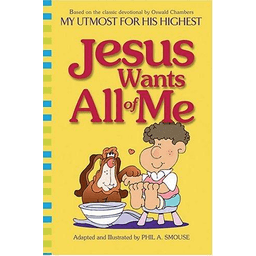 My Utmost for His HighestOswald Chambers’ daily devotional - a different format from Tozer (365 short entries), but the same insistence that the Christian life is about being conformed to God, not used by him.
Frequently asked questions
Do I need any theology background to read it?
No. Tozer uses the formal vocabulary of classical theology - words like aseity, transcendence, immutability - but he defines them as he goes and writes for an attentive general reader. If you can read a serious magazine article you can read this book.
How long does it take to read?
About four hours straight through, but very few readers actually read it that way. The book is designed to be read one chapter at a sitting with the prayer treated as the point. Most readers take it across three weeks to a few months.
Is this a good small-group book?
Yes - the 23-chapter structure maps almost perfectly to a 23-week study, and the chapters are short enough that everyone can actually read them between meetings. The one gap is that there are no built-in discussion questions, so leaders either write their own or use one of the third-party study guides online.
How does it compare to a systematic theology like Grudem or Bavinck?
Different category. A systematic theology is a reference work - footnoted, exhaustive, organized for argument. The Knowledge of the Holy is a devotional treatment of one section (the doctrine of God) with no footnotes and a prophetic-sermon register. Most readers end up using both: Tozer to be moved, the systematic to dig in.
Which tradition does Tozer write from?
Tozer was a pastor in the Christian and Missionary Alliance. The book draws on the broad classical-Christian tradition shared across Catholic, Orthodox, Reformed, Lutheran, and Wesleyan theology, though his framing of immutability and sovereignty sits more comfortably with classical-theist than with open-theist or process readings.
Should I read this or The Pursuit of God first?
Most readers start with The Pursuit of God - it is even shorter and more devotional, and it eases you into Tozer’s voice. Then The Knowledge of the Holy as the doctrinal companion. They are designed to work together, and the bundled edition is the natural way in.
Is the language too archaic for modern readers?
The body chapters read in fairly clean mid-20th-century prose. The closing prayers use the older second-person ("Thee," "Thou") that some readers find archaic and others find right for the subject. If that register is a barrier, the updated-language edition gently modernizes those passages.
Sources & further reading
More Modern Christian Classics
Knowing GodJ.I. Packer’s 1973 classic on the doctrine of God has sold more than 1.5 million copies and is still the book most pastors hand to laypeople who want theology that goes somewhere - here’s what it actually does and who it’s for.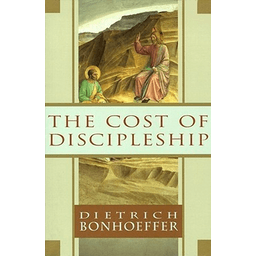 The Cost of DiscipleshipDietrich Bonhoeffer’s 1937 exposition of the Sermon on the Mount, written for pastors training under a regime that wanted them silent - and still the sharpest book in print on what following Jesus actually costs.
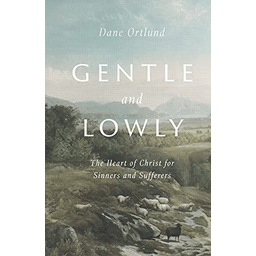 Gentle and LowlyDane Ortlund’s 23 short chapters on Matthew 11:29 have quietly become the most-given new Christian book of the decade - and the reason is not what you’d guess.
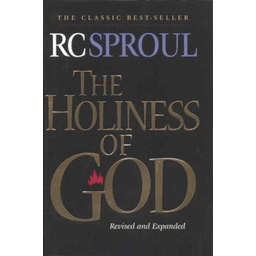 The Holiness of GodR.C. Sproul’s career-defining book on the one attribute of God the church most forgets - and the vision in Isaiah 6 he believed everything else flows from.
 The Weight of GloryThe 1941 sermon many call Lewis's single finest piece of writing - "there are no ordinary people" - gathered with eight other addresses into one slim, uneven, unforgettable collection.The Pursuit of GodA.W. Tozer’s ten-chapter wake-up call on knowing God personally - short, severe, and the one devotional Reformed, Wesleyan, Catholic, and Orthodox readers all seem to keep on the nightstand.