- Starting price
- Free online; $9.99 paperback
- Free tier
- Yes
- Platforms
- Print · Kindle · Audiobook · App · Free at utmost.org
- Developer
- Discovery House
- Launched
- 1935 (Updated 1992)
- Updated
- May 24, 2026
The verdict
The classic daily devotional against which every other daily devotional is still measured. Dense, demanding, occasionally archaic - and almost impossible to read for a year without something in you shifting.
Try My Utmost for His Highest ↗Opens utmost.org
My Utmost for His Highest has quietly become the devotional that other devotionals are compared against. Published in 1935, compiled by Oswald Chambers’s wife Biddy from the lectures he gave at the Bible Training College in London before his death in 1917, it has sold more than thirteen million copies and shows no sign of slowing down. It is the book on the nightstand of pastors who have read it for forty years and of new readers who picked it up last Tuesday because someone they trusted said, "you should try this one."
It is not a comfortable book. It does not coddle. It does not aim at your feelings first. It does not assume the reader is fragile. Each entry is roughly 350 words long - one short, pressurized paragraph of theology tied to a single verse - and the whole thing is built to be read on the same date every year for as long as you live. Some readers call it "hand-stitched theology." Others call it "the bonsai tree of devotionals." Both are fair.
Ninety years on, the things that make it great and the things that make it hard are the same things. The prose is early-twentieth-century British. The theology is shaped by Chambers’s Scottish Baptist roots and the broader Holiness movement of his era. The demand is constant: surrender, surrender, surrender. The reward - for readers who stay with it - is a daily encounter with a teacher who refuses to flatter them and refuses to let them shrink the Christian life into something manageable.
✓ The good
- Daily format that actually compounds - 365 entries of roughly 350 words each, designed to be re-read on the same date every year for the rest of your life
- Short but extraordinarily dense - most readers spend longer thinking about an entry than reading it, which is exactly the point
- Genuinely free online at utmost.org - the full text, every entry, with no paywall, no account, no app required
- Theological depth that holds up under re-reading - the kind of book whose meaning expands the older the reader gets
- Updated Edition (James Reimann, 1992) makes the same content radically more accessible without sanding off the edges
- Single-author voice across the whole year - unlike compilation devotionals, the cadence and demands are consistent end-to-end
- Reasonable in every format - paperback hovers around $9.99 and the whole text is free on the web
✗ Watch out
- The Classic edition prose is dated and dense - early-twentieth-century British English that some readers find rewarding and some find punishing
- Demanding in tone - Chambers asks for "absolute surrender" on most pages, which can feel relentless if read in low seasons
- Light on direct exposition of the verse at the top - each entry rides off a passage but rarely walks through it line by line
- Not a substitute for actual Bible reading - by design, it is a companion to Scripture, not a replacement (yet readers sometimes treat it as one)
- Holiness-movement vocabulary ("entire sanctification," "the death of self," "abandonment") can feel unfamiliar to readers outside that stream
- Single voice across 365 days - a feature for most, but a reader who does not click with Chambers will not warm up by April
Best for
- Readers who want a year-long daily companion they can return to annually
- Christians wanting to be stretched rather than soothed by their devotional reading
- Long-time believers looking for a re-readable classic, not the next new release
- Pastors, teachers, and small-group leaders building a devotional habit alongside study
Avoid if
- You want a devotional that walks verse-by-verse through a book of the Bible
- You are looking for something gentle, narrative, or emotionally consoling first
- Dense, sermonic prose tires you out - and the Updated edition still feels too demanding
- You want a devotional with discussion questions, journaling prompts, or built-in reading plans
What My Utmost for His Highest is
My Utmost for His Highest is a 365-day devotional published in 1935 and compiled by Biddy Chambers from her late husband Oswald Chambers’s lectures, sermons, and classroom talks. Oswald died of a ruptured appendix in 1917 in Egypt, where he had been ministering to British troops. Biddy spent the next several decades transcribing, editing, and assembling his teaching into the volume that now bears his name. Every entry sits under a single short verse from the King James Version, followed by a roughly 350-word reflection.
The book is structured around the calendar year - January 1 through December 31 - and is designed to be read on the same date every year for as long as the reader is alive. There is no introductory section, no thematic table of contents, no programmatic build. The architecture is the calendar itself. The reader meets Chambers on March 14 once a year and slowly, across a decade, begins to know what he is going to say, and slowly across two decades begins to argue back, and slowly across three begins to agree.
Why readers from across the Christian tradition keep returning to Chambers
My Utmost for His Highest is not the right choice for every reader, but its draw across traditions is striking. Chambers came from a Scottish Baptist background shaped by the Holiness movement, yet the book’s readership today reaches well beyond any single stream - Anglicans, Reformed Christians, Pentecostals, Catholics, Latter-day Saints, and unaffiliated seekers all describe encountering it as formative. The reason is not that Chambers is denominationally vague. He is not. The reason is that his concerns are almost entirely about the interior life - surrender, obedience, attention to God, the slow dismantling of self-will - and those concerns land in any tradition that takes discipleship seriously.
The other reason is the voice. Chambers is not soothing. He is not a coach. He does not speak as a friend on the porch. He speaks as a teacher who believes the reader is capable of more than the reader thinks, and who is unwilling to lower the bar to keep the reader comfortable. This is the model that respects the reader’s work. For Christians tired of devotional books that pat them on the head, Chambers is bracing in exactly the way they wanted but could not name.
The daily format: the bonsai tree of devotionals
Every entry in My Utmost for His Highest is roughly 350 words. A single verse sits at the top. One short, pressurized paragraph follows. There are no sub-points, no headings, no application boxes, no questions for reflection. The whole apparatus of the modern devotional - currently full of journaling prompts, reading plans, and discussion grids - is absent. What is left is one tightly compressed paragraph of theology, written to be read in under five minutes and chewed on for the rest of the day.
This sounds like a small thing. In practice it is transformative. The density is what gives the book its second-decade payoff. A reader who returns to March 14 every year for ten years has had ten different encounters with the same 350 words, because the reader is not the same. Most modern devotionals are designed to be read once - they have a lifecycle of about twelve months. My Utmost for His Highest is designed for the opposite: to sit on the nightstand for forty years, to be reread until the binding gives out, and to be replaced with the same book in a new cover. That is the bonsai-tree quality. Nothing is added. Everything is shaped.
The "absolute surrender" theme: what Chambers will not let the reader off of
The single most consistent theme across the 365 entries is what Chambers calls "absolute surrender" or, in some entries, "abandonment to God." The vocabulary is rooted in the Holiness movement of the late nineteenth and early twentieth centuries - a stream within the broader evangelical world that emphasized full consecration of the self to God as a definite act, not merely a posture. Chambers returns to this idea relentlessly. The Christian life, in his telling, is not first about feeling, doctrine, service, or experience. It is first about a reader’s willingness to hand over the right to themselves.
For readers in any tradition, this is the part of the book that lands hardest and stays with them longest. It is also the part some readers struggle with most. Chambers does not soften the demand for different seasons of life. The reader in burnout, the reader in grief, the reader who just lost a job - Chambers does not adjust the standard. Whether a particular reader experiences that as bracing or crushing depends on the season. The honest thing to say is that Chambers wrote for readers who wanted to be stretched, and a reader looking for consolation first should probably begin elsewhere and come back to him later.
Classic vs. Updated edition: the most important choice a new reader makes
The Classic edition is the original 1935 text - Chambers’s lectures as Biddy transcribed and edited them, in early-twentieth-century British English. The vocabulary is denser than modern readers expect ("hireling," "diffidence," "ye"), and the sentence structures are longer and more periodic. The Updated Edition, prepared by James Reimann in 1992 with the cooperation of Discovery House, modernizes the language while keeping every entry in the same order under the same verse, and - importantly - without diluting the demands of the original.
For a first-time reader, the Updated Edition is almost always the better starting point. Reimann did not soften Chambers; he translated him. The same paragraph that asks for absolute surrender in 1935 still asks for absolute surrender in 1992 - it just does so in English the reader actually thinks in. The Classic edition remains a great choice for readers who love period prose, for longtime readers who already know the rhythm, and for anyone who specifically wants the King James cadence of the early-twentieth-century original. Most first-time readers, however, get more out of the book and stick with it longer when they start with the Updated edition and graduate to the Classic later.
Pricing
Free at utmost.org
Free
Full text of every daily entry, free on the web. Same content as the print Classic edition.
Paperback (Classic)
~$9.99
The standard mass-market paperback of the original 1935 text. Widely available and inexpensive.
Paperback (Updated Edition)
~$15
James Reimann’s 1992 update - same entries, modernized English. The version most first-time readers should start with.
Hardcover (Classic ed.)
~$18
Classic cloth-bound edition. A common gift book and a long-haul nightstand companion.
Kindle
~$8
Full e-book with date navigation. Convenient for travel and for syncing with a phone reader.
Audible
~$15
Unabridged audiobook narration. Useful for commuters, though the density rewards reading more than listening.
Pricing on My Utmost for His Highest is, by 2026 devotional-book standards, almost embarrassingly low. The Classic edition paperback hovers around $9.99 at most retailers. The Updated Edition paperback runs closer to $15. A hardcover Classic gift edition is typically around $18. Kindle is about $8, Audible roughly $15.
The genuinely surprising tier is the free one. The full text of every daily entry is available at utmost.org with no paywall, no account, and no app required. The site also offers an email subscription that delivers the day’s entry to an inbox each morning. For readers wanting to test whether Chambers is for them before spending anything, the website is the obvious starting point.
For most first-time readers, the Updated Edition paperback at around $15 is the best value - modern English, full text, durable enough to last several years of daily use. For longtime readers and gift-givers, the Classic hardcover is the traditional choice. For travelers and commuters, Kindle plus the free utmost.org access covers both home and away with no friction.
Where My Utmost for His Highest falls behind
No verse-by-verse Bible exposition. Chambers anchors each entry to a single short verse, but he is not exegeting that verse line by line. Readers wanting daily walking through a book of the Bible - Genesis a chapter at a time, the Sermon on the Mount paragraph by paragraph - will need a different kind of resource (a commentary, a reading plan, a study Bible) alongside My Utmost for His Highest, not in place of it.
Light on context for the original setting. The book was assembled from talks Chambers gave to a specific audience - students at the Bible Training College in London, then soldiers in Egypt - and a reader unfamiliar with that background can occasionally feel like they walked into the middle of a conversation. The Updated edition helps somewhat, but there is no introductory framing inside the daily entries themselves.
No journaling, reflection, or community features. Most modern devotionals come with prompts, questions, or app integrations. My Utmost for His Highest does not. The reader is on their own with the page, which is exactly what some readers want and exactly what others find unfinished.
Limited tonal range. Chambers has one register - earnest, urgent, demanding - and he stays in it for 365 days. Readers who want a devotional that moves between gentle, meditative, narrative, and exhortative gears will find the constancy of his voice either steadying or wearying, depending on temperament and season.
My Utmost for His Highest vs. Jesus Calling vs. Streams in the Desert
Different strengths. My Utmost for His Highest is the demanding teacher: dense paragraphs of theology, the constant call to surrender, the year-after-year reread. Jesus Calling, by Sarah Young (2004), is the consoling companion: short first-person reflections written from the perspective of Jesus speaking to the reader, gentle in tone and emotionally direct. Streams in the Desert, compiled by Lettie Cowman in 1925, sits between the two: passage, story, and devotional reflection, oriented toward readers walking through suffering and waiting.
A reader choosing between them is mostly choosing a tone. Chambers stretches. Young consoles. Cowman accompanies through hardship. Each has been the right book for millions of readers, and each has been the wrong book for the season a reader picked it up. Jesus Calling has drawn theological discussion because of its first-person voice device, and readers vary on whether the device works for them; that conversation is worth knowing about before starting, but it has not blunted the book’s reach.
A reasonable approach for many readers is to keep more than one on the shelf and rotate by season. My Utmost for His Highest for a year of intentional discipline. Streams in the Desert through a hard stretch. Jesus Calling when consolation is what the day actually needs. None of them is trying to be the other, and the differences are features, not flaws.
The bottom line
My Utmost for His Highest is the closest thing the daily-devotional category has to a permanent classic. The Classic-edition prose is dated, the demands are constant, and it is not the book for every season - but a reader who gives it a year usually keeps it for life. For first-time readers, start with the Updated Edition paperback (around $15) or the free text at utmost.org. For longtime readers, the Classic hardcover earns its place on the nightstand. Either way, Chambers will not flatter the reader. That is exactly why the book has outlasted almost everything published alongside it.
Alternatives to My Utmost for His Highest
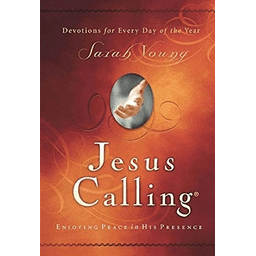 Jesus CallingSarah Young’s gentle, first-person daily devotional. Tonally the opposite of Chambers - consoling rather than demanding.
 Our Daily BreadThe free daily devotional from Our Daily Bread Ministries - short, accessible, and well-suited to readers wanting something simpler.
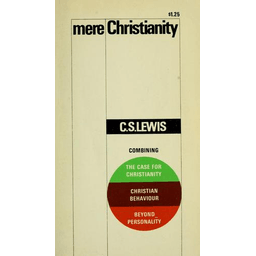 Mere ChristianityC. S. Lewis’s classic essay-length explanation of Christian belief. A different genre, but a similar caliber of re-readability.
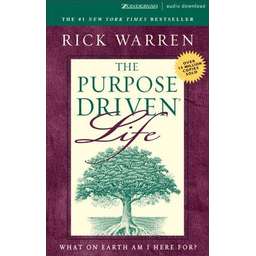 The Purpose Driven LifeRick Warren’s 40-day guided journey through a Christian framework for life. Modern, structured, and more programmatic than Chambers.
Frequently asked questions
Is My Utmost for His Highest really free?
Yes. The full text of every daily entry is available at utmost.org with no paywall, no account, and no app required. Discovery House also offers a free daily-email subscription. The paid editions (paperback, hardcover, Kindle, Audible) are for readers who prefer a physical copy or want offline access.
Should I get the Classic or Updated edition?
For most first-time readers, the Updated Edition (James Reimann, 1992) is the better starting point. It modernizes the early-twentieth-century British English without softening the substance. The Classic edition is still a great choice for readers who love period prose or who already know Chambers’s rhythm.
What tradition does Oswald Chambers come from?
Chambers was Scottish, raised in a Baptist family, and shaped strongly by the Holiness movement of the late nineteenth and early twentieth centuries. His vocabulary - "absolute surrender," "abandonment," "entire sanctification" - comes from that stream. The book itself, however, is read widely across many Christian traditions.
How is My Utmost for His Highest meant to be read?
One entry per day, on the corresponding calendar date - January 1 through December 31. Most readers spend longer thinking about an entry than reading it. The book is also designed to be re-read on the same dates every year, so March 14 in 2026 is the same entry as March 14 in 2027 and 2037.
Can it replace daily Bible reading?
No, and Chambers himself would have said so. Each entry sits under a verse and points the reader back to Scripture rather than away from it. Most readers pair My Utmost for His Highest with a Bible reading plan or a chapter-a-day rhythm, not as a substitute for one.
Is there an audiobook?
Yes. An unabridged Audible edition is available for around $15. The density of Chambers’s prose tends to reward reading more than listening, but the audiobook is a reasonable option for commuters or for readers who simply absorb better by ear.
Is there an app?
Yes. Discovery House publishes an official My Utmost for His Highest app for iOS and Android with the daily entry, search, and notification reminders. The full text is also available, free, at utmost.org if a reader prefers the browser to an app.
Sources & further reading
More Devotional Books
 Morning and EveningThe 1865 twice-daily devotional from the Prince of Preachers - still in print, still in the morning routine of millions, and still doing something almost no other devotional even tries.For the Love of GodA two-volume daily devotional that does something almost no other devotional attempts: it walks you through the whole Bible in a year and teaches you to read it as one connected story - and Crossway gives the entire text away for free.The Songs of JesusTim and Kathy Keller’s 365-day walk through every Psalm has quietly become the daily-practice companion to Keller’s Prayer - a short passage, a brief reflection, and a written prayer for each morning of the year.
 Streams in the DesertThe hundred-year-old daily devotional that gets handed to people in the hospital, at the funeral, after the diagnosis - and the one question worth answering before you buy it.
 New Morning MerciesA 365-day devotional built on one stubborn idea: the gospel is not just the door you walked through, it’s the air you keep breathing - and Paul David Tripp will not let you forget it.Daily Light on the Daily PathThe 1794 family devotional made of nothing but arranged Scripture - morning and evening, every day of the year, with no human commentary at all, and almost no one else has tried to do what it does.