- Starting price
- Free original; $9.99 print
- Free tier
- Yes
- Platforms
- Print · Kindle · Audiobook · App · Public domain (1925 original)
- Developer
- Zondervan (modern edition)
- Launched
- 1925 (Updated by Jim Reimann 1997)
- Updated
- May 24, 2026
The verdict
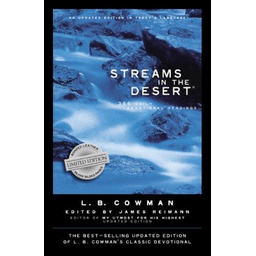
A century after it was compiled, Streams in the Desert is still the devotional people reach for when life breaks. The 1925 original is in the public domain and free; the 1997 Updated Edition by Jim Reimann is the version most modern readers should actually buy.
Try Streams in the Desert ↗Opens zondervan.com
Streams in the Desert has quietly become the devotional people give each other in the worst weeks of their lives. Cancer wards. Funerals. The first morning after a divorce decree. The book has sold tens of millions of copies in part because pastors, hospice chaplains, and grandmothers keep buying fresh copies to hand to someone who just got bad news. It is not the cheerful devotional. It is the one you can stand to read when cheerful would feel like a slap.
It does not promise breakthroughs. It does not coach you toward your best life. It does not pretend the trial is shorter than it is. What it does is sit with the reader in the desert for 366 days, pairing a scripture passage with a poem, a hymn stanza, or a missionary’s journal entry - voices from people who knew what suffering felt like and kept believing anyway. The cumulative effect, over a year, is steadying in a way few modern devotionals try to be.
The book was compiled by Lettie B. Cowman - published in her day as Mrs. Charles E. Cowman - during and after the years she and her husband Charles spent as missionaries in Japan and China. Charles’s health collapsed on the field. He spent six years dying slowly at home while she gathered the readings that would become this book. Streams was written from inside the trial it speaks to, and you can feel it on every page.
✓ The good
- The classic for suffering - no other daily devotional sits with grief, illness, and depression with the same authority
- Scripture + poem + testimony format - every entry triangulates the verse with a stanza of verse and a real person’s story, which lands harder than commentary alone
- The 1925 original is in the public domain - free PDF, free Kindle, free audio, and any small press can print it
- Year-long structure with a dated entry for every day - you do not have to think, you just open to today
- Short enough to actually finish - each day is roughly one page, readable in three minutes on a hard morning
- A hundred-year track record - if it had been a fad it would have died by 1940, and it didn’t
- The Updated Edition (Reimann, 1997) modernizes the King James English without flattening the poetry - the best version for new readers
✗ Watch out
- The 1925 prose is dated - thee/thou pronouns, Victorian sentence rhythms, and unfamiliar hymn references slow modern readers down
- Holiness-tradition framing - Cowman writes from a Wesleyan-holiness theology of sanctification, which colors a handful of entries
- Scripture quoted in KJV - lovely if you grew up with it, friction if you did not (the Updated Edition fixes this with NIV)
- Some hymn stanzas are pulled from sources modern readers cannot easily look up - attribution is thin in the original
- Not a study Bible - the readings devotionally apply scripture rather than exegete it, so do not expect verse-by-verse teaching
- Heavy on suffering as the lens - if you are in a season of joy, the book can feel relentlessly minor-key
Best for
- Someone walking through illness, grief, depression, or burnout
- Caregivers and chaplains who hand devotionals to people in crisis
- Readers who want a year-long structure with no planning required
- Anyone who finds Jesus Calling too sweet and My Utmost too cerebral
Avoid if
- You want a verse-by-verse Bible study, not a devotional
- KJV English actively repels you (then buy the Updated Edition instead)
- You want upbeat, victory-language daily reading
- You are looking for a topical devotional rather than a daily-page format
What Streams in the Desert is
Streams in the Desert is a 366-day devotional originally compiled and published in 1925 by Lettie Burd Cowman - better known on the title page as Mrs. Charles E. Cowman. Each day occupies roughly one printed page and follows a consistent shape: a scripture passage (King James in the original), a short reflection by Cowman or a quoted writer, a hymn stanza or poem, and often a brief testimony from a missionary, pastor, or believer who walked through real trial. The entries are dated January 1 through December 31, with a February 29 reading included.
The collection is anthological rather than authored. Cowman drew on the voices she had been reading and underlining for years - Spurgeon, Phillips Brooks, F.B. Meyer, Frances Ridley Havergal, Andrew Murray, A.B. Simpson, Hudson Taylor, dozens more - along with her own reflections from the years of her husband’s illness. The result is closer to a curated hymnal of suffering than a single-author devotional, and the chorus of voices is much of what gives the book its weight.
Why readers in hard seasons prefer Streams in the Desert
The single biggest practical difference between Streams in the Desert and almost every other daily devotional is the lens. Streams is written from inside trial, for people inside trial. It does not pivot to encouragement. It does not soften the verse to make it palatable. It sits with the reader in the dark room and reads scripture out loud the way a friend would - slowly, without rushing toward the resolution.
That is why the book gets handed across hospital beds and pressed into hands at viewings. A reader in acute pain cannot stomach a devotional that opens with “today is going to be amazing.” They can stomach Cowman, because Cowman does not pretend. The verses she chose, the poems she paired them with, and the testimonies she quoted all assume the reader is hurting. For the audience she wrote for - people whose lives had become deserts - that assumption is the whole gift.
The suffering-and-faithfulness theme: the differentiator
Almost every entry in Streams in the Desert turns on a single hinge: God is faithful in the wilderness, and the wilderness is not the absence of God but a place He is known. Cowman returns to this from a hundred angles - the Israelites in the desert, Hagar at the spring, Elijah under the broom tree, Job on the ash heap, Paul’s thorn, the Garden of Gethsemane, Jeremiah’s tears. The theme is not relentless because Cowman is morbid. It is relentless because the book is for readers whose lives have become relentless, and a cheerful change of subject would feel like betrayal.
What lifts it above mere consolation literature is that Cowman never lets the trial be the last word. Each entry closes with a turn - a stanza, a testimony, a verse - that points past the desert to the God who walks through it. The result is a devotional that takes pain seriously without leaving the reader there. For the audience the book was written for - missionaries on hard fields, sick believers in long convalescence, parents who had buried children - that combination of unflinching honesty and quiet hope is the reason the book outlived its decade.
The scripture + poem + testimony format: why three voices work better than one
Each daily entry triangulates the reader’s attention across three different kinds of voice. First comes the scripture, the anchor for the day. Then comes Cowman’s reflection or a quoted prose passage from one of the writers she trusted - Spurgeon, Murray, Meyer, Hudson Taylor - that opens up what the verse means in trial. Then comes a poem or hymn stanza, often from Frances Ridley Havergal or an unattributed Victorian hymn writer, that lets the truth land in a different register. Many entries close with a one-paragraph testimony from someone who lived the verse.
The effect is that the reader is never being lectured. They are being walked around the verse by a small chorus. Prose explains, poetry feels, testimony embodies. For a reader whose mind is fogged by illness or grief, this format is more accessible than a single-author exposition - if one voice does not land that day, another one will. It is also why the book reads aloud well at bedsides and graveside services. The poems were chosen to be spoken.
Original (1925) vs. Updated Edition (Reimann, 1997): the one decision worth making before you buy
There are essentially two versions of Streams in the Desert in print, and choosing between them is the only real decision a buyer has to make. The original 1925 text is in the public domain. The English is Edwardian - dignified, lyrical, and occasionally slow. Scripture is quoted in King James. Some hymn references assume a reader who knew the 1900 Methodist hymnal by heart. If that prose register feels like home to you, the original is free in every format and there is no reason to pay for anything else.
Jim Reimann’s 1997 Updated Edition keeps the structure and the voice but modernizes the English, swaps the KJV quotations for NIV, and lightly trims passages that depended on now-obscure references. Nothing essential is lost. The poetry is largely preserved. For most readers under sixty, and for almost any reader being handed the book in a hospital room and asked to read it on a hard day, the Updated Edition is the better practical choice - it removes the layer of friction between the reader and the consolation the book is trying to offer. The original is the artifact. The Updated is the working tool.
Pricing
Free Original (1925)
Free
The original 1925 compilation is in the public domain. Free PDF, free Kindle, free EPUB, and free audio versions are widely available from Project Gutenberg, Christian Classics Ethereal Library, and dozens of mirrors.
Paperback
~$9.99
Modern paperback editions, usually reprints of the original text. The cheapest physical copy and a common bookstore stocking item.
Hardcover
~$18
Hardcover gift editions, often with ribbon markers. The version people buy to give away - a hospital-bedside or funeral-aftermath book.
Kindle
~$8
Digital edition for e-readers. Note that the public-domain original is free on Kindle; paid Kindle versions are typically the Updated Edition.
Updated Edition (Reimann)
~$13
Jim Reimann’s 1997 update modernizes the English, swaps KJV quotations for NIV, and lightly trims dated references. The version most new readers should start with.
Springs in the Valley (companion)
~$15
Cowman’s 1939 follow-up volume - same format, same voice, second year of readings. For readers who finish Streams and want another year.
The pricing on Streams in the Desert is unusual because the book exists in two layers - a free public-domain original and a paid modernized edition - and most buyers do not realize this when they walk into a bookstore.
The 1925 original is fully in the public domain in the United States. You can download it free from Project Gutenberg, Christian Classics Ethereal Library, the Internet Archive, and a dozen Kindle storefronts. Free audio readings exist on LibriVox and YouTube. Any small press can legally print it, which is why $4 paperback editions exist alongside $25 leather-bound ones.
The Updated Edition by Jim Reimann is under copyright with Zondervan and runs around $13 in paperback or $10 in Kindle. The companion volume Springs in the Valley - Cowman’s 1939 sequel using the same format - is around $15.
The honest recommendation: if you are buying for yourself and prose register matters to you, start with the free 1925 original and see if you bond with it. If you are buying for someone in crisis who does not need an extra reading hurdle, spend the $13 on the Updated Edition. Most readers do not need both, though many end up owning both.
Where Streams in the Desert falls behind
No verse-by-verse teaching. Streams is a devotional, not a commentary, and Cowman applies passages rather than exegeting them. Readers who want grammatical-historical Bible study will need a study Bible or a commentary alongside it - the ESV Study Bible, the NIV Study Bible, or something verse-by-verse like Enduring Word.
No interactive companion app. Unlike YouVersion-era devotionals, Streams has no first-party app, no streak tracker, no audio narration tied to the day’s entry, no community feed. Some third-party apps host the text, but the experience is print-first by design.
Aging cultural references. The hymn stanzas, missionary anecdotes, and Victorian poetry that worked in 1925 sometimes feel distant in 2026. Readers who have never sung “When Peace Like a River” may not recognize half of the closing stanzas. The Updated Edition softens this but cannot erase it.
A narrow emotional register. Streams is unapologetically a devotional of the wilderness, not the mountaintop. Readers in a season of joy, expansion, or thanksgiving may find the relentless minor key tiring. It is the right book for the right season - and the wrong book for other seasons.
Light editorial apparatus. Quotations are sometimes attributed only by surname, sources are not footnoted, and Cowman freely paraphrases the writers she draws from. Anyone who wants to trace a quotation to its original sermon or essay will find the trail thin.
Streams in the Desert vs. My Utmost for His Highest vs. Jesus Calling
These three are the most-handed-down daily devotionals in English. Different strengths. Streams in the Desert is the suffering devotional - the one for hard seasons, where the scripture-plus-poem-plus-testimony format meets the reader where it hurts. My Utmost for His Highest, compiled from Oswald Chambers’s lectures by his widow Biddy and first published in 1927, is the cerebral devotional - dense, demanding, and oriented toward the reader’s surrender of self. Jesus Calling, written by Sarah Young and published in 2004, is the comforting devotional, written in first-person voice as words from Jesus to the reader.
For the reader walking through trial, Streams is the most natural fit - it assumes hardship and ministers from inside it. For the reader who wants to be sharpened and stretched, My Utmost is the harder, more demanding companion - a page of Chambers takes ten minutes to read and another hour to think about. For the reader who wants warmth and reassurance, Jesus Calling sells the most copies and has the gentlest tone, though its first-person-Jesus device has drawn ongoing discussion among readers and pastors about how to read it well.
The honest summary: Streams for the desert, Chambers for the climb, Young for the bedside lamp. Many readers own all three across a lifetime and use them in different seasons. They are not really competing for the same shelf so much as covering different needs.
The bottom line
Streams in the Desert earns the place it has held for a hundred years. It is not the devotional for every reader or every season, but for the reader in pain - illness, grief, depression, burnout, the long wilderness - it has fewer real competitors than any other book in the category. Buy the Updated Edition if you are starting fresh or giving it away; download the free 1925 original if you love older English prose and want the artifact Cowman actually compiled. Either way, it belongs on the short shelf of devotionals worth keeping.
Alternatives to Streams in the Desert
 My Utmost for His HighestOswald Chambers’s 1927 classic - the cerebral, demanding daily devotional. Where Streams sits with you in pain, Chambers asks you to surrender. Denser reading, longer payoff.
 Jesus CallingSarah Young’s 2004 devotional written in first-person voice from Jesus to the reader. Warmer and lighter than Streams; format has drawn ongoing discussion. The bestselling devotional of the modern era.
 Our Daily BreadFree daily devotional in app, print, and email form from the long-running ministry. Shorter and more general than Streams - a good everyday option rather than a hard-season specialist.
 Mere ChristianityNot a devotional, but the classic on the road sign next to it - C.S. Lewis’s case for the faith. The book to read alongside Streams when you want reasoning, not consolation.
Frequently asked questions
Who wrote Streams in the Desert?
It was compiled by Lettie Burd Cowman, originally published in 1925 under her married name Mrs. Charles E. Cowman. She and her husband Charles were missionaries in Japan and China, and she gathered most of the readings during and after his long final illness. The book is anthological - most entries quote other writers - with Cowman as the curator and author of the connecting reflections.
Is Streams in the Desert in the public domain?
Yes, the original 1925 text is in the public domain in the United States. You can download it free as PDF, Kindle, or EPUB from Project Gutenberg, Christian Classics Ethereal Library, the Internet Archive, and similar sources. Free audio readings exist on LibriVox. The 1997 Updated Edition by Jim Reimann is under copyright with Zondervan and is not free.
Should I buy the original or the Updated Edition?
For most modern readers, the Updated Edition by Jim Reimann is the easier read - it modernizes the English, uses NIV instead of KJV, and lightly trims dated references without losing the voice. The 1925 original is free and is the right choice if you love older English prose or want the artifact Cowman actually compiled. If you are buying the book for someone in crisis who does not need extra reading friction, get the Updated Edition.
What tradition does Streams in the Desert come from?
Cowman wrote from the Wesleyan-holiness tradition - she and her husband helped found what became OMS International, a holiness missionary society. A handful of entries reflect that theology of sanctification, but the great majority of the book is broadly applicable across Christian traditions. Readers from Catholic, Protestant, Latter-day Saint, and Orthodox backgrounds all use it without difficulty.
How long is a daily entry?
About one printed page - typically a scripture passage, a paragraph or two of reflection, a poem or hymn stanza, and sometimes a short testimony. Most readers finish a day in three to five minutes, which is part of why the book works on hard mornings when concentration is limited.
Is there a sequel?
Yes - Cowman published Springs in the Valley in 1939 using the same scripture-plus-poem-plus-testimony format. It is a full second year of readings, around $15 in paperback. Most readers start with Streams and add Springs in the second year.
Streams in the Desert vs. My Utmost for His Highest - which should I start with?
Streams if you are in a hard season - illness, grief, depression, burnout - because it was written for exactly that audience. My Utmost if you want a sharper, more demanding daily read that pushes you on discipleship and surrender. Many readers own both and use them in different seasons of life.
Sources & further reading
More Devotional Books
My Utmost for His HighestThe 90-year-old daily devotional that still outsells most new releases - short, dense, and famously unwilling to let a reader off the hook.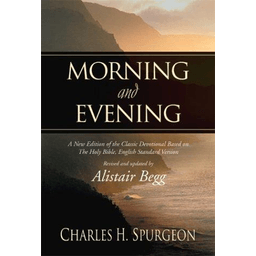 Morning and EveningThe 1865 twice-daily devotional from the Prince of Preachers - still in print, still in the morning routine of millions, and still doing something almost no other devotional even tries.For the Love of GodA two-volume daily devotional that does something almost no other devotional attempts: it walks you through the whole Bible in a year and teaches you to read it as one connected story - and Crossway gives the entire text away for free.The Songs of JesusTim and Kathy Keller’s 365-day walk through every Psalm has quietly become the daily-practice companion to Keller’s Prayer - a short passage, a brief reflection, and a written prayer for each morning of the year.
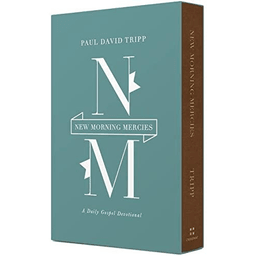 New Morning MerciesA 365-day devotional built on one stubborn idea: the gospel is not just the door you walked through, it’s the air you keep breathing - and Paul David Tripp will not let you forget it.Daily Light on the Daily PathThe 1794 family devotional made of nothing but arranged Scripture - morning and evening, every day of the year, with no human commentary at all, and almost no one else has tried to do what it does.