- Starting price
- ~$22 hardcover
- Free tier
- No
- Platforms
- Print · Kindle
- Developer
- HarperOne
- Launched
- 2003
- Updated
- May 31, 2026
The verdict
A well-curated year of daily Lewis, drawn from across his books, letters, and essays. It is the gentlest way to spend twelve months with his thought - a sampler rather than the full works, and best understood as daily reflection rather than a prayer-style devotional. If you have never read Lewis and want a low-commitment start, this is the on-ramp.
Try A Year with C.S. Lewis ↗Opens harpercollins.com
A Year with C.S. Lewis has quietly become the book people reach for when they want Lewis but do not know where to begin. He wrote more than thirty books across forty years - apologetics, fiction, literary criticism, letters, sermons - and the sheer size of the shelf can stall a new reader before they start. This volume solves that problem the simplest way possible: it hands the reader one short passage a day, dated to the calendar, and lets a year do the work that a reading list never quite manages.
It is not a new book by Lewis. It does not contain a word he did not already write. It does not try to summarize him or argue a thesis. What it is, instead, is an anthology - 365 excerpts pulled from across his published work and arranged one per day, January 1 through December 31. The editors at HarperOne assembled it in 2003, drawing on Mere Christianity, The Screwtape Letters, The Problem of Pain, The Four Loves, his essays, and his letters, among others. Each day is a single dated reading, usually a paragraph or two, with a short scriptural or thematic heading and a note of which book it came from.
The appeal is the format more than any single passage. A reader who would never sit down with The Problem of Pain cover to cover will happily read three hundred words of it on a Tuesday morning in March, and then three hundred words of The Four Loves the next day, and slowly accumulate a working sense of how Lewis thought across his whole career. It is the most accessible point of entry into Lewis in print - not a replacement for reading the books whole, but an invitation to want to.
✓ The good
- The gentlest possible on-ramp to Lewis - one short, dated passage a day means a new reader meets him without committing to a single full book first
- Genuinely wide-ranging - the excerpts span Mere Christianity, The Screwtape Letters, The Problem of Pain, The Four Loves, the essays, and the letters, so a year gives a real cross-section of his thought
- The daily format compounds - 365 short readings build a working familiarity with Lewis’s voice and concerns that a one-book read rarely delivers
- Each entry names its source - when a passage lands, the reader knows exactly which book to go read in full, so the anthology doubles as a guided map of his work
- Read across traditions - like nearly all of Lewis, the selections stay on the broadly shared center of Christian thought, and Catholic, Protestant, Orthodox, and Latter-day Saint readers all find him quotable
- Short daily commitment - most entries take under five minutes to read, which makes it easy to sustain a habit across a whole year
- A natural gift - the hardcover is a common present for graduates, new readers, and longtime Lewis fans who do not yet own a collected daily edition
✗ Watch out
- Excerpts out of context - a passage lifted from the middle of an argument can lose the scaffolding around it, and Lewis built his arguments cumulatively
- A sampler, not the full works - readers who want Lewis’s actual reasoning, start to finish, are better served reading the source books whole
- The curation is the editor’s, not Lewis’s - the day-by-day selection and arrangement reflect HarperOne’s editorial choices, and a different editor would have built a different year
- Not a devotional in the prayer sense - it offers daily reflection from a great writer, not guided prayer, liturgy, or a structured spiritual exercise, and some readers expecting the latter are surprised
- No connective tissue - there is little commentary linking one day to the next, so the year reads as 365 separate moments rather than a developing whole
- Light on the fiction - the Narnia books and the space trilogy are hard to excerpt by the paragraph, so readers who love Lewis’s storytelling will find comparatively little of it here
Best for
- New readers who want to meet Lewis before committing to a full book
- Longtime fans who want a year-long daily dose across his whole catalog
- Readers building a short, sustainable daily-reading habit
- Gift-givers looking for a single durable Lewis volume
Avoid if
- You want Lewis’s full arguments rather than excerpts
- You are looking for guided prayer or a structured spiritual exercise
- You already own most of his books and read them whole
- You want a devotional anchored in verse-by-verse Scripture exposition
What A Year with C.S. Lewis is
A Year with C.S. Lewis is a 365-day anthology published by HarperOne in 2003. It collects short excerpts from across Lewis’s published work - books, essays, and letters - and arranges them one per calendar day, January 1 through December 31. Each entry runs roughly a paragraph or two, sits under a short scriptural or thematic heading, and is footnoted with the title of the book it was drawn from. The sources include Mere Christianity, The Screwtape Letters, The Problem of Pain, The Four Loves, Miracles, The Weight of Glory, and his collected letters, among others.
It is not original Lewis and it is not a single sustained work. It is curation: the editors selected, dated, and ordered passages from a catalog spanning four decades to produce a year of daily reading. Lewis was a lifelong Anglican who wrote, by deliberate habit, toward the shared center of Christian belief rather than toward denominational distinctives - and the anthology inherits that quality, which is part of why his readership reaches across traditions. The architecture here is the calendar itself: there is no thesis to follow, only a writer to spend a year with.
Why a daily anthology, rather than just reading the books
The single biggest practical difference between this anthology and Lewis’s actual books is the unit of reading. A book asks for a sitting; this asks for a paragraph. That sounds like a small thing. In practice it changes who finishes. A reader intimidated by a four-hundred-page shelf of apologetics and literary criticism will read three hundred words a day without strain, and across a year will cover ground from titles they would never have opened on their own. The format lowers the activation cost of Lewis to almost nothing.
The trade is real and worth naming up front. Lewis argued cumulatively - the moral argument in Mere Christianity is built brick by brick, and a single brick pulled out and set on a Tuesday morning carries less than it does in the wall. So this is the thoughtful reader’s sampler, not the reader’s library. It is best understood as an invitation: a year of short encounters designed to make you want the full books, with each entry naming exactly which one to go read next. Used that way - as a map rather than the territory - it earns its place. Used as a substitute for the works themselves, it leaves the best of Lewis on the shelf.
The daily-readings format: a paragraph of Lewis, every morning
The architecture of A Year with C.S. Lewis is the calendar. There are 365 entries, one per day, each a short excerpt - usually a paragraph, occasionally two - lifted from somewhere in Lewis’s published work and set under a brief heading. There are no study questions, no application boxes, no connective commentary stitching one day to the next. The whole apparatus of the modern devotional is absent. What is left is Lewis’s own prose, portioned into pieces small enough to read before the coffee cools and dense enough to think about for the rest of the morning.
This is the feature that makes the book work for the reader it is built for. A full Lewis title rewards sustained attention, which is exactly the commitment a new reader is not yet ready to make. The daily excerpt asks for almost nothing and returns a real taste of the writer - his wit, his concreteness, his habit of turning an abstraction into an image you can walk around. Over a year, those tastes accumulate into genuine familiarity. The reader who finishes December 31 knows how Lewis sounds, what he kept returning to, and which of his books they now actually want to read whole. That is the format doing its job.
The range of sources: a cross-section of forty years of Lewis
The selections are drawn from across Lewis’s catalog rather than from any single book, and that breadth is the anthology’s second real strength. In one week a reader might move from the moral argument of Mere Christianity to the screwtape-eyed satire of The Screwtape Letters to the hard-won reflection of The Problem of Pain to the affections mapped in The Four Loves. The essays and the letters appear too, which surfaces a more personal, less platformed Lewis than the famous books alone. Each entry is footnoted with its source, so the cross-section doubles as a guided tour of where to go next.
For a reader who knows Lewis only as the author of one book - usually Mere Christianity or the Narnia stories - this range is genuinely useful. It shows that the same mind that argued for God from the moral law also wrote tenderly about grief, sharply about temptation, and carefully about the kinds of love. The anthology cannot, of course, reproduce the full arc of any of those works; excerpting is lossy by nature, and the fiction in particular resists being sliced into daily paragraphs. But as a survey of the shape and reach of Lewis’s thought, delivered a little at a time, the breadth of sourcing is the thing most readers end up grateful for.
Reflection, not prayer: what kind of daily book this actually is
It is worth being precise about the genre, because the word "devotional" carries expectations this book does not entirely meet. A great many daily devotionals are structured spiritual exercises - a verse, a reflection, and a prompt toward prayer, sometimes with liturgy or guided meditation built in. A Year with C.S. Lewis is not that. It is a daily reading: a passage from a great Christian writer, offered for thought. There is no prayer scripted for the reader, no exercise to perform, no examination of conscience. The heading orients the passage; the passage does the rest.
For many readers that is exactly the appeal - a daily encounter with a serious mind, on their own terms, without being told what to do with it. For readers specifically seeking guided prayer or a structured devotional rhythm, it is the wrong tool, and they should know that going in rather than feel short-changed by April. The honest framing is that this is daily reflection drawn from Lewis, best paired with whatever prayer practice and Scripture reading a reader already keeps. It feeds the mind a paragraph at a time; it does not organize the reader’s devotional life, and it does not try to.
Pricing
Hardcover
~$22
The standard HarperOne hardcover and the edition most people own. Durable enough for a year of daily use and the natural gift copy.
Kindle
~$13
Full e-book with date navigation and search. Convenient for travel and for syncing the day’s reading to a phone.
Used hardcover
~$5-10
Widely available secondhand. The way many readers acquire their first copy, since it has been in print since 2003.
Audiobook
~$20
An unabridged audio edition exists, though a date-by-date anthology suits a print or e-reader format more naturally than continuous listening.
Pricing on A Year with C.S. Lewis is straightforward. The standard HarperOne hardcover runs around $22 at most retailers - call it the everyday default and the copy most readers own. It is built well enough to survive a full year of being picked up every morning, which is the right standard for a daily book.
The Kindle edition runs closer to $13, with date navigation and search, and is the convenient pick for travel or for reading the day’s entry on a phone. Because the title has been in print since 2003, used hardcovers are easy to find for roughly $5 to $10, which is how a lot of readers acquire their first copy. An unabridged audiobook also exists for around $20, though a date-by-date anthology fits a print or e-reader format more naturally than continuous listening does.
For most readers the hardcover at around $22 is the best value - durable, giftable, and the version the book was clearly designed to be. If the goal is simply to try Lewis before investing, a used copy or the Kindle edition covers it cheaply. Most readers do not need more than one format; the hardcover is the balanced default and the copy that ends up staying on the nightstand.
Where A Year with C.S. Lewis falls behind
Excerpts out of context. Lewis built his case by accumulation, and an anthology necessarily lifts paragraphs out of the arguments that gave them their weight. A single day’s reading from The Problem of Pain or Miracles can read as a striking aphorism while quietly dropping the reasoning that earned it. For the genre this is unavoidable, but it is the central limitation: the book gives you the view, not the climb.
The curation is the editor’s. The selection, the dating, and the order are HarperOne’s editorial work, not Lewis’s. A different editor would have chosen different passages and built a different year. That is no knock on the work - it is just the nature of an anthology - but a reader should understand they are meeting a curated Lewis, shaped by someone else’s sense of what matters most.
Not a prayer-style devotional. Readers expecting guided prayer, liturgy, or a structured spiritual exercise will find daily reflection instead. The book offers a passage and a heading and stops there. That is the right design for what it is, but it means the book pairs with a devotional practice rather than supplying one.
Light on the fiction. The Narnia books and the space trilogy are among the most-loved things Lewis wrote, and they are exactly the works that resist excerpting by the paragraph. A reader who came to Lewis through the stories will find comparatively little of that register here, since narrative does not portion into daily pieces the way an essay does.
A starting point, not a destination. The most honest thing to say is that the anthology is designed to send the reader onward to the full books. Readers who already own and read Lewis whole will find less new here, and readers who want his complete thought will eventually outgrow the daily format - by design.
A Year with C.S. Lewis vs. Mere Christianity vs. The Weight of Glory
Different jobs. A Year with C.S. Lewis is the sampler - short daily excerpts from across his whole catalog, built to introduce the reader to the range of his thought a paragraph at a time. Mere Christianity is the single best entry point into Lewis’s actual argument: his compiled wartime radio talks laying out, start to finish, what Christians hold in common. The Weight of Glory is the collection of his sermons and addresses, including the famous title essay - shorter than a full treatise, but each piece complete and read whole rather than in fragments.
A reader choosing among them is mostly choosing how much to commit. The anthology asks for five minutes a day and surveys everything lightly. Mere Christianity asks for a weekend and rewards it with one sustained, coherent case. The Weight of Glory sits between the two - self-contained essays a reader can take one at a time without losing the thread, since each was written to stand alone. If you want to meet Lewis before deciding, start with the anthology. If you want his thinking in full, read Mere Christianity whole.
All three are read widely across Catholic, Protestant, Orthodox, and Latter-day Saint readers, which is the through-line of Lewis generally - he wrote toward the shared center on purpose. A sensible path for many readers is to use the anthology as the map, let it point them to the title that grabbed them, and then read that book whole. The anthology and the source works are not competitors; the first is built to lead to the second.
The bottom line
A Year with C.S. Lewis is the easiest way to spend a year getting to know one of the most-read Christian writers of the last century. It will not give you his full arguments - it is excerpts, curated by an editor, and best read as daily reflection rather than guided prayer - but it is a genuinely good sampler, and each entry tells you exactly which book to read next when a passage lands. For a new reader who wants Lewis without committing to a single full work first, or a longtime fan who wants a daily dose across his whole catalog, it earns its place on the nightstand. Treat it as the map, not the territory, and it does its job well.
Alternatives to A Year with C.S. Lewis
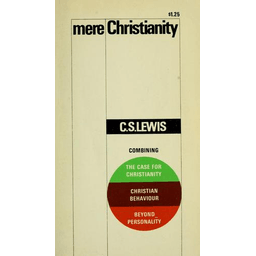 Mere ChristianityLewis’s single best entry point - the compiled wartime radio talks, read whole rather than in daily fragments.
 The Weight of GloryHis collected sermons and addresses, including the title essay. Self-contained pieces, each read complete.
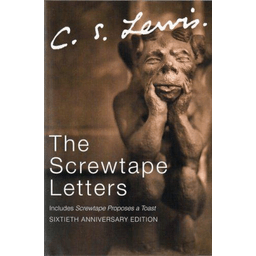 The Screwtape LettersLewis’s satirical letters from a senior devil to a junior tempter - one of the books this anthology draws from.
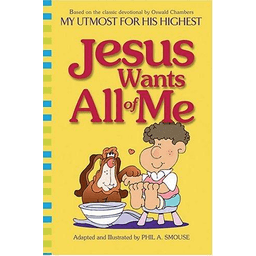 My Utmost for His HighestOswald Chambers’s classic 365-day devotional. A single-author daily book, more demanding and more prayer-oriented than this anthology.
Frequently asked questions
Is A Year with C.S. Lewis a new book by Lewis?
No. It is an anthology, edited and published by HarperOne in 2003. Every word in it was written by Lewis, but the book itself contains no new material - it collects short excerpts from across his existing books, essays, and letters and arranges them one per calendar day.
Which of Lewis’s works does it draw from?
A wide cross-section: Mere Christianity, The Screwtape Letters, The Problem of Pain, The Four Loves, Miracles, The Weight of Glory, and his collected letters, among others. Each daily entry is footnoted with the title of the book it came from, so you always know where a passage originated.
Is it a devotional in the usual sense?
Not quite. It is daily reflection rather than guided prayer. Each day offers a short passage from Lewis under a brief heading, but there are no scripted prayers, prompts, or structured spiritual exercises. Readers who specifically want guided prayer or liturgy should pair it with a devotional practice they already keep.
Should I read this or just read the full books?
It depends on where you are. If you have never read Lewis and the size of his catalog is stalling you, the anthology is the gentlest on-ramp - a paragraph a day across a year. If you want his actual arguments in full, read the source books whole; excerpts lose some of the cumulative reasoning. Many readers use the anthology as a map and let it point them to the title to read next.
Was C.S. Lewis Catholic, Protestant, or something else?
Lewis was a lifelong Anglican (Church of England). He deliberately wrote toward the shared center of Christian belief rather than denominational distinctives, which is why his work - and this anthology of it - is read across Catholic, Protestant, Orthodox, and Latter-day Saint readers alike.
Which edition should I buy?
The HarperOne hardcover (around $22) is the right default for most readers - durable enough for daily use and the natural gift copy. The Kindle edition (around $13) is convenient for travel and phone reading. Because the book has been in print since 2003, used hardcovers are easy to find for roughly $5 to $10 if you just want to try it.
Where should I go after a year with this book?
Wherever the excerpts led you. If the apologetics passages landed, read Mere Christianity whole. If the sermons did, read The Weight of Glory. If the satire did, read The Screwtape Letters. The whole point of the anthology is to surface which of Lewis’s books you actually want to read in full - each entry names its source so you know exactly where to start.
Sources & further reading
More Devotional Books
My Utmost for His HighestThe 90-year-old daily devotional that still outsells most new releases - short, dense, and famously unwilling to let a reader off the hook.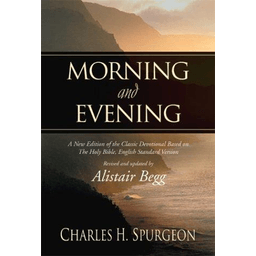 Morning and EveningThe 1865 twice-daily devotional from the Prince of Preachers - still in print, still in the morning routine of millions, and still doing something almost no other devotional even tries.For the Love of GodA two-volume daily devotional that does something almost no other devotional attempts: it walks you through the whole Bible in a year and teaches you to read it as one connected story - and Crossway gives the entire text away for free.The Songs of JesusTim and Kathy Keller’s 365-day walk through every Psalm has quietly become the daily-practice companion to Keller’s Prayer - a short passage, a brief reflection, and a written prayer for each morning of the year.
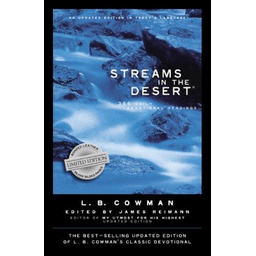 Streams in the DesertThe hundred-year-old daily devotional that gets handed to people in the hospital, at the funeral, after the diagnosis - and the one question worth answering before you buy it.
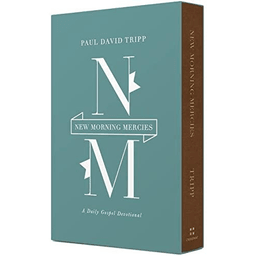 New Morning MerciesA 365-day devotional built on one stubborn idea: the gospel is not just the door you walked through, it’s the air you keep breathing - and Paul David Tripp will not let you forget it.