- Starting price
- $17.99 hardcover
- Free tier
- No
- Platforms
- Print · Kindle · Audiobook
- Developer
- Crossway
- Launched
- 2014
- Updated
- May 24, 2026
The verdict
The modern Reformed devotional bestseller, and for good reason. If you want one page a day that consistently re-anchors you in the gospel without devolving into cliche, New Morning Mercies is the safest pick on the shelf.
Try New Morning Mercies ↗Opens crossway.org
New Morning Mercies has quietly become the favorite morning devotional for a generation of readers who got tired of pastel sentiment and wanted something with a little more spine. Paul David Tripp - pastor, biblical counselor, conference speaker - wrote it the way he talks: blunt, pastoral, allergic to platitudes, and convinced that what most Christians need on a Tuesday morning is not a new principle but a reminder of an old gospel.
It doesn’t moralize. It doesn’t flatter. It doesn’t hand you a verse and a pep talk and send you out the door. Each of the 365 entries opens with a one or two sentence aphorism - the kind of line you might write on an index card and tape to the dashboard - then unpacks it across roughly 350 words of pastoral counsel, then closes with a Scripture reading reference.
The book won the ECPA Christian Book of the Year award in the devotional category in 2015 and has stayed on backlist bestseller lists for more than a decade. It’s the devotional people quietly press into the hands of friends in hard seasons - and the one many readers have now worked through three or four times in a row, because the pages keep landing differently depending on what kind of year it is.
✓ The good
- Genuinely gospel-centered every single day - not just on Sundays of the church calendar, not just at Christmas and Easter, but on January 14th when nothing is happening
- Pastoral and counseling voice - Tripp’s decades in biblical counseling show up in how precisely he names the inner mechanics of fear, anger, and self-righteousness
- One-page format that actually works - long enough to chew on, short enough to finish before the coffee gets cold
- Aphoristic openers are quotable - the opening line of each day functions almost like a Tweetable thesis and is the most-screenshotted feature of the book
- Audiobook is excellent - Tripp narrates with the cadence of a sermon, not a textbook reading
- The padded gift edition is one of the most-given Christian books of the last decade - weddings, ordinations, hard diagnoses, graduations
- Doctrinally consistent without being a theology lecture - every entry lands somewhere a thoughtful Christian can pray
✗ Watch out
- The Reformed evangelical voice is unmistakable - readers from other traditions may want to translate a phrase here and there
- No dated entries (just Day 1 through Day 365) - which is freeing if you start mid-year, slightly disorienting if you like a calendar
- The aphoristic style can feel repetitive in long stretches - several days in a row will hit similar notes about self-righteousness or grace
- Heavier on inner-life sanctification than on outward mission or justice themes - not a weakness, just a scope
- Print is small in the standard hardcover - readers over 50 often migrate to Kindle or the padded edition for the slightly larger type
Best for
- Readers who want a daily gospel re-anchor without sentimentality
- People going through a hard season - grief, anxiety, conflict, vocational confusion
- Pastors and counselors looking for short, quotable, theologically careful morning material
- Gift-givers who need something safer than Jesus Calling and warmer than systematic theology
Avoid if
- You’re looking for a topical devotional - New Morning Mercies is intentionally non-thematic
- You want a dated, liturgical-calendar devotional - this is Day 1 to Day 365, undated
- You want a strongly action-oriented or mission-focused devotional - this one stays close to the heart
- You prefer a single-author classic from a different tradition (Catholic, Orthodox, LDS) - the voice is firmly Reformed evangelical
What New Morning Mercies is
New Morning Mercies is a 365-day devotional book by Paul David Tripp, published by Crossway in 2014. Each daily entry runs about a page and a half: a one or two sentence aphorism in bold at the top, a brief pastoral essay underneath, and a Scripture reading reference at the bottom. The entries are numbered Day 1 through Day 365 rather than dated, so you can start any time of year.
Tripp is a pastor with a long background in biblical counseling - he ran the Christian Counseling and Educational Foundation for more than a decade and has written extensively for pastors, parents, and people in the middle of hard situations. The voice in New Morning Mercies is the voice of a counselor who has heard every excuse, including his own, and keeps coming back to the same truth: grace is not just how you get in, it’s how you stay alive.
Why readers keep coming back to New Morning Mercies
The single biggest practical difference between New Morning Mercies and the other devotionals on the shelf is the relentlessness of its gospel emphasis. Most one-page-a-day books rotate through themes - patience this week, gratitude next week, a Psalm-of-the-day after that. Tripp doesn’t. He keeps returning, in slightly different angles, to the conviction that the Christian’s daily problem is not a shortage of moral effort but a forgetfulness about what Christ has already done.
That sounds like a small thing. In practice it’s transformative. Readers who have lived inside the book for a year describe a slow rewiring - the reflex of moralizing your own behavior gradually loosens, the reflex of running back to grace becomes easier. It’s the kind of devotional whose effect is cumulative rather than episodic, which is why people work through it more than once.
The gospel-for-believers theme: the book’s distinctive
The thesis that runs underneath every entry is a line Tripp has said many ways: the gospel is for Christians, not just for unbelievers. The good news that Jesus lived, died, and rose for sinners is not the entry ramp you take once and then leave behind for the highway of self-improvement - it’s the actual road. Every daily reading, in one way or another, points back to that.
This emphasis is closely associated with a strand of Reformed evangelical pastoral writing - Tim Keller, Jerry Bridges, and Tripp himself have all built ministries around it. Other Christian traditions affirm the same realities but phrase the daily Christian life differently - some leaning more on sacramental practice, some on covenant ordinances, some on the language of discipleship and obedience. Readers from those traditions can still get a great deal out of New Morning Mercies; they’ll just notice the framing is unmistakably from one corner of the room.
The biblical-counseling pastoral voice: Tripp’s day-job DNA
Tripp spent decades in the world of biblical counseling - sitting across from couples in crisis, parents at the end of their rope, pastors who had blown up their ministries. That work shaped how he writes. He is unusually precise about the inner mechanics of self-righteousness, control, fear, resentment, and the small daily idolatries most of us don’t notice we’re serving. His sentences name the thing you’re actually doing in your head before breakfast.
The result is a devotional that reads less like a sermon and more like five minutes with a wise pastor who is unwilling to let you off the hook but also unwilling to pile on. Readers regularly describe being startled by a line that exposes them and comforts them in the same paragraph - a combination that is rare in the daily-devotional category, where the gravity usually tilts heavily toward one or the other.
The padded gift edition: why this is the book people give
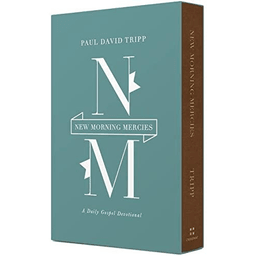
Crossway publishes a padded faux-leather edition of New Morning Mercies that has become one of the most-given Christian books of the past decade. The trim is slightly larger than the standard hardcover, the cover has a cushioned soft-feel finish, the type is a little easier on aging eyes, and there’s a presentation page in the front for the giver to sign and date.
It shows up at weddings, ordinations, college graduations, and - most often - in the hands of friends walking through a hard diagnosis. The reason is not aesthetic. It’s that the book is the rare gift that pairs a pastoral, non-saccharine voice with a format you can actually pick up at 6:30 a.m. without feeling like you’ve signed up for homework. Givers trust it. Recipients keep it on the nightstand.
Pricing
Hardcover
~$17.99
The standard edition. 384 pages, sewn binding, ribbon marker. The version most readers own.
Kindle
~$12.99
Full text, searchable, syncs with your other Kindle devices. The cheapest legitimate option.
Audible
~$14.95
Narrated by Paul David Tripp himself. About 25 hours total. Good for commuting through a chapter a day.
Padded Gift Edition
~$24.99
Larger trim, padded faux-leather cover, presentation page in front. The format most people receive as a gift.
Crossway+ App
Free with purchase
If you buy the ebook through Crossway directly, the content is also accessible in the Crossway+ reader at no extra cost.
Pricing is straightforward. The standard hardcover runs around $17.99 at most retailers and is what the majority of readers own - it has the sewn binding, the ribbon marker, and the full text in a portable trim.
The Kindle edition, at around $12.99, is the cheapest legitimate way in and a good option if you want to search across entries or read on a phone. The Audible version runs about $14.95 and is narrated by Tripp himself - worth knowing if you tend to listen on a commute rather than read at a desk.
The padded gift edition, at around $24.99, is the format you almost never buy for yourself but often receive. The cushioned cover, presentation page, and slightly larger type make it the go-to wedding and ordination gift in many evangelical circles.
Most readers do not need more than one format. If you’re buying it for yourself, the hardcover is the balanced default; if you’re buying it for someone you love, the padded edition is the one to send.
Where New Morning Mercies falls behind
No dated calendar. The entries are Day 1 through Day 365, which is liberating if you start in May but mildly frustrating if you like devotionals tied to liturgical seasons - Advent, Lent, Easter - the way Morning and Evening or many Catholic, Anglican, and Orthodox devotionals are.
Limited topical navigation. The back has a Scripture index but no thematic index, which means if you want to find Tripp on, say, anxiety or marriage or parenting, you’ll have to either remember the day number or scan. A topical index in a future edition would be a real upgrade.
Repetition for long-haul readers. Because every entry points to the same gospel core, several days in a row can feel like variations on the same chord. Most readers find this is the point. Some find it a limit, especially the second time through.
Not strong on outward themes. The book lives mostly in the territory of the heart - motives, idols, fears, reassurances. Readers looking for a devotional with more sustained emphasis on mission, justice, the church’s public witness, or the practical disciplines of service will need to pair this with something else.
The voice is firmly Reformed evangelical. Readers from Catholic, Orthodox, Latter-day Saint, or Wesleyan traditions may want to translate occasional vocabulary, especially when Tripp uses language like total inability or imputed righteousness in passing. The pastoral substance still travels; the framing carries its tradition.
New Morning Mercies vs. Morning and Evening vs. My Utmost for His Highest
These three are the perennial shelf-mates in the modern Christian devotional aisle, and they aim at different things. New Morning Mercies is contemporary, pastoral-counseling-flavored, and aphoristic - written in the last decade by a living author who sounds like a friend. Morning and Evening is Charles Spurgeon’s Victorian classic - two readings a day, dense, scripture-saturated, written in 19th-century English that some readers love and some find heavy. My Utmost for His Highest is Oswald Chambers, compiled from lectures in the 1920s - famously intense, demanding, mystical in places, and beloved precisely because it pushes hard on the will.
Different strengths. New Morning Mercies is better at landing the same gospel anchor day after day in plain modern prose. Morning and Evening is broader - verse-by-verse meditations, evening readings, the depth of a great preacher’s thirty-year output. My Utmost is the most uncompromising of the three and the most quoted, but also the most likely to leave a new reader unsure exactly what Chambers is asking.
If you’re picking your first serious one-a-day devotional, New Morning Mercies is the easiest entry point and the most likely to be read every day for a year. If you want a classic voice, pick Spurgeon. If you want to be uncomfortable in a productive way, pick Chambers. Many readers eventually own all three and rotate.
The bottom line
New Morning Mercies is the modern Reformed devotional bestseller for a reason: it is pastorally serious, doctrinally careful, mercifully short, and built on a thesis - that the gospel is not just for unbelievers - that turns out to wear well over a year. The voice is unmistakably Reformed evangelical, so readers from other traditions will translate a phrase here and there, but the substance travels. If you want one page a day that consistently re-anchors you without flattering you, the standard hardcover is the safest pick on the shelf; the padded gift edition is the safest book to send to a friend in a hard season.
Alternatives to New Morning Mercies
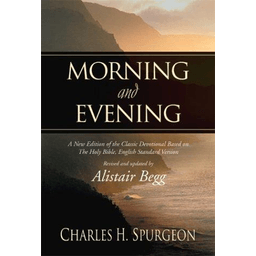 Morning and EveningCharles Spurgeon’s two-reading-a-day Victorian classic. Denser, more scripture-saturated, more sermonic. The canonical alternative.
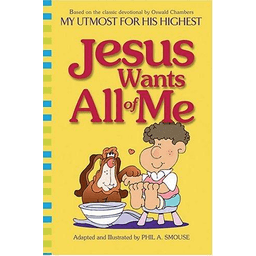 My Utmost for His HighestOswald Chambers’ 1920s lectures compiled into a daily devotional. Intense, demanding, famously quoted. The classic discipleship counterpart.
 Streams in the DesertL.B. Cowman’s 1925 devotional written from years of suffering. The go-to for readers in long seasons of grief or waiting.
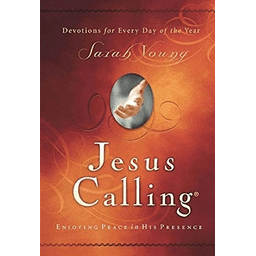 Jesus CallingSarah Young’s first-person devotional. The bestseller of the category and also the most debated. A very different voice from Tripp’s.
Frequently asked questions
Is New Morning Mercies a dated devotional?
No. The entries are numbered Day 1 through Day 365, not tied to calendar dates. You can start any time of year and just work straight through.
How long is each daily entry?
About a page and a half - a one or two sentence aphorism in bold, roughly 300 to 400 words of pastoral commentary, and a Scripture reading reference at the bottom. Most readers finish in five to seven minutes.
Which edition should I buy - hardcover, Kindle, audiobook, or padded?
For personal reading, the standard hardcover is the balanced default. The Kindle is the cheapest way in and is good if you want search. The Audible version is narrated by Tripp himself and works well for commutes. The padded gift edition is what to buy if you’re giving it to someone else.
What tradition is Paul David Tripp writing from?
Tripp is a Reformed evangelical pastor with a long background in biblical counseling. The book is theologically consistent with that tradition. Readers from Catholic, Orthodox, Latter-day Saint, or Wesleyan backgrounds can still benefit, though some phrasing will read as distinctly Reformed.
Is this a good gift for someone going through a hard time?
Yes - it’s one of the most common gift-book choices in this category for exactly that reason. The padded gift edition, with its presentation page in front, is the format most often given for weddings, ordinations, and friends walking through illness or grief.
How does it compare to Jesus Calling?
Very different voices. Jesus Calling is written in a first-person devotional voice as though Jesus is speaking, which some readers find intimate and some find theologically uncomfortable. New Morning Mercies is written as a pastor speaking to the reader about the gospel. Both are bestsellers; they’re aiming at different things.
Did New Morning Mercies win any awards?
Yes - it won the ECPA Christian Book of the Year award in the devotional category in 2015 and has stayed on backlist bestseller lists for more than a decade since.
Sources & further reading
More Devotional Books
My Utmost for His HighestThe 90-year-old daily devotional that still outsells most new releases - short, dense, and famously unwilling to let a reader off the hook.Morning and EveningThe 1865 twice-daily devotional from the Prince of Preachers - still in print, still in the morning routine of millions, and still doing something almost no other devotional even tries.For the Love of GodA two-volume daily devotional that does something almost no other devotional attempts: it walks you through the whole Bible in a year and teaches you to read it as one connected story - and Crossway gives the entire text away for free.The Songs of JesusTim and Kathy Keller’s 365-day walk through every Psalm has quietly become the daily-practice companion to Keller’s Prayer - a short passage, a brief reflection, and a written prayer for each morning of the year.Streams in the DesertThe hundred-year-old daily devotional that gets handed to people in the hospital, at the funeral, after the diagnosis - and the one question worth answering before you buy it.Daily Light on the Daily PathThe 1794 family devotional made of nothing but arranged Scripture - morning and evening, every day of the year, with no human commentary at all, and almost no one else has tried to do what it does.