- Starting price
- Free (public domain); $15 print
- Free tier
- Yes
- Platforms
- Print · Kindle · Audiobook · Free PDF · Public domain · App
- Developer
- Crossway (modern updated ed.), Hendrickson, Banner of Truth (originals)
- Launched
- 1865
- Updated
- May 24, 2026
The verdict
The gold-standard year-long devotional in English. Sermon-shaped, scripture-anchored, twice a day - and because it is public domain, no one has an excuse not to try it.
Try Morning and Evening ↗Opens spurgeon.org
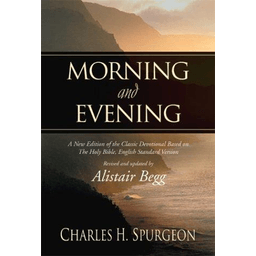
Morning and Evening has quietly become the favorite devotional of pastors, seminarians, and ordinary readers who have outgrown the soft-focus daily-email genre and want something with more spine. Charles Haddon Spurgeon assembled it in 1865 from the same well that produced his sermons at the Metropolitan Tabernacle in London - a well that, by the time he died in 1892, had filled more than sixty published volumes and earned him the durable nickname “Prince of Preachers.”
It does not give you a verse and a thought for the day. It does not give you a celebrity author’s journal entry. It does not give you life-coaching with a scripture sticker on top. It gives you a short scripture text, twice a day, every day of the year, and then a tightly-argued meditation - usually 250 to 400 words - that treats the verse the way Spurgeon treated it from the pulpit: slowly, devotionally, with Christ at the center.
The book is in the public domain, which matters more than it sounds. You can read it free in a browser at CCEL or Spurgeon Gems, listen to it as a free audiobook, or buy any of a dozen print editions ranging from a $15 paperback to Crossway’s gently modernized hardcover. The barrier to entry is the Victorian English, not the price.
✓ The good
- Twice-daily structure - morning and evening readings give the day actual bookends, which almost no other devotional attempts
- Sermon-shaped writing - each entry has a thesis, scriptural support, and a pastoral application, not just a mood
- Christ-centered throughout - Spurgeon never leaves a text without pointing to the person and work of Jesus
- Public domain - free in print, free as PDF, free as audio, available in dozens of formats and apps
- Wide appeal across traditions - read by Reformed, broader evangelical, and even Catholic and Orthodox readers who appreciate the devotional voice
- Holds up to repeat years - unlike most one-and-done devotionals, readers often cycle through it for decades
- Modern updated editions exist - Crossway’s revision (Alistair Begg, ed.) keeps the substance and softens the 19th-century syntax
✗ Watch out
- Victorian English - the original (Banner of Truth, Hendrickson) can feel dense if you don’t read older prose for fun
- Reformed Baptist theological frame - Spurgeon’s Calvinism shows up, especially on election and the sovereignty of God
- No explicit reading plan through Scripture - the verses are picked thematically, not sequentially
- Light on application steps - if you want “three things to do today,” this isn’t that genre
- Dated cultural references - occasional 19th-century illustrations land flat to modern ears
Best for
- Readers who want a substantive daily devotional with bookends to the day
- Pastors and teachers mining for sermon seed-ideas
- Anyone building a long-term morning and evening prayer rhythm
- Readers across Reformed, evangelical, and liturgical backgrounds drawn to Christ-centered devotional prose
Avoid if
- You want a short verse-and-a-thought push notification, not a 400-word meditation
- Victorian English actively irritates you and you won’t try a modern edition
- You want a structured chronological or canonical Bible-reading plan
- You want a journaling devotional with prompts and blank lines
What Morning and Evening is
Morning and Evening is a daily devotional containing 732 short readings - one for the morning and one for the evening of every day of the year. Each reading opens with a brief scripture text, usually a single verse or fragment, followed by a meditation of roughly a page in length. The two daily entries are not paired thematically; they stand on their own.
The book was first published in two parts - the Evening Readings in 1865 and the Morning Readings shortly after - and combined into the single-volume daily companion that has stayed in print ever since. The entries are not original to the book; many were drawn from and adapted out of Spurgeon’s preaching and pastoral writing during his decades at the Metropolitan Tabernacle in London.
Why readers across traditions still reach for Morning and Evening
The single biggest practical difference between Morning and Evening and almost every modern devotional is that Spurgeon writes like a preacher, not like a journaler. He picks a text, makes a claim about what it shows you about God, defends the claim from the verse itself, and lands the application on your week. There is no soft-focus, no airy reflection on the author’s mood. Every entry has a thesis.
That sermon-shaped voice is why the book travels. It is read by Reformed Baptists who claim Spurgeon as one of their own, by broader evangelicals who treat him as common heritage, and by Catholic and Orthodox readers who appreciate the Christ-centered devotional substance even when they would frame some specific doctrines differently. The writing is warm without being sentimental - the thoughtful person’s daily devotional.
The twice-daily format: bookends for the day
The structure is the unusual feature. Most daily devotionals give you one entry; Morning and Evening gives you two, and they are explicitly framed as morning and evening readings. The morning entry tends to set a tone or a promise for the day; the evening entry tends to return to rest, repentance, or assurance - not by rigid rule, but by long pattern. Together they create something close to a lay version of monastic morning and evening prayer, without the liturgical scaffolding.
This sounds like a small thing. In practice it is transformative. The day stops being one undifferentiated stretch with a verse stapled to the front. There is a moment in the morning to lift your eyes, and a moment in the evening to close them. Readers who keep up the rhythm for even a few months often report that the evening reading does as much for sleep as for sanctification - the day actually ends, instead of bleeding into the next one.
Spurgeon’s pastoral preaching voice
Spurgeon was, by most counts, the most-listened-to English-speaking preacher of the 19th century. He filled a 5,000-seat tabernacle twice each Sunday for more than three decades, and his sermons were transcribed and printed weekly. Morning and Evening is the devotional residue of that pulpit - short, but built on the same craft: a verse opened up like a hand opening on a coin, an argument made plain, then turned toward the listener’s actual life.
This is also why the book reads as pastoral rather than performative. Spurgeon spent his ministry preaching to working-class Londoners - not seminary classrooms - and he wrote the way he preached: assuming you are tired, distracted, possibly discouraged, and in need of being shown Christ rather than scolded toward Him. Anyone whose job involves producing weekly teaching has used Morning and Evening as a source of sermon seed-ideas. Plenty of laypeople use it the same way - a single page that gives the day its theological backbone.
Updated vs. original: the editing decision you actually have to make
Because the book is public domain, there are two living versions in circulation. The original Victorian text - reprinted unchanged by Banner of Truth and Hendrickson - keeps every “thee,” every long subordinate clause, every Latinate construction Spurgeon learned from Puritan reading. The updated edition, most commonly the Crossway version edited under Alistair Begg, smooths archaic vocabulary, breaks up the longest sentences, and modernizes pronouns where it can be done without losing the rhythm.
Neither choice is wrong. The original gives you the actual prose of a man steeped in the King James Bible and the Puritans; the updated edition gives you the same theology and structure with the friction of a 160-year-old idiom dialed down. The rule of thumb most readers settle into: start with the updated edition to build the habit, then graduate to the original once the voice feels familiar. (For first-time devotional readers especially, the updated edition is the balanced default.)
Pricing
Free (public domain)
$0
Full text at Spurgeon Gems, CCEL, and most Bible apps; free PDFs and free LibriVox audio recordings
Paperback (various)
~$15
Hendrickson and other standard reprints of the original Victorian text - the budget print pick
Crossway Updated Hardcover
~$25
Modern English edition (Alistair Begg, ed.) - same substance, gently smoothed syntax, the most common gift edition
Banner of Truth Hardcover
~$22
Classic unmodernized edition for readers who want the original Spurgeon voice unaltered
Kindle / Audible
~$10 / ~$15
Kindle editions of both original and updated versions; multiple narrated audiobook productions
There is no real pricing decision here. Morning and Evening has been in the public domain for over a century, and the full text is free in essentially every Bible app, on Spurgeon Gems, CCEL, and as downloadable PDFs and free audio.
If you want a physical copy, the question is which edition. The Crossway updated hardcover runs around $25, which is the most common gift edition and the easiest entry point. A standard Hendrickson paperback of the original is closer to $15. The Banner of Truth edition - around $22 - is the canonical unmodernized version for readers who want Spurgeon’s prose untouched.
Kindle editions of both the original and updated texts hover around $10, and Audible narrations run roughly $15, though the LibriVox volunteer recordings are free if you don’t mind variable narration.
Most readers do not need more than one edition. Pick the one whose voice you will actually open every morning.
Where Morning and Evening falls behind
No structured Scripture-reading plan. Morning and Evening picks verses thematically, not sequentially, so you won’t finish the year having read through any one book of the Bible. Pair it with a separate reading plan if cover-to-cover progress matters to you.
No journaling space or guided prompts. Unlike New Morning Mercies or many modern devotionals, the page is just text. If you want fill-in lines or weekly review questions, you’ll have to bring your own notebook.
Light on contemporary application. Spurgeon’s illustrations are 19th-century English - ships, lamps, fields, soldiers, the occasional pre-modern medicine reference. The theology travels; the cultural furniture sometimes doesn’t.
Theological frame is explicitly Reformed Baptist. Spurgeon’s Calvinism shows up around election, sovereignty, and assurance. It rarely dominates a given reading, but readers from other traditions will notice it, and readers looking for a generically non-denominational voice should know it going in.
No accountability or social layer. There’s no streak, no community plan, no built-in app integration. You either pick it up or you don’t - which is either freeing or, depending on your habit-formation needs, a real gap.
Morning and Evening vs. My Utmost for His Highest vs. New Morning Mercies
These are the three devotional classics readers most often compare. Different strengths. Morning and Evening (1865) is sermon-shaped, twice-daily, Reformed Baptist in tradition, and the longest established - a book that has formed devotional habits for over 150 years. My Utmost for His Highest (Oswald Chambers, 1935) is more compressed and demanding, drawn from Chambers’ holiness-tradition lectures at the Bible Training College in London, with a single dense reading per day that often functions as a spiritual gut-punch.
New Morning Mercies (Paul Tripp, 2014) is the modern entry - one reading per day, gospel-centered counseling sensibility, contemporary prose, and a clear pastoral throughline about how the gospel meets daily struggle. It is the most accessible of the three on first read, and the most explicitly therapeutic in voice.
If you want bookends to your day and the heritage voice of 19th-century preaching, Morning and Evening is the obvious pick. If you want a single short reading that will challenge you hard before lunch, Chambers. If you want modern English and a counseling-shaped tone, Tripp. Many serious readers cycle through all three across different seasons - they aren’t really competitors so much as different doorways into the same daily habit.
The bottom line
Morning and Evening is the gold standard of the year-long Christian devotional in English. It is sermon-shaped, twice a day, Christ-centered on every page, and - because it has been in the public domain for over a century - essentially free in any format you want. The Victorian prose is the only real friction, and Crossway’s updated edition has solved that for readers who want it solved. If you have been meaning to build a daily morning and evening reading habit and have not landed on a book that holds your attention past March, this is the one to try first.
Alternatives to Morning and Evening
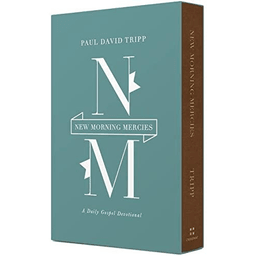 New Morning MerciesPaul Tripp’s modern one-a-day devotional - gospel-centered, counseling-shaped, the easiest contemporary on-ramp.
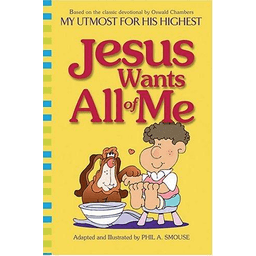 My Utmost for His HighestOswald Chambers’ 1935 classic - short, demanding, holiness-tradition readings that punch above their length.
 Streams in the DesertL.B. Cowman’s comfort-in-suffering devotional - a softer companion volume read alongside Morning and Evening for over a century.
 Our Daily Bread (app)The free daily-devotional app from RBC Ministries - short, modern, push-notification friendly, the everyday accessible pick.
Frequently asked questions
Is Morning and Evening really free?
Yes. The book has been in the public domain for over a century. The full text is freely available at Spurgeon Gems, CCEL, and inside most major Bible apps, and free audio readings exist on LibriVox and YouTube. Paid editions are paying for paper, binding, or modernized editing - not for the text itself.
Should I read the original Victorian English or the updated edition?
If you regularly read older prose for pleasure, the original (Banner of Truth or Hendrickson) is rewarding. If you don’t, start with Crossway’s modern English edition edited under Alistair Begg - same theology and structure, smoother syntax. You can always graduate to the original once the voice is familiar.
Who was Charles Spurgeon?
Charles Haddon Spurgeon (1834-1892) was a British preacher who pastored the Metropolitan Tabernacle in London for over thirty years. He drew weekly crowds in the thousands, published more than sixty volumes of sermons in his lifetime, and is widely referred to as the “Prince of Preachers.” He stood in the Reformed Baptist tradition.
Will Morning and Evening work for non-Reformed readers?
For most readers, yes. Spurgeon’s Calvinism shows up around election and divine sovereignty, but the bulk of the devotional is Christ-centered meditation on a short text - substance that has been embraced across Reformed, broader evangelical, and even some Catholic and Orthodox devotional reading. Readers from other traditions usually find the framing recognizable even when they would phrase a specific point differently.
How long does each reading take?
Most entries are around 250 to 400 words - roughly three to five minutes of careful reading, longer if you sit with the text. The twice-daily structure means total daily time is closer to ten minutes, which is one reason the format sustains over years.
Does the book follow the Bible chronologically?
No. The verses are picked thematically, not sequentially, so reading Morning and Evening over a year will not walk you through any one book of the Bible cover to cover. If sequential Bible reading matters to you, pair Morning and Evening with a separate reading plan.
Is there a good audiobook version?
Yes - several. Paid Audible productions run around $15 and are professionally narrated. Free LibriVox volunteer recordings are available if you don’t mind variable narration quality, and a number of modern Bible apps now include audio readings of Morning and Evening as part of their devotional libraries.
Sources & further reading
More Devotional Books
My Utmost for His HighestThe 90-year-old daily devotional that still outsells most new releases - short, dense, and famously unwilling to let a reader off the hook.For the Love of GodA two-volume daily devotional that does something almost no other devotional attempts: it walks you through the whole Bible in a year and teaches you to read it as one connected story - and Crossway gives the entire text away for free.The Songs of JesusTim and Kathy Keller’s 365-day walk through every Psalm has quietly become the daily-practice companion to Keller’s Prayer - a short passage, a brief reflection, and a written prayer for each morning of the year.Streams in the DesertThe hundred-year-old daily devotional that gets handed to people in the hospital, at the funeral, after the diagnosis - and the one question worth answering before you buy it.New Morning MerciesA 365-day devotional built on one stubborn idea: the gospel is not just the door you walked through, it’s the air you keep breathing - and Paul David Tripp will not let you forget it.Daily Light on the Daily PathThe 1794 family devotional made of nothing but arranged Scripture - morning and evening, every day of the year, with no human commentary at all, and almost no one else has tried to do what it does.