- Starting price
- ~$22 hardcover
- Free tier
- No
- Platforms
- Print · Kindle
- Developer
- Viking / Penguin
- Launched
- 2015
- Updated
- May 31, 2026
The verdict
The daily-practice volume to Keller’s theology of prayer - one Psalm passage, one short reflection, and one written prayer every morning for a year. It is not a Psalms commentary and never pretends to be; it is the most accessible way to pray the whole Psalter once through, and after eleven years it is still the devotional most often handed out alongside Prayer.
Try The Songs of Jesus ↗Opens penguinrandomhouse.com
The Songs of Jesus: A Year of Daily Devotions in the Psalms came out in November 2015, a year after Tim Keller’s Prayer, and it was built to be that book’s other half. Where Prayer is the long, patient theology - Augustine, Luther, and Calvin read side by side across three hundred pages - The Songs of Jesus is the daily rhythm: open the book, read a few verses of a Psalm, read a paragraph of reflection, pray the short prayer printed underneath, and go. It is the volume Keller readers reach for when they have finished the theology and want to actually do the thing.
It is not a commentary. It is not a sermon collection. It is not a topical devotional that rotates through themes. What it is instead is a guided walk through the entire book of Psalms - all 150 of them, broken into 365 short readings so the whole Psalter gets prayed once over the course of a year. Each day gives the reader a passage, a brief reflection that opens up what is happening in the text, and a written prayer that turns the reading into something said back to God. Tim Keller wrote it with his wife Kathy Keller, his collaborator across decades of ministry, and her hand is part of why the prayers land as warmly as they do.
The title is the book’s thesis in three words. The Psalms were the songbook Jesus himself prayed and sang - He quoted them from the cross, the Gospel writers read His life through them, and the early church treated them as the church’s prayer book before it had anything else. Reading the Psalms as the songs Jesus knew by heart is the lens the Kellers hand the reader on day one, and it is what keeps a year of short morning readings from flattening into routine.
✓ The good
- Walks through all 150 Psalms in a year - the whole Psalter, not a curated greatest-hits selection, so the reader prays the hard and dark ones alongside the famous ones
- A written prayer every single day - each entry ends with a short prayer the reader can say back to God, which makes it a doing-book and not just a reading-book
- Short enough to actually keep - a passage, a paragraph, and a prayer fit in five minutes, the difference between a devotional people finish and one they abandon by February
- Kathy Keller’s co-authorship shows - the prayers are warmer and more personal than Keller’s solo prose, and the partnership is part of the book’s texture
- The companion to Prayer - it is the practice side of Keller’s theology of prayer, which is why the two are so often bought and gifted together
- The Psalms belong to everyone - as Israel’s and the church’s shared songbook, the source texts sit comfortably across traditions in a way a topical devotional rarely does
- Teaches readers to pray with the Psalms, not just read them - the model of read-reflect-pray is a transferable habit that outlasts the year
✗ Watch out
- Each entry is brief by design - covering 150 Psalms in 365 days means every passage gets a short paragraph, so this is a companion, not a verse-by-verse Psalms commentary
- Not a scholarly resource - there is no Hebrew, no textual notes, no treatment of authorship or genre debates; readers wanting depth on a single Psalm will need a commentary alongside it
- The Reformed evangelical accent is present - Keller’s framing is recognizable, and readers from other traditions will catch the lens even where the Psalms themselves carry the weight
- Undated entries can disorient calendar-lovers - the book is built as a continuous year rather than mapped to specific dates or liturgical seasons
- No audiobook in the usual sense - the format is built around reading a printed passage and prayer, so it lives best on the nightstand rather than the commute
Best for
- Readers who finished Keller’s Prayer and want the daily practice side
- Anyone who has never prayed through the whole book of Psalms and wants a guided year
- People who want a written prayer handed to them, not just a passage to think about
- Gift-givers looking for a warm, accessible devotional rooted in shared scripture
Avoid if
- You want a deep verse-by-verse Psalms commentary rather than a short daily devotional
- You prefer long, essay-length daily entries over a passage-reflection-prayer format
- You want a topical devotional organized around themes rather than straight through a book
- You are looking primarily for a collection of printed prayers to read aloud - try The Valley of Vision instead
What The Songs of Jesus is
The Songs of Jesus is a 365-day devotional through the entire book of Psalms, written by Timothy Keller with Kathy Keller and published by Viking, the Penguin imprint, in 2015. Each daily entry follows the same three-part shape: a short passage of a Psalm printed at the top, a brief reflection of a paragraph or two that opens up what the passage is doing, and a written prayer underneath that turns the reading into a response. Over the year the readings move straight through all 150 Psalms in order.
It belongs alongside Keller’s Prayer as the practice companion to that book’s theology - the two were released a year apart and are routinely bundled. Where Prayer spends three hundred pages on what prayer is, The Songs of Jesus simply hands the reader a year of guided praying, using the one book of the Bible that is itself a collection of prayers. It is the most accessible of Keller’s devotional output and the one most often recommended to readers who want to start, not just study.
Why Keller readers reach for The Songs of Jesus to actually pray
The single biggest practical difference between The Songs of Jesus and most daily devotionals is that it does not stop at reflection - it hands the reader a prayer to say. Most one-page books leave you with a thought and trust you to do something with it; the gap between reading and praying is exactly where the daily habit usually dies. The Kellers close that gap on every page. The reflection opens the passage up, and then the printed prayer pulls the reader through the door into actually addressing God, which is the whole point of using the Psalms in the first place.
That choice is what makes the book the natural sequel to Prayer. Keller argued at length there that the Psalms are the church’s school of prayer and that lament, confession, thanksgiving, and praise are the registers a praying life has to learn. The Songs of Jesus is that argument turned into a daily exercise - it is the model that respects your work, assuming you want to learn the moves and not just read about them. By the end of a year the read-reflect-pray rhythm has become a habit the reader can carry into any Psalm, with or without the book in hand.
The whole Psalter in a year - all 150 Psalms, not a curated selection
The structural decision that defines the book is that it covers every Psalm. Many Psalms devotionals quietly skip the difficult ones - the imprecatory Psalms that call down judgment, the long stretches of historical recital, the dark laments where the writer feels abandoned - and stick to the comforting favorites. The Songs of Jesus does not. It moves straight through all 150 in order across 365 readings, breaking the longer Psalms into multiple days so the reader prays the whole thing rather than a highlight reel. The cost of that completeness is brevity: each day gets a short passage and a short reflection, because there is a lot of ground to cover.
The payoff is that the reader meets the full emotional range of the Psalter, which is the part most readers have never prayed before. Praying through the angry and grief-stricken Psalms, not just the green-pastures ones, is precisely what gives the Psalms their long reputation as a complete prayer book - the place believers have always gone to find their own worst feelings already given words. The Kellers’ reflections help the reader sit with the hard passages rather than rush past them, which is harder to do alone and is one of the book’s quiet strengths.
The written prayer on every page - turning reading into praying
Each entry ends with a short prayer, usually a few sentences, that takes the day’s passage and addresses it back to God. This is the feature that separates the book from a Psalms reading plan or a devotional commentary. The prayer is not a summary of the reflection; it is a model of how to respond to the passage - sometimes confession, sometimes thanks, sometimes a plea drawn straight out of the Psalm’s own words. Readers can pray it as written, or use it as a starter and continue in their own words, which is how most people end up using it after a few weeks.
Kathy Keller’s co-authorship is most visible here. The prayers are warmer and more intimate than Tim Keller’s characteristically professorial prose, and the collaboration gives the book a texture his solo titles do not have. For many readers the daily prayer is the part that does the work - it is one thing to understand that the Psalms teach prayer, and another to be handed the words and pulled into actually saying them before the day starts. Over a year the habit becomes the reader’s own.
The companion to Prayer - the practice half of Keller’s theology
The Songs of Jesus was conceived as the daily-practice counterpart to Keller’s 2014 book Prayer, and the two function as a matched set. Prayer makes the case that the Psalms are the school of prayer and spends real space on the Lord’s Prayer and the Psalter as the church’s two great prayer texts; The Songs of Jesus is the year-long lab session that puts the theory into the reader’s hands. This is why pastors so often hand out the pair together and why bookstores shelve them side by side.
The pairing also explains the title’s logic. Keller’s lens throughout is that the Psalms were the songs Jesus prayed - He sang them at the Last Supper, quoted Psalm 22 from the cross, and treated them as His own prayer book - so to pray the Psalms is, in a sense, to pray with Him. Read on its own, The Songs of Jesus stands fine as an accessible year in the Psalms; read after Prayer, it is the moment the reader stops studying prayer and starts practicing it, with the most prayer-shaped book of the Bible as the daily text.
Pricing
Hardcover
~$22
The original 2015 Viking hardcover, around 380 pages with a ribbon marker. The format most readers settle into - durable enough for a year of daily use and the natural gift edition.
Kindle
~$13
Full ebook with highlights and search. Convenient for reading on a phone first thing in the morning, and the cheapest legitimate way in.
Used hardcover
under $10
Abundant on the secondhand market given the print run. A fine option if you only want the standard text and do not mind a previous owner’s notes.
Bundle with Prayer
~$35 new
Paired with Keller’s Prayer for a complete theology-plus-practice setup. The combination most pastors recommend and the way the book is most often gifted.
Pricing is simple. The 2015 Viking hardcover runs around $22 new and is the format most readers end up with - it is built to survive a year of daily handling, has a ribbon marker, and makes the natural gift edition. Used hardcovers are abundant under $10 given the size of the print run.
The Kindle edition hovers around $13 and is the cheapest legitimate way in. It works well for readers who do their devotions on a phone first thing in the morning, and the search and highlight functions are handy if you want to find a particular Psalm later. Because the book is built around reading a short printed passage and prayer, it does not have a standard audiobook the way a prose devotional would - the format lives on the page.
The most-recommended bundle pairs The Songs of Jesus (~$22) with Keller’s Prayer (~$18) for roughly $35 new or far less used. That pairing is the theology volume plus the daily-practice volume, and it is the way the book is most often gifted - to new members, to someone starting a prayer habit, or to a friend who has read Prayer and asked what to do next.
Most readers do not need more than one format. If you are buying it for yourself, the hardcover is the balanced default since you will be opening it every morning for a year; the Kindle is the pick if you read on a phone or want the lower price.
Where The Songs of Jesus falls behind
Not a Psalms commentary. By design, each of the 150 Psalms gets only a short passage and a brief reflection so the whole Psalter fits in a year. A reader who wants to go deep on a single Psalm - its Hebrew, its structure, its authorship, the scholarly debates - will find the entries too compact and will need a dedicated commentary alongside it. The book trades depth-per-Psalm for coverage of the whole.
Devotional rather than scholarly. There is no original-language work, no textual apparatus, and no genre analysis. The reflections aim to open the passage for prayer, not to settle interpretive questions, which is the right call for the format but a real limit for study. Readers using it as their only Psalms resource should know it is a starting point.
Brief daily entries. Each reading is a few minutes - a passage, a paragraph, and a prayer. That brevity is the reason people finish the book, but readers who prefer a longer, essay-length daily meditation in the style of My Utmost for His Highest or Morning and Evening will find these entries short by comparison.
A recognizable Reformed evangelical lens. Keller writes from a Presbyterian (PCA) vantage point, and while the Psalms themselves are shared across every tradition, the framing of the reflections carries its accent. A reader from another tradition will get a great deal out of the book and will occasionally notice the corner of the room it is written from.
No first-party app, video series, or study guide. Eleven years on, there is still no official digital extension of the material - no companion app, no group curriculum from the publisher. Small-group leaders who want to use it together end up building their own discussion structure, which the daily format supports but does not provide.
The Songs of Jesus vs. The Valley of Vision vs. My Utmost for His Highest
These three sit near each other on the devotional shelf but do genuinely different jobs. Different strengths. The Songs of Jesus is a guided year through one book of the Bible - the Psalms - with a reflection and a written prayer each day, and it is the one to pick if the reader wants to pray straight through the Psalter once with help at every step.
The Valley of Vision is something else entirely - Arthur Bennett’s collection of Puritan prayers, meant to be prayed aloud rather than studied, with no passage and no reflection attached. It is the nightstand book of prayer language; The Songs of Jesus is the book that teaches the reader to build their own prayers out of scripture. The two actually complement each other well: one supplies finished prayers, the other supplies the habit of praying the Bible.
My Utmost for His Highest is Oswald Chambers compiled from 1920s lectures - a dated daily devotional that is intense, demanding, and famously quoted, but not tied to any single book of the Bible and far heavier on the will than on prayer per se. The Songs of Jesus is gentler, more accessible, and anchored entirely in the Psalms. If you want to learn to pray the Psalms, pick the Kellers; if you want a classic prayer voice to borrow, pick Valley of Vision; if you want to be pushed hard each morning, pick Chambers. Many readers eventually own all three and use them for different things.
The bottom line
The Songs of Jesus is the daily-practice companion to Keller’s Prayer and the most accessible way to pray through the entire book of Psalms in a year. It is not a commentary and never tries to be - the trade for covering all 150 Psalms is that each gets a short, warm treatment and a written prayer rather than a deep scholarly dig. Pair it with a Psalms commentary if you want depth on a single Psalm, or with Prayer if you want the theology behind the practice. But as a year-long, prayer-included walk through the songbook Jesus Himself prayed, it has earned its place as the devotional Keller readers reach for when they decide to stop studying and start praying.
Alternatives to The Songs of Jesus
 Prayer: Experiencing Awe and Intimacy with GodTim Keller’s book-length theology of prayer. The Songs of Jesus is its daily-practice companion - read Prayer for the foundation, then pray the Psalms with this.
 The Valley of VisionArthur Bennett’s collection of Puritan prayers, meant to be prayed aloud. Supplies finished prayers where The Songs of Jesus teaches you to build your own from scripture.
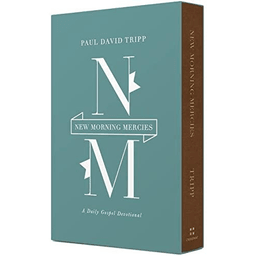 New Morning MerciesPaul David Tripp’s 365-day gospel-centered devotional. A different daily shape - aphorism and pastoral essay rather than passage, reflection, and written prayer.
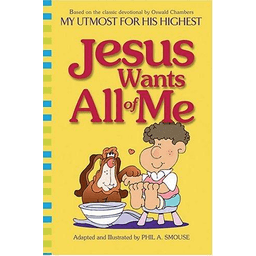 My Utmost for His HighestOswald Chambers’s century-old daily devotional. More intense and demanding, not tied to a single book of the Bible - the classic discipleship counterpart.
Frequently asked questions
Is The Songs of Jesus a commentary on the Psalms?
No. It is a 365-day devotional that walks through all 150 Psalms with a short passage, a brief reflection, and a written prayer each day. Because it covers the whole Psalter in a year, each Psalm gets a compact treatment rather than the verse-by-verse depth of a commentary. If you want to study a single Psalm closely, pair it with a dedicated Psalms commentary.
Did Kathy Keller really co-write it?
Yes - the book is credited to Timothy Keller with Kathy Keller, his wife and longtime ministry collaborator. Her hand is most visible in the written prayers, which read warmer and more personal than Tim Keller’s solo prose. The partnership is part of what gives the book its texture.
How is each daily entry structured?
Three parts: a short passage from a Psalm at the top, a paragraph or two of reflection that opens up what the passage is doing, and a written prayer underneath that turns the reading into a response to God. Most readers finish a day in about five minutes.
Should I read this or Keller’s Prayer first?
They do different jobs. Prayer is the book-length theology of prayer; The Songs of Jesus is the daily-practice companion that puts it into a year of praying the Psalms. Many readers read Prayer first for the foundation and then use The Songs of Jesus to actually build the habit, which is why the two are so often bundled. Either order works - you can also start with the daily readings and pick up the theology later.
What tradition do the Kellers write from?
Tim Keller was a Reformed Presbyterian pastor (Presbyterian Church in America, PCA) who founded Redeemer Presbyterian in New York. The reflections carry that accent. The Psalms themselves, though, are shared across every Christian tradition as the church’s ancient songbook, so readers from Catholic, Orthodox, Latter-day Saint, Wesleyan, and other backgrounds will find the source text familiar even where they notice the framing.
Why is it called The Songs of Jesus?
The Psalms were the songbook Jesus Himself prayed and sang - He quoted them from the cross, sang them at the Last Supper, and the early church used them as its prayer book. The title invites the reader to pray the Psalms as the songs Jesus knew by heart, which is the lens the Kellers use throughout.
Is there an audiobook?
Not in the usual sense. The format is built around reading a short printed passage and praying a printed prayer, so it lives best on the page rather than as commute listening. The main editions are the hardcover and the Kindle ebook.
Sources & further reading
More Devotional Books
My Utmost for His HighestThe 90-year-old daily devotional that still outsells most new releases - short, dense, and famously unwilling to let a reader off the hook. Morning and EveningThe 1865 twice-daily devotional from the Prince of Preachers - still in print, still in the morning routine of millions, and still doing something almost no other devotional even tries.For the Love of GodA two-volume daily devotional that does something almost no other devotional attempts: it walks you through the whole Bible in a year and teaches you to read it as one connected story - and Crossway gives the entire text away for free.
 Streams in the DesertThe hundred-year-old daily devotional that gets handed to people in the hospital, at the funeral, after the diagnosis - and the one question worth answering before you buy it.New Morning MerciesA 365-day devotional built on one stubborn idea: the gospel is not just the door you walked through, it’s the air you keep breathing - and Paul David Tripp will not let you forget it.Daily Light on the Daily PathThe 1794 family devotional made of nothing but arranged Scripture - morning and evening, every day of the year, with no human commentary at all, and almost no one else has tried to do what it does.