
- Starting price
- $17.99 hardcover
- Free tier
- No
- Platforms
- Print · Kindle · Audiobook · Audible
- Developer
- Dutton (Penguin Random House)
- Launched
- 2014
- Updated
- May 24, 2026
The verdict
The thoughtful person’s introduction to prayer - Keller writes for readers who want both the theology and the practice, and who don’t mind being asked to think. Twelve years after publication it still reads as the most widely recommended single-volume on prayer in print.
Try Prayer: Experiencing Awe and Intimacy with God ↗Opens penguinrandomhouse.com
Tim Keller’s Prayer: Experiencing Awe and Intimacy with God came out in November 2014, sold more than 500,000 copies in its first few years, hit the New York Times bestseller list, and has since settled into the position most authors only dream about - the book people buy first when they decide they want to learn how to pray. It is the book pastors hand to new members, the book small groups read in the fall, and the book seminary students get assigned in spiritual-formation electives.
It is not a how-to manual. It is not a forty-day devotional. It is not a charismatic-style breakthrough book. What it is instead is something rarer: a careful, mid-length theology of prayer that takes the practice seriously enough to spend roughly a hundred pages defining what prayer actually is before telling the reader how to do it. Keller writes the way he preaches - patient, slightly professorial, allergic to slogans, and quietly insistent that the reader’s problems with prayer are usually problems with how they think about God.
The book’s distinctive contribution is a synthesis that almost no other modern prayer book attempts: Keller reads Augustine, Luther, and Calvin on prayer side by side, holds them up against the Psalms and the Lord’s Prayer, and then asks how the resulting picture interacts with the secular reader’s real objections. Three giants, two biblical anchors, one twenty-first-century skeptical conversation partner. That combination is why the book has stuck.
✓ The good
- Augustine, Luther, and Calvin read together - Keller is the rare modern author who makes the three of them feel like a single conversation rather than three separate footnotes
- Anchored in the actual texts - the Psalms and the Lord’s Prayer get full exegetical treatment instead of being mined for one-liners
- Takes secular doubts seriously - chapters on whether prayer is wishful thinking, why God seems silent, and why prayer "works" engage modern objections without dismissing them
- Theological depth without academic prose - the writing is plain enough for a first-time reader and rich enough for a pastor preparing a sermon series
- Pastorally honest about dry seasons - Keller is unusually frank about his own decades-long struggles with prayer, which lowers the bar to entry
- Practical "method" chapters at the end - meditation, contemplation, and the daily office get concrete enough that a reader can build a routine from chapter 14 alone
✗ Watch out
- Long for a prayer book - at roughly 320 pages of dense prose, it is not the right pick for someone wanting a quick devotional jump-start
- Reformed accent throughout - Keller’s Presbyterian (PCA) framing shapes the synthesis, and readers from other traditions will recognize that lens even where it stays neutral
- Light on charismatic, contemplative, and liturgical traditions - Pentecostal, Quaker, Orthodox, and Catholic devotional streams get less airtime than the Reformation triad
- Few exercises and no worksheets - readers who want a Paul Miller-style "try this today" workbook will need to bring their own structure
- Audiobook narration is competent but flat - the hardcover with margin space is the better way to absorb the material
Best for
- Readers who want both the theology and the practice in one volume
- Pastors and small-group leaders building a prayer teaching series
- Seminary and Bible-college students assigned a spiritual-formation text
- Lifelong Christians who feel their prayer life has gone shallow and want depth, not novelty
Avoid if
- You want a quick thirty-day prayer challenge rather than a sustained theology
- You prefer charismatic, contemplative, or strictly liturgical framing over a Reformation-rooted synthesis
- You dislike book-length engagement with Augustine, Luther, and Calvin
- You are looking primarily for printed prayers to read aloud - try The Valley of Vision instead
What Prayer: Experiencing Awe and Intimacy with God is
Prayer: Experiencing Awe and Intimacy with God is Tim Keller’s 2014 book-length theology of Christian prayer, organized in five parts: desiring prayer, understanding prayer, learning prayer, deepening prayer, and doing prayer. It is roughly 320 pages, includes substantial footnotes, and was published by Dutton, the Penguin Random House imprint that put out most of Keller’s general-audience titles.
It belongs to a small cluster of recent books - alongside Paul Miller’s A Praying Life and Donald Whitney’s Praying the Bible - that has come to function as the default modern prayer canon for Reformed-leaning readers. Of those three, Keller’s is the most theologically ambitious and the one most often handed to seekers and skeptics, not just to longtime Christians.
Why thoughtful readers reach for Keller’s Prayer first
The single biggest practical difference between Prayer and almost every other book on the shelf is that Keller refuses to skip the theology. He is convinced that most people who say they "can’t pray" are actually carrying around a half-formed picture of God that makes prayer feel pointless, and that no amount of technique will fix that until the picture changes. So the first half of the book is essentially a long, patient repair job on who the reader thinks they are talking to.
That choice is what makes the book so often quoted in sermons, study notes, and seminary syllabi. It is the model that respects your work - assumes you have actually read a few things, actually have doubts, actually want to know what Augustine meant by restless hearts and what Calvin meant by prayer as the chief exercise of faith. Once Keller has done that work, the practical chapters land with weight, because they are landing on ground he has already prepared.
The Augustine, Luther, and Calvin synthesis - the differentiator
Roughly the middle third of the book is built around three teachers Keller treats as his primary historical guides: Augustine of Hippo on prayer as the rest of the restless heart, Martin Luther on prayer as the simple, daily catechism-shaped conversation, and John Calvin on prayer as the chief exercise of faith and the way the believer actually receives what God has promised. Keller does not just cite them - he sets them in conversation, shows where they reinforce one another, and names the places where their accents differ. That is unusual. Most modern prayer books pick one heritage and stay there.
The effect is that a Catholic reader recognizes Augustine, a Lutheran reader recognizes Luther’s Small Catechism teaching on the Lord’s Prayer, and a Reformed reader recognizes Calvin’s Institutes book III chapter 20 - and the synthesis still hangs together. It is also why the book has crossed tradition lines further than its publisher likely expected: Wesleyan, charismatic, Catholic, and Orthodox readers all find threads they recognize, even as Keller writes from a Presbyterian (PCA) vantage point. The historical roots do the unifying work.
Lord’s Prayer and Psalms exegesis - the biblical anchor
The other backbone of the book is the actual biblical texts on prayer. Keller works through the Lord’s Prayer line by line, drawing on Augustine’s sermons, Luther’s Personal Prayer Book, and Calvin’s Institutes treatment as his three sparring partners - each petition is opened up theologically and then handed back as a usable daily framework. The Psalms get parallel treatment as Israel’s and the church’s school of prayer, with attention to lament, confession, thanksgiving, and praise as the four main registers a praying life needs to learn to move through.
This is the part of the book that pastors quote in sermons and that small-group curricula tend to lean on. It functions as a teaching commentary on the two most important texts on prayer in scripture, and it is plain enough that a first-time reader can follow and rich enough that a seminary student can take notes. The companion volume - The Songs of Jesus, the Kellers’ year-long Psalms devotional - is essentially the practice side of this exegetical work, which is why the two are so often bundled together.
Modern doubts and the silence of God - the chapter people remember
Few prayer books spend serious time on whether prayer is wishful thinking, whether unanswered prayer is evidence against God, whether neuroscience has explained away contemplative experience, or whether the silence many believers feel for years at a time is itself an argument against the whole enterprise. Keller spends real space on each of these. He treats the modern skeptic, including the skeptic inside the believer’s own head, as a serious conversation partner rather than a threat to be waved off.
This is the chapter cluster that most often shows up in podcast clips and quote graphics, and it is also why the book gets recommended to people who are not yet sure they believe. Keller does not pretend the questions are easy. He walks through how the giants he is reading - and the biblical writers themselves, especially in the lament psalms - handled the silence, and offers a posture rather than a tidy answer. For many readers it is the section that turns a book about prayer into a book they finish.
Pricing
Hardcover
~$17.99
Original 2014 Dutton hardcover, 320 pages. Best for margin notes, rereading, and gifting. The format most readers settle into.
Paperback
~$15.99
Penguin trade paperback released after the initial hardcover run. Same text, lighter, cheaper, easier to travel with.
Kindle
~$13
Kindle edition with highlights and lookup. Good for searching back through Keller’s Augustine and Calvin quotes.
Audible
~$15
Roughly thirteen hours, narrated by Sean Pratt. Solid but plain - works well for commute listening.
Bundle with The Songs of Jesus
~$25
Pair with the Kellers’ year-long Psalms devotional for a paired theology-plus-practice setup. The combination most pastors recommend.
The 2014 Dutton hardcover runs around $17.99 new and is the format most readers end up with - it has the margin space the book really wants, since Keller is constantly quoting Augustine, Luther, and Calvin and the reader will want to write back. Used copies are abundant under $10.
The Penguin trade paperback at around $15.99 is the format pastors hand out in bulk for small groups. Kindle hovers around $13 and is worth it if the reader wants to search back later through specific Augustine or Calvin quotes - Keller cites the Institutes constantly and the search function pays for itself.
Audible runs roughly $15 for about thirteen hours, narrated by Sean Pratt. Competent commute listening, but the book has enough density that most readers benefit from the print version on the second pass.
The most-recommended bundle pairs Prayer (~$18) with The Songs of Jesus (~$18) - the Kellers’ Psalms devotional - for roughly $25 used or $35 new. That pairing is essentially the theology volume plus the daily practice volume, and is the way the book is most often gifted.
Where Prayer: Experiencing Awe and Intimacy with God falls behind
No practical workbook component. The book is a sustained argument and a theology, not a Paul Miller-style "try this today" guidebook. Readers who learn by doing rather than by reading will want to pair it with A Praying Life or with the Kellers’ own The Songs of Jesus to get the daily rhythm side. Keller’s practical chapters at the end help, but they are short relative to the theological setup.
Light treatment of charismatic and Pentecostal streams. Tongues, spirit-led intercession, and prophetic prayer get brief acknowledgement but no real exposition - a Pentecostal or charismatic reader will recognize the omission. Similarly, Quaker silent waiting and Catholic Marian and saint-mediated devotion are mentioned but not engaged at the depth the Augustine-Luther-Calvin sections receive.
Reformation-heavy historical lens. By design, Keller’s three main teachers are Augustine, Luther, and Calvin. The Eastern fathers, the medieval mystics, the Desert tradition, and modern Catholic spiritual writers like Thomas Merton appear only briefly. A reader looking for a wider historical survey will want to add Foster’s Celebration of Discipline or a book like Gary Thomas’s Sacred Pathways.
Dense for a beginner. At 320 pages with substantial footnotes, the book asks more of a first-time reader than the genre average. Someone brand new to prayer and to theological reading at the same time may stall in the first hundred pages - which is precisely the section the rest of the book depends on.
No companion app, video series, or study guide from the publisher. Twelve years on, there is still no first-party digital extension of the material. Group leaders end up building their own discussion questions, which the book’s structure supports but does not provide.
Keller’s Prayer vs. A Praying Life vs. The Valley of Vision
These three books make up most modern Reformed-leaning prayer recommendations, and they do genuinely different jobs. Different strengths. Keller is the theology volume - patient, historical, structured around Augustine, Luther, and Calvin, and the one to read if the reader’s problem with prayer is essentially intellectual or a question of how to think about God.
Paul Miller’s A Praying Life is the practice volume - shorter, more anecdotal, more workshop than seminar, and the one to read if the reader’s problem is that they keep trying to start a daily prayer habit and it keeps falling apart. Miller is funnier and more personal. Keller is denser and more comprehensive. Most readers benefit from reading both within a year of each other, and many small groups intentionally pair them.
The Valley of Vision is something else entirely - a collection of Puritan prayers compiled by Arthur Bennett, meant to be prayed aloud rather than studied. It is the book that goes on the nightstand and gets opened most mornings; Keller and Miller are the books that go on the desk and get worked through once. Many readers end up with all three and use them for different things: Valley of Vision for daily devotional voice, Keller for the theological foundation, Miller for the day-to-day practice.
The bottom line
Prayer is the thoughtful person’s introduction to Christian prayer - the book to recommend when someone wants both the theology and the practice, and is willing to spend three hundred careful pages getting both. Twelve years after publication it is still the modern single-volume that pastors, small-group leaders, and seminary professors reach for first. It is not the only book a praying life needs; pair it with The Songs of Jesus or A Praying Life for the daily rhythm side. But as a foundation, it has earned the position it holds.
Alternatives to Prayer: Experiencing Awe and Intimacy with God
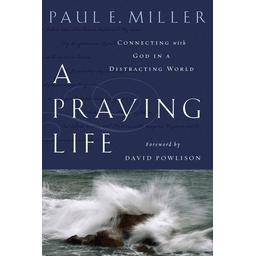 A Praying LifePaul Miller’s practical, anecdotal companion volume. Shorter, more personal, more "try this today." The practice side of what Keller does as theology.
 The Valley of VisionArthur Bennett’s collection of Puritan prayers - meant to be prayed aloud, not studied. The nightstand book that pairs with Keller’s desk book.
 My Utmost for His HighestOswald Chambers’s century-old daily devotional. Different genre - shorter, more aphoristic, deeply Wesleyan-Holiness in tone.
 Knowing GodJ. I. Packer’s 1973 classic on the character of God. Often read alongside Keller - Packer answers "who is God" so prayer to Him makes sense.
Frequently asked questions
Is Prayer by Tim Keller good for beginners?
Yes, but with a caveat - Keller writes plainly enough for a first-time reader, but the book is 320 pages and spends the first third on the theology of prayer before turning to method. A reader brand new to both prayer and theological reading may want to start with Paul Miller’s shorter A Praying Life and then come back to Keller for the depth.
What tradition does Tim Keller write from?
Keller was a Reformed Presbyterian pastor (Presbyterian Church in America, PCA) and founded Redeemer Presbyterian in New York. The book’s historical synthesis draws heavily on Augustine, Luther, and Calvin, so Catholic, Lutheran, and Reformed readers all find their tradition represented. Wesleyan, charismatic, and Orthodox readers will recognize fewer of their own teachers but will still find the Augustine threads familiar.
How long is the book?
Roughly 320 pages in the Dutton hardcover, organized into five parts and twenty chapters. The audiobook is about thirteen hours. Most readers move through it in four to six weeks at a chapter or two per sitting; small groups commonly take a full semester.
Should I read Keller’s Prayer or Foster’s Celebration of Discipline first?
Different jobs. Foster covers twelve spiritual disciplines across traditions - prayer is one chapter in a much wider survey. Keller goes deep on prayer alone, with the Augustine-Luther-Calvin axis as the historical spine. If prayer is the specific question, Keller first. If the broader landscape of spiritual practice is the question, Foster first.
Is there a study guide or companion?
No official first-party study guide from Dutton. Many small-group leaders use the book’s five-part structure as a natural five- or twenty-session arc. The Songs of Jesus - the Kellers’ year-long Psalms devotional - functions as the unofficial daily-practice companion and is often bundled with it.
How does it compare to Paul Miller’s A Praying Life?
Miller is the practice book, Keller is the theology book. Miller is shorter (about 280 pages), funnier, more anecdotal, organized around how a real prayer life actually forms over time. Keller is denser, more historically rooted, and structured as a sustained argument. Most readers benefit from reading both within a year of each other.
Does Keller talk about unanswered prayer and God’s silence?
Yes - extensively, and it is one of the most-cited sections of the book. He treats the silence of God and the experience of unanswered prayer as serious questions, walks through how Augustine, Luther, Calvin, and the lament psalms handled them, and offers a posture rather than a formula. It is the part of the book most often recommended to readers who are wrestling with doubt.
Sources & further reading
More Books on Prayer
The Valley of VisionArthur Bennett’s slim collection of Puritan prayers has quietly become the modern standard prayer book in Reformed circles - and the gift-book the rest of the church keeps quietly buying.A Praying LifeThe most quietly beloved modern book on prayer in the evangelical world, built around a startling idea - that real prayer looks more like a child tugging a parent’s sleeve than a disciplined adult performing piety.The Book of Common PrayerThe 1549 prayer book that gave English-speaking Christianity its Daily Office has quietly become the structured prayer rhythm readers of many traditions reach for when their own words run out.Power Through PrayerThe short, white-hot classic that argues the church’s power has never come from its methods or its machinery but from praying people - written for preachers, read by everyone who has ever felt their own prayer life go cold. The Power of a Praying WifeThe book that quietly built an entire genre of "praying for your spouse" titles - and still sits on more nightstands than almost any other prayer book in print.
 ESV Study BibleThe ESV Study Bible has quietly become the default desk Bible for pastors, seminarians, and serious lay readers in the Reformed evangelical world - and the reasons it earned that spot are worth understanding before you buy.