
- Starting price
- $10.99 paperback
- Free tier
- No
- Platforms
- Print · Kindle · Audiobook
- Developer
- Northfield Publishing
- Launched
- 1992 (updated 2015)
- Updated
- May 24, 2026
The verdict
A short, practical, surprisingly durable framework that has helped millions of couples stop talking past each other. The categories are loose and the research is thin, but the core idea - that people give and receive love differently - is the kind of insight that pays for itself in the first conversation.
Try The 5 Love Languages ↗Opens 5lovelanguages.com
The 5 Love Languages has quietly become the favorite of marriage counselors, premarital pastors, small-group leaders, and a stunning number of secular therapists who never mention the book is Christian. More than 20 million copies have moved since 1992 - a number almost no Christian-press title has ever touched - and it now spawns a small library of spinoffs (children, teenagers, singles, men, military, the workplace) plus a website, a quiz, podcasts, and a daily email. For a book that is barely 200 pages and was written by a Baptist marriage counselor in North Carolina, that is an unusual cultural footprint.
It is not a theology of marriage. It does not exegete Ephesians 5. It does not stake out a position on gender roles, divorce, or the meaning of the covenant. What it does is name a single, very practical observation Chapman kept making in his counseling office: most couples are not failing to love each other - they are failing to love each other in a way the other person actually receives. He calls these styles the five love languages: Words of Affirmation, Acts of Service, Receiving Gifts, Quality Time, and Physical Touch. The premise is that everyone has a primary language, and when a spouse speaks the wrong one, the love simply does not register.
That premise is the book's entire engine. The rest is illustration - story after story from Chapman's counseling files, a self-assessment quiz at the back, a chapter on loving an unloving spouse, and a closing argument that love is a choice rather than a feeling. It is a small book carrying a big idea, and the reason it has lasted is that the idea works in a one-bedroom apartment on a Tuesday night. Whether the framework is rigorously true is a separate question we will get to.
✓ The good
- Genuinely useful vocabulary - couples who could not previously name what was missing suddenly can, and the conversation moves
- Short and readable - under 200 pages, conversational prose, doable in a weekend or as a four-week small-group study
- The quiz works as a conversation starter - even skeptics who roll their eyes at the categories find the results surprisingly accurate
- Christian framing is light enough to share with non-Christian friends - Chapman's faith is present but never the hook, which is why it crossed mainstream
- Spinoff series is genuinely useful - the children, teenagers, and singles editions are not cash-grabs; they apply the framework to real situations
- Counselor's instincts on display - Chapman's stories carry the weight of someone who has actually sat with thousands of couples
- Holds up at 30+ years - the cultural references are dated but the underlying insight is not
✗ Watch out
- Empirical research is thin - the framework was built from clinical observation, not controlled studies, and academic psychologists have published mixed results on whether the categories hold up
- Five is a clean number, not a researched one - many people land between two or three "languages" and the forced-choice quiz can flatten that
- Gender assumptions feel dated in places - the 2015 update softened the original, but examples still skew toward a 1980s marriage (he works, she manages the home)
- Light on hard cases - abuse, addiction, infidelity, and serious mental illness get short treatment; the framework is calibrated for normal-strength marital drift, not crisis
- Theology of marriage is implicit, not developed - readers wanting a thicker Christian account of covenant, vocation, or sanctification should pair it with something heavier
- Some critics argue it can encourage transactional thinking - "I did your language, where's mine" - though Chapman explicitly warns against this
Best for
- Engaged couples and newlyweds looking for a shared vocabulary
- Long-married couples in a dry patch who need a fresh frame
- Small groups and Sunday school classes wanting a 4-6 week study
- Counselors and pastors who want a single book to assign before the first session
Avoid if
- You want academically rigorous relationship research with citations
- Your marriage is in crisis (abuse, addiction, affair) - start with a counselor, not a paperback
- You want a deep theology of Christian marriage - pair this with something thicker
- You bounce off self-help language and earnest 1990s anecdotes
What The 5 Love Languages is
The 5 Love Languages is a short, practical paperback that argues every person has a primary emotional channel through which they most naturally give and receive love - and that mismatched channels are the single most common quiet killer of otherwise good marriages. Chapman names five: Words of Affirmation (verbal encouragement, praise, appreciation), Acts of Service (doing things that ease the other person's load), Receiving Gifts (tangible tokens that say "I was thinking of you"), Quality Time (undivided attention), and Physical Touch (non-sexual affection alongside sex). The book walks one language per chapter, each illustrated with three or four counseling-room stories.
Chapman is a Baptist pastor and marriage counselor based in Winston-Salem who has been seeing couples for more than five decades. The first edition came out in 1992 through Northfield, a Moody Publishers imprint. A revised edition arrived in 2015 with updated examples, a new section on social media, and a refreshed quiz. The book is explicitly Christian in its framing - the closing chapters anchor love in God's love and treat marriage as a covenant - but the framework itself is portable enough that it has been adopted by secular therapists, corporate trainers, and TikTok creators who have no idea the author opens with a prayer.
Why so many couples actually finish this one
Most marriage books die on page forty. The 5 Love Languages does not, and the reason is structural. Chapman gives you a vocabulary in the first chapter, a quiz at the back, and a frame simple enough that you can explain it to your spouse in ninety seconds at dinner. That is the killer feature - not the depth of the insight but the immediate usability of it. You read a chapter, you have a conversation, something shifts before you reach the next chapter. The book is short enough that you can hand it to a husband who has not finished a book since college and have him actually return it.
It is also the thoughtful person's gateway marriage book. The framework is light enough that more skeptical readers can engage without feeling preached at - Chapman's Christian commitments are present but never demanded - and substantive enough that decades-married couples regularly report a real shift. That combination is rare. Most marriage advice is either too thin to matter or too heavy to finish. This one threads the needle, which is why pastors keep handing it out, why secular counselors keep recommending it, and why it keeps selling roughly half a million copies a year more than thirty years in.
The framework: five categories, one big idea
The five love languages are the entire engine of the book. Words of Affirmation covers verbal encouragement, compliments, written notes, and the small daily "thank you" that some spouses live on and others barely notice. Acts of Service is the language of effort - unloading the dishwasher, running the errand, fixing the running toilet - where the act itself is the love letter. Receiving Gifts is not materialism but symbolism; the small tangible token that says the other person was thinking of you when you were not in the room. Quality Time is undivided attention - phones down, eyes up, a shared activity or shared conversation where presence is the point. Physical Touch is non-sexual affection (a hand on the back, a hug in the kitchen, sitting close on the couch) alongside the sexual relationship.
The big idea - and it really is one idea, repeated five times with different examples - is that people instinctively give love in their own primary language and assume it will land. It often does not. A husband who feels loved through Acts of Service will mow the lawn and fix the gutter and assume his wife knows he loves her, while she sits in the living room aching because he has not actually sat down and talked to her in three weeks. Neither person is failing. They are speaking past each other. Chapman's claim is that learning your spouse's language and choosing to speak it - even when it feels unnatural - is the practical work of love. It sounds like a small thing. In practice it is transformative, which is why couples keep saying this book saved them when nothing else did.
The assessment: the quiz that launched a thousand date nights
Tucked at the back of the book - and now hosted free at 5lovelanguages.com - is a thirty-item forced-choice quiz that ranks your five languages from primary to least-spoken. The format is simple: "I like to receive notes of affirmation from you" versus "I like it when you hug me," pick one, thirty times. At the end you get a numeric score for each language and a ranking. Couples typically take it separately, then compare, and the comparison is where the magic happens. The reveal is rarely dramatic for the person taking it. It is often dramatic for the spouse who suddenly understands why a $4 card landed harder than a $400 dinner.
The quiz is also where some of the academic criticism lands hardest - forced-choice instruments flatten people who genuinely score evenly across two or three languages, and the categories are not psychometrically validated in the way personality instruments like the Big Five are. Chapman would not claim otherwise; the quiz is a counseling tool, not a diagnostic test. Used as a conversation starter - "here is roughly how I tend to feel loved, and here is how you tend to feel loved" - it works astonishingly well. Used as a personality lock-in or an excuse ("I don't speak that language"), it can become a problem. Most couples land in the first camp and find it useful within an hour of taking it.
The spinoff series: kids, teens, singles, military, and beyond
What started as one paperback is now a small franchise. The 5 Love Languages of Children (co-authored with pediatrician Ross Campbell) applies the framework to parenting and is the spinoff most often recommended back to people after the original. The 5 Love Languages of Teenagers tackles the harder developmental window where physical touch and quality time both get awkward. The Singles edition reframes the languages around friendships, family of origin, and roommates rather than marriage - useful for the reader who finds the original too couple-coded. There is a men's edition (originally titled The Five Love Languages: Men's Edition, with examples and language pitched at male readers who do not normally pick up relationship books), a military edition for deployment-strained marriages, and a workplace edition (The 5 Languages of Appreciation in the Workplace) that has quietly become a corporate-training staple.
The spinoffs are uneven - the children's and teenagers' editions are the strongest, the workplace and military ones are useful for their specific audiences, and a few of the smaller spinoffs feel like the framework stretched thin. But the broader point is that the core idea is portable, which is part of why it stuck. Most marriage books cannot be retrofitted to a fourth grader, a deployed sailor, or a manager trying to retain a difficult employee. This one can, mostly, and the existence of the series gives readers a natural next step rather than a one-and-done read.
Pricing
Paperback
~$10.99
The 2015 revised edition - the one everyone means when they say "the book." Easy to mark up, easy to lend, the version most small groups order in bulk.
Hardcover
~$19.99
Gift edition with sturdier binding. Popular as a wedding-shower or engagement gift. No content difference from the paperback.
Kindle
~$9.99
Full text, includes the assessment. Convenient but the quiz works better with a pen and a quiet table than on a phone screen.
Audible
~$20
Narrated by Chapman himself - around five hours. His Southern-counselor cadence is part of the appeal; this is the version that works on a commute.
Workbook
~$15
Companion workbook for couples or small groups. Chapter-by-chapter prompts and exercises. Useful if you want the book to actually change something rather than just be read.
The paperback at around $10.99 is the obvious starting point and the version most readers should buy. It is cheap enough to hand to a friend, light enough to throw in a bag, and the 2015 revision is the cleanest edition of the text. If you are leading a small group, ordering twenty copies of the paperback is the standard move.
The Kindle edition at around $9.99 is convenient and includes the assessment, but the quiz genuinely works better on paper - the forced-choice format wants a pen and a quiet hour, not a phone in the elevator. The Audible version (around $20, narrated by Chapman himself in his unhurried North Carolina cadence) is the right pick for commuters and for spouses who will listen but not read.
The hardcover at around $19.99 is essentially a gift edition - most often given at engagement parties, bridal showers, and to newly married couples by well-meaning aunts. The workbook at around $15 is the upgrade that matters: if you actually want the book to change something, pairing the paperback with the workbook turns a weekend read into a four-to-six-week practice. Most readers do not need the workbook. Couples who want the book to do real work usually do.
The companion website (5lovelanguages.com) hosts the quiz for free, plus articles, a podcast, and a daily email. Most of what you need is in the paperback; the site is a useful supplement, not a required purchase.
Where The 5 Love Languages falls behind
No empirical research base. The framework was built from Chapman's clinical observation across decades of counseling, not from controlled studies, and the academic literature is mixed on whether the five categories hold up as discrete constructs. Some studies find them useful as conversation starters; others find that relationship satisfaction tracks better with general communication quality than with language-matching. Readers who want peer-reviewed grounding will need to look elsewhere - books by John Gottman or Sue Johnson sit on firmer empirical ground.
Light on hard cases. The book is calibrated for normal-strength marital drift - the couple who has gone quiet, the spouse who feels unseen, the relationship that has lost its spark. It is not calibrated for abuse, untreated addiction, infidelity, or serious mental illness, and the brief chapter on "loving an unloving spouse" is too thin to carry that weight. Couples in genuine crisis need a counselor, not a paperback, and the book occasionally gets handed out as if it could do work it was never designed to do.
Dated cultural defaults. The 2015 update helped, but the examples still skew toward a particular kind of mid-century marriage - male breadwinner, female homemaker, two-parent household, suburban context. Readers in same-sex relationships, blended families, multi-generational homes, or any setting outside the implied default will find themselves translating constantly. The framework still applies; the illustrations sometimes do not.
Theology of marriage is implicit. Chapman is a Baptist pastor and the closing chapters anchor love in God's love, but the book is not - and does not try to be - a developed Christian theology of marriage. Readers wanting a thicker account of covenant, vocation, sanctification, headship, or any of the contested theological questions will find this book genuinely useful but theologically thin. Pair it with something heavier (Keller's The Meaning of Marriage, Thomas's Sacred Marriage) if depth is the goal.
Five categories is a clean number, not a researched one. Some readers genuinely have a sixth category that doesn't fit (financial security, shared spiritual practice, intellectual companionship), or score evenly across three of the five. The forced-choice quiz can flatten that, and the book occasionally encourages readers to pick a primary language when their actual experience is more distributed. The framework is a useful simplification; it is not the final word on how love works.
The 5 Love Languages vs. Sacred Marriage vs. The Meaning of Marriage
These three are the books most often recommended together - and they sit at different points on the same shelf. Chapman's 5 Love Languages is the practical front door: short, accessible, immediately usable, and light enough on theology that you can hand it to a non-Christian friend. Gary Thomas's Sacred Marriage takes the opposite angle, arguing that God designed marriage primarily to make us holy rather than happy, and treating the difficulty of marriage as the spiritual feature rather than the bug. Tim Keller's The Meaning of Marriage (co-written with Kathy Keller) is the heaviest of the three, working through Ephesians 5 and giving a developed theological account of covenant, gospel, and gender that the other two largely leave implicit.
Different strengths. Chapman is better at giving you a vocabulary you can use on Tuesday. Thomas is better at reframing the hard seasons as sanctifying rather than disappointing. Keller is better at building a theological foundation thick enough to hold the other two. A common path is to start with Chapman because spouses will actually read it, then move to Thomas when the marriage is going through a stretch that needs reframing, then arrive at Keller when you want the underlying theology.
For couples in premarital counseling, most pastors still assign Chapman first and one of the others second. For long-married couples in a flat patch, Thomas often hits hardest. For readers who want the deepest account, Keller is the unmissable one. None of them replaces the others, and the smartest readers own all three.
The bottom line
The 5 Love Languages is not the deepest book on marriage and it is not the most rigorously researched, but it may be the most useful - and that is a separate, important category. Chapman gives ordinary couples a vocabulary they did not have, a quiz that actually opens conversation, and a framework simple enough that both spouses can hold it in their heads at the same time. The critiques are real (thin empirics, dated examples, light theology) but they are worth knowing about going in rather than dealbreakers. For ten dollars and a weekend, the upside is enormous. Most marriages would be measurably better if both spouses had read it.
Alternatives to The 5 Love Languages
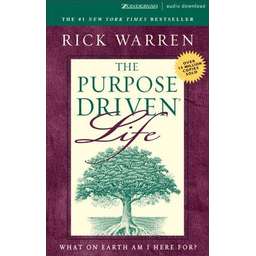 The Purpose Driven LifeRick Warren's 40-day devotional on the question "What on earth am I here for?" - another short, accessible Christian title that crossed mainstream and sold tens of millions.
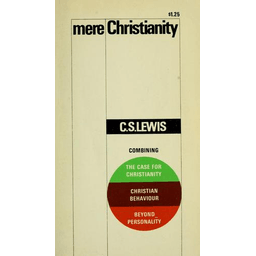 Mere ChristianityC.S. Lewis's classic case for the Christian faith. Heavier reading than Chapman, but the foundational book most thoughtful Christians eventually arrive at.
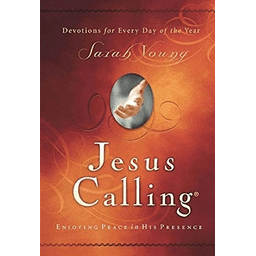 Jesus CallingSarah Young's daily devotional, written in the first-person voice of Jesus addressing the reader. Wildly popular, with some controversy around the first-person device.
 ESV Study BibleCrossway's flagship study Bible - 20,000+ study notes, maps, articles. Different category from Chapman, but the natural next purchase for a couple wanting to read scripture together.
Frequently asked questions
Is The 5 Love Languages a Christian book?
Yes, Chapman is a Baptist pastor and marriage counselor and the book is written from an explicitly Christian framework - the closing chapters anchor love in God's love and treat marriage as a covenant. That said, the framework itself is portable enough that secular therapists, corporate trainers, and non-religious couples use it widely. Many readers do not realize the book is Christian until the final chapters.
Is the quiz scientifically validated?
Not in the formal sense. The five-language framework was built from Chapman's clinical observation over decades of counseling, not from controlled psychometric studies. Academic research on the categories is mixed - some studies find them useful conversation tools, others find relationship satisfaction tracks better with general communication quality than with language-matching. Treat the quiz as a counseling tool that opens conversation, not a diagnostic test.
Which edition should I buy?
The 2015 revised paperback is the default - it is the cleanest version of the text and the one most small groups use. The hardcover is essentially a gift edition. The audiobook is excellent for commuters because Chapman narrates it himself. The Kindle is convenient but the quiz genuinely works better with paper and a pen. The workbook is worth adding if you want the book to actually change something rather than just be read.
What about the spinoffs - are they worth reading?
The 5 Love Languages of Children (co-authored with pediatrician Ross Campbell) is the strongest spinoff and the one most readers come back for after the original. The Teenagers edition is solid for parents navigating that window. The Singles, Military, and Workplace editions are useful for their specific audiences. The Men's edition is essentially the original with examples and tone pitched at male readers. Start with the original; add spinoffs as the situation demands.
My spouse will not read the book - what should I do?
Common situation, and the book itself addresses it in the chapter on loving an unloving spouse. The simplest move is to take the free quiz at 5lovelanguages.com yourself, then ask your spouse to take it as a five-minute favor - most people will. From there, a single dinner conversation about the results often does more than reading the book together would have. The audiobook is also the right call for spouses who will listen on a commute but never sit down with a paperback.
How does it compare to Gottman or Sue Johnson?
John Gottman's work (The Seven Principles for Making Marriage Work) and Sue Johnson's Hold Me Tight sit on firmer empirical ground - both are built on decades of laboratory research. They are deeper and more rigorous. Chapman is shorter, more practical, and easier to finish, which is why it is more often recommended first. Many counselors assign Chapman to start the conversation and Gottman or Johnson when couples want to go further.
Is the framework dated in 2026?
Some of the examples are - the book carries the cultural defaults of an early-1990s marriage, even after the 2015 update. The underlying insight that people give and receive love in different ways is not dated and shows no sign of becoming so. Readers in same-sex relationships, blended families, or non-traditional households will translate the examples constantly but generally find the framework itself still applies.
Sources & further reading
More Marriage & Family Books
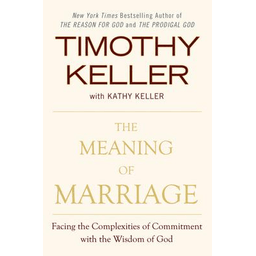 The Meaning of MarriageTim and Kathy Keller’s 2011 marriage book has quietly become the most-recommended modern Christian work on the subject - and the reason has almost nothing to do with romance.ParentingPaul David Tripp's 2016 parenting book reframes the whole project around 14 gospel principles - and argues that God is using your kids to change you as much as He's using you to change them.Habits of the HouseholdJustin Whitmel Earley’s field guide to forming Christian families one daily rhythm at a time - and why a Richmond lawyer’s parenting book quietly became the most-recommended title in young-parent small groups.Boundaries in MarriageCloud and Townsend take their five-million-copy Boundaries framework and point it straight at the marriage relationship - arguing that owning your own life is what makes loving your spouse possible.Don’t Make Me Count to ThreeGinger Hubbard's 2003 toddler-discipline book has quietly become the go-to gift for new moms in evangelical circles - short, practical, and aimed at the child's heart rather than just the meltdown in aisle four.The Mission of MotherhoodSally Clarkson's 2003 book reframes motherhood as a high and intentional calling rather than a holding pattern - the vision-casting classic that launched a whole movement of home-discipleship writing.