- Starting price
- $12.99 hardcover
- Free tier
- No
- Platforms
- Print · Kindle · Audiobook
- Developer
- Thomas Nelson
- Launched
- 2004
- Updated
- May 24, 2026
The verdict
Jesus Calling is the rare devotional that has comforted tens of millions of readers and provoked a real, ongoing theological conversation about its first-person format. Both responses are honest. Whether it belongs on your nightstand depends on how you read it.
Try Jesus Calling ↗Opens jesuscalling.com
Jesus Calling has quietly become the bestselling devotional of the last twenty years, with more than fifty million copies sold across the franchise. Walk into almost any Christian bookstore in North America and you will see it - the small square hardcover, the cream cover, the gold script. Walk into a hospice room, a college dorm, a grieving friend's kitchen, and you will often find it there too. People do not buy this book for theology seminars. They buy it because somebody handed it to them in a hard week and it helped.
It also has its critics. It doesn't hide its format. It doesn't soften the voice. It doesn't apologize for what it is - a daily one-page entry written, as Sarah Young describes in her introduction, as if Jesus is speaking directly to the reader in the first person. That single editorial decision is the entire conversation around this book. To some readers it is the warmest possible invitation into prayer. To others - including a number of well-known pastors and theologians - it raises questions worth asking out loud.
This review tries to do something the internet does poorly with Jesus Calling: take both sides seriously. The book's appeal is real. The concerns about its format are real. We will lay out what it is, how it reads, who wrote it and why, where the controversy lives, and who is most and least likely to be helped by it. The conclusion is yours.
✓ The good
- Genuinely comforting to readers in grief or anxiety - the warm, intimate tone is the reason millions of copies have moved
- Bite-sized daily structure - one page, two or three short paragraphs, the kind of thing a busy or exhausted reader will actually finish
- Each entry is anchored by two or three scripture references printed at the bottom, so the reader is pointed back to the Bible itself
- Beautiful gift-edition packaging - the leathersoft and deluxe editions are some of the best-made devotionals on the market
- Sarah Young's backstory is compelling - decades of chronic illness and missionary life shape the quiet, dependent tone of the writing
- Audiobook narration is unusually well done - many readers prefer it for morning commutes or bedtime listening
✗ Watch out
- The first-person "Jesus speaking" voice is the central concern - readers from a number of traditions, including conservative Protestants and Catholics, have flagged it as a category they are not comfortable with
- Scripture references appear at the bottom of each entry, but the body of the entry is Young's own prose, not exposition of those verses - easy to confuse the two
- Not a Bible study - repeated daily use can substitute for, rather than supplement, time in scripture itself
- Theologically thin by design - the format trades depth for warmth, which is a real trade-off
- Some entries lean heavily on a single emotional register (calm, presence, comfort) - readers wanting lament, doctrine, or wrestling will not find much of it here
Best for
- Readers in seasons of grief, illness, or anxiety who need a short, gentle daily anchor
- Gift-givers who want something warm and accessible for a friend who does not read theology
- People rebuilding a devotional habit after years away from it
- Audiobook listeners who want a quiet, contemplative morning or evening rhythm
Avoid if
- You are uncomfortable with devotionals written in the first-person voice of Jesus
- You want verse-by-verse exposition or a guided Bible study - this is not that
- You are looking for a doctrinally rigorous devotional in the Puritan or Reformed tradition
- You prefer devotionals that quote scripture at length rather than reference it in footnotes
What Jesus Calling is
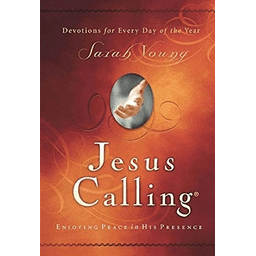
Jesus Calling is a 365-day devotional, first published by Thomas Nelson in 2004, written by missionary and counselor Sarah Young. Each day has a single page: a short reflection of two or three paragraphs, written in the first-person voice as if Jesus is speaking directly to the reader, followed by two or three scripture references at the bottom of the page. There are no chapters in the traditional sense - just January 1 through December 31, one entry per day.
It has grown into a substantial franchise. Beyond the original devotional there are children's editions, a 365-day Bible alongside, a journaling edition, a teen edition, an Advent volume, and a steady stream of follow-ups - Jesus Always, Jesus Today, Jesus Lives. Across the line, the publisher reports more than fifty million copies sold, which puts it in the small category of devotionals that have crossed over from Christian retail into general-market gift sections.
Why so many everyday readers reach for Jesus Calling
The honest answer is the format. A page a day, written in a voice that addresses the reader directly, is exactly the kind of thing a tired or grieving person can actually pick up at 6:00 a.m. or 10:00 p.m. and finish. Most devotionals are longer and denser than they realize - Spurgeon's Morning and Evening is dense paragraphs of nineteenth-century English; My Utmost for His Highest is theological. Jesus Calling clocks in at roughly two hundred words a day, in modern, plainspoken sentences, and the reader is the one being addressed.
The second answer is the tone. Young wrote much of this material out of decades of chronic illness and the quiet of her own prayer life as a missionary, and you can feel it. The book's recurring themes - presence, trust, slowing down, releasing anxiety - match how a lot of readers actually feel when they pick up a devotional. It does not ask much of you on a hard day. That is either its great gift or its limitation, depending on what you want a devotional to do.
The one-page-a-day format: why it works for so many readers
Open Jesus Calling to today's date and you get the same thing every time - a date heading, a single page of devotional prose, and two or three scripture references printed in italics at the bottom. The whole thing takes about three minutes to read. That is by design. Young has said in interviews that she wanted to write something a person could read during a coffee break, in a hospital waiting room, before bed. The constraint is the point.
In practice, this is the feature that drives the sales numbers more than any other. Most readers do not stick with devotionals that demand twenty minutes a day. They stick with the one they can finish before the kids wake up. Jesus Calling fits in the smallest possible window of the day, which is why so many people who tried and abandoned longer devotionals describe this as the first one that stayed on their nightstand for an entire year. The flip side, which is fair, is that three minutes of someone else's prose is not the same thing as reading the Bible itself. The book points to scripture; it does not replace it. Used the right way, it is a doorway. Used the wrong way, it is a substitute.
The first-person voice: the heart of the controversy
This is the part of Jesus Calling that gets written about. Every entry is composed as a direct first-person message - "I am with you," "Come to Me," "Trust Me in the depths of your being." In her introduction, Young describes the entries as the product of her own quiet-time journaling, in which she would listen for messages she believed Jesus was giving her, and then write them down in his voice. She is careful to say the book is not equal to scripture. But the literary device - Jesus speaking in the first person, on the page, every day for a year - is the device.
A number of well-known voices have raised concerns about this. Pastor Tim Challies and the late Phil Johnson, among others, have published critiques arguing that the format invites readers to receive Young's reflections as if they were direct words from Jesus, and that this raises real questions for traditions that hold the canon of scripture closed. Other Christians, including many pastors who otherwise recommend the book, have no problem with it - they read it the way they would read any devotional, treating the "I" as a literary frame. Latter-day Saint readers, whose tradition does affirm continuing revelation through specific channels, often have their own particular take on a book that claims neither prophetic authority nor purely human authorship. The point is not to settle that conversation. The point is that the format is the book, and the reader should know going in that the format itself is what readers and pastors have been debating for twenty years.
Sarah Young: who wrote this and why
Sarah Young was born in 1946, studied at Wellesley and Tufts, trained as a counselor at Covenant Theological Seminary, and spent much of her adult life on the mission field with her husband Stephen - first in Japan, later in Australia. From her thirties onward she struggled with chronic illness - including significant immune-system and neurological issues - that increasingly limited what she could do publicly. By the time Jesus Calling was published in 2004 she was largely housebound, and she remained so for the rest of her life. She passed away in 2023.
That context matters for reading the book. The recurring themes - stillness, dependence, the comfort of presence in a body that does not cooperate, the smallness of any given day - are not abstract. They are what her own quiet times were made of for decades. Many readers who pick up Jesus Calling in a hard season of their own report that the book feels like it was written by someone who knew what a hard season actually felt like. That is, in the most concrete sense, true.
Pricing
Hardcover
~$12.99
The standard edition - small square format, cream cover, gold script. The version most people picture when they think of Jesus Calling.
Kindle
~$9.99
The least expensive way in. Good for sampling or for readers who already prefer ebooks; loses the gift-object feel of the print editions.
Leathersoft
~$24.99
A nicer binding with a flexible cover and ribbon marker - the most common gift edition, holds up to daily use better than the standard hardcover.
Audible
~$25
Full-length narration. Many readers report the audiobook is the format that finally made the devotional stick - short enough to fit a commute.
Large Deluxe Edition
~$30
Larger trim size, expanded layout, often with additional reflection prompts. The version most often given as a milestone or memorial gift.
There is no free tier - this is a book, and like any book the price is the price.
For most readers, the standard hardcover at around $12.99 is the right purchase. It is the version everyone pictures, it holds up reasonably well to a year of daily handling, and at this price it is the easy gift to bring to a hospital visit or a funeral.
The leathersoft edition at around $24.99 is worth the upgrade if you are giving it as a milestone gift or buying it for yourself with the expectation of using it for several years. The binding is markedly more durable, the ribbon marker is genuinely useful, and the smaller trim size travels well.
Kindle at around $9.99 is the least expensive way to sample the book before committing to a print copy, and the Audible edition at around $25 is the one a lot of commuters end up preferring - it is the format that turns a three-minute morning ritual into something you can actually keep up across a year.
Where Jesus Calling falls behind
No exposition of the scripture references. The verses at the bottom of each entry are listed, not unpacked - a reader who wants to understand why a particular passage anchors the day's reflection has to go look it up on their own. Most do not.
No room for lament or doctrinal weight. The emotional register is consistent - calm, presence, comfort, trust - and the book rarely modulates into harder territory. Readers who want a devotional that wrestles with suffering, judgment, sin, or doctrine in any sustained way will not find much of it here.
No equivalent of a Bible reading plan. Jesus Calling is sometimes mistaken for a Bible-in-a-year resource. It is not. It is one short page of original devotional writing per day, with verse pointers. The companion Jesus Calling Bible exists to fill that gap, but it is a separate purchase.
No engagement with the format question itself. The introduction explains how the book was written, but the running text never pauses to remind the reader that what they are reading is Sarah Young's prose, not the words of Jesus. That ambiguity is exactly what critics flag, and the book does not address it once you are inside it.
Jesus Calling vs. My Utmost for His Highest vs. Our Daily Bread
These are the three devotionals most readers compare when they are picking one. Different strengths. Jesus Calling is the warmest and most accessible - short, first-person, comforting, modern prose. My Utmost for His Highest, compiled from Oswald Chambers' early-twentieth-century lectures, is the most demanding - dense theology, archaic phrasing, a confrontational tone toward the comfortable Christian life. Our Daily Bread, from Our Daily Bread Ministries, sits between them - a short illustrated reflection, a scripture passage actually printed in the entry, and a clear devotional teaching grounded in the verse.
For readers in active grief or anxiety, Jesus Calling is the most likely to actually get picked up and finished. For readers who want their devotional to challenge them and stretch their theological vocabulary, My Utmost is the obvious choice - and it is in the public domain, available free in dozens of formats. For readers who want a short daily reading that actually expounds a specific scripture passage, Our Daily Bread is the one to use; it is also free, in print and through the app, and ships to anyone who asks.
Different jobs. Jesus Calling is the comfort book. My Utmost is the discipleship book. Our Daily Bread is the scripture-anchored everyday devotional. Most serious readers eventually own all three and rotate.
The bottom line
Jesus Calling is the bestselling devotional of its generation for good reasons - it is short, it is warm, it has met millions of readers in their hardest seasons, and it points back to scripture on every page. It is also a book whose format has been honestly questioned by thoughtful Christians from several traditions, and the questions are not going away. Read it knowing both things are true. If the first-person voice is something you can receive as a literary frame for a fellow believer's prayer life, this book has real gifts to give you. If it is not, there are other excellent devotionals on the next shelf over.
Alternatives to Jesus Calling
 Jesus Calling Devotional AppThe official text-and-audio library: seven-day previews, then $4.99 monthly or $49.99 yearly, with legacy-purchase access caveats.
 Our Daily BreadFree daily devotional with short reflections anchored in a printed scripture passage - the closest mainstream alternative if the Jesus Calling format gives you pause.
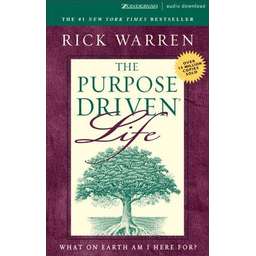 The Purpose Driven LifeRick Warren's 40-day guided reading on the purpose of human life - more programmatic and teaching-driven than Jesus Calling, with discussion questions per day.
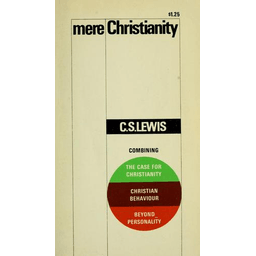 Mere ChristianityC.S. Lewis's classic - not a devotional, but the book most often paired with Jesus Calling on a nightstand when readers want some theological weight alongside the comfort.
 ESV Study BibleNot a devotional at all - a one-volume study Bible. Included here because the best companion to any short devotional is the scripture itself, with notes.
Frequently asked questions
Is Jesus Calling actually written by Jesus?
No. The book is written by Sarah Young in a first-person literary voice meant to feel as if Jesus is speaking to the reader. Young is clear in her introduction that the book is not equal to scripture; the format is a devotional device, and the body of every entry is her own prose.
Why is Jesus Calling controversial?
The central concern is the first-person voice. A number of pastors and theologians - Tim Challies and Phil Johnson among the better-known - have argued that writing in the voice of Jesus blurs the line between scripture and personal devotional reflection. Other Christians read the book as a literary device and have no issue with it. It is a real disagreement worth knowing about before you buy.
Who is Sarah Young?
Sarah Young (1946-2023) was a missionary, counselor, and author. She trained at Covenant Theological Seminary, served on the mission field in Japan and Australia with her husband Stephen, and wrote Jesus Calling over years of chronic illness that left her largely housebound. The book grew out of her own daily quiet-time journaling.
How long does it take to read each day?
About three minutes. Each entry is roughly two hundred words plus two or three scripture references at the bottom of the page. The brevity is the format - it is designed to fit into the smallest possible window of a busy or exhausted day.
Can Jesus Calling replace daily Bible reading?
It is not designed to. Each entry points to scripture but does not contain or expound it. Most readers who use Jesus Calling well treat it as a short morning or evening companion alongside actual Bible reading, not as a substitute for it.
Which edition should I buy?
For most readers the standard hardcover at around $12.99 is the right choice. The leathersoft edition at around $24.99 is the upgrade worth making if you plan to use it for several years or are giving it as a milestone gift. The Audible edition is the one a lot of commuters end up preferring.
Are the spinoffs - Jesus Always, Jesus Today, the kids editions - worth it?
They follow the same format and tone as the original. Readers who loved the first book usually enjoy the spinoffs; readers who had reservations about the first-person voice will have the same reservations about the rest of the franchise. The children's editions are the ones most often recommended on their own merits as gentle, age-appropriate daily reading for younger readers.
Sources & further reading
More Devotional Books
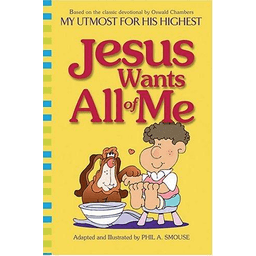 My Utmost for His HighestThe 90-year-old daily devotional that still outsells most new releases - short, dense, and famously unwilling to let a reader off the hook.
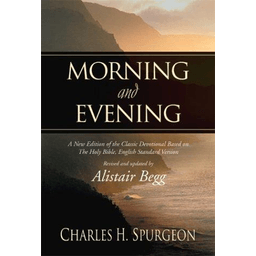 Morning and EveningThe 1865 twice-daily devotional from the Prince of Preachers - still in print, still in the morning routine of millions, and still doing something almost no other devotional even tries.For the Love of GodA two-volume daily devotional that does something almost no other devotional attempts: it walks you through the whole Bible in a year and teaches you to read it as one connected story - and Crossway gives the entire text away for free.The Songs of JesusTim and Kathy Keller’s 365-day walk through every Psalm has quietly become the daily-practice companion to Keller’s Prayer - a short passage, a brief reflection, and a written prayer for each morning of the year.
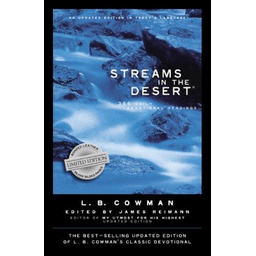 Streams in the DesertThe hundred-year-old daily devotional that gets handed to people in the hospital, at the funeral, after the diagnosis - and the one question worth answering before you buy it.
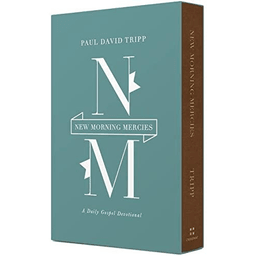 New Morning MerciesA 365-day devotional built on one stubborn idea: the gospel is not just the door you walked through, it’s the air you keep breathing - and Paul David Tripp will not let you forget it.