
- Starting price
- $54.99 hardcover
- Free tier
- No
- Platforms
- Print · Kindle · Logos · ESV.org online
- Developer
- Crossway
- Launched
- 2008
- Updated
- May 24, 2026
The verdict
The single most comprehensive, well-edited evangelical study Bible in print - 95 contributors, 20,000+ notes, 50+ articles, and editorial fingerprints from Wayne Grudem and J.I. Packer. Best-in-class for readers comfortable with its Reformed-leaning theological perspective; readers from other traditions will want to know that perspective is there.
Try ESV Study Bible ↗Opens esv.org
The ESV Study Bible launched in October 2008, won ECPA Christian Book of the Year the following spring, and has since crossed the one-million-copy mark - numbers a reference book almost never sees. Wayne Grudem served as general editor, J.I. Packer as theological editor, and 93 other scholars contributed notes, articles, charts, and maps. The project was the largest single editorial undertaking in Crossway's history at the time, and it shows.
It is not a devotional Bible. It does not optimize for daily reading. It does not try to compete with a one-year plan app. What it does is sit on a desk - or open on a laptop via Logos or ESV.org - and answer the questions a serious reader actually asks while working through a passage: what does this Hebrew word mean here, what did the original audience hear, where does this thread show up elsewhere in scripture, how have the church's teachers historically read it.
There are three obvious competitors: the NIV Study Bible (broader evangelical, translation-driven), the MacArthur Study Bible (more pointed dispensational and Reformed-Baptist voice), and the Reformation Study Bible (Sproul, confessionally Reformed). The ESV Study Bible sits between them - broader and more academically restrained than MacArthur, more theologically opinionated than the NIV edition, less explicitly confessional than the Reformation. For a lot of pastors and teachers in the broad Reformed and evangelical world, that's the sweet spot. For readers in Wesleyan, Catholic, Orthodox, or Latter-day Saint traditions, it's a useful but partisan reference - best read with awareness of what perspective is doing the framing.
✓ The good
- Best-in-class scholarship density - 20,000+ study notes, 80,000 cross-references, and 50+ feature articles, all in one volume
- Editorial coherence - Grudem and Packer's oversight gives the whole thing a consistent voice across 95 contributors, which is rare for projects this size
- Visual reference unmatched in the category - over 200 full-color maps, charts, timelines, and architectural diagrams by National Geographic-tier cartographers
- Lifetime digital access to ESV.org included with print purchase - the same notes searchable, linkable, and synced across devices
- Logos and Kindle editions are first-class - not afterthoughts; the Logos version integrates with original-language tools and other reference works
- Cross-references are exceptionally well-curated - not exhaustive, but selected, which is more useful than a thousand pointer arrows
- Articles section reads like a one-volume systematic theology and biblical-theology primer - surprisingly substantial for a study Bible
✗ Watch out
- Reformed-leaning evangelical perspective shapes the notes - Wesleyan, Catholic, Orthodox, and Latter-day Saint readers will find theology outside their tradition
- Physical book is heavy and bulky - 2,750+ pages; not a carry-to-church Bible for most people
- ESV translation only - if you prefer NIV, NASB, KJV, NRSV, or another version, the notes don't travel
- Print font is small in the standard hardcover - large-print edition exists but adds bulk and cost
- No audio component - for an audio-first reader, this is not the resource (Dwell or YouVersion is)
- Some sections lean technical fast - the Pentateuch and Pauline epistle notes can read more like a commentary digest than a study Bible
Best for
- Pastors and seminarians who want one editorially coherent reference on the desk
- Lay readers in Reformed, Presbyterian, Baptist, or broadly evangelical traditions
- Bible teachers preparing weekly studies who need notes plus cross-references plus maps in one place
- Logos users who want the Crossway scholarly stack integrated into their library
Avoid if
- You read primarily in a non-ESV translation and want notes that map to your text
- You're Catholic, Orthodox, or Latter-day Saint and want a study Bible from inside your tradition
- You want a devotional or daily-reading Bible - the ESV Study Bible is a reference, not a plan
- You need a lightweight Bible to carry - the print edition is genuinely heavy
What ESV Study Bible is
The ESV Study Bible is a single-volume study Bible built around Crossway's English Standard Version translation. The biblical text occupies the top half of each page; the bottom half carries study notes from a rotating cast of scholars assigned by book - Old Testament notes from people like Iain Duguid, Daniel Block, and Gordon Wenham; New Testament notes from Thomas Schreiner, D.A. Carson, Vern Poythress, and others. Wayne Grudem oversaw the project as general editor, with J.I. Packer signing off on theological content across the volume.
Beyond the running notes, the book includes 50+ feature articles on topics like biblical theology, the reliability of the canon, the history of salvation, world religions, ethics, and the relationship between the testaments. There are over 200 full-color maps, diagrams of the tabernacle and temple, timelines, charts comparing parallel passages, and book-by-book introductions covering authorship, date, audience, themes, and structure. The whole thing runs roughly 2,750 pages in the standard hardcover and is also available as a Kindle book, a Logos resource, and a free companion on ESV.org for anyone who buys a print copy.
Why serious evangelical readers reach for the ESV Study Bible
The most-cited reason is editorial density per page. A typical chapter in Romans or Genesis carries more carefully edited footnoted scholarship than most one-volume commentaries - but in the same physical layout as a regular Bible, so you don't lose your place jumping between books. That's the practical magic. You read the text, you glance down, you find an answer, you keep reading. Compare that to opening a separate commentary and finding your verse, which is friction enough that most lay readers stop doing it.
The other reason is that Grudem and Packer were unusually disciplined editors. The project has 95 contributors but reads like a single book. Notes don't contradict each other across the canon. Articles cross-reference notes and vice versa. Maps and diagrams are placed where the text being illustrated actually appears, not pushed to an appendix. None of this sounds like much. In practice it's why the volume sold over a million copies and why most Reformed and broadly evangelical seminaries either recommend it or assume their students already own it.
The notes: 20,000 footnotes from 95 contributors, edited to read as one voice
The study notes are the heart of the product - roughly 20,000 of them, totaling over a million words, written by scholars assigned by book of the Bible. Each book has a lead author and supporting contributors; the editorial team then harmonized voice and theological framing across the whole project. The notes cover historical background, Hebrew and Greek word studies, literary structure, cross-canonical connections, and interpretive options when the meaning is contested. Where readings genuinely diverge - say, Romans 7's "I" or the millennial passages in Revelation - the notes typically lay out the main views and indicate which the editors find most persuasive, rather than pretending the question is settled.
What separates these notes from a typical study Bible is the density of cross-references and the willingness to engage technical material. A note on a single verse in Hebrews might point you to four Old Testament passages, a parallel in Paul, an article in the back of the book on the relationship between the covenants, and a sidebar on the priestly system. None of it is overwhelming because of the layout discipline - short paragraphs, clear typographic hierarchy, generous white space. This is the layer most pastors and teachers cite as the reason the ESV Study Bible became their desk reference. It does in 20 seconds what opening a separate commentary does in two minutes.
Articles and book introductions: a one-volume biblical-theology library
Tucked between the testaments and at the front and back of the volume are 50+ articles by scholars including D.A. Carson, John Frame, Vern Poythress, and Wayne Grudem himself. Topics include the history of salvation, biblical theology, hermeneutics, the canon of scripture, the reliability of the manuscripts, ethics, world religions, ancient Near Eastern background, and the relationship of the Old and New Testaments. Each article runs several thousand words and reads more like a chapter from a primer than a sidebar. For a reader who wants a single book that contains both running commentary and substantive theological essays, the article section alone justifies the price for many buyers.
The book introductions are the other underrated piece. Each of the 66 books opens with a multi-page introduction covering author, date, occasion, audience, themes, structure, theology, and an outline. The introductions are written to the same editorial standard as the notes and articles - restrained, scholarly, willing to flag where the academic consensus is contested. For someone preparing to teach or preach through a book, reading the introduction first is the single best ten-minute investment in the volume. It is the thoughtful person's on-ramp to any unfamiliar book of scripture.
Maps, diagrams, and visual reference: the National Geographic comparison is earned
The visual reference work in the ESV Study Bible is among the best in the category. There are over 200 full-color maps showing geography at the time of each major narrative - the kingdoms of David and Solomon, the divided kingdom under Rehoboam and Jeroboam, Paul's missionary journeys mapped against the Roman road network, the city of Jerusalem at different periods. The maps are cartographically literate: they show terrain, elevation, trade routes, and political boundaries with the kind of clarity you'd expect from a dedicated atlas. Several reviewers compared the production quality to National Geographic, and the comparison holds up.
Beyond maps, the volume includes architectural diagrams of the tabernacle, Solomon's temple, Herod's temple, and first-century synagogues; timelines of the patriarchs, the monarchy, the exile and return, and the inter-testamental period; and dozens of charts comparing parallel passages - say, the synoptic gospels side by side, or Chronicles compared to Kings. For visual learners, the diagrams alone make the print edition worth keeping even if you also own the digital version. The Kindle edition reproduces them but loses some fidelity on smaller screens; the Logos and ESV.org editions render them at full resolution and let you zoom freely.
Pricing
Hardcover
$54.99
The standard edition. Substantial binding, full-color throughout, includes free lifetime ESV.org online access. This is the one most buyers should get.
TruTone Leather
~$89
Imitation-leather covers in several colorways. Same content as hardcover; the upgrade is durability and feel, not pages or features.
Kindle Edition
~$34
Full text and notes on Kindle hardware and apps. Cross-references are tappable; maps and diagrams display but lose some fidelity at small screen sizes.
Logos Edition
~$50
Deepest integration - notes link to Greek/Hebrew lexicons, cross-references jump to other Logos resources, articles surface in the Factbook. Best for existing Logos users.
ESV.org Online
Included with print
Same study content on the web, free with any print purchase. Search, copy, and share notes from any browser; no separate subscription required.
The hardcover at $54.99 is the right choice for most buyers. You get the full study apparatus, durable binding, and free lifetime online access at ESV.org - which means even if you mostly read on a laptop, the print copy is the license that unlocks the web version. Most users do not need anything beyond this tier.
The TruTone leather editions at around $89 are a cosmetic upgrade. Same content, same pagination, better feel and longer cover life. If this is the Bible that will sit on your desk for fifteen years, the upgrade is reasonable. If you're mostly going to use the digital version and want the print as backup, save the money.
The Kindle edition at around $34 is the cheapest path in and the most portable. You lose some map fidelity on small screens and the cross-reference layout is necessarily different from print, but the notes are all there and tappable. A reasonable choice for someone who reads primarily on a tablet or phone.
The Logos edition at around $50 is the right pick for existing Logos users - the notes integrate with original-language tools, the Factbook, and any other resources you already own. For someone not already in the Logos ecosystem, the standalone Kindle or the free ESV.org access is the better starting point.
Where ESV Study Bible falls behind
Reformed-leaning theological perspective. The notes are written from within a broadly Reformed evangelical framework - covenantal in shape, with editorial sympathies on questions like predestination, the sacraments, eschatology, and the ordo salutis that will be familiar to readers from Presbyterian, Reformed Baptist, and similar traditions. Readers in Wesleyan-Arminian, Anglo-Catholic, Roman Catholic, Eastern Orthodox, or Latter-day Saint traditions will encounter framings of certain passages - Romans 9, the sacraments, ecclesiology, the canon, the relationship of faith and works - that don't reflect their own tradition's reading. That's not a defect, but it's worth knowing before you buy.
ESV-only. Every note, every cross-reference, every article quotes and references the English Standard Version. If your primary translation is NIV, NASB, NKJV, KJV, NRSV, CSB, or anything else, you'll do constant mental translation between the verse you're reading and the verse the note is annotating. The MacArthur Study Bible exists in multiple translations; the ESV Study Bible does not.
No daily-reading or devotional component. There's no one-year plan, no reading schedule, no devotional thoughts. The volume assumes you bring the reading discipline; it provides the reference apparatus. For readers who want a Bible that walks them through scripture day by day, the YouVersion app or a dedicated devotional Bible (like the NIV Application Commentary editions) is a better fit.
No audio. If you do most of your scripture intake by listening - commute, exercise, wind-down - none of the ESV Study Bible's notes or articles are voiced. The biblical text itself is available in audio elsewhere, but the study content is text-only across every edition.
Print weight. The standard hardcover is genuinely heavy - over five pounds - and the page count means the standard font is on the small side. The large-print edition adds another inch of thickness and another fifteen dollars to the price. For a desk Bible this is fine; for a Bible you want to carry to small group or church, it's not the right book.
ESV Study Bible vs. NIV Study Bible vs. MacArthur Study Bible
These are the three single-volume study Bibles most American buyers end up choosing between, and they serve genuinely different readers. The NIV Study Bible is the broadest of the three - the Zondervan edition originated in 1985, has been revised multiple times, and reflects a wide evangelical consensus rather than a specific tradition. Notes are shorter and more accessible; the theological framing is less distinct. For a reader who wants a study Bible that doesn't take sides on contested in-house evangelical questions, the NIV edition is the safer pick.
The MacArthur Study Bible is the most opinionated of the three. John MacArthur is the sole author of the notes, and his Reformed-Baptist, dispensational, cessationist perspective shows up clearly throughout. Where the ESV Study Bible lays out interpretive options and indicates a preference, MacArthur tells you what the passage means and moves on. Readers who already share MacArthur's framework find this clarifying; readers who don't find it more frustrating than the ESV edition's more restrained approach. The MacArthur Study Bible is also available in multiple translations, which the ESV Study Bible is not.
Different strengths. The NIV Study Bible is broader and more translation-flexible. The MacArthur Study Bible is sharper-voiced and more decisive. The ESV Study Bible is denser, more editorially coherent, more visually accomplished, and more academically restrained - 95 contributors edited into one voice, with a clear Reformed-leaning evangelical perspective held with more discipline than MacArthur's. For pastors, seminarians, and lay readers who want maximum scholarship in one volume and are comfortable with the theological framing, the ESV Study Bible is the strongest of the three. For everyone else, the choice depends on which trade-off matters most.
The bottom line
The ESV Study Bible is the most comprehensive, best-edited, and most visually accomplished single-volume study Bible in the broad evangelical world - and at $54.99 for hardcover with lifetime ESV.org access, it's also reasonably priced for what you get. The Reformed-leaning theological perspective is real and worth knowing about going in rather than a dealbreaker. If you're inside the Reformed evangelical world, this is the desk Bible to buy. If you're outside it, it's still a serious reference - just one you'll want to read alongside something from your own tradition.
Alternatives to ESV Study Bible
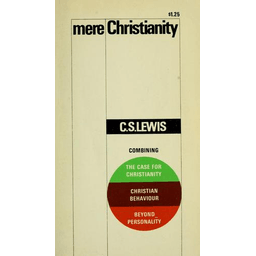 Mere ChristianityC.S. Lewis's 1952 apologetic classic - not a study Bible but the most-recommended cross-tradition introduction to historic Christian belief in print.
 The Purpose Driven LifeRick Warren's 40-day devotional bestseller - devotional rather than reference, but pairs well with a study Bible for daily reading.
 Logos Bible SoftwareThe reference platform that hosts the ESV Study Bible alongside thousands of other commentaries, lexicons, and theological works. For digital-first readers.
 Blue Letter BibleFree web and app reference with original-language tools, multiple commentaries, and cross-references - strong free complement to any study Bible.
Frequently asked questions
What translation does the ESV Study Bible use?
The English Standard Version (ESV), Crossway's 2001 essentially-literal translation revised periodically since. The notes, cross-references, and articles all quote and reference the ESV - they don't work as well alongside other translations, since wordings won't always match.
What is the theological perspective of the ESV Study Bible?
Broadly Reformed-leaning evangelical. Wayne Grudem served as general editor and J.I. Packer as theological editor, and the 95 contributors were assembled from Reformed, Presbyterian, Reformed Baptist, and broadly evangelical scholarly circles. Readers from Wesleyan, Catholic, Orthodox, or Latter-day Saint traditions will encounter framings of certain passages that reflect that editorial perspective rather than their own tradition's reading.
Do I get the digital version if I buy the print edition?
Yes. Every print purchase includes free lifetime access to the full ESV Study Bible content on ESV.org - searchable, linkable, and accessible from any browser. You register your copy once and the access doesn't expire.
How is it different from the MacArthur Study Bible?
The MacArthur Study Bible is written entirely by John MacArthur and reflects his Reformed-Baptist, dispensational, cessationist perspective directly and decisively. The ESV Study Bible has 95 contributors edited into a single voice, takes a broader and more academically restrained approach to contested questions, includes substantially more articles and visual reference material, but is only available in the ESV translation. MacArthur is in multiple translations.
Is it good for someone new to Bible study?
Yes, with a caveat. The notes are accessible enough for a motivated beginner, and the book introductions are an excellent on-ramp. But it's a reference Bible, not a devotional or reading-plan Bible - it assumes you'll bring the reading discipline. New readers who want more hand-holding may do better starting with a daily-reading app like YouVersion alongside the ESV Study Bible as a reference.
How does it compare to the Reformation Study Bible?
The Reformation Study Bible, edited by R.C. Sproul, is more explicitly confessional - its notes assume and reference the Westminster Standards and related Reformed confessions. The ESV Study Bible is Reformed-leaning but less confessionally narrow, with broader scholarly contributions and substantially more articles and visual material. Readers committed to confessional Reformed theology often prefer Sproul's edition; readers wanting broader evangelical scholarship usually prefer the Crossway volume.
Is there an app version?
There's no standalone ESV Study Bible app, but the full study content is available three ways: the Kindle edition for Kindle hardware and apps, the Logos edition for the Logos Bible Software ecosystem, and free web access at ESV.org for anyone who owns a print copy. The ESV.org mobile experience is the closest thing to a dedicated app and works well on phones and tablets.
Sources & further reading
More Study Bibles
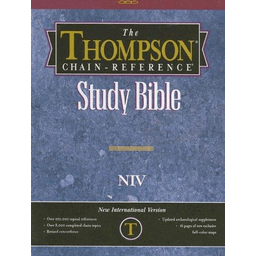 NIV Study BibleThe original modern study Bible - over nine million copies sold and still the most balanced one-volume evangelical study Bible most readers will ever own.
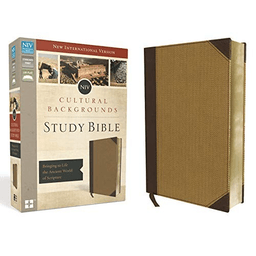 NIV Cultural Backgrounds Study BibleA 2,400-page reference Bible built around one question - what would an ancient reader have heard in this verse?
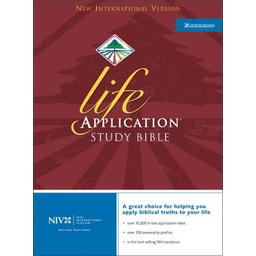 NIV Life Application Study BibleThe best-selling study Bible of the last forty years built its name on one idea - notes that tell you what a passage means for your Tuesday, not just what it meant in the first century. Here is what that trade-off actually buys you.
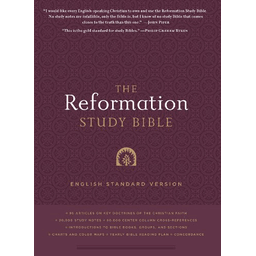 Reformation Study BibleR.C. Sproul's flagship study Bible pairs the ESV text with confessional Reformed notes, historic creeds, and a stack of theology articles - and Ligonier gives the whole apparatus away free online, which changes the buying math.
 Ignatius Catholic Study BibleThe Catholic study Bible that built its reputation one New Testament volume at a time - Scott Hahn and Curtis Mitch on the RSV-2CE - has finally arrived as a complete single volume, and it's worth understanding what it does before you buy.
 CSB Study BibleHolman's flagship study Bible pairs the readable Christian Standard Bible translation with about 16,000 study notes - a clean, modern, broadly evangelical reference that competes in one of the most crowded categories in publishing.