
- Starting price
- ~$35 hardcover
- Free tier
- No
- Platforms
- Print · Kindle · App
- Developer
- Holman Bible Publishers (B&H)
- Launched
- 2017
- Updated
- May 31, 2026
The verdict
A well-made, readable, broadly evangelical study Bible built on the Christian Standard Bible - about 16,000 notes, solid word studies, and clean maps and charts in a single volume. The notes are concise and accessible rather than encyclopedic, which makes it a strong everyday reference for readers comfortable with the CSB translation and the broadly evangelical, Protestant 66-book framing it serves.
Try CSB Study Bible ↗Opens csbible.com
The CSB Study Bible arrived in 2017 from Holman Bible Publishers - the B&H imprint with deep roots in the Southern Baptist tradition - built on the then-new Christian Standard Bible translation. It landed in a category that was already packed. The ESV Study Bible had owned the high end of the market since 2008, the NIV Study Bible had been the default for a generation, and the Life Application line had locked up the devotional-application niche. Holman's pitch was a clean, modern, readable study Bible at a friendlier price, paired with a translation engineered to be both faithful to the original languages and easy to read aloud.
It is not the densest study Bible on the shelf. It does not try to be a one-volume seminary library. It does not bury you in ten thousand words of footnotes on a single chapter of Romans. What it does is sit comfortably in the middle of the market: roughly 16,000 study notes, a strong set of Hebrew and Greek word studies, 60-plus articles, full-color maps and charts, and book introductions - all in a layout that stays out of your way. For a reader who found the ESV Study Bible intimidating or the older NIV edition dated, the CSB Study Bible reads like a fresh, uncluttered alternative.
There are three obvious points of comparison: the ESV Study Bible (denser, Reformed-leaning, more expensive), the NIV Study Bible (broader, longer-established, translation-driven), and the Life Application Study Bible (application-first, lighter on technical background). The CSB Study Bible sits between the reference-heavy and the devotional-light ends - more substantial than a basic study Bible, more concise than the ESV flagship. It serves a broadly evangelical readership from a Southern-Baptist-heritage publisher and uses the Protestant 66-book canon. That is useful information for any buyer; it shapes the translation philosophy, the note selection, and the canon you get between the covers.
✓ The good
- Built on a genuinely readable translation - the Christian Standard Bible aims for "optimal equivalence," landing between word-for-word and thought-for-thought, and it reads smoothly aloud
- About 16,000 study notes that stay concise and accessible - short enough to actually read mid-passage, rather than a commentary digest you skim past
- Strong Hebrew and Greek word-study features - keyed callouts that unpack significant original-language terms without requiring you to know the alphabet
- Clean, modern page design - clear typographic hierarchy, generous spacing, and full-color maps and charts that don't crowd the text
- Friendlier price than the category leaders - the hardcover typically runs well under the ESV Study Bible, which lowers the barrier for a first study Bible
- 60-plus articles plus book introductions - covering background, themes, structure, and theology in digestible form
- A wide edition lineup - including the CSB Study Bible for Women and other variants, so readers can pick a layout and supplementary content that fits
✗ Watch out
- Notes are solid-but-concise rather than encyclopedic - readers wanting the maximal footnote density of the ESV Study Bible will find this one lighter
- The CSB translation is newer and less familiar - readers anchored to the NIV, ESV, KJV, or NASB will need to adjust to fresh wordings, and memorized verses won't always match
- Notes are keyed to the CSB text - cross-references and word studies track the CSB, so the apparatus travels less well alongside a different translation
- Digital integration is less deep than the ESV's Logos stack - the CSB app and Kindle editions are serviceable but not a full reference-software ecosystem
- Crowded field means less distinct identity - it competes against several established study Bibles without one signature feature that obviously sets it apart
- Print-only study content for the most part - no dedicated audio version of the notes and articles
Best for
- Readers who want a clean, readable study Bible as their first or everyday reference
- Anyone who prefers the Christian Standard Bible translation and wants notes keyed to it
- Lay readers and small-group members in Baptist or broadly evangelical congregations
- Buyers who want substantial study help at a friendlier price than the category leaders
Avoid if
- You want the maximum footnote density and article depth of the ESV Study Bible
- You read primarily in a non-CSB translation and want notes that map to your text
- You're Catholic, Orthodox, or Latter-day Saint and want a study Bible from inside your tradition
- You want a deep reference-software ecosystem rather than a print-first study Bible
What CSB Study Bible is
The CSB Study Bible is a single-volume study Bible built around the Christian Standard Bible, the translation B&H released in 2017 as a major revision of the earlier Holman Christian Standard Bible. The biblical text sits at the top of each page; study notes run beneath it, written and edited by a team of evangelical scholars and covering historical background, literary structure, theological themes, and cross-canonical connections. Holman counts roughly 16,000 of these notes across the volume, alongside word-study features that highlight significant Hebrew and Greek terms in plain English.
Beyond the running notes, the volume includes 60-plus articles on biblical and theological topics, book-by-book introductions covering author, date, audience, and themes, and a full set of full-color maps, charts, and timelines. The whole thing is published in the Protestant 66-book canon and comes in a wide lineup of editions - hardcover, cloth, several leather options, large-print, a CSB Study Bible for Women with its own supplementary material, plus Kindle and the CSB app. It is designed as a readable, modern, broadly evangelical reference rather than a maximal scholarly compendium.
Why everyday readers reach for the CSB Study Bible
The first reason is the translation. The Christian Standard Bible was built on a philosophy its translators call "optimal equivalence" - an attempt to land between the word-for-word literalness of something like the ESV or NASB and the thought-for-thought readability of the NIV or NLT. In practice that means sentences that read cleanly aloud without drifting far from the underlying Hebrew and Greek. For a reader who found older study Bibles either stiff or loose, the CSB often feels like a comfortable middle, and a study Bible keyed to that text inherits the same accessibility.
The second reason is restraint. The notes are written to be read in the moment, not skimmed past. Where the ESV Study Bible can hand you a small essay on a single verse, the CSB Study Bible tends to give you a clear, compact paragraph - enough to answer the question and keep you moving through the passage. For many lay readers and small-group members, that is the more useful trade. It does in a sentence or two what a denser study Bible does in a column, and it gets you back to the text faster. The friendlier price reinforces the same posture: this is a study Bible built for everyday use, not a desk monument.
The notes: about 16,000 footnotes, written for readability
The study notes are the core of the product - roughly 16,000 of them, distributed across all 66 books and written by a team of evangelical scholars assigned by section. They cover the usual study-Bible territory: historical and cultural background, the meaning of difficult phrases, literary structure, theological themes, and connections to other passages. What distinguishes them is tone and length. The CSB Study Bible notes are written to be read mid-passage, in a compact paragraph, rather than as a multi-column treatment that competes with the biblical text for your attention. The editorial instinct throughout is to answer the question concisely and return you to the reading.
That concision is the feature and, depending on what you want, the limitation. A reader comparing the CSB Study Bible side by side with the ESV Study Bible will notice that on a dense passage - Romans 9, the temple chapters of Ezekiel, the eschatology of Revelation - the ESV simply gives you more words, more cross-references, and more discussion of competing interpretations. The CSB Study Bible covers the same ground more lightly. For someone who found the heavier study Bibles overwhelming, that is a relief and the whole point. For someone who wants every interpretive option laid out, it is a reason to keep a denser reference nearby. Neither is wrong; they are aimed at different readers.
Word studies and original-language helps in plain English
One of the CSB Study Bible's strongest features is its handling of Hebrew and Greek. Rather than assuming you can read the original alphabets, the volume surfaces significant original-language words through clearly marked word-study callouts that explain what a term means, how it is used elsewhere in scripture, and why the nuance matters for the passage in front of you. A reader who has never taken a language class can follow why a particular Greek verb tense changes the sense of a verse, or why a Hebrew word carries connotations that a single English gloss misses. The features are integrated into the page rather than banished to an appendix, so they appear where the word actually occurs.
This is the layer that lets the CSB Study Bible punch above its concise reputation. Original-language word studies are the kind of thing readers most often want from a study Bible and most often find either absent or too technical. Handling them in plain English, keyed to where they appear, is a genuinely useful design choice - it gives a motivated lay reader a real taste of the work that translators and commentators do, without requiring any prior training. Paired with the CSB's readable base text, the word studies make the volume feel like an on-ramp to deeper study rather than a wall.
Articles, introductions, and visual reference in one clean package
Surrounding the running notes are 60-plus articles on biblical and theological topics, book-by-book introductions, and a full set of full-color maps, charts, and timelines. The book introductions cover author, date, occasion, audience, themes, and structure, and reading one before working through a book is among the better uses of the volume - a quick orientation that frames everything the notes go on to say. The articles run shorter than the ESV Study Bible's small-essay treatments but cover the topics a general reader actually wonders about: how the canon came together, how the testaments relate, the geography and customs behind the narratives.
The visual reference is handled with the same clean modern design that runs through the rest of the volume. Full-color maps place the geography of each major narrative, charts compare parallel passages and lay out chronologies, and timelines anchor the biblical story against surrounding history. None of it is as exhaustive as a dedicated Bible atlas, and the cartography is more functional than the National-Geographic-tier production of the ESV flagship - but it is clear, legible, and well-integrated, and for most readers it covers the questions that come up while reading. The overall effect is a study Bible that feels uncluttered: substantial help, presented without visual noise.
Pricing
Hardcover
~$35
The standard edition. Full-color throughout, durable binding, the complete note and article set. This is the one most buyers should get.
Cloth / Clothbound
~$45
A step up in cover material and feel over the standard hardcover. Same content and pagination; the upgrade is durability and presentation, not pages or features.
Leather / LeatherTouch
~$60-90
Imitation- and genuine-leather editions in several colorways. Identical study content to the hardcover; you're paying for the cover and longer cover life.
Kindle Edition
~$20-25
Full text and notes on Kindle hardware and apps. Cross-references are tappable; maps and charts display but lose some fidelity at small screen sizes.
CSB App
Free app, paid content
The free CSB Bible app carries the translation; the study notes are available as in-app content. Convenient for phone reading, lighter on layout fidelity than print.
The hardcover at around $35 is the right choice for most buyers. You get the full study apparatus - all 16,000 notes, the word studies, the articles, the maps and charts - in a durable binding at a price that comfortably undercuts the category leaders. For a first study Bible, or for a reader who wants substantial help without a premium outlay, this is the tier to get. Most buyers do not need anything beyond it.
The cloth and leather editions, running roughly $45 up to $90 depending on cover material, are cosmetic and durability upgrades. Same content, same pagination, better feel and longer cover life. If this is the Bible that will sit on your desk or travel with you for years, the upgrade is reasonable. If you mostly want the study content and don't care about the cover, the standard hardcover saves the difference.
The Kindle edition, typically around $20-25, is the cheapest and most portable path in. You lose some map and chart fidelity on small screens, but the notes are all present and tappable. It is a reasonable choice for someone who reads primarily on a tablet or phone. The free CSB app carries the translation, with the study notes available as in-app content - convenient for phone reading, though lighter on layout fidelity than print.
Across the lineup, the value proposition is consistent: this is a study Bible priced to be bought and used, not admired on a shelf. The friendlier entry point is part of what the CSB Study Bible is for.
Where CSB Study Bible falls behind
Note density. The CSB Study Bible's roughly 16,000 notes are written to be concise, and on the densest passages that shows. The ESV Study Bible's 20,000-plus notes give you more discussion, more cross-references, and more treatment of competing interpretations. If maximal footnote depth is what you want from a study Bible, the CSB edition is lighter by design - a strength for everyday reading, a limitation for exhaustive study.
Translation familiarity. The Christian Standard Bible is newer than the NIV, ESV, KJV, or NASB, and a reader steeped in one of those will hit fresh wordings throughout. Verses you have memorized in another translation will not always match the CSB phrasing, and because the notes and word studies are keyed to the CSB text, the apparatus works best when you read the CSB itself rather than alongside a different version.
Digital ecosystem. The ESV Study Bible plugs into the Logos reference-software stack, with notes linking to lexicons and other resources you own; the NIV editions are deeply integrated across major Bible apps. The CSB Study Bible's Kindle and app editions are serviceable but shallower - fine for reading, not a full reference-software environment for cross-resource study.
A crowded field. The category is full of established study Bibles, and the CSB edition does not have one signature feature that obviously sets it apart the way the ESV has its article library or the Life Application line has its application notes. Its strengths - readable translation, clean design, concise notes, friendly price - are real but cumulative rather than singular, which can make it harder to choose at a glance.
Audio. The study content is text-first. The CSB translation is available in audio elsewhere, but the notes, word studies, and articles are not voiced. For a reader who does most of their study by listening, this is not the resource.
CSB Study Bible vs. ESV Study Bible vs. NIV Study Bible
These three are among the study Bibles a broadly evangelical buyer most often weighs, and they aim at different readers. The ESV Study Bible is the densest and most expensive of the three - 20,000-plus notes, 50-plus substantial articles, exceptional maps, and a clear Reformed-leaning editorial perspective, all built on the essentially-literal English Standard Version. It is the maximal one-volume reference, and it reads like one. For a reader who wants the most scholarship per page and is comfortable with the ESV text and framing, it is the heavyweight.
The NIV Study Bible is the broadest and longest-established. The Zondervan edition originated in 1985, has been revised multiple times, and reflects a wide evangelical consensus on the familiar New International Version rather than a single tradition's voice. Its notes are accessible and its translation is the one a generation of readers already knows by heart. For a reader who wants a study Bible keyed to the translation they grew up with and a framing that doesn't take strong in-house positions, the NIV edition is the safe, familiar pick.
Different strengths. The ESV Study Bible is denser, more articled, and more visually accomplished - and more expensive. The NIV Study Bible is broader, more familiar, and translation-driven. The CSB Study Bible is the clean modern middle: a readable translation engineered between literal and dynamic, concise notes that respect your time, useful plain-English word studies, and a friendlier price. For a reader who wants substantial help without the ESV's heft or the NIV's longer history - and who likes the CSB text - it is a genuinely strong everyday choice. For maximal depth, reach for the ESV; for maximal familiarity, the NIV.
The bottom line
The CSB Study Bible is a clean, readable, broadly evangelical study Bible that does most of what a study Bible should do - about 16,000 concise notes, strong plain-English word studies, useful articles and visual reference - on a translation engineered for readability, at a price that undercuts the category leaders. It is not the densest option and the CSB translation will be unfamiliar to some, but for an everyday reference or a first study Bible, especially for readers who like the CSB, it is an easy one to recommend. Reach for the ESV Study Bible if you want maximum depth; reach for this if you want clarity, readability, and value.
Alternatives to CSB Study Bible
 ESV Study BibleCrossway's flagship - 20,000+ notes, 50+ articles, and exceptional maps on the ESV. Denser and pricier; the maximal one-volume reference for readers who want depth.
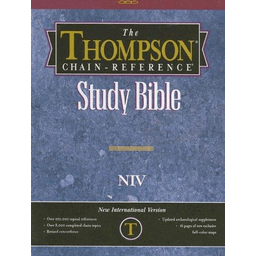 NIV Study BibleZondervan's long-established edition on the familiar NIV - broad evangelical consensus, accessible notes, the translation a generation already knows.
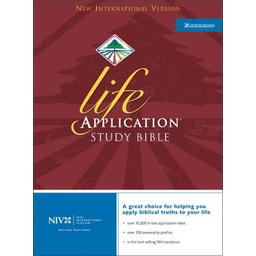 NIV Life Application Study BibleThe best-selling application-first study Bible - notes focus on how a passage applies to daily life rather than technical background. A different emphasis from the CSB edition.
 Lifeway Christian ResourcesThe Southern Baptist Convention's retail and resource site - a primary place to compare and buy the CSB Study Bible and its various editions.
Frequently asked questions
What translation does the CSB Study Bible use?
The Christian Standard Bible (CSB), released by B&H in 2017 as a major revision of the earlier Holman Christian Standard Bible. The translators describe their approach as "optimal equivalence" - aiming to sit between word-for-word and thought-for-thought translation. The study notes, word studies, and cross-references are all keyed to the CSB text, so the apparatus works best when you read the CSB itself.
Who publishes the CSB Study Bible and what tradition does it serve?
It is published by Holman Bible Publishers, the B&H imprint historically associated with the Southern Baptist tradition. The study Bible itself is written for a broadly evangelical readership and uses the Protestant 66-book canon. That background shapes the translation philosophy, the note selection, and the canon between the covers - useful information for any buyer deciding whether it fits their needs.
How is it different from the ESV Study Bible?
The ESV Study Bible is denser and more expensive - roughly 20,000 notes, 50-plus substantial articles, and exceptional maps on the literal-leaning ESV, with a Reformed-leaning editorial perspective. The CSB Study Bible is more concise by design - about 16,000 notes written to be read in the moment - on the more readable CSB translation, at a friendlier price. Choose the ESV for maximal depth; choose the CSB for readability and value.
Is the CSB Study Bible good for someone new to Bible study?
Yes - it is one of the more approachable study Bibles available. The CSB translation reads smoothly, the notes are concise rather than overwhelming, the word studies explain Hebrew and Greek in plain English, and the book introductions give a quick orientation before you start a book. The friendlier price also lowers the barrier for a first study Bible.
Are there different editions of the CSB Study Bible?
Yes. Beyond the standard hardcover, there are cloth, several leather and LeatherTouch options, large-print editions, and a CSB Study Bible for Women with its own supplementary content, plus Kindle and the CSB app. The study notes and articles are the same across the core editions; the differences are mostly cover material, layout, and any edition-specific extras.
How does the CSB compare to the NIV translation?
Both aim for readability, but they take slightly different routes. The NIV is a well-established thought-for-thought-leaning translation that a generation of readers knows by heart. The CSB is newer and uses an "optimal equivalence" approach that tries to stay a little closer to the wording of the original languages while remaining easy to read aloud. Neither is harder to read; the CSB will simply be less familiar to longtime NIV readers, and memorized verses won't always match.
Is there a digital or app version?
Yes. The CSB Study Bible is available as a Kindle edition and through the free CSB Bible app, where the study notes are offered as in-app content. Both are good for reading on a phone or tablet, though they render maps and charts with less fidelity than print and don't offer the deep reference-software integration of something like the ESV Study Bible in Logos.
Sources & further reading
More Study Bibles
ESV Study BibleThe ESV Study Bible has quietly become the default desk Bible for pastors, seminarians, and serious lay readers in the Reformed evangelical world - and the reasons it earned that spot are worth understanding before you buy.NIV Study BibleThe original modern study Bible - over nine million copies sold and still the most balanced one-volume evangelical study Bible most readers will ever own.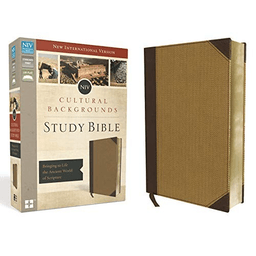 NIV Cultural Backgrounds Study BibleA 2,400-page reference Bible built around one question - what would an ancient reader have heard in this verse?NIV Life Application Study BibleThe best-selling study Bible of the last forty years built its name on one idea - notes that tell you what a passage means for your Tuesday, not just what it meant in the first century. Here is what that trade-off actually buys you.
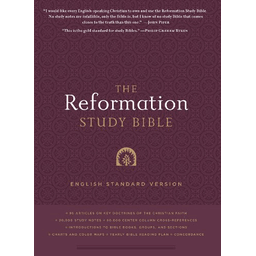 Reformation Study BibleR.C. Sproul's flagship study Bible pairs the ESV text with confessional Reformed notes, historic creeds, and a stack of theology articles - and Ligonier gives the whole apparatus away free online, which changes the buying math.
 Ignatius Catholic Study BibleThe Catholic study Bible that built its reputation one New Testament volume at a time - Scott Hahn and Curtis Mitch on the RSV-2CE - has finally arrived as a complete single volume, and it's worth understanding what it does before you buy.