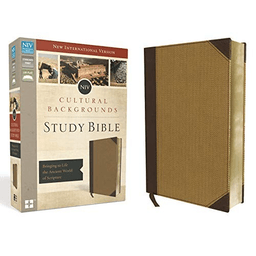
- Starting price
- $59.99 hardcover
- Free tier
- No
- Platforms
- Print · Kindle · Logos · Olive Tree
- Developer
- Zondervan
- Launched
- 2016
- Updated
- May 24, 2026
The verdict
The most useful single-volume cultural-context Bible on the market. If you want to know what the original audience would have understood, this is the study Bible that answers the question - chapter after chapter, without burying you in doctrinal commentary.
Try NIV Cultural Backgrounds Study Bible ↗Opens zondervan.com
The NIV Cultural Backgrounds Study Bible has quietly become the favorite of serious lay readers, small-group leaders, and seminary students who already own a doctrinal study Bible and want something that fills the other half of the picture. Published by Zondervan in 2016 and edited by Craig S. Keener (New Testament) and John H. Walton (Old Testament) - arguably the two most-cited evangelical Bible-background scholars working today - it is built around a single editorial question: what would an ancient Israelite, a Second Temple Jew, or a first-century Greco-Roman reader have heard in this passage?
That focus is the whole product. It doesn’t systematize doctrine. It doesn’t walk you through a confession of faith. It doesn’t argue for a school of interpretation. It explains the world the text came out of - household codes, patron-client economics, ancient Near Eastern creation accounts, temple architecture, betrothal customs, honor-shame dynamics, Roman legal procedure - and then trusts you to do the theological work yourself with whatever framework you bring.
The result is a 2,400-page reference volume that reads less like a denominational position paper and more like a guided tour through the cultural air the biblical authors breathed. It pairs especially well with a more doctrinal study Bible (the ESV Study Bible, the NIV Study Bible, the MacArthur Study Bible, the Catholic Study Bible, or any tradition-specific reference) - you bring your theology, the Cultural Backgrounds Bible brings the world.
✓ The good
- Best-in-class for cultural and historical context - every chapter has substantial background notes on customs, geography, languages, and ancient parallels
- Editorial pedigree is unmatched - Keener and Walton are the two scholars most often cited in modern evangelical background commentary, and both wrote heavily here
- 300+ in-depth articles on ancient context - temple worship, marriage customs, Roman citizenship, ancient Near Eastern law codes, Second Temple Judaism, and more
- Less doctrinally slanted than competitors - the focus is on what the text meant to its first hearers, not on adjudicating modern theological debates
- Hundreds of full-color photos, maps, charts, and reconstructions of ancient sites, artifacts, and city plans
- Available in the NIV (the dominant modern English translation) with a parallel NRSV edition for readers who prefer that text
- Works as a complement, not a competitor, to whatever doctrinal study Bible you already own
✗ Watch out
- Heavy and large - the hardcover is genuinely two-handed; the personal-size edition trades readability for portability
- NIV-only in the primary edition - readers committed to the ESV, KJV, NASB, or LSB have to either switch or buy the NRSV cross-edition
- Not a doctrinal or systematic-theology resource - if you want verse-by-verse theological commentary, this isn’t that book
- Pricier than entry-level study Bibles - the hardcover is around $60 and premium leather editions run nearly $90
- Some notes assume a baseline familiarity with the ancient world that newer readers may find dense at first
- Digital editions in Logos and Olive Tree are excellent but charged separately - no free unlock with the print purchase
Best for
- Small-group leaders who want context their group can’t Google
- Serious lay students who already own a doctrinal study Bible
- Seminary and Bible-college students supplementing course commentaries
- Pastors prepping expository sermons who want a first-stop background source
Avoid if
- You want a single doctrinal or confessional study Bible
- You read primarily in the ESV, KJV, or NASB and won’t switch translations
- You’re a brand-new Bible reader looking for a starter resource
- You want a lightweight Bible to carry to church each week
What NIV Cultural Backgrounds Study Bible is
The NIV Cultural Backgrounds Study Bible is a one-volume study Bible from Zondervan, released in 2016 under the general editorship of Craig S. Keener (New Testament) and John H. Walton (Old Testament). It uses the 2011 NIV text and surrounds it with background notes, in-text articles, color photos, maps, and reconstructions focused on the historical and cultural setting of each book.
The supporting cast is essentially a who’s-who of evangelical biblical scholarship - Tremper Longman III, Mark Strauss, William Klein, and dozens of other specialists wrote individual book introductions and contributed notes. The total page count runs north of 2,400 pages depending on edition, and the content is roughly evenly split between scripture, in-line cultural notes, and longer themed articles between books.
Why serious readers prefer the Cultural Backgrounds Bible
The single biggest practical difference between this Bible and the ESV Study Bible or MacArthur Study Bible is the question being answered. Doctrinal study Bibles ask "what does this verse teach?" and answer with theological synthesis. The Cultural Backgrounds Bible asks "what would the original audience have heard?" and answers with archaeology, ancient parallels, social customs, and linguistic notes. Both questions matter - they’re just different questions.
That focus produces a different reading experience. Open to Ruth and you get the legal mechanics of kinsman-redeemer arrangements at the ancient city gate. Open to 1 Corinthians and you get the patron-client structure of Greco-Roman dinner parties that’s sitting underneath Paul’s instructions about the Lord’s Supper. Open to Daniel and you get Babylonian court protocol. The doctrine is left for the reader and their tradition - the Bible gives you the world.
Cultural backgrounds focus: the differentiator that defines the product
Every page is organized around ancient context. Where a typical doctrinal study Bible might use its footnote space to cross-reference a verse to a related theological theme, the Cultural Backgrounds Bible uses that space to explain what a "cubit" actually was, why a Roman centurion’s rank mattered for the Acts narrative, how levirate marriage functioned, or what an ancient Near Eastern suzerain treaty looked like - and how that shape shows up in Deuteronomy. The notes don’t tell you what to believe; they tell you what the text would have meant to the people who first received it.
In practice this means you stop being surprised by the Bible in the right way. The strange parts - Jesus cursing a fig tree, Paul telling women to cover their heads, the elaborate purity codes in Leviticus, the cryptic numbers in Revelation - get less strange when you can see the cultural frame they sit inside. It doesn’t flatten the text or explain away the mystery. It just removes the unnecessary friction of reading a 2,000-to-3,500-year-old document with modern Western assumptions.
Keener and Walton: the scholarship pedigree behind the project
The two general editors are not random picks - they are arguably the two most-cited modern evangelical Bible-background scholars alive. Craig S. Keener’s four-volume Acts commentary runs nearly 4,500 pages and is one of the most thoroughly documented commentaries in any language; his IVP Bible Background Commentary on the New Testament has been a seminary standard for three decades. John H. Walton’s work on Genesis and the ancient Near Eastern context of the Old Testament - particularly The Lost World of Genesis One and the IVP Bible Background Commentary on the Old Testament - has shaped how a generation of pastors and scholars read the Pentateuch.
Putting both of them at the top of one study Bible is the move that makes this product credible. The notes here aren’t the work of a single author with a single hobby horse. They draw from decades of peer-reviewed scholarship on Second Temple Judaism, Greco-Roman society, Ugaritic and Mesopotamian literature, and the archaeology of Israel and the Levant - translated into accessible English without watering down the substance.
300+ in-depth articles on ancient context
Scattered between the books of the Bible are more than 300 longer articles - typically a page or two each - that take a single topic and explain it in depth. Subjects range across the whole ancient world: covenant treaties, ancient Near Eastern creation accounts, household structure, slavery in the Greco-Roman world, the architecture of the Jerusalem temple in different eras, Roman provincial administration, synagogue worship, Pharisaic legal disputes, the imperial cult, gladiatorial games, weights and measures, agricultural cycles, and dozens more.
These articles are what most readers cite as the killer feature. Each one is short enough to read in five or ten minutes and detailed enough that you walk away with usable knowledge - the kind of thing that quietly improves every future read-through of related passages. Together they function almost as a one-volume Bible encyclopedia bound into the back half of every chapter you happen to be studying.
Pricing
Hardcover
~$59.99
The full-size flagship edition - durable cover, sewn binding, the version most readers buy.
Personal Size Hardcover
~$45
Same content in a smaller trim - easier to carry, but the type is noticeably tighter.
Bonded Leather
~$89
Premium feel with the same internal layout - a gift-grade edition for long-term use.
Kindle
~$30
Searchable digital edition for casual reading - workable, but reflowed text loses the page design.
Logos Edition
~$50
Fully indexed inside Logos Bible Software - the most powerful way to search the notes and articles.
The hardcover at around $59.99 is the version most readers should buy. It’s the balanced default - durable, full-size print, sewn binding, and roughly the same price as a comparable doctrinal study Bible. Most users do not need the leather edition.
The personal-size hardcover at around $45 is the right pick if you genuinely plan to carry it. The trade-off is real: the type is noticeably tighter and the photos compress, but you save weight and shelf space.
The bonded leather edition at around $89 is a gift-grade choice - same content, premium binding. Pay for it if you’ll use this Bible for ten years.
Kindle (~$30) and the Logos edition (~$50) cover the digital cases. Kindle is convenient but reflowed text loses the page design that makes the print edition work. The Logos edition is the power-user choice if you already live in Logos - every note becomes searchable and cross-linkable.
Where NIV Cultural Backgrounds Study Bible falls behind
No first-party ESV or KJV edition. The NIV is the primary text, with an NRSV cross-edition available - readers committed to the ESV, KJV, NASB, or LSB have to either switch translations or do without. For some buyers that’s a non-starter.
Not a substitute for doctrinal commentary. If you want a study Bible that explains how a verse fits into a confession of faith, walks you through the order of salvation, or argues a position on baptism or eschatology, this isn’t that book. The editorial choice to stay focused on background means you should pair it with whatever doctrinal resource matches your tradition.
Weight and size in the full edition. The hardcover is noticeably heavier than a comparable ESV Study Bible - closer to a one-volume reference work than a carry-to-church Bible. The personal-size edition fixes the portability problem at the cost of legibility.
No free digital companion. Print purchase doesn’t unlock the Kindle or Logos editions - each is a separate purchase. Some competing study Bibles bundle a digital version, and the absence is mildly annoying at this price point.
A baseline of familiarity helps. Some of the notes assume the reader has at least a general sense of the ancient world. New readers can absolutely use this Bible, but the density of references to Sumerian myth, Roman law, or Pharisaic halakha can feel steep at first.
NIV Cultural Backgrounds Study Bible vs. ESV Study Bible vs. The IVP Bible Background Commentary
These three are the references that keep coming up together, and they do genuinely different jobs. The ESV Study Bible is a doctrinal study Bible in the broadly Reformed evangelical tradition - its strength is theological synthesis, with extensive book introductions, doctrinal essays, and verse-level notes that walk you through Reformed-leaning interpretive choices. If you want one study Bible that takes a confessional position and defends it, that’s the one.
The NIV Cultural Backgrounds Study Bible is the inverse trade. It minimizes doctrinal commentary on purpose and uses the same footnote real estate to explain ancient context - customs, archaeology, languages, and parallels. You give up the systematic theological framing and gain a much richer historical picture. Many serious readers eventually own both, because the two genuinely don’t compete; they answer different questions about the same verses.
The IVP Bible Background Commentary (the two-volume set Keener and Walton wrote separately) is the closest single-purpose competitor on the background side. Different strengths. IVP is denser, more academic, and verse-by-verse across both testaments in a separate two-volume format. The Cultural Backgrounds Study Bible is broader (notes plus articles plus maps plus photos plus a full Bible text) and easier to use as a one-volume reading companion. If you want every background note Keener and Walton have written, buy IVP. If you want a study Bible you can actually read in, buy this.
The bottom line
The NIV Cultural Backgrounds Study Bible is the strongest single-volume cultural-context Bible in print. It doesn’t replace a doctrinal study Bible - it complements one. The editorial pedigree of Keener and Walton, the 300+ in-depth articles, and the relentless focus on what the original audience would have understood combine into a reference volume that genuinely changes how you read scripture. For serious lay readers, small-group leaders, students, and pastors who already have a doctrinal resource and want the other half of the picture, the hardcover at around $60 is one of the easier study-Bible recommendations to make. Real gaps exist - translation lock-in, weight, no digital bundle - but they’re worth knowing about going in rather than dealbreakers.
Alternatives to NIV Cultural Backgrounds Study Bible
 ESV Study BibleThe dominant doctrinal study Bible in the broadly Reformed evangelical tradition - pairs naturally with the Cultural Backgrounds Bible.
 NIV Study BibleThe classic general-purpose NIV study Bible - broader doctrinal coverage, lighter background notes.
 MacArthur Study BibleA single-author study Bible reflecting John MacArthur’s dispensational and Reformed-leaning teaching.
 Halley’s Bible HandbookA pocket-size standalone handbook with book overviews and selected background - a lighter-weight alternative.
Frequently asked questions
Is the NIV Cultural Backgrounds Study Bible a replacement for a doctrinal study Bible?
No, and it isn’t trying to be. It focuses on historical and cultural context rather than systematic theology. Most readers who buy it pair it with a doctrinal study Bible that matches their tradition.
Who are Craig Keener and John Walton?
They are the general editors - Keener for the New Testament, Walton for the Old. Both are among the most-cited modern evangelical Bible-background scholars, with major academic commentaries on Acts and Genesis respectively.
Is it available in translations other than the NIV?
The primary edition uses the 2011 NIV. A cross-edition uses the NRSV. As of writing, there is no ESV, KJV, NASB, or LSB version.
How does it compare to the IVP Bible Background Commentary?
The IVP commentaries (also by Keener and Walton, in two separate volumes) go deeper verse-by-verse and are more academic. This study Bible is broader and more readable, and includes the full Bible text plus articles, maps, and photos in one volume.
Is it good for new Bible readers?
It can work for newer readers, but some notes assume a baseline familiarity with the ancient world. A simpler study Bible may be a gentler entry point - readers often move up to the Cultural Backgrounds Bible after a year or two.
Does the print version come with a free digital edition?
No. The Kindle (~$30) and Logos (~$50) editions are sold separately from the print edition.
Which print edition should I buy?
The full-size hardcover at around $59.99 is the default recommendation. Get the personal-size if portability matters more than legibility, or the bonded leather (~$89) if you want a gift-grade edition for long-term use.
Sources & further reading
More Study Bibles
ESV Study BibleThe ESV Study Bible has quietly become the default desk Bible for pastors, seminarians, and serious lay readers in the Reformed evangelical world - and the reasons it earned that spot are worth understanding before you buy.NIV Study BibleThe original modern study Bible - over nine million copies sold and still the most balanced one-volume evangelical study Bible most readers will ever own. NIV Life Application Study BibleThe best-selling study Bible of the last forty years built its name on one idea - notes that tell you what a passage means for your Tuesday, not just what it meant in the first century. Here is what that trade-off actually buys you.
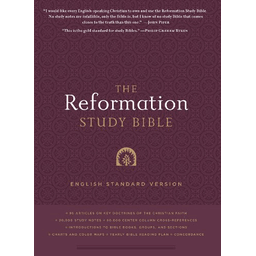 Reformation Study BibleR.C. Sproul's flagship study Bible pairs the ESV text with confessional Reformed notes, historic creeds, and a stack of theology articles - and Ligonier gives the whole apparatus away free online, which changes the buying math.
 Ignatius Catholic Study BibleThe Catholic study Bible that built its reputation one New Testament volume at a time - Scott Hahn and Curtis Mitch on the RSV-2CE - has finally arrived as a complete single volume, and it's worth understanding what it does before you buy.
 CSB Study BibleHolman's flagship study Bible pairs the readable Christian Standard Bible translation with about 16,000 study notes - a clean, modern, broadly evangelical reference that competes in one of the most crowded categories in publishing.