- Starting price
- $24.99 hardcover
- Free tier
- No
- Platforms
- Print · Kindle · Logos · Olive Tree
- Developer
- Zondervan
- Launched
- 1924 (Deluxe 25th anniversary ed. 2014)
- Updated
- May 24, 2026
The verdict
The original one-volume Bible handbook - and still the friendliest. Halley's has sold more than six million copies because it does one thing better than any competitor: it walks a non-scholar through every book of the Bible without ever sounding like a seminary lecture.
Try Halley's Bible Handbook ↗Opens zondervan.com
Halley's Bible Handbook has quietly become the default first-reference for everyday Bible readers - the book pastors hand to new converts, the one parents keep on the kitchen shelf, and the one that has outlasted nearly every competitor it inspired. Henry H. Halley started it in 1924 as a 16-page pamphlet of notes he handed out at speaking engagements. By the time of his death in 1965 it had grown into a 900-page reference with millions of copies in print, and Zondervan has kept it updated through several editions since - most recently the Deluxe 25th anniversary edition in 2014.
It is not a study Bible. It does not replace a commentary. It does not pretend to be a scholarly work. What it does, better than almost anything else on the shelf, is give a curious reader a single trustworthy companion that opens to any book of the Bible and answers the obvious questions - who wrote it, when, why, what happens in it, what to notice, what the archaeology says, where it fits on the map. For a hundred years that has been enough to make it indispensable.
The handbook category Halley invented is now crowded - the Eerdmans Handbook to the Bible, Unger's Bible Handbook, the Zondervan Handbook, the Lion Handbook and others all chase the same reader. Halley's keeps its lead by being shorter, warmer, and more devotional in tone than the academic options, while still packing in enough archaeology, history, and chapter-by-chapter outline to satisfy a serious lay reader. It is the resource most people mean when they say they want "one good book about the Bible."
✓ The good
- Book-by-book overview that actually orients you - every book of the Bible gets a date, an author note, a purpose statement, and a chapter-by-chapter walkthrough
- Archaeology integrated throughout - Halley was an early popularizer of biblical archaeology and the Deluxe edition adds full-color site photography
- Maps, charts, and timelines on nearly every spread - the visual density is the secret weapon
- Daily Bible reading guidance built in - the back matter has tested reading plans that have led generations through the whole Bible
- Concise church history overview - a 50-page survey from the apostles through the Reformation that most handbooks skip
- Devotional warmth - Halley's voice is pastoral, not professorial, which makes it readable cover to cover (people actually do this)
- One volume, durable binding, sits open on a desk - the physical object is built for daily use
✗ Watch out
- Halley's original voice shows its age in places - some 1960s-era cultural framing remains in lightly-edited form
- Not a verse-by-verse commentary - if you want exegesis on a single passage, you'll need something else
- Archaeology section, while updated, is still lighter than a dedicated archaeology reference
- Conservative evangelical Protestant framing throughout - readers from other traditions will want to read alongside their own tradition's resources
- No interactive features in the print edition (obviously) - the Logos and Olive Tree versions add search but cost extra
Best for
- New Bible readers who want one trustworthy companion
- Parents and small-group leaders building a home reference shelf
- Pastors looking for a giveaway book for new believers
- Anyone working through a one-year Bible reading plan
Avoid if
- You want a verse-by-verse commentary
- You need academic-level archaeology or original-language work
- You prefer a Catholic, Orthodox, or LDS framing as your primary lens
- You only read digitally and want a native app, not a ported book
What Halley's Bible Handbook is
Halley's Bible Handbook is a single-volume reference that walks readers through every book of the Bible with summaries, outlines, historical notes, archaeology, maps, and devotional reflection - plus a back-matter section on church history and a tested daily Bible reading plan. It is roughly 900 pages, organized in canonical order, designed to be opened to any book of the Bible and consulted in minutes rather than read through (though many readers do read it through).
Henry Halley wrote and self-published the first edition in 1924 as a small pamphlet of his lecture notes; he kept enlarging it across four decades and dozens of revisions until his death in 1965. Zondervan acquired the rights and has maintained the book since, with significant updates in the 24th edition (2000) and the Deluxe 25th anniversary edition (2014). Total sales are above six million copies, making it one of the best-selling Bible reference works in publishing history.
Why everyday readers prefer Halley's
The single biggest practical difference between Halley's and the academic handbooks is tone. Halley wrote as a pastor to laypeople, not as a scholar to other scholars, and that voice survives every revision. When you open the book to Leviticus, you get a one-page "why this book matters" framing before the outline starts. When you open to Romans, you get Halley's own gratitude for the letter alongside the outline. The Eerdmans and Unger handbooks are more thorough on archaeology and authorship debates; Halley's is more likely to make you actually want to read the Bible chapter it's describing.
The second difference is density. A page of Halley's typically packs a chapter outline, a map or chart, an archaeology sidebar, and a paragraph of devotional reflection into one spread. Other handbooks are cleaner; none are as efficient at giving a curious reader four kinds of context at once. For people who learn by skimming and circling back, this is the format that respects how they actually read.
Book-by-book overview: the format Halley invented
Every book of the Bible gets the same treatment - a header block with date, author, and purpose; a one-to-three-page "about this book" narrative; a chapter-by-chapter outline that flags the key passages; and recurring sidebars for archaeology, maps, and notable historical figures. The longer books (Genesis, Isaiah, Psalms, Matthew, Acts) get expanded treatment that runs 30 to 60 pages; the shorter books get five to ten pages of the same dense, scannable format. The structure is so consistent that after the first few books you can navigate any entry in under a minute.
This is the format Halley invented for a popular audience, and it predates the Zondervan, Eerdmans, Lion, and Unger handbooks that followed. The reason it still works a hundred years later is that the questions a curious reader brings to a Bible book have not changed - who wrote it, when, what happens, what to look for - and Halley's answers them in the order most readers ask them. Newer handbooks have prettier production and updated scholarship; none have improved on the underlying structure.
Archaeology, maps, and photos - the visual evidence
Halley was an early and enthusiastic popularizer of biblical archaeology, and the archaeological notes are woven through the book rather than ghettoized in an appendix - a note on the Ur of the Chaldees excavations sits next to the Abraham narrative, a note on Jericho's walls sits in the Joshua section, a note on first-century Corinthian inscriptions sits in the Pauline epistles. The Deluxe 25th anniversary edition added full-color site photography throughout, which transforms the experience: you read about Megiddo and look at a photograph of Megiddo on the same page.
Maps appear on roughly every fifth spread - the Exodus route, the divided kingdom, Paul's journeys, the Holy Land in the time of Jesus, the spread of the early church. Charts cover the kings of Israel and Judah, the prophets and the kings they served, the gospels harmonized, the Roman emperors. None of this is research-grade - Halley's is not a substitute for an archaeology textbook or a Bible atlas - but it is exactly what a lay reader needs to make the geography and material culture real instead of abstract.
Daily Bible reading guidance - the back-matter superpower
Tucked into the back of the handbook is a section that, more than any other feature, explains why Halley's lives on bedside tables: a tested set of daily Bible reading plans and a frank pastoral case for reading the whole Bible through. Halley was militant on this point - he believed every Christian should read the whole Bible repeatedly across a lifetime - and the plans he included are designed to make that possible for a normal person with a normal schedule.
This sounds like a small thing. In practice it is transformative. Most reference books assume you will only consult them when you have a question; Halley's assumes you are actually trying to read the Bible and gives you the scaffolding to do it. Readers who pair the daily reading plan with the corresponding chapter notes get a quiet, two-track education in the whole Bible - you read the chapter in your Bible, then read Halley's three paragraphs on that chapter, and over a year you have done something most Christians never do.
Pricing
Hardcover
~$24.99
The standard hardcover of the 25th anniversary edition - full text, charts, and maps in two-color print. The version most readers buy and the one most pastors hand out.
Deluxe Edition
~$35
Larger trim size with full-color photography of archaeological sites, manuscripts, and Holy Land geography throughout. The version to buy if the visual material matters to you.
Kindle
~$15
Full text on Kindle apps and devices. Search works; the layout-heavy charts render less elegantly than in print.
Logos Edition
~$20
Integrated into the Logos Bible Software library - links scripture references to your other Logos resources and is searchable across your library.
Bonded Leather
~$45
Gift-grade edition with bonded leather cover and ribbon marker. Same interior as the standard hardcover.
The hardcover at around $24.99 is the version to buy for almost everyone - it has the full text, charts, and maps, and the build quality is good enough that copies routinely last decades. This is the one most pastors hand out and the one most readers actually use.
The Deluxe edition at around $35 is worth the upgrade if the visual material matters to you - the full-color archaeological site photography genuinely changes how the book reads, and the larger trim size makes the charts more legible. If you read mostly for the geography and history, get this one.
The Kindle edition around $15 is the cheapest way in and works fine for reading the text, but Halley's is a layout-heavy reference and the charts render less elegantly on e-ink. The Logos edition around $20 is the best digital option if you already live in Logos - references hyperlink to your other resources and the whole book is searchable alongside your library.
The bonded leather edition around $45 is a gift item, not a functional upgrade - same interior as the hardcover with a fancier cover and a ribbon marker. Worth it for ordination gifts, baptism gifts, or as a Bible-class graduation present.
Where Halley's Bible Handbook falls behind
No verse-by-verse commentary. Halley's gives you a paragraph or three on each chapter, which is plenty of orientation but not enough if you want to understand a specific verse in depth. For that you want a dedicated commentary or a study Bible - Halley's is explicit that it is a handbook, not a commentary, and treating it as one will leave you disappointed.
Dated framing in places. Even with several editions of updates, parts of the book carry Halley's mid-twentieth-century voice - occasional cultural asides, a sometimes-polemical tone in the church history section, and a generally conservative evangelical Protestant lens throughout. Readers in other traditions will get value from the structural overviews and archaeology but should pair the handbook with resources from their own tradition for theological framing.
Archaeology is solid but not deep. The Deluxe edition's photography and updated notes are a real improvement, but a reader who wants to go deep on biblical archaeology will quickly outgrow what Halley's offers and want something like the Biblical Archaeology Society's resources or a dedicated Bible atlas.
Digital editions feel like ported print. The Kindle, Logos, and Olive Tree versions all preserve the content but none of them reimagine the handbook for a screen. If you want a digital-native Bible reference, Logos's own Factbook or a study Bible app will feel more at home on a tablet than Halley's does.
Halley's Bible Handbook vs. Eerdmans Handbook to the Bible vs. Unger's Bible Handbook
Different strengths, same shelf. Halley's is the warmest and the most widely used by laypeople - it is the handbook your grandmother probably owned and the one a pastor is most likely to hand a new convert. The voice is devotional, the format is dense, and the daily reading guidance gives it a use case the other two do not match. At around $24.99 it is also the cheapest of the three.
Eerdmans Handbook to the Bible is broader and more academic. It was written by a team of British and international scholars, runs longer than Halley's, and goes deeper on historical-critical questions, comparative religion, and the Bible's literary background. The production is gorgeous - full-color throughout, with stronger photography and infographics than even Halley's Deluxe. If you want one handbook that takes scholarship seriously without being a technical commentary, this is the pick.
Unger's Bible Handbook (Merrill Unger, Moody) sits between the two - more devotional than Eerdmans, more scholarly than Halley's, with a strong dispensational-premillennial framing in places that reflects the author's tradition. It is the right choice if that tradition is yours; otherwise Halley's is friendlier and Eerdmans is more comprehensive. Most serious lay readers end up owning Halley's and one of the other two.
The bottom line
Halley's Bible Handbook is the original one-volume Bible companion and, a hundred years and six million copies later, still the friendliest entry point for an everyday reader. Buy the standard hardcover, keep it within arm's reach of wherever you read your Bible, and use the back-matter reading plan to actually read the whole thing. It will not replace a study Bible or a commentary; it was never trying to. For one trustworthy book that opens to any chapter of Scripture and helps you understand it, nothing in the category has matched it.
Alternatives to Halley's Bible Handbook
 ESV Study BibleMassive study Bible with the same scope as a handbook plus full ESV text and verse-by-verse notes - heavier and pricier but combines two references in one.
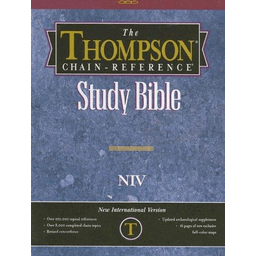 NIV Study BibleThe bestselling study Bible in the NIV translation - readable notes, book introductions, and maps alongside the full text.
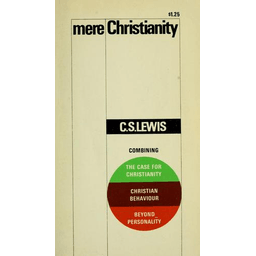 Mere ChristianityC.S. Lewis's classic case for the Christian faith - not a Bible reference but the companion read most often paired with a handbook by new believers.
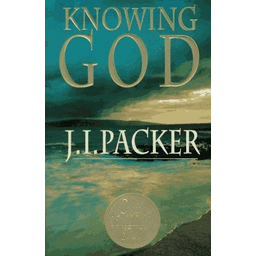 Knowing GodJ.I. Packer's modern classic on the character of God - the theology companion to Halley's narrative and historical work.
Frequently asked questions
Is Halley's Bible Handbook still relevant a hundred years after it first came out?
Yes - the Deluxe 25th anniversary edition (2014) is the current version and includes updated archaeology, full-color photography, and a maintained text. The structural format Halley invented in 1924 still works because the basic questions a lay reader brings to the Bible have not changed.
What's the difference between the hardcover and the Deluxe edition?
The Deluxe edition adds full-color photography of biblical sites and manuscripts throughout, uses a larger trim size that makes the charts more legible, and sells for around $10 more. The text is the same. If the visual material matters to you, get the Deluxe; if you mostly want the reference content, the standard hardcover is fine.
Is Halley's a commentary?
No. It is a handbook - a book-by-book overview with outlines, historical notes, archaeology, maps, and devotional reflection. For verse-by-verse commentary you want a dedicated commentary (like the Tyndale or NIV Application series) or a study Bible.
What tradition is the handbook written from?
Henry Halley was trained in the Disciples of Christ tradition and wrote from a broadly evangelical Protestant perspective. Zondervan, a conservative evangelical publisher, has maintained the editions since. Readers from Catholic, Orthodox, LDS, or other traditions will still find the book-by-book overviews, archaeology, and maps useful but may want to pair the handbook with resources from their own tradition for theological framing.
Should I buy Halley's or a study Bible?
If you want one book that does both the reference and the text, get a good study Bible like the ESV Study Bible or NIV Study Bible. If you already own a Bible you love and want a separate reference, Halley's is cheaper, lighter, and easier to read cover to cover. Many readers own both.
Does Halley's work on Kindle or in Bible software?
Yes - there are Kindle (~$15), Logos (~$20), and Olive Tree editions. The text and notes carry over well; the layout-heavy charts render less elegantly on screen than in print. If you live in Logos, the Logos edition is the best digital pick because references hyperlink to your other resources.
Is the daily Bible reading plan actually any good?
It is the feature most long-time owners single out. Halley believed every Christian should read the whole Bible repeatedly across a lifetime and built tested plans into the back of the handbook to make that possible. Paired with the chapter-by-chapter notes, the plan gives readers a quiet, two-track way to read and understand the whole Bible in a year.