
- Starting price
- ~$55 complete edition
- Free tier
- No
- Platforms
- Print · Kindle
- Developer
- Ignatius Press
- Launched
- 2010
- Updated
- May 31, 2026
The verdict
The most widely used faithful, accessible Catholic study Bible in print - Scott Hahn and Curtis Mitch's notes on the RSV-2CE, with topical essays, word studies, and cross-references drawn from the Church Fathers and magisterial teaching. Best-in-class for Catholic readers who want study material from inside their own tradition; readers from other traditions should know the notes are written from within Catholic teaching and use the Catholic canon.
Try Ignatius Catholic Study Bible ↗Opens ignatius.com
The Ignatius Catholic Study Bible has quietly become the default study Bible for English-speaking Catholics who want serious notes without a seminary library. It is the work of Scott Hahn and Curtis Mitch, published by Ignatius Press, and built on the Revised Standard Version, Second Catholic Edition - the RSV-2CE, a translation prized for keeping the dignified cadence of the RSV while conforming its wording to Catholic usage. The notes are written to be read by ordinary people: a catechist, a parent, a parish study group, a college student who wants to know what the Church has actually taught about a passage.
It did not arrive all at once. For most of its life the Ignatius Catholic Study Bible was a volume-by-volume project. The New Testament was completed first and gathered into a single hardcover that became a fixture in Catholic bookstores; the Old Testament books trickled out as individual booklets over many years. It does not optimize for daily reading. It does not offer a one-year plan. It does not try to be a devotional. What it does is sit beside an open Bible and answer the question a Catholic reader actually asks - what does the Church see here, where does this passage echo elsewhere in scripture, how did the Fathers read it.
More recently - around 2023-2024 - the complete Bible, Old and New Testaments together, was finished and released as a single volume, which is the edition most new buyers now choose. That completion is the headline change since the New Testament era: where Catholic readers once had to assemble the set or wait, they can now get the whole canon in one book. The two obvious points of comparison are the Catholic Study Bible from Oxford (the academic NABRE edition, broader and more critical in its notes) and the Catechism of the Catholic Church (the doctrinal reference the Ignatius notes constantly point back to). The Ignatius edition sits in its own lane: a faithful, accessible, single-voice study Bible for Catholic readers, told from within Catholic teaching.
✓ The good
- Notes written from inside Catholic teaching - Hahn and Mitch annotate each passage the way the Church reads it, with the Catechism and magisterial documents cited throughout
- Built on the RSV-2CE - a literal, dignified translation that keeps the RSV's readability while conforming wording to Catholic usage
- Topical essays and word studies are a real strength - substantial sidebars on themes like covenant, the priesthood, Mary, and the sacraments, plus Greek and Hebrew word notes for key terms
- Patristic and magisterial cross-referencing - the notes draw on the Church Fathers and Church teaching, not just modern commentary, giving readers a sense of how a passage has been read across the centuries
- Accessible voice - Hahn in particular writes for the ordinary reader, so the notes work for a parish study group or a motivated beginner, not only scholars
- Now complete in one volume - after years of New Testament-only availability, the full Catholic canon (Old and New Testaments) is finally in a single book
- Cross-references and study questions support group use - the apparatus is built for catechesis, with discussion questions that make it easy to teach from
✗ Watch out
- Notes read from a devotional, faithful-Catholic vantage rather than a neutral-academic one - readers wanting critical-scholarship framing should look at the Oxford Catholic Study Bible instead
- The complete single-volume edition arrived only recently - for most of the product's life only the New Testament volume and individual Old Testament booklets existed, so used and older copies are often NT-only
- RSV-2CE only - if you read primarily from the NABRE, NRSV, Douay-Rheims, or another translation, the notes and the text won't match your usual Bible
- No audio component - the study content is text-only across every edition; an audio-first reader is not the target
- The complete edition is heavier and pricier than the NT volume - the full canon in one book adds bulk and cost over the New Testament-only hardcover
- Less exhaustive than a multi-volume academic commentary - the notes are selective and pastoral, not a verse-by-verse critical apparatus
Best for
- Catholic readers who want study notes from inside their own tradition
- Catechists and parish small-group leaders preparing studies for adults
- Converts and new Catholics who want the Catechism and the Fathers connected to the text
- RSV-2CE readers who want a study apparatus keyed to the translation they already use
Avoid if
- You want notes written from a neutral-academic or critical-scholarship vantage
- You read primarily from the NABRE, NRSV, or another non-RSV-2CE translation
- You want a daily-reading or devotional Bible rather than a reference
- You need a lightweight Bible to carry - the complete edition is a substantial book
What Ignatius Catholic Study Bible is
The Ignatius Catholic Study Bible is a study Bible built on the Revised Standard Version, Second Catholic Edition (RSV-2CE), with study notes by Scott Hahn and Curtis Mitch and published by Ignatius Press. The biblical text carries the running commentary at the foot of the page, in the familiar study-Bible layout: you read the verse, glance down, and find a note explaining background, cross-references, and how the passage is understood within Catholic teaching. Because it uses the Catholic canon, the volume includes the deuterocanonical books alongside the rest of the Old and New Testaments.
Beyond the running notes, the apparatus includes topical essays on major biblical themes, word studies on important Greek and Hebrew terms, extensive cross-references, book-by-book introductions, study questions for group use, and citations to the Church Fathers and to magisterial documents such as the Catechism of the Catholic Church. For most of its history the work was published in pieces - a complete New Testament volume first, then the Old Testament books as individual booklets - before the entire Bible was gathered into a single complete edition around 2023-2024. It is also available as a Kindle/ebook.
Why Catholic readers reach for the Ignatius Catholic Study Bible
The most-cited reason is that the notes are written from inside Catholic teaching by authors who write for ordinary readers. Scott Hahn is among the best-known Catholic teachers writing in English, and the apparatus reflects that pastoral instinct: a note on a passage in John or Hebrews will connect the verse to the sacraments, to the liturgy, to the Catechism, and to how the Fathers read it - the things a Catholic reader is actually looking for when they open the text. You read the verse, you glance down, and the answer is framed the way the Church frames it, with the magisterial sources cited so you can follow the thread further.
The other reason is the translation underneath. The RSV-2CE keeps the literal, dignified register that made the original RSV a scholarly favorite, while conforming its wording to Catholic usage and restoring traditional phrasings in key passages. For a Catholic reader who wants a study Bible that reads well aloud and matches the wording used in many Catholic settings, that base is a large part of the draw. The notes and the text are designed to work together, which is the practical magic of any good study Bible.
The notes: Hahn and Mitch annotating from within Catholic teaching
The study notes are the heart of the product. Written by Scott Hahn and Curtis Mitch, they run at the foot of each page and cover historical and literary background, the meaning of key terms, and - distinctively - how each passage is understood within Catholic teaching. Where a verse touches a doctrine, the notes point to the relevant section of the Catechism of the Catholic Church and frequently to the Church Fathers, so the reader sees both the modern explanation and the way the passage was read in the early centuries. The notes are pastoral and selective rather than exhaustive: they aim to answer the questions a Catholic reader actually has, not to catalog every scholarly option.
What separates these notes from a more academic study Bible is the vantage point. They are written from a faithful, devotional Catholic perspective, with the assumption that the reader wants to understand the text as the Church receives it. That makes them especially useful for catechesis - a catechist or small-group leader can teach directly from the page - and it is the layer most readers cite as the reason they chose the Ignatius edition. Readers who want a more neutral-academic or critical framing of the same passages will find that vantage in the Oxford Catholic Study Bible instead; the Ignatius notes are doing a different job, and they do it for a different reader.
Topical essays and word studies: the catechetical layer
Threaded through the volume are topical essays and word studies that function as the catechetical backbone of the Bible. The essays take up major biblical themes - covenant, sacrifice and priesthood, the kingdom, Mary, the sacraments, salvation history - and trace them across the canon in a few hundred words each, giving a reader the connective tissue that running verse notes alone can't. The word studies zero in on important Greek and Hebrew terms, explaining what a word meant in its original setting and how its sense carries into Catholic understanding. Together they turn the volume into something closer to a guided introduction to reading scripture within the Catholic tradition than a bare set of footnotes.
This layer is what makes the Ignatius edition work so well for groups and for converts. A reader coming into the Catholic Church, or a cradle Catholic who never studied scripture formally, gets not just a note on the verse in front of them but a short, readable essay tying that verse into the larger biblical story the Church tells. The book-by-book introductions and the study questions reinforce the same goal: this is a Bible built to be taught from and studied together. For a parish that runs adult-formation programs, the apparatus is close to a built-in curriculum, which is a large part of why it became the standard recommendation in so many Catholic settings.
From volume-by-volume to one book: the complete edition
For most of its existence the Ignatius Catholic Study Bible was an unfinished set, and that history matters when you buy. The New Testament was completed first and published as a single hardcover volume - the book that established the product and the one many Catholics still own. The Old Testament, by contrast, came out slowly as individual book-by-book booklets over a span of years, which meant a reader who wanted the whole Bible had to either buy the booklets piecemeal or wait. That long rollout is the single biggest practical fact about the product's past, and it is why so many copies in circulation are New Testament-only.
Around 2023-2024 the project was finally completed and the entire Bible - Old and New Testaments together, with the full apparatus - was released as a single complete volume. For new buyers this changes the decision: the complete edition is now the natural default, while the New Testament volume and individual booklets remain available mostly for readers who want a cheaper entry point or a single book at a time. The trade-off is size and price - the complete canon in one book is heavier and runs higher than the NT-only volume - but for most readers having everything in one place is worth it.
Pricing
Complete Edition (leatherette/hardcover)
~$55-70
The full Bible, Old and New Testaments together in one volume, released as a single book around 2023-2024. The edition most new buyers should get. Leatherette and hardcover bindings run toward the higher end of the range.
New Testament volume
~$25-30
The original single-volume New Testament that built the product's reputation. Cheaper than the complete edition; the right pick if you only want the NT notes or are pairing it with a separate Old Testament.
Individual study booklets
~$10-13 each
The book-by-book booklets the Old Testament was originally released in. Useful for studying a single book at a time or supplementing a New Testament-only copy. Pricing is per booklet.
Kindle / ebook
~$20-40
Digital editions for Kindle hardware and apps. Notes and cross-references are tappable; the format trades the print volume's layout for portability and search. Availability varies by edition.
The complete edition at roughly $55-70 is the right choice for most new buyers. You get the full Catholic canon - Old and New Testaments with the deuterocanon - plus the entire study apparatus in one volume. Leatherette and hardcover bindings sit toward the upper end of that range, and the price reflects the size of a complete single-volume study Bible rather than anything unusual. Most readers do not need anything beyond this tier.
The New Testament volume at around $25-30 is the cheaper path in and a reasonable choice if you mostly study the Gospels and Epistles, or if you already own a separate Old Testament you're happy with. It is also the edition you'll most often find used, since it was in print for years before the complete Bible was finished. Just know going in that it is New Testament-only.
The individual study booklets at roughly $10-13 each are the legacy of the volume-by-volume era. They're useful for studying a single Old Testament book in depth, or for filling gaps around a New Testament copy. Buying the whole Old Testament this way costs more in total than the complete edition, so the booklets make the most sense as a supplement rather than a way to assemble the full Bible.
The Kindle/ebook editions, where available, run roughly $20-40 depending on the edition and trade the print layout for portability and search. Notes and cross-references are tappable. For a reader who studies mostly on a tablet or phone, the digital edition is a fine option; for group teaching and close study, most readers still prefer the print volume.
Where Ignatius Catholic Study Bible falls behind
Devotional vantage rather than neutral-academic. The notes are written from a faithful, devotional Catholic perspective, which is exactly what many readers want - but it is not a neutral-academic or critical-scholarship treatment. A reader who wants the kind of source-critical, historical-critical apparatus found in an academic edition will find a different fit in the Oxford Catholic Study Bible (built on the NABRE), which leans more toward critical scholarship. That's not a defect; it's a difference in what the two Bibles are trying to do.
Recent completion after a long NT-only era. The complete single-volume edition arrived only around 2023-2024, after many years in which only the New Testament volume and individual Old Testament booklets existed. That means a large share of copies in circulation - and much of the secondhand market - is still New Testament-only, and a buyer has to check which edition they're actually getting rather than assuming the whole Bible.
RSV-2CE only. The text and every note are keyed to the Revised Standard Version, Second Catholic Edition. If your usual Bible is the NABRE (used in the U.S. lectionary), the NRSV, the Douay-Rheims, or another translation, you'll be reading the notes against a slightly different wording than the one you hear at Mass or use day to day. The notes don't travel to another translation.
No audio. If you take in most of your scripture by listening, none of the study content here is voiced - the notes, essays, and word studies are text-only across every edition. The biblical text is available in audio elsewhere, but the apparatus that makes this a study Bible is print and screen only.
Selective, not exhaustive. The notes are pastoral and curated rather than comprehensive. For a verse where you want every interpretive option and a full survey of the scholarship, a dedicated multi-volume commentary will go deeper. The Ignatius edition trades exhaustiveness for accessibility, which is the right call for its audience but worth knowing if your needs are more technical.
Ignatius Catholic Study Bible vs. Oxford Catholic Study Bible vs. the Catechism
Catholic readers shopping for study material usually end up weighing these against each other, and they do genuinely different jobs. The Oxford Catholic Study Bible is the academic option - built on the New American Bible Revised Edition (NABRE), the translation used in the U.S. lectionary, with notes that lean toward modern critical scholarship: historical-critical method, questions of authorship and dating, the kind of apparatus you'd expect from a university press. For a reader, student, or instructor who wants that scholarly vantage, the Oxford edition is the natural pick.
The Ignatius Catholic Study Bible is the faithful, accessible option. Built on the RSV-2CE, with Hahn and Mitch's notes written from within Catholic teaching, it reads the text the way the Church receives it - connecting passages to the Catechism, the Fathers, and the sacraments - and it's written for ordinary readers and groups rather than primarily for the academy. Where the Oxford edition asks how scholars reconstruct the text, the Ignatius edition asks how the Church reads it. Different strengths, for different readers.
The Catechism of the Catholic Church is a different kind of resource altogether - not a Bible but the systematic statement of Catholic doctrine, organized topically rather than by scripture passage. The two pair naturally: the Ignatius notes cite the Catechism constantly, so a reader who wants to follow a doctrine from the biblical text to its full treatment moves from the study Bible to the Catechism. Many Catholic households end up with both. If you want one Bible to study scripture from inside the tradition, the Ignatius edition is the strongest accessible choice; add the Oxford edition for critical-scholarship depth, and the Catechism for doctrine in full.
The bottom line
The Ignatius Catholic Study Bible is the most widely used faithful, accessible Catholic study Bible in print - Hahn and Mitch's notes on the RSV-2CE, with topical essays, word studies, and cross-references to the Fathers and the Catechism, now finally available as a complete single volume. The notes are written from within Catholic teaching and use the Catholic canon, which is exactly what Catholic readers are looking for and worth knowing for everyone else. If you want to study scripture from inside the Catholic tradition, this is the volume to buy; if you want a more critical-academic vantage, pair it with the Oxford Catholic Study Bible.
Alternatives to Ignatius Catholic Study Bible
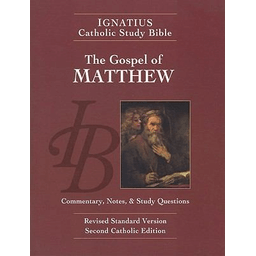 Catholic Study Bible (Oxford, NABRE)The academic Catholic study Bible - Oxford's NABRE edition, with notes that lean toward modern critical scholarship. The natural counterpart for readers who want a more neutral-academic vantage.
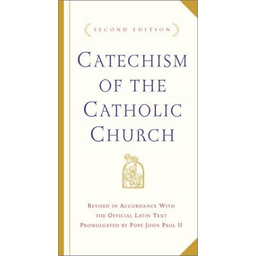 Catechism of the Catholic ChurchThe systematic statement of Catholic doctrine, organized topically. The reference the Ignatius notes cite constantly - pair the two for scripture plus doctrine.
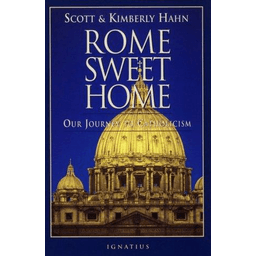 Rome Sweet HomeScott Hahn's conversion memoir, written with Kimberly Hahn - the back story to the teacher behind the Ignatius notes, popular with converts and the curious.
 Catholic AnswersThe largest Catholic apologetics and evangelization website - free articles, Q&A, and radio addressing the same questions the study Bible's notes raise.
Frequently asked questions
What translation does the Ignatius Catholic Study Bible use?
The Revised Standard Version, Second Catholic Edition (RSV-2CE). It keeps the literal, dignified register of the original RSV while conforming the wording to Catholic usage. The notes, cross-references, and essays are all keyed to the RSV-2CE, so they work best alongside that translation rather than the NABRE or another version.
Who wrote the study notes?
Scott Hahn and Curtis Mitch, published by Ignatius Press. Hahn is a widely read Catholic teacher and author, and the notes reflect a pastoral, accessible voice written for ordinary readers and study groups. The notes are written from within Catholic teaching and cite the Catechism and the Church Fathers throughout.
Is the whole Bible available, or just the New Testament?
Both are now available. For most of the product's life only a complete New Testament volume and individual Old Testament booklets existed; around 2023-2024 the entire Bible was released as a single complete volume. New buyers usually choose the complete edition, but the NT-only volume is still sold and common on the used market, so check which edition you're getting.
How is it different from the Oxford Catholic Study Bible?
Both are Catholic study Bibles, but they take different approaches. The Oxford edition is built on the NABRE and its notes lean toward modern critical scholarship - historical-critical method, questions of authorship and dating. The Ignatius edition is built on the RSV-2CE and its notes are written from within Catholic teaching for ordinary readers and groups, connecting passages to the Catechism, the Fathers, and the sacraments. Many readers who want both perspectives own both.
Does it include the deuterocanonical books?
Yes. It uses the Catholic canon, so the complete edition includes the deuterocanonical books (sometimes called the Apocrypha in other traditions) alongside the rest of the Old and New Testaments, with the same study apparatus applied throughout.
Is it good for someone new to Catholic Bible study?
Yes - it's one of the better choices for that reader. The notes are accessible, the topical essays tie individual passages into the larger biblical story, the book introductions orient you, and the study questions make it easy to use in a group or for personal formation. Converts and new Catholics in particular tend to find the connections to the Catechism and the Fathers helpful.
Is there an app or audio version?
There's a Kindle/ebook edition for digital reading, with tappable notes and cross-references, though availability varies by edition. There is no audio version of the study content - the notes, essays, and word studies are text-only. The biblical text itself is available in audio elsewhere.
Sources & further reading
More Study Bibles
 ESV Study BibleThe ESV Study Bible has quietly become the default desk Bible for pastors, seminarians, and serious lay readers in the Reformed evangelical world - and the reasons it earned that spot are worth understanding before you buy.
 NIV Study BibleThe original modern study Bible - over nine million copies sold and still the most balanced one-volume evangelical study Bible most readers will ever own.
 NIV Cultural Backgrounds Study BibleA 2,400-page reference Bible built around one question - what would an ancient reader have heard in this verse?
 NIV Life Application Study BibleThe best-selling study Bible of the last forty years built its name on one idea - notes that tell you what a passage means for your Tuesday, not just what it meant in the first century. Here is what that trade-off actually buys you.
 Reformation Study BibleR.C. Sproul's flagship study Bible pairs the ESV text with confessional Reformed notes, historic creeds, and a stack of theology articles - and Ligonier gives the whole apparatus away free online, which changes the buying math.
 CSB Study BibleHolman's flagship study Bible pairs the readable Christian Standard Bible translation with about 16,000 study notes - a clean, modern, broadly evangelical reference that competes in one of the most crowded categories in publishing.