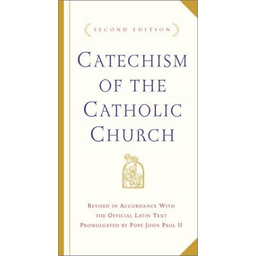
- Starting price
- Free (full text online)
- Free tier
- Yes
- Platforms
- Print · Web (free) · Kindle · Audio
- Developer
- Libreria Editrice Vaticana
- Launched
- 1992
- Updated
- May 31, 2026
The verdict
The official, comprehensive statement of Catholic doctrine - four pillars, ~2,865 numbered paragraphs, and free in full at the Vatican's own site. It is a reference work, not a devotional, and rewards a search box more than a straight read. If you want to know what the Catholic Church actually holds on a question, this is the book that answers it.
Try Catechism of the Catholic Church ↗Opens vatican.va
The Catechism of the Catholic Church - usually shortened to the CCC - has quietly become the single document almost every other Catholic resource points back to. Open a Catholic apologetics site, a parish RCIA handout, a bishops' statement, or a Catholic study Bible's footnotes, and the citations keep landing in the same place: a four-digit paragraph number from the Catechism. That is by design. When you want to know what the Catholic Church officially teaches on a question, this is the book that is meant to settle it.
It did not start as a casual project. After the Second Vatican Council, bishops around the world asked for a single, authoritative reference that gathered Catholic doctrine in one place. Pope John Paul II commissioned it, a commission of cardinals and bishops drafted it over six years, and it was promulgated in 1992; the definitive Latin edition, which fixed the official text, followed in 1997. It is not a pamphlet. It is not a devotional. It is not a quick read - it is roughly 2,865 numbered paragraphs, heavily cross-referenced and footnoted to Scripture, the Church Fathers, the councils, and the saints.
What you actually get is a reference work built in four parts the Church calls "pillars": the Creed (what Catholics believe), the Sacraments (the liturgy and how grace is celebrated), Life in Christ (morality, structured around the Ten Commandments), and Prayer (closing with a line-by-line commentary on the Our Father). The numbered-paragraph format is the giveaway: this is a book to be consulted, indexed, and quoted, not necessarily read cover to cover in a weekend. For Catholics it is the home base. For non-Catholic readers, it is the most direct way to read, in the Church's own words, exactly what the Catholic Church holds.
✓ The good
- The official, comprehensive statement of Catholic doctrine - when a question is "what does the Catholic Church actually teach here," the CCC is the document meant to answer it
- Free in full text - the complete Catechism is online at vatican.va and usccb.org at no cost, searchable and linkable by paragraph
- Densely sourced - nearly every claim is footnoted to Scripture, the Church Fathers, ecumenical councils, and the saints, so you can trace where a teaching comes from
- The four-pillar structure is genuinely clear - Creed, Sacraments, Life in Christ, Prayer maps the whole of the faith onto four navigable sections
- The numbered-paragraph system is the lingua franca of Catholic reference - "CCC 1257" points everyone to the same line, which is why catechists, apologists, and study Bibles all cite it
- Comprehensive in scope - the Creed, the seven sacraments, the Ten Commandments, and a full commentary on the Lord's Prayer all treated at length in one volume
- Editions for every format - paperback, hardcover, leather, Kindle, and audio all exist, so the same text is available however you prefer to read
✗ Watch out
- A dense reference work, not a devotional read - long stretches read like a doctrinal manual, and reading it straight through is heavy going
- The numbered-paragraph format rewards an index or search box - without one, finding the paragraph you need can be slow
- Genuinely long - ~2,865 paragraphs across four pillars is a lot of material, and newcomers can find the full text intimidating
- Heavy cross-referencing assumes some background - the footnotes to councils, Fathers, and earlier paragraphs are a strength for study and a hurdle for a first-timer
- Newcomers often start elsewhere - many are pointed to the shorter Compendium or YOUCAT first and graduate to the full CCC later
Best for
- Catholics who want the authoritative reference on any doctrinal question
- Catechists, RCIA leaders, and apologists who cite the text directly
- Non-Catholic readers who want Catholic teaching in the Church's own words
- Anyone using a Catholic study Bible or site that footnotes the CCC
Avoid if
- You want a devotional or a cover-to-cover read rather than a reference
- You are brand new and want the shortest possible summary first
- You prefer a question-and-answer format over numbered paragraphs
- You only need a quick answer and would rather use a guided app or site
What Catechism of the Catholic Church is
The Catechism of the Catholic Church is the official, comprehensive compendium of Catholic doctrine, promulgated by Pope John Paul II in 1992, with the definitive Latin edition following in 1997. It runs to roughly 2,865 numbered paragraphs and is organized into four parts the Church calls pillars: the Creed (the profession of faith), the Sacraments (the celebration of the Christian mystery), Life in Christ (morality, structured around the Ten Commandments), and Prayer (closing with a commentary on the Our Father). Nearly every paragraph is footnoted to Scripture, the Church Fathers, the councils, and the saints.
It is published by Libreria Editrice Vaticana, with English editions distributed through the United States Conference of Catholic Bishops (USCCB) and other publishers. The full text is freely available online at vatican.va and usccb.org, and print, ebook, and audio editions are widely sold. Because it cites the Catholic biblical canon - including the deuterocanonical books - and speaks in the Church's official voice, non-Catholic readers will encounter it as the authoritative Catholic reference: the place where Catholic teaching on a given question is stated directly.
Why the CCC is the reference everyone cites
Most popular Catholic books are someone's explanation of the faith - a teacher, an apologist, a convert telling you what the Church holds and why it landed for them. The Catechism is different in kind: it is the Church stating its own teaching in its own voice, gathered into one ordered text and given official status. That is why it functions as the common reference point. A catechist in one diocese and an apologist in another can both write "CCC 1213" and know they are pointing at the exact same paragraph.
The four-pillar architecture is the other half of what makes it usable. Rather than a loose topical sprawl, the whole of Catholic teaching is mapped onto four sections - what to believe, how grace is celebrated in the sacraments, how to live, and how to pray - each building in numbered order with cross-references threading between them. For a Catholic reader it is the authoritative home base. For a Protestant, Orthodox, or Latter-day Saint reader who wants to understand Catholic teaching accurately, it is the most direct route there is: the Church's own words, organized, indexed, and free to read.
The four pillars: how the whole faith is organized
The Catechism is built on four pillars, and once you see the structure the whole book navigates easily. Part One, the Profession of Faith, walks through the Apostles' and Nicene Creeds line by line - God, creation, Christ, the Holy Spirit, the Church, the resurrection, eternal life. Part Two, the Celebration of the Christian Mystery, covers the liturgy and the seven sacraments. Part Three, Life in Christ, treats morality and is structured around the Ten Commandments, with extended sections on conscience, virtue, sin, and grace. Part Four, Christian Prayer, closes the book with a treatment of prayer and a paragraph-by-paragraph commentary on the Our Father.
This is not arbitrary ordering - it is the classic catechetical pattern of creed, sacraments, commandments, and prayer, the same four headings catechisms have used for centuries, now filled out at reference length. For a reader, the payoff is practical: a moral question sends you to Part Three, a question about baptism or the Eucharist to Part Two, a question about the Trinity or the resurrection to Part One. The pillars turn an enormous body of teaching into four addresses you can actually find your way around.
The numbered paragraphs and cross-references: a reference engine
Every section of the Catechism is broken into numbered paragraphs - roughly 2,865 of them - and that numbering is the feature that makes the book work the way it does. Citations everywhere in the Catholic world take the form "CCC" plus a paragraph number, so a reference points to one specific line rather than a vague page range that shifts between editions. Within the text, margin numbers and small-print cross-references constantly send you to related paragraphs elsewhere in the book, and footnotes anchor claims to Scripture, the Church Fathers, and the councils.
In practice this makes the Catechism behave less like a book you read front to back and more like a reference engine you query. Land on a paragraph about the sacrament of reconciliation and the cross-references will pull you toward sin, grace, and the priesthood; follow the footnotes and you are reading the biblical and patristic sources behind the teaching. It is the reason the numbered-paragraph format, intimidating at first, becomes the thing experienced users like most - and the reason an index or a search box turns the CCC from a doorstop into a fast lookup tool.
The sources behind every line: Scripture, Fathers, councils, saints
One of the quieter strengths of the Catechism is how heavily it shows its work. The text is saturated with citations - to Scripture (in the Catholic canon, including the deuterocanonical books), to the early Church Fathers, to the documents of ecumenical councils, and to later saints and theologians. Long quotations from figures like Augustine, Aquinas, and Thérèse of Lisieux are woven directly into the paragraphs, so a teaching is rarely just asserted; it is attached to the sources the Church reads it from.
For a student this is the difference between a summary and a research tool. You are not only told what the Catholic Church teaches on a point - you are handed the trail of texts behind it, ready to follow up. That sourcing is also why the Catechism reads as authoritative within Catholic study: the citations are not decoration but the structure of the argument. It does mean the footnotes assume some background, which is part of why brand-new readers are often pointed to a shorter introduction first and grow into the full apparatus over time.
Pricing
Free online (Vatican / USCCB)
Free
The complete text at vatican.va and usccb.org - searchable, linkable by paragraph, and the way most people actually use it.
Paperback
around $10-18
The standard print edition. The copy most catechists and students keep on the shelf for quick reference.
Hardcover / leather
around $30+
Gift-grade and reference-grade editions. The one that survives years of RCIA classes and study groups.
Kindle / ebook
around $5-10
Searchable on any device, with the paragraph numbers intact. Useful when you want to grep for a topic fast.
Audio edition
varies
Narrated editions exist for those who prefer to listen, though a reference work in audio is best paired with the printed or online text.
The headline on pricing is unusual for a book this size: the complete Catechism is free. The full, official text lives at vatican.va and at usccb.org, searchable and linkable by paragraph number, and for a huge share of users that is the only edition they ever need. If your use case is "look up what the Church teaches on X," the free online text does the job as well as any print copy - better, since you can search it.
The print editions are where you pay, and the spread is wide. A paperback typically runs somewhere around $10-18 depending on edition and seller, which is the copy most catechists and students keep within arm's reach. Hardcover and leather gift editions climb to roughly $30 and up - the reference-grade copies meant to survive years of classes and study groups. Prices drift, so treat these as ballpark rather than exact.
Ebook editions (Kindle and others) generally land in the rough $5-10 range and keep the paragraph numbers intact, which makes them genuinely useful - a searchable CCC on your phone is a fast way to settle a question. Narrated audio editions exist as well, though a dense reference work in audio is best paired with the printed or online text rather than used on its own.
Most readers do not need to spend anything. The free online text at the Vatican and USCCB is the balanced default and the version most people actually use; a paperback is the natural add for anyone who wants to mark it up or keep it on the shelf.
Where Catechism of the Catholic Church falls behind
Not a devotional. The Catechism is a reference work, and it reads like one. If you are looking for a daily reading, a meditation, or a book to carry you through a season, this is not built for that - long stretches are doctrinal exposition, and many people find a guided devotional or a study Bible a better companion for prayer time.
Length and density. At roughly 2,865 paragraphs across four pillars, the full Catechism is a lot of material, and the prose is precise rather than breezy. A first-time reader can find the sheer scale intimidating, which is why so many people start with a shorter summary and return to the full text once they know what they are looking for.
The lookup problem without a search box. The numbered-paragraph system is a strength once you have an index or the searchable online text - and a weakness without one. Hunting for the right paragraph in a print copy with no index is slow, and the cross-references, helpful as they are, assume you already know roughly where you are headed.
The on-ramp. Newcomers are frequently directed to the Compendium of the Catechism or to YOUCAT first, both of which are shorter and more approachable. The full CCC is the destination, not always the starting point, and people who open it cold sometimes bounce off the apparatus before they reach the parts they came for.
Catechism of the Catholic Church vs. Compendium vs. YOUCAT
These three are the same teaching at three levels of depth, and they do genuinely different jobs. The Catechism of the Catholic Church (1992) is the full reference - the comprehensive, heavily sourced, ~2,865-paragraph text that everything else summarizes and that catechists and apologists cite by paragraph number. The Compendium of the Catechism (2005) is the official short version, a question-and-answer distillation of the full CCC that keeps the same structure but strips it down to essentials. YOUCAT is the youth-oriented edition, written in accessible language with a question-and-answer format and a layout aimed at younger readers and beginners.
Different jobs. The CCC is the deepest and most authoritative - the document the others point back to and the one to own if you want the complete reference. The Compendium is the fastest way to get the official teaching in a compact, memorizable form. YOUCAT is the friendliest on-ramp for a teenager, an RCIA newcomer, or anyone who wants the substance without the full apparatus. If you want one complete reference, it is the Catechism. If you want a pocket summary, reach for the Compendium. If you are starting from zero or teaching young people, YOUCAT is the gentler entry point.
All three carry official standing within the Catholic Church, and all three are most useful read together: many people keep YOUCAT or the Compendium for quick orientation and turn to the full Catechism when they need the complete treatment and the sources behind it.
The bottom line
The Catechism of the Catholic Church is the official, comprehensive reference for Catholic teaching, and it is hard to overstate how central it is - nearly every other Catholic resource ultimately cites it. It is dense, long, and built to be consulted rather than read straight through, and newcomers are often better served starting with the Compendium or YOUCAT. But for anyone who wants to know exactly what the Catholic Church holds on a question - in the Church's own words, with the sources attached, and free in full online - this is the book that answers it.
Alternatives to Catechism of the Catholic Church
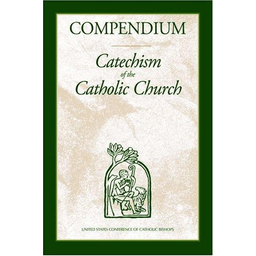 Compendium of the CatechismThe official short version - a question-and-answer distillation of the full CCC that keeps the structure and strips it to essentials.
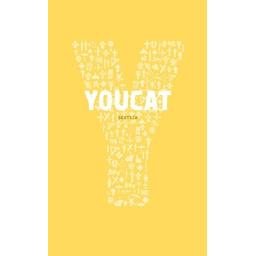 YOUCATThe youth-oriented catechism - accessible language and a Q&A format aimed at teenagers, RCIA newcomers, and first-time readers.
 Catholic AnswersThe large Catholic apologetics site - explanations and Q&A that lean on the Catechism, useful for following up a specific question.
 Vatican.vaThe Holy See's official site, where the full Catechism lives free alongside encyclicals, council documents, and Church texts.
Frequently asked questions
What is the Catechism of the Catholic Church?
It is the official, comprehensive statement of Catholic doctrine, promulgated by Pope John Paul II in 1992 (the definitive Latin edition followed in 1997). It gathers Catholic teaching into one ordered text of roughly 2,865 numbered paragraphs, organized in four pillars: the Creed, the Sacraments, Life in Christ, and Prayer.
Is the Catechism free to read?
Yes. The complete text is available free online at vatican.va and at usccb.org, searchable and linkable by paragraph number. Print editions run from around $10-18 for a paperback up to $30 and more for hardcover and leather editions, and Kindle and audio editions also exist.
How is the Catechism organized?
In four parts the Church calls pillars: Part One, the Creed (what Catholics believe); Part Two, the Sacraments (the liturgy and the seven sacraments); Part Three, Life in Christ (morality, structured around the Ten Commandments); and Part Four, Prayer, which closes with a commentary on the Our Father.
What does "CCC 1257" mean?
It is a citation to the Catechism of the Catholic Church by paragraph number - paragraph 1257 in this case. Because every paragraph is numbered, references across the Catholic world use this form so that everyone is pointed to the exact same line regardless of which edition they hold.
Should I start with the Catechism or the Compendium or YOUCAT?
The full Catechism is the complete reference the others summarize. Many newcomers start with the Compendium (an official short Q&A version) or YOUCAT (a youth-oriented edition in accessible language) and turn to the full CCC for the complete treatment and the sources behind it.
Is the Catechism useful for non-Catholic readers?
Yes. For Protestant, Orthodox, Latter-day Saint, or other readers who want to understand Catholic teaching accurately, the Catechism is the most direct source: it states Catholic doctrine in the Church's own words. Note that it cites the Catholic biblical canon, including the deuterocanonical books, and non-Catholic readers will encounter it as the authoritative Catholic reference.
Which edition should I buy?
For most people the free, fully searchable online text at vatican.va or usccb.org is all you need. If you want a print copy to mark up, a paperback (around $10-18) is the everyday default; hardcover and leather editions (around $30 and up) are the gift- and reference-grade copies. A Kindle edition keeps the paragraph numbers and is handy for searching on a phone.
Sources & further reading
More Catholic Books
Compendium of the Catechism of the Catholic ChurchThe official 598-question summary of the full Catechism - Catholic doctrine in a portable question-and-answer format, with the complete text free at vatican.va. CatholicismBishop Robert Barron's richly illustrated tour of the Catholic faith - the companion book to the Word on Fire documentary series, written to walk a curious reader from Jesus to the last things.
 Introduction to ChristianityThe 1968 lectures that a young Joseph Ratzinger - later Pope Benedict XVI - turned into one of the 20th century's most cited works of Catholic theology, built section by section on the Apostles' Creed.
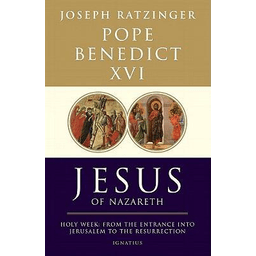 Jesus of NazarethA sitting pope's personal, scholarly reading of the Gospels - three volumes that engage modern biblical criticism while searching for the Jesus the Gospels actually present.
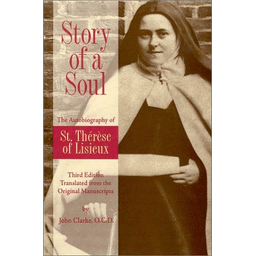 Story of a SoulThe spiritual autobiography of a young Carmelite nun who died at 24 - the small, warm book that taught a century of readers a path of holiness through little things done with great love.New Seeds of ContemplationThomas Merton’s revised 1962 classic on contemplation - the book that taught a century of readers the difference between the true self and the false self, and what it means to rest in God.