- Starting price
- Free (full text online)
- Free tier
- Yes
- Platforms
- Print · Web (free) · Kindle
- Developer
- Libreria Editrice Vaticana
- Launched
- 2005
- Updated
- May 31, 2026
The verdict
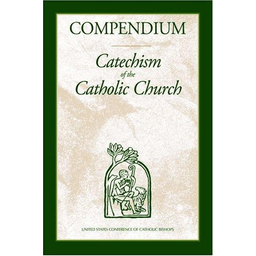
The Compendium is the official short-form summary of the Catechism of the Catholic Church - 598 questions and answers covering the Creed, the sacraments, the Christian life, and prayer. It is a reference and synthesis, not a devotional or a deep study, and it points back to the full Catechism for detail. The complete text is free online, which makes it one of the most accessible official Catholic documents in print.
Try Compendium of the Catechism of the Catholic Church ↗Opens vatican.va
The Compendium of the Catechism of the Catholic Church is the Vatican's own pocket version of its longest doctrinal document. The full Catechism, published in 1992, runs to more than 2,800 numbered paragraphs across some 700 pages - a remarkable synthesis, but a daunting one to hand a busy person who simply wants to know what the Catholic Church teaches and why. The Compendium, issued in 2005, distills that whole work into 598 questions and answers, each keyed back to the paragraphs of the full Catechism so a reader can dig deeper whenever an answer raises a new question.
It did not appear out of nowhere. At the 2002 catechetical congress, bishops asked for a brief, popular summary, and Pope John Paul II commissioned one. The drafting was led by Cardinal Joseph Ratzinger - who had also overseen the original Catechism - and the finished text was promulgated in 2005 by the same man, by then Pope Benedict XVI. So the Compendium carries unusual continuity: the person who shepherded the long version also signed off on the short one, which is part of why it reads as an authoritative summary rather than a third-party study aid.
What you get is a slim volume in a deliberately old form: question, then answer, the way catechisms have been written for centuries. The 598 entries follow the same four parts as the full Catechism - the Profession of Faith (the Creed), the Celebration of the Christian Mystery (the sacraments and liturgy), Life in Christ (morality and the commandments), and Christian Prayer (with a close reading of the Our Father). An appendix adds common prayers and doctrinal formulas, and most editions are interleaved with classic Christian artwork. It is a reference book short enough to read straight through.
✓ The good
- The official short-form summary of Catholic teaching - issued by the Vatican under Benedict XVI, not a third-party study guide, so it carries the weight of the full Catechism
- The question-and-answer format is genuinely easy to navigate - look up a topic, get a clear paragraph, move on, which the 700-page Catechism does not let you do
- Every answer is cross-referenced to the full Catechism's paragraph numbers - a doorway into the longer work rather than a replacement for it
- The complete text is free online at vatican.va in multiple languages - one of the most accessible official Catholic documents anywhere
- Compact and portable - it fits the four-part structure of the full Catechism into a volume you can carry, a common confirmation and RCIA companion
- The appendix of common prayers and doctrinal formulas, plus the curated artwork, makes it a tidy single reference for the basics
- Inexpensive in print (roughly $13-20) and available as an ebook - a low-cost way to own an authoritative reference
✗ Watch out
- It is a summary by design - for the full reasoning or the scriptural and patristic citations on any topic, it sends you back to the larger Catechism
- A reference work, not a devotional - no daily readings, reflections, or guided prayers, so it is something you consult rather than pray with
- The question-and-answer form is efficient but dry for cover-to-cover reading - it reads like a structured outline, not narrative prose
- Presents Catholic doctrine specifically and uses the Catholic biblical canon, so readers from other traditions use it as a reference to that tradition, not a shared overview
- Print pagination varies by publisher, so a study group needs to reference by question number rather than page
Best for
- Anyone wanting a quick, authoritative answer on what the Catholic Church teaches
- Confirmation, RCIA, and adult catechesis classes that need a portable text
- Readers intimidated by the full 700-page Catechism who want a way in
- Non-Catholics seeking an accurate, first-party summary of Catholic doctrine
Avoid if
- You want the full reasoning, citations, and scriptural backing - read the complete Catechism
- You want a devotional or a daily prayer companion rather than a reference
- You prefer narrative teaching to a question-and-answer outline
- You are looking for a study guide that walks through the Bible book by book
What Compendium of the Catechism of the Catholic Church is
The Compendium of the Catechism of the Catholic Church is the official abridgment of the 1992 Catechism, published in 2005 under Pope Benedict XVI. It restates the Catholic faith in 598 questions and answers, following the four-part order of the full Catechism: the Creed, the sacraments and liturgy, the moral life, and prayer. Each answer is short - usually a paragraph - and carries cross-references to the corresponding paragraphs of the larger work, so the Compendium functions as both a standalone summary and an index into the longer text.
It is best understood as a reference and synthesis rather than a teaching narrative or a devotional. The question-and-answer form is the oldest catechetical format there is, and the Compendium uses it to make the material lookup-friendly: a reader can find the entry on a specific topic, read a clear and authoritative answer, and follow the citations deeper if needed. An appendix gathers common prayers and traditional doctrinal formulas, and most print editions are illustrated with classic sacred art chosen to accompany the teaching.
Why readers reach for the Compendium over the full Catechism
The full Catechism is comprehensive, and that comprehensiveness is exactly what makes it hard to start. More than 2,800 paragraphs is a lot to face when your actual question is narrow - what does the Church teach about a particular sacrament, or how does it read a single line of the Creed. The Compendium exists for that moment. It takes the same material, in the same order, and compresses it into a form you can scan, so the question that sent you looking gets a clean answer in a paragraph rather than a chapter.
The trade is depth for accessibility, and the Compendium is honest about it: nearly every answer points back to the paragraph numbers in the full Catechism where the reasoning, the scriptural citations, and the historical context live. That makes it a doorway rather than a substitute. People who use both tend to keep the Compendium close for quick reference and reach for the full Catechism when an answer opens a question they want to follow all the way down. The Compendium is the index and the on-ramp; the Catechism is the library it points into.
The 598 question-and-answer format: doctrine you can look up
The heart of the Compendium is its structure: 598 numbered questions, each followed by a concise answer. This is the classic catechism form, and it does one thing extremely well - it turns a body of teaching into something you can search by topic. Rather than reading a chapter to find the sentence you need, you locate the question that matches your query and read the paragraph under it. The questions move in the same four-part sequence as the full Catechism, so the flow from the Creed through the sacraments, the moral life, and prayer is preserved, just at a fraction of the length.
In practice this is what makes the Compendium so widely used in confirmation and adult-formation settings. A catechist can assign a handful of questions, a class can discuss them, and everyone works from the same short, authoritative answers. Because each entry is cross-referenced to the larger Catechism, a question that sparks more interest has an immediate next step built in. The format is efficient rather than literary, but for a reference whose job is to deliver clear answers quickly, that is the point.
The free Vatican text: an official document anyone can read
The complete Compendium is published free on the Vatican's own website, vatican.va, in multiple languages including English. This is not an excerpt or a preview - it is the entire 598-question text, the same content as the print editions, hosted by the publisher of record. For a reader deciding whether to buy a copy, or for anyone who simply wants to check what the Catholic Church teaches on a point, that free official text is the most direct possible source.
The practical effect is that the Compendium is one of the most accessible authoritative Catholic documents in existence. A student writing a paper, a curious reader from another tradition, or a parish without a budget for printed copies can all reach the same official answers at no cost. The print and ebook editions add portability, the artwork, and the convenience of a physical reference, but the substance is open to everyone - a choice that fits the Compendium's purpose as a summary meant to be widely used.
The appendix: common prayers and doctrinal formulas in one place
Beyond the 598 questions, the Compendium closes with an appendix that gathers a set of common Catholic prayers - the Our Father, the Hail Mary, the Apostles' and Nicene Creeds, the Act of Contrition, and others - alongside traditional doctrinal formulas such as the theological and cardinal virtues, the gifts of the Holy Spirit, the works of mercy, and the commandments. These are presented as ready reference, often in both Latin and the vernacular in print editions.
This appendix is part of what makes the Compendium a tidy single volume rather than just a doctrinal summary. A reader who wants both the teaching and the texts of the prayers that express it has them in one place, which is why the book is a natural companion for someone preparing for confirmation or learning the basics of Catholic practice. Combined with the sacred-art illustrations that run through most editions, the appendix rounds the Compendium out from a pure Q&A into a compact reference for the doctrine, the prayers, and the formulas of Catholic life.
Pricing
Web (vatican.va)
Free
The complete text, all 598 questions, hosted free on the Vatican site in multiple languages.
Paperback
~$13-17
The standard softcover edition (USCCB and other licensed publishers). The copy most parishes buy in bulk.
Hardcover
~$18-20
Gift-grade edition, the one often handed out at confirmation. Includes the same artwork and appendix.
Kindle / ebook
~$8-13
Searchable digital edition; convenient for looking up a single question, though the free Vatican text covers the same content.
The most important pricing fact about the Compendium is that the full text is free. The Vatican hosts all 598 questions on vatican.va, in multiple languages, at no cost - call it the everyday default for anyone who wants to read or reference the document without buying anything. For many readers that free official text is all they will ever need.
Print editions, published by the USCCB and other licensed houses, run roughly $13-17 for the paperback and around $18-20 for the hardcover. The paperback is the copy most parishes buy in bulk for catechesis; the hardcover is the gift-grade edition often handed out at confirmation. Both carry the same content, the appendix of prayers, and the classic artwork. Pagination varies by publisher, so a study group is better off referencing by question number than page.
A Kindle or ebook edition typically runs somewhere around $8-13 and adds quick searching and highlighting, which is handy for looking up a single question on a phone. Pricing on all editions drifts, so treat these as approximate rather than exact.
Most readers do not need to spend anything to use the Compendium - the free Vatican text is complete. Buy a print copy when you want portability, the artwork, or a physical reference for a class; buy the ebook if you want search in your pocket. The free web edition is the balanced default.
Where Compendium of the Catechism of the Catholic Church falls behind
Depth. The Compendium is a summary, and on any question where you want the full reasoning, the scriptural and patristic citations, or the historical development, it deliberately sends you back to the larger Catechism. That is the design - it is the on-ramp, not the destination - but it does mean the Compendium alone will not satisfy a reader who wants the complete argument behind an answer.
Devotional use. There are no daily readings, reflections, guided meditations, or prayer plans here. The appendix collects the texts of common prayers, but the book is something you consult, not something you pray through. A reader looking for a devotional companion will need a separate resource; the Compendium is reference.
Readability cover-to-cover. The question-and-answer form is excellent for lookup and dry for straight-through reading. It reads like a tightly structured outline rather than narrative teaching, which is fine for a reference but means it is not the book you settle in with for an evening of reading.
Scope of tradition. The Compendium presents the teaching of the Catholic Church and uses the Catholic biblical canon. That is exactly what it is meant to do, but it means a reader from another tradition is using it as an accurate first-party reference to Catholic doctrine, not as a shared or cross-traditional overview.
Compendium vs. the full Catechism vs. YOUCAT
These three are tiers of the same body of teaching, and they do different jobs. The Catechism of the Catholic Church (1992) is the comprehensive reference - more than 2,800 paragraphs, the full reasoning and citations, the document everything else points back to. The Compendium of the Catechism (2005) is the official short summary - 598 questions and answers in the same four-part order, cross-referenced to the full text, built for portability and lookup. YOUCAT (2011) is the youth adaptation - the same doctrine recast in conversational language with sidebars, quotations, and illustrations aimed at teenagers and young adults.
Different strengths. The full Catechism is the deepest and most authoritative - the one you cite for the complete teaching. The Compendium is the most efficient reference for an adult who wants a clear, official answer fast and a built-in path deeper. YOUCAT is the most approachable for a young or first-time reader who would bounce off the formal register of the other two. If you want one authoritative book, it is the full Catechism; if you want the same content in a form you can carry and scan, the Compendium; if you are handing it to a teenager, YOUCAT.
All three are Catholic references presenting Catholic doctrine, and all three trace back to the same source text. The Compendium and YOUCAT are best understood as two different on-ramps - one formal and lookup-oriented, one conversational and youth-oriented - into the comprehensive Catechism that anchors them both.
The bottom line
The Compendium of the Catechism of the Catholic Church is the official, portable, question-and-answer summary of Catholic teaching, and it does that job cleanly. It will not give you the full reasoning behind every answer - by design, it sends you to the larger Catechism for that - and it is a reference rather than a devotional. But as a way to look up what the Catholic Church teaches, to prepare for confirmation, or to read an accurate first-party summary of Catholic doctrine, it is hard to beat, especially given that the complete text is free at vatican.va.
Alternatives to Compendium of the Catechism of the Catholic Church
 Catechism of the Catholic ChurchThe full 2,800-paragraph reference the Compendium summarizes - the complete reasoning, citations, and depth.
 YOUCATThe youth edition of the Catechism - the same doctrine in conversational language with sidebars and illustrations for teens.
 Catholic AnswersThe largest lay-run Catholic apologetics ministry - articles, tracts, and a daily call-in show explaining Catholic teaching.
 USCCBThe U.S. bishops' official site - daily Mass readings, the catechism text, and Church documents from the American conference.
Frequently asked questions
What is the difference between the Compendium and the full Catechism?
The full Catechism of the Catholic Church (1992) has more than 2,800 paragraphs and gives the complete reasoning, citations, and historical context. The Compendium (2005) condenses that same material into 598 questions and answers in the same four-part order, each cross-referenced to the full Catechism's paragraph numbers. The Compendium is the portable summary; the Catechism is the comprehensive reference it points back to.
How many questions are in the Compendium?
There are 598 questions and answers, organized into the four parts of the full Catechism: the Creed, the sacraments and liturgy, the moral life, and prayer. An appendix adds common prayers and traditional doctrinal formulas, and most print editions include classic sacred artwork.
Is the Compendium available for free?
Yes. The complete text - all 598 questions - is published free on the Vatican's website, vatican.va, in multiple languages including English. It is the full document, not an excerpt. Print editions run roughly $13-20 and ebooks are also available, but the substance is freely accessible online.
Who wrote and issued the Compendium?
It was published in 2005 by Libreria Editrice Vaticana under Pope Benedict XVI. The drafting was overseen by then-Cardinal Joseph Ratzinger, who had also led the original 1992 Catechism, so the same figure shepherded both the long version and the short summary.
Is the Compendium a good way to learn what the Catholic Church teaches?
Yes - it is the official first-party summary, written to be a clear, accessible overview of Catholic doctrine. The question-and-answer format makes specific topics easy to look up, and the cross-references let you follow any answer into the full Catechism. It presents the teaching of the Catholic Church and uses the Catholic biblical canon, so readers from other traditions can use it as an accurate reference to that tradition.
Should I read the Compendium or YOUCAT?
Both summarize the Catechism, for different readers. The Compendium uses a formal question-and-answer format and works as an adult reference and an index into the full Catechism. YOUCAT (2011) recasts the same doctrine in conversational language with sidebars and illustrations aimed at teens and young adults. Choose the Compendium for a portable official reference; choose YOUCAT for a younger reader.
Is the Compendium a devotional?
No. It is a reference and a summary of doctrine, not a devotional. There are no daily readings, reflections, or guided prayers, though the appendix does collect the texts of common prayers. It is something you consult to find an answer rather than pray through; for a devotional companion you would want a separate resource.
Sources & further reading
More Catholic Books
Catechism of the Catholic ChurchThe official, full-length compendium of Catholic doctrine - four pillars, ~2,865 numbered paragraphs, free online at the Vatican, and the reference nearly every other Catholic resource quotes. CatholicismBishop Robert Barron's richly illustrated tour of the Catholic faith - the companion book to the Word on Fire documentary series, written to walk a curious reader from Jesus to the last things.
 Introduction to ChristianityThe 1968 lectures that a young Joseph Ratzinger - later Pope Benedict XVI - turned into one of the 20th century's most cited works of Catholic theology, built section by section on the Apostles' Creed.
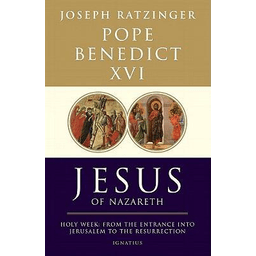 Jesus of NazarethA sitting pope's personal, scholarly reading of the Gospels - three volumes that engage modern biblical criticism while searching for the Jesus the Gospels actually present.
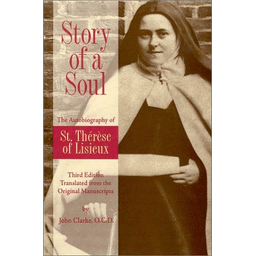 Story of a SoulThe spiritual autobiography of a young Carmelite nun who died at 24 - the small, warm book that taught a century of readers a path of holiness through little things done with great love.New Seeds of ContemplationThomas Merton’s revised 1962 classic on contemplation - the book that taught a century of readers the difference between the true self and the false self, and what it means to rest in God.