- Starting price
- ~$16 paperback
- Free tier
- No
- Platforms
- Print · Kindle
- Developer
- New Directions
- Launched
- 1962
- Updated
- May 31, 2026
The verdict
New Seeds of Contemplation is the book Thomas Merton spent his life rewriting, and it is the one most readers point to as his finest. It is not a memoir and not a how-to but a series of short, dense, luminous meditations on what contemplation actually is - and on the difference between the false self we build to impress the world and the true self that is hidden in God. It asks more of a reader than his autobiography does, but it gives more back, and it has been read across traditions for more than sixty years as one of the great modern books on the inner life.
Try New Seeds of Contemplation ↗Opens ndbooks.com
New Seeds of Contemplation has quietly become the book people reach for when The Seven Storey Mountain has done its work and they want to know what the silence the young Merton disappeared into is actually for. It is not the story of a conversion. It is the fruit of one - a gathering of short chapters, some only a page or two, on the nature of contemplative prayer and the life of the soul that gives itself to God. Thomas Merton wrote the first version, Seeds of Contemplation, in 1949, a year after the memoir made him famous; he kept returning to it, revising and expanding, until the fuller, deeper New Seeds of Contemplation appeared in 1962. The later book is the one that lasted.
It does not read like most spiritual books. It does not march through a program. It does not promise that prayer will make you calm, productive, or successful. It does not flatter the reader with the idea that contemplation is a technique you can master on a schedule. Instead it circles a single mystery from a dozen angles - what it means for a creature to be known and loved by God, and to wake up to that fact - and trusts the reader to sit with paradox rather than resolve it. The chapters are short on purpose. Merton meant them to be read slowly, a few at a time, the way one might pray rather than the way one reads for information.
The book’s most famous and most durable idea is the contrast between what Merton calls the false self and the true self. The false self is the identity we assemble out of achievement, reputation, possessions, and the opinions of others - the self that exists, in his phrase, outside the reach and the will of God. The true self is the person we actually are in God’s sight, hidden with Christ, and the whole movement of the contemplative life, as Merton describes it, is the slow uncovering of that real self as the false one is let go. It is a Catholic spiritual classic, written by a Trappist monk steeped in the Christian mystical tradition, and it has been read far beyond Catholic readers ever since - by Protestants, by the Orthodox, by people of no settled tradition at all - for its account of the inner life.
✓ The good
- Merton’s most enduring book - widely regarded as the finest thing he wrote, and the one most often handed to a reader who wants the heart of his contemplative thought
- The true-self / false-self framework is genuinely clarifying - a vocabulary for the inner life that thousands of readers have found names something they could not name before
- Short, self-contained chapters made for slow reading - you can take one meditation at a sitting, which fits the way the book is meant to be used
- Prose of real beauty - Merton was a poet as well as a monk, and the best chapters read like prose-poems on prayer and the presence of God
- Read widely across traditions - a Catholic classic that Protestant, Orthodox, and other readers have long picked up for its portrait of contemplation and union with God
- The revised 1962 edition is the mature one - Merton spent over a decade deepening the original, and the later book carries the weight of that long reworking
- A doorway into the wider mystical tradition - Merton draws quietly on John of the Cross, the Cloud author, and the desert fathers, leaving thoughtful readers with a reading list
✗ Watch out
- Dense and demanding - the chapters are short but concentrated, and a reader expecting an easy devotional will find it asks for real attention
- Not a how-to or a method - it describes the contemplative life rather than teaching a step-by-step practice, so readers wanting technique will need a different book
- Some chapters resist a single reading - Merton works by paradox and circling, and a few meditations only open up on a second or third pass
- The vocabulary takes adjusting to - terms like "true self," "false self," and "contemplation" carry specific meanings here that a first-time reader has to learn as they go
- Abstract rather than narrative - there are no stories or scenes to carry you along, so a reader who loved the memoir’s movement may miss it here
Best for
- Readers ready to move from Merton’s memoir to his mature contemplative thought
- Anyone drawn to the true-self / false-self framework and the inner life
- Readers who appreciate dense, poetic, meditative prose taken slowly
- Those seeking an entry point into the Christian contemplative tradition
Avoid if
- You want a step-by-step method or a guided prayer practice
- You prefer narrative and scenes over abstract meditation
- You want a quick, light devotional rather than a demanding book
- You bounce off paradox and writing that resists tidy conclusions
What New Seeds of Contemplation is
New Seeds of Contemplation is Thomas Merton’s book of meditations on the contemplative life, published by New Directions in 1962. It is the substantially revised and expanded version of his 1949 book Seeds of Contemplation, which Merton reworked over more than a decade into the fuller, more mature volume that has stayed in print ever since. Rather than a continuous argument or a narrative, it is a sequence of short chapters - many only a page or two - each circling some aspect of contemplation: what it is, what gets in its way, the false self and the true self, solitude, humility, and the soul’s union with God.
It is a Catholic spiritual classic, written by a Trappist (Cistercian) monk steeped in the Christian mystical tradition - John of the Cross, the anonymous author of The Cloud of Unknowing, the desert fathers, and the broader Western contemplative heritage. But like Merton’s memoir, it has never stayed inside Catholic readership. It has been picked up across traditions and by readers of none for its account of the inner life and the prayer of presence. It is best understood as a book of meditations to be read slowly and returned to, not as a systematic theology of prayer or a manual of technique.
Why readers keep returning to New Seeds
Most books about prayer tell you what to do. They offer steps, methods, postures, and schedules - a practice you can adopt on Monday. New Seeds of Contemplation does something different and rarer. It tries to describe, as honestly and precisely as Merton can manage, what contemplation actually is from the inside, and it spends most of its energy clearing away the misunderstandings that keep getting in the way. It is less a set of instructions than a long, careful pointing - here is what you are looking for, here is what it is not, here is what you will mistake it for. That is why readers who already pray well find as much in it as beginners do.
The other thing it has is the framework that made it famous: the false self and the true self. Merton’s claim is that most of us spend our lives building and defending an identity out of what we own, what we achieve, and what others think of us - and that this constructed self is precisely what has to be let go for the real self, the one hidden in God, to come to light. He returns to this from many directions across the book. Readers across traditions have come back to New Seeds for decades for exactly that vocabulary, which names something about the spiritual life that many had felt but could not say.
The true self and the false self: Merton’s central idea
The most influential thread in the book is Merton’s distinction between the false self and the true self. The false self, in his account, is the identity we manufacture and protect - the self defined by reputation, achievement, possessions, and the regard of others, the self that wants to exist on its own terms and outside the will of God. We dress it, defend it, and mistake it for who we are. The true self, by contrast, is the person we actually are in God’s sight, hidden with Christ, a self we do not invent but discover. Merton’s claim is that we cannot find that real self directly; it surfaces only as the false one is given up.
This is the idea that has done the most work on readers, and it is why the book has reached so far beyond its original audience. Merton gives a name and a shape to an experience many people recognize but could not articulate - the exhausting work of maintaining an image, and the intuition that the self underneath it is both more real and more hidden than the performed one. Whether a reader receives it as theology, as psychology, or simply as a true description of the human predicament, the false-self / true-self framework has become one of the most quoted and most useful ideas in modern spiritual writing.
Contemplation defined by what it is not
Much of New Seeds works by negation - Merton spends a great deal of the book telling you what contemplation is not, on the conviction that the misunderstandings are what keep people from it. Contemplation, he insists, is not a technique, not a trance, not an emotional high, not an escape from reality, and not something you achieve by effort and then possess. It is not the reward for being spiritually advanced. He clears away these false pictures one by one, in short, sharp chapters, precisely because they are the things a sincere reader is most likely to confuse with the real thing.
What he points to instead is harder to state and so he circles it rather than defining it flatly: a simple, loving awareness of God’s presence, a gift received rather than an accomplishment earned, in which the self quiets and rests in the One who made it. This apophatic method - describing the mystery by saying what it is not - places Merton squarely in the older contemplative tradition of the Cloud author and John of the Cross. For some readers it is exactly the right approach, refusing to cheapen the subject; for others it can feel like the book keeps circling without landing. Both reactions are fair, and both are built into how the book works.
Short meditations and poet’s prose: a book built to be read slowly
New Seeds is not constructed like an argument with a beginning, middle, and end. It is a sequence of short, largely self-contained meditations, many running only a page or two, and Merton clearly meant them to be taken a few at a time rather than read straight through like a treatise. The form is the method: the brevity invites you to stop, sit with a chapter, and let it work on you, which is much closer to prayer than to study. Readers who try to read it quickly, cover to cover, often report that it slides past; readers who slow down to its pace tend to find it opens.
And the prose carries it. Merton was a published poet as well as a monk, and at its best the writing in New Seeds reads like prose-poetry on the presence of God - image-rich, rhythmic, and capable of stopping a reader cold with a single sentence. That literary quality is a large part of why the book has lasted where many earnest books on prayer have not. It is also why people across traditions return to it: not for a doctrinal position to adopt, but for language that makes the inner life vivid and gives a reader something true to sit with.
Pricing
Paperback
~$16
The standard New Directions trade paperback. The copy most readers own and the one quotations are usually keyed to.
Kindle / ebook
~$12
Searchable and highlight-syncs across devices - useful for a book this quotable that readers tend to return to.
Used paperback
~$4-8
Widely available secondhand - the book has been in print continuously since 1962, so used copies are everywhere.
Hardcover / cloth edition
~$22
A more durable bound edition for a book many readers keep on a shelf and reread; less common than the paperback.
New Seeds of Contemplation is not free. It has been in print continuously since 1962, so the cheapest way in is a used paperback - copies turn up at library sales, secondhand shops, and online for four to eight dollars, which is how many readers acquire their first one. A new New Directions trade paperback runs around sixteen dollars and is the everyday default, the edition most quotations and page references are keyed to.
The Kindle edition runs a few dollars under the paperback, and highlighting syncs across devices - genuinely useful for a book this quotable and one that readers tend to revisit rather than read once. For a book made of short, return-to-able meditations, having it searchable on a phone is more useful than it might be for a straight-through narrative.
There is also a more durable cloth or hardcover edition, usually around twenty-two dollars, which some readers prefer for a book they expect to keep on a shelf and reread for years. Most readers do not need it; the standard paperback is the balanced default and the copy you will mark up. Prices drift, so treat every figure here as approximate and check the current edition before buying.
Where New Seeds of Contemplation falls behind
Not a how-to. New Seeds of Contemplation describes the contemplative life; it does not teach a method for entering it. There are no steps, no schedule, no technique to adopt. That is deliberate - Merton thought the language of technique misunderstood the thing entirely - but it means a reader who wants a guided, practical prayer practice will have to look elsewhere, to a structured book or app, and use New Seeds as the deeper why behind the practice rather than the practice itself.
Density over ease. The chapters are short, but they are concentrated, and Merton works by paradox, circling, and negation rather than by plain statement. A reader expecting a light, encouraging devotional will find the book asks for more attention than that. The reward is real, but it comes to the reader willing to slow down and reread; skimmed, the book can feel like it never quite says what it means.
Abstract rather than narrative. Unlike the memoir, there are no scenes, no characters, and no story to carry you along - just sustained meditation on the inner life. Readers who loved the movement and candor of The Seven Storey Mountain sometimes find the leap to this more abstract register harder than they expected. It is a different kind of book doing a different job, and it helps to know that going in.
A vocabulary to learn. Words like "contemplation," "true self," and "false self" carry specific, loaded meanings in Merton’s usage, and a first-time reader has to pick them up as they go. The book does not pause to define its terms academically; it uses them and trusts you to catch up. That is part of its literary character, but it can make the early chapters feel slippery until the vocabulary settles.
New Seeds of Contemplation vs. The Cloud of Unknowing vs. Interior Castle
These three are a natural shortlist for a reader after the heart of the Christian contemplative tradition, and they come from very different eras. The Cloud of Unknowing (anonymous, 14th century) is the medieval English source - a direct, practical guide to apophatic prayer that tells the reader to set everything but love for God beneath a "cloud of forgetting," and one of the wells Merton himself drinks from. Interior Castle (Teresa of Ávila, 1577) is the great map of the soul’s journey - Teresa imagines the soul as a castle of seven mansions and charts the stages of prayer from the outer rooms to union with God at the center. New Seeds of Contemplation (Merton, 1962) is the modern heir - it gathers that older tradition and restates it for a 20th-century reader in short, poetic meditations rather than as a single sustained map.
Different strengths. The Cloud is the most practical and direct - the one that comes closest to telling you what to do in prayer. Interior Castle is the most architectural - a complete charting of the soul’s ascent that rewards a reader who wants the whole map. Merton is the most accessible to a modern reader and the most literary - the book to start with if you want the contemplative tradition in contemporary language and in pieces you can take one at a time. If you want the modern doorway, it is New Seeds. If you want the medieval practical source, read The Cloud. If you want Teresa’s full map of the interior life, Interior Castle is the one.
All three are Catholic spiritual classics that have been read far beyond their original setting. The Cloud and Interior Castle have been picked up across traditions for centuries, and New Seeds joined them in the modern era - read by Protestant, Orthodox, and other readers for its portrait of contemplation and union with God rather than for any single doctrinal claim.
The bottom line
New Seeds of Contemplation is the book to read once Merton’s story has made you curious about the silence behind it. It is denser and more demanding than the memoir - a sequence of short, concentrated meditations rather than a narrative - but it is also the more lasting book, and the one Merton himself kept returning to and deepening. Its account of the false self and the true self has become part of how the modern world talks about the inner life, and its prose is good enough to stop you on the page. If you want the mature heart of Thomas Merton, and a doorway into the wider contemplative tradition he drew on, this is the one to start with.
Alternatives to New Seeds of Contemplation
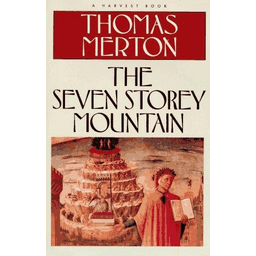 The Seven Storey MountainMerton’s 1948 conversion memoir - the famous story of how he came to the monastery, and the natural book to read before this one.Interior CastleTeresa of Ávila’s map of the soul’s seven mansions - the great architectural charting of the prayer journey Merton’s tradition descends from.
 The Practice of the Presence of GodBrother Lawrence’s short classic on living in constant awareness of God - the simplest, most practical companion to Merton’s meditations.The Cloud of UnknowingThe medieval English guide to apophatic prayer - one of the contemplative sources Merton himself draws on, and a more direct how-to.
Frequently asked questions
What is New Seeds of Contemplation about?
It is Thomas Merton’s 1962 book of meditations on the contemplative life - short chapters circling what contemplation is, what gets in its way, and above all the difference between the "false self" we build out of achievement and reputation and the "true self" hidden in God. It is a book about prayer and the inner life, meant to be read slowly rather than straight through.
How is it different from The Seven Storey Mountain?
The Seven Storey Mountain is Merton’s autobiography - the narrative of his conversion and entry into the monastery. New Seeds of Contemplation is not a story at all; it is the mature fruit of that life, a series of meditations on contemplative prayer. Many readers go to the memoir first for the story, then to New Seeds for the deeper thought behind it.
What is the "true self" and "false self"?
It is Merton’s central idea. The false self is the identity we construct and defend out of possessions, achievements, and the opinions of others - a self that wants to exist apart from God. The true self is the person we actually are in God’s sight, hidden with Christ, which we do not invent but discover as the false self is let go. The framework has become one of the most quoted ideas in modern spiritual writing.
Is it only for Catholic readers?
No. It is a Catholic spiritual classic - Merton was a Trappist monk and the book is rooted in the Christian mystical tradition - but it has been read widely beyond Catholic readers since it appeared. Protestant, Orthodox, and other readers have long picked it up for its account of contemplation and the inner life rather than for any single doctrinal claim.
Is it hard to read?
It is demanding in a particular way. The chapters are short, but they are dense and work by paradox and circling rather than plain statement, so the book asks for slow, attentive reading and often rewards a second pass. A reader who skims it tends to feel it slide past; one who slows to its pace usually finds it opens. It is not a quick or light devotional.
Should I read Seeds or New Seeds of Contemplation?
New Seeds is the one most readers want. Merton wrote the shorter Seeds of Contemplation in 1949, then spent more than a decade revising and expanding it into the fuller New Seeds of Contemplation in 1962. The later book is the mature version and the one that has stayed in print and in conversation; the earlier one is mainly of interest to readers tracing how Merton’s thought developed.
What should I read after New Seeds of Contemplation?
Readers often go back to The Seven Storey Mountain for the story, or deeper into the tradition Merton draws on - Teresa of Ávila’s Interior Castle for the full map of the prayer journey, The Cloud of Unknowing for a more practical medieval guide, or Brother Lawrence’s The Practice of the Presence of God for the simplest, most everyday companion. For a structured daily practice rather than a book, a contemplative prayer app is a different but related on-ramp.
Sources & further reading
More Catholic Books
 Catechism of the Catholic ChurchThe official, full-length compendium of Catholic doctrine - four pillars, ~2,865 numbered paragraphs, free online at the Vatican, and the reference nearly every other Catholic resource quotes.
 Compendium of the Catechism of the Catholic ChurchThe official 598-question summary of the full Catechism - Catholic doctrine in a portable question-and-answer format, with the complete text free at vatican.va.
 CatholicismBishop Robert Barron's richly illustrated tour of the Catholic faith - the companion book to the Word on Fire documentary series, written to walk a curious reader from Jesus to the last things.
 Introduction to ChristianityThe 1968 lectures that a young Joseph Ratzinger - later Pope Benedict XVI - turned into one of the 20th century's most cited works of Catholic theology, built section by section on the Apostles' Creed.
 Jesus of NazarethA sitting pope's personal, scholarly reading of the Gospels - three volumes that engage modern biblical criticism while searching for the Jesus the Gospels actually present.
 Story of a SoulThe spiritual autobiography of a young Carmelite nun who died at 24 - the small, warm book that taught a century of readers a path of holiness through little things done with great love.