- Starting price
- Free (public domain); $14 print
- Free tier
- Yes
- Platforms
- Print · Kindle · Audiobook · Web (free)
- Developer
- Various / Public domain
- Launched
- 1375
- Updated
- May 31, 2026
The verdict
The classic statement of apophatic - wordless, imageless - prayer in the Christian tradition, written around 1375 by an anonymous English author who refused to put his name on it. Short, beautiful, and demanding. Not the first contemplative book most readers should pick up, but for those already drawn to silence before God, few books go deeper.
Try The Cloud of Unknowing ↗Opens ccel.org
The Cloud of Unknowing has quietly become the book that contemplatives across nearly every Christian tradition reach for when they want to go past words. It is short - most editions run under 200 pages, and the core argument fits in the first dozen chapters - and it is anonymous, which is unusual enough to be worth pausing on. We do not know who wrote it. We know roughly when (the late fourteenth century), roughly where (the English Midlands), and roughly what kind of person the author was (an experienced spiritual director, almost certainly a monk or priest, writing for a young man in his early twenties). The author deliberately withheld his name, and seven hundred years of scholarship has not recovered it.
It is not a systematic theology. It is not a memoir. It is not a how-to manual in the modern sense, though it contains more concrete counsel than most books in its tradition. What it is, instead, is a long letter - a sustained piece of spiritual direction addressed to one specific young person who has felt drawn toward the contemplative life and wants to know how to proceed. The author writes with extraordinary intimacy, warmth, and bluntness. He warns the young man not to lend the book around carelessly. He tells him to skip ahead, or stop reading entirely, if the counsel does not fit. He is funny, severe, tender, and occasionally exasperated, all in the space of a page.
The premise is one of the boldest in Christian spiritual writing: God, the author says, cannot finally be reached by thinking. Not by clever theology, not by vivid mental images of Christ, not by feelings, however holy. The intellect runs out before God begins. What remains - the only thing that reaches him - is love. So the contemplative learns to push every thought, even good and pious thoughts, down beneath what the author calls a "cloud of forgetting," and to reach up toward God through a "cloud of unknowing" with what he calls a "naked intent" of love. It sounds austere, almost negative. In practice it has fed the Christian contemplative-prayer tradition for centuries, and it stands behind much of the modern centering-prayer movement.
✓ The good
- The definitive Christian statement of apophatic prayer - the clearest, warmest, most readable expression of the "way of unknowing" in the Western tradition
- Read across traditions - a pre-Reformation English classic that Catholic, Orthodox, and Protestant contemplative readers have all drawn from
- Genuinely concrete for its kind - unlike much mystical writing, it gives actual counsel: how to handle distractions, the one-word prayer, what to do when nothing happens
- Short and self-contained - the heart of the book is the first 20-odd chapters, and the whole thing reads in an afternoon or two
- Public domain - multiple free editions exist online in modernized English, plus low-cost ebooks
- Strikingly intimate voice - the author writes to one young person with humor, bluntness, and tenderness that survives 700 years and translation
- A natural deepening after the gentler classics - readers who have loved Brother Lawrence or à Kempis and want to go further into silence find their next step here
✗ Watch out
- The apophatic method is not for everyone, and it is debated - wordless, imageless prayer suits some readers deeply and leaves others cold or uneasy, and the approach has critics as well as enthusiasts across traditions
- Written for readers already committed to a contemplative life - the author explicitly says it is not meant for beginners or the merely curious, and reading it as a first devotional can mislead
- Medieval idiom and assumptions - even in modern translation the fourteenth-century frame (its picture of "active" vs. "contemplative" lives, its monastic setting) takes some adjusting to
- Translation choice matters a great deal - Middle English originals are nearly unreadable for most, and modern renderings vary widely in tone and accuracy
- Easy to misread on its own - without some context the "forget everything, even thoughts of Christ" counsel can be taken further than the author intends
- Sparse on Scripture exposition - verses and allusions are woven in, but the book does not work through passages the way a modern Bible-centered devotional would
Best for
- Readers already drawn to silent or contemplative prayer who want to go deeper
- Anyone exploring the roots of centering prayer and the modern contemplative revival
- Spiritual directors and pastors who want the source text behind a long tradition
- Readers who have outgrown gentler classics and want a more demanding next step
Avoid if
- You are looking for your first devotional or an easy entry point to prayer
- You want verse-by-verse Scripture exposition or study questions
- Wordless, imageless prayer strikes you as a dead end rather than a doorway
- You bounce off medieval vocabulary and framing even in modern translation
What The Cloud of Unknowing is
The Cloud of Unknowing is an anonymous work of contemplative spiritual direction written in Middle English in the latter half of the fourteenth century, most often dated to around 1375. The author is unknown - almost certainly an English monk or priest, an experienced director writing for a particular twenty-four-year-old man who has felt called toward contemplative prayer. The book takes the form of a long, personal letter of some seventy-five short chapters, and the same author very likely wrote a companion piece, The Book of Privy Counseling, which many modern editions include alongside it.
Its method is "apophatic," or negative: it approaches God by setting aside what God is not - every concept, image, and feeling - rather than by building up positive descriptions. The reader is counseled to bury all thoughts, even devout ones, beneath a "cloud of forgetting," and to reach toward God, who lies hidden in a "cloud of unknowing," with a simple, naked intent of love, often gathered into a single short word repeated in the heart. Despite its Catholic monastic origin, the book crossed the confessional lines that formed after the Reformation and is read today across Catholic, Orthodox, and Protestant contemplative circles.
Why contemplative readers keep returning to The Cloud
The single biggest practical difference between The Cloud of Unknowing and most devotional writing is that it does not ask you to think harder, feel more, or picture the right things. It asks you to let those go. Where The Imitation of Christ gives the mind something to chew on every page, and Brother Lawrence keeps a gentle conversation running through ordinary work, The Cloud points past words altogether - toward a prayer that is mostly silence, attention, and longing. For readers who have found that more reading, more analysis, and more vivid mental devotion eventually hit a ceiling, that is the relief the book offers: permission to stop producing thoughts and simply reach.
It is also, for a mystical text, unusually practical. The author does not float. He tells the young man exactly what to do when his mind wanders (do not fight the thoughts head-on; slip past them), what to do with a distraction he cannot shake (try hiding behind a single short word), and what to expect on the days when nothing seems to happen (most of them). That combination - a radical method delivered by a warm, blunt, experienced director who clearly knew his one reader well - is why The Cloud has outlasted flashier books and why it sits, quietly, behind so much of the contemplative-prayer revival of the last century.
The two clouds: the “cloud of forgetting” and the “cloud of unknowing”
The book’s governing image - and its title - is a pair of clouds. Above you, between you and God, is the cloud of unknowing: a darkness not of confusion but of transcendence, the simple fact that God exceeds everything the mind can hold. You cannot think your way through it. Beneath you, between you and everything else, the author tells you to lay a cloud of forgetting: a deliberate setting-aside of every other thought - not just sins and distractions, but creatures, memories, plans, and even good and holy thoughts about God’s works or the life of Christ. The whole of created reality, however worthy, goes down beneath the cloud of forgetting so that nothing competes for the heart’s attention. What is left to reach upward through the higher cloud is not an idea but an act of love - what the author calls a "naked intent" directed at God himself, "for himself, and not for his gifts."
This is the part of the book most easily misunderstood, and the author seems to know it. He is not saying the intellect is worthless, that Scripture and the humanity of Christ do not matter, or that beginners should leap straight into wordless prayer. He is describing one specific moment in a mature life of prayer - the moment of pure contemplative reaching toward God - and insisting that, in that moment, even the best thoughts get gently put aside because they are not God. Read in context, the counsel is disciplined and careful. Read in a single out-of-context line, "forget even thoughts of Christ" can be taken much further than the author ever meant, which is exactly why he warns the young man not to pass the book around to people who are not ready for it.
The little word: the practical core of the method
For all its talk of darkness and unknowing, The Cloud hands the reader one of the most concrete techniques in contemplative literature. When the mind will not settle, the author counsels, take a single short word - he suggests something small and whole, like "God" or "love" - and fasten it in your heart so that it stays there "come what may." When thoughts press in, you do not argue with them or analyze them; you simply return to the word. It becomes a shield and a kind of spear, a way of holding the heart’s attention on God without the machinery of discursive thinking. He even advises that a shorter word holds the mind better than a longer one, because there is less for the intellect to take apart.
This single piece of counsel is the most direct ancestor of the modern centering-prayer movement, which builds an entire practice around the gentle return to a "sacred word." Twentieth-century teachers who revived contemplative prayer for ordinary Christians - across traditions - drew openly on The Cloud at exactly this point. It is worth saying plainly that this kind of wordless, repetitive prayer is embraced warmly by some readers and approached with caution by others; some across various traditions worry that emptying the mind can drift away from prayer that is anchored in Scripture and the person of Christ, while others find it a deeply Christ-centered way of resting in God. The Cloud itself is unambiguous that the whole exercise is directed at the God of the Christian faith and is fueled by love for him - but readers will weigh the method differently, and that is a conversation worth having honestly rather than settling here.
The translation question: which Cloud should you actually read?
Because the book is in the public domain, you have a wide field of options - and with The Cloud the choice of translation matters more than with almost any classic, because the original is in fourteenth-century Middle English that most modern readers genuinely cannot read without help. The free public-domain standard is Evelyn Underhill’s lightly modernized 1912 edition, available on CCEL and Project Gutenberg; it keeps an older, more formal register and comes with a thoughtful (if dated) introduction. It is dignified and free, and many readers love it - others find its English a wall.
Among modern translations, three come up again and again. Clifton Wolters’s Penguin Classics edition is the durable everyday default - clear, accurate, well-introduced. William Johnston’s translation (often bundled with The Book of Privy Counseling) is the version many in the centering-prayer world grew up on and includes a strong contemplative introduction. Carmen Acevedo Butcher’s Shambhala rendering is the warmest and most contemporary, deliberately recovering the author’s humor and conversational ease - the gentlest on-ramp for a first-time reader. None of these changes the substance of the book. They change how much distance sits between you and an anonymous English director writing in 1375 - and with a text this demanding, that distance is worth choosing deliberately.
Pricing
Free (CCEL / Project Gutenberg)
Free
Full public-domain text online - most often Evelyn Underhill’s lightly modernized 1912 edition, in HTML, ePub, and PDF. The free way to read it tonight, with a useful older introduction.
Penguin Classics (Wolters)
~$14
Clifton Wolters’s readable modern translation with a substantial introduction and notes. The durable everyday paperback and the most common recommendation for a first serious read.
HarperOne / Image (Johnston)
~$15
William Johnston’s widely used translation, often paired with The Book of Privy Counseling and a strong introduction. A favorite of readers coming from the centering-prayer tradition.
Carmen Acevedo Butcher (Shambhala)
~$16
A warm, fresh contemporary rendering that recovers the author’s humor and informality. The gentlest on-ramp for readers who find older translations stiff.
Audible audiobook
~$15
Several narrations run roughly four to six hours. The meditative cadence rewards a slow human reader; good for a quiet commute or a series of short walks.
There is no version of this book you have to pay for. The Cloud has been in the public domain for centuries, and Evelyn Underhill’s 1912 modernized edition is freely available in HTML, ePub, and PDF from the Christian Classics Ethereal Library and Project Gutenberg. If you simply want to read it tonight and are comfortable with a slightly older English register, the free text is a perfectly good place to start.
What you are actually buying, if you spend money, is translation and apparatus. The Penguin Classics paperback (Clifton Wolters) at around $14 is the everyday default - readable, accurate, with a substantial introduction and notes, and the version we’d hand a serious first-time reader. The HarperOne / Image edition (William Johnston) at around $15 is the one many centering-prayer readers prefer, and it usefully pairs The Cloud with its companion, The Book of Privy Counseling.
For readers who find older translations stiff, Carmen Acevedo Butcher’s Shambhala edition at around $16 is the gentlest and warmest modern rendering - it recovers the author’s humor in a way the older versions flatten. The Audible audiobook at around $15 runs roughly four to six hours; the meditative pace rewards a slow human reading more than most narrators give it. Most readers do not need more than one edition.
As with any public-domain title, be wary of bargain-bin reprints with no translator’s name and no introduction - they are sometimes the raw Middle English or a garbled scan, neither of which serves a first reading. If a listing does not say who translated it, the safe move is to read the free Underhill text or buy one of the three named modern translations above.
Where The Cloud of Unknowing falls behind
Not a beginner’s book. The author says so himself, repeatedly - The Cloud is written for someone already settled into a life of prayer and drawn specifically toward contemplation. Read as a first devotional, it can mislead: its counsel to set thoughts aside assumes a foundation of Scripture, ordinary prayer, and ordinary discipleship that it does not stop to build. Readers new to the spiritual life are better served starting with Brother Lawrence or à Kempis and coming to The Cloud later.
The method is debated, not universal. Wordless, imageless, "centering" prayer is embraced warmly by some readers and approached with real caution by others - across traditions. Some worry that emptying the mind can drift from prayer rooted in Scripture and the person of Christ; others find the approach a profoundly Christ-centered rest in God. The Cloud is a partisan of the contemplative way and does not present the debate; a reader should know going in that thoughtful people land in different places on it.
Easy to misread on its own. The book’s most striking lines - bury even good thoughts, even thoughts of Christ’s life, beneath the cloud of forgetting - are carefully qualified in context but jarring out of it. Without an introduction or a guide, readers sometimes take the counsel further than the author intends. This is a book that genuinely benefits from a good translator’s preface, or from reading it alongside someone who knows the tradition.
Sparse Scripture exposition. The Cloud weaves in biblical allusion - the Mary and Martha story, Moses and the cloud on Sinai - but it does not work through passages or build its case verse by verse the way a modern Bible-centered devotional does. Readers who want exposition will get more from Spurgeon’s Morning and Evening or a study Bible than from this.
Medieval frame throughout. Even in the warmest modern translation, the fourteenth-century setting shows - its hierarchy of "active" and "contemplative" lives, its monastic assumptions, its occasional polemic against the spiritual fashions of its own day. Most readers adapt without trouble, but the book never pretends to be modern, and a reader wanting contemporary categories will have to translate as they go.
The Cloud of Unknowing vs. The Dark Night of the Soul vs. The Interior Castle
These three are the most commonly recommended classics of the Christian contemplative and mystical tradition, and they are often pitched at the same reader - someone past the introductory devotionals who wants to go deeper into prayer and the interior life. Different strengths. The Cloud of Unknowing is the shortest and most method-focused, the practical handbook of the "way of unknowing." John of the Cross’s Dark Night of the Soul is the most poetic and the most concerned with what happens when prayer goes dry and dark. Teresa of Ávila’s Interior Castle is the most architectural - a guided tour through seven "mansions" of the soul’s progress toward God.
The Cloud and The Dark Night are natural companions: both are apophatic, both treat the darkness and dryness of advanced prayer not as failure but as part of the path, and both are short enough to read in a sitting or two. John of the Cross is a sixteenth-century Spanish Carmelite writing as a poet and theologian; the Cloud author is a fourteenth-century English director writing as a warm, blunt counselor to one young man. Teresa’s Interior Castle is longer and more structured than either - the most complete map of the three, and the one many readers find easiest to follow because it gives the journey a shape.
If you want the most concentrated, practical entry into wordless prayer, start with The Cloud. If you want the deepest treatment of spiritual darkness and dryness, John of the Cross. If you want the fullest, most organized map of the soul’s ascent, Teresa. Many contemplative readers end up owning all three and reaching for whichever fits the season they are in - but The Cloud is the shortest door, and the one most directly behind the modern contemplative-prayer revival.
The bottom line
The Cloud of Unknowing is the rare medieval mystical text that still does exactly what it set out to do - guide a willing reader past words into a prayer made of attention and love. It is short, beautiful, surprisingly practical, and quietly demanding, and it is not the first contemplative book most people should pick up. Start gentler, and come here when silence before God has begun to draw you. Read a named modern translation - the Penguin Wolters is the everyday default, the Butcher the warmest - or the free Underhill text tonight. The apophatic way is not for everyone, and reasonable readers across traditions weigh it differently. But for those it fits, few short books go deeper.
Alternatives to The Cloud of Unknowing
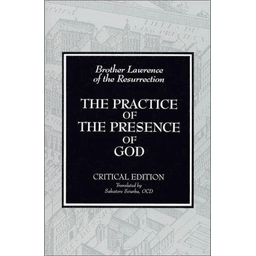 The Practice of the Presence of GodBrother Lawrence’s 17th-century classic on staying aware of God in ordinary work - far gentler and more accessible than The Cloud, and the better starting point for most readers new to contemplative reading.The Dark Night of the SoulJohn of the Cross’s 16th-century masterpiece on the darkness and dryness of advanced prayer - the closest apophatic cousin to The Cloud, more poetic and more concerned with spiritual aridity.
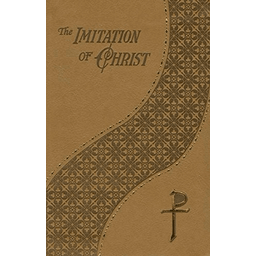 The Imitation of ChristThomas à Kempis’s 15th-century devotional of short meditations on following Jesus - the most widely read short Christian classic, and a more accessible, thought-rich companion to The Cloud.The Interior CastleTeresa of Ávila’s 16th-century map of the soul’s journey through seven mansions toward union with God - longer and more structured than The Cloud, and the fullest guide of the three.
Frequently asked questions
Who wrote The Cloud of Unknowing?
No one knows. The book is anonymous and the author deliberately withheld his name. Scholars agree he was almost certainly an English monk or priest writing in the latter half of the fourteenth century, around 1375, as an experienced spiritual director addressing a particular young man of about twenty-four who felt drawn to contemplative prayer. The same author very likely wrote a companion work, The Book of Privy Counseling. Seven hundred years of study has not identified him.
What does “the cloud of unknowing” actually mean?
It is the author’s image for the gap between the human mind and God. God, he argues, exceeds everything the intellect can grasp, so between the contemplative and God hangs a "cloud of unknowing" that thought cannot penetrate. The contemplative reaches through it not with ideas but with love - a "naked intent" directed at God himself. Beneath the contemplative, the author places a second cloud, the "cloud of forgetting," over every other thought, so that nothing created competes for the heart’s attention.
Is The Cloud of Unknowing a Catholic book? Will it work for Protestant or LDS readers?
It was written in a Catholic monastic setting before the Reformation, so its frame is medieval Catholic. But because it predates the later confessional divisions, it has been read and drawn from across Catholic, Orthodox, and Protestant contemplative circles for centuries. Its central counsel - to reach toward God through love rather than only through thought - is not tied to the distinctives of any one modern tradition. Readers from any background can engage it, though some of its medieval assumptions will need translating.
Is this a good first book on prayer or contemplation?
Generally no, and the author says as much. The Cloud is written for someone already grounded in prayer and specifically drawn toward contemplation; it assumes a foundation it does not build. Read as a first devotional it can mislead, because its counsel to set thoughts aside presumes ordinary discipleship is already in place. Most readers are better served starting with something gentler - Brother Lawrence’s The Practice of the Presence of God or The Imitation of Christ - and coming to The Cloud once silent prayer has begun to draw them.
Which translation of The Cloud of Unknowing should I read?
For a serious first read, Clifton Wolters’s Penguin Classics translation (around $14) is the durable, well-introduced everyday default. William Johnston’s translation (around $15) is favored in centering-prayer circles and usefully pairs The Cloud with The Book of Privy Counseling. Carmen Acevedo Butcher’s Shambhala edition (around $16) is the warmest and most contemporary, and the gentlest on-ramp. Evelyn Underhill’s 1912 edition is free online but uses an older English register. Avoid unnamed bargain reprints, which are sometimes the raw Middle English or a poor scan.
How is The Cloud connected to centering prayer?
Closely. The Cloud’s counsel to fasten a single short word in the heart and gently return to it whenever the mind wanders is the most direct ancestor of the modern centering-prayer practice, which builds an entire method around returning to a "sacred word." Twentieth-century teachers who revived contemplative prayer for ordinary Christians drew openly on The Cloud at this point. It is worth knowing that this kind of wordless prayer is embraced by some readers and approached with caution by others across traditions - a genuine and ongoing conversation rather than a settled question.
Is there a free version, and how long does it take to read?
Yes. The book has been in the public domain for centuries; Evelyn Underhill’s 1912 modernized edition is freely available from the Christian Classics Ethereal Library (ccel.org) and Project Gutenberg in HTML, ePub, and PDF. As for length, the core of the argument is in the first twenty-odd of its roughly seventy-five short chapters, and the whole book reads in an afternoon or two. Like most contemplative classics, though, it is built for slow, repeated reading rather than a single pass.
Sources & further reading
More Christian Classics (Pre-1900)
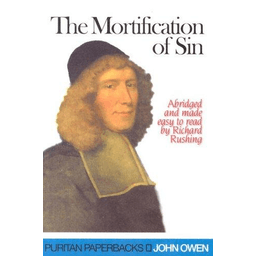 The Mortification of SinThe 1656 Puritan handbook on fighting indwelling sin - still the most rigorous spiritual diagnostic in print, four centuries on.The Imitation of ChristA 600-year-old devotional that has outsold almost every Christian book ever written - and still rearranges the modern reader who is willing to sit with it.The Practice of the Presence of GodA 17th-century Carmelite kitchen monk’s short, plain talks and letters on staying aware of God in the middle of ordinary work - the smallest devotional classic that keeps outlasting bigger books.The Treasury of DavidSpurgeon spent two decades on a verse-by-verse commentary on all 150 Psalms - his own exposition, centuries of collected commentators, and notes for preachers - and the result is still the first book many turn to when they open the Psalter.All of GraceSpurgeon's short 1886 book explaining salvation by grace through faith - written for the anxious and the seeking, given away by the millions, and still the booklet people press into a searching friend's hands.The Bruised ReedRichard Sibbes built an entire book out of half a verse - "a bruised reed he will not break" - and four centuries on it is still the tenderest page the Puritans ever wrote.