- Starting price
- Free (public domain); $9 print
- Free tier
- Yes
- Platforms
- Print · Kindle · Audiobook · Free PDF · Public domain · App
- Developer
- Various (Penguin Classics, Vintage Spiritual Classics, Aeterna Press, Ignatius Press)
- Launched
- c. 1418-1427
- Updated
- May 24, 2026
The verdict
After the Bible itself, possibly the most-read Christian book in history - and the rare medieval classic that still does what it set out to do. Short chapters, blade-sharp prose, and a single relentless theme: become like Christ. Worth owning in print and rereading for life.
Try The Imitation of Christ ↗Opens ccel.org
The Imitation of Christ has quietly become the favorite of more serious Christian readers than almost any other devotional ever written. It has been translated into nearly every language on earth, printed in tens of millions of copies, and read by figures as different as John Wesley, John Newton, Dietrich Bonhoeffer, Thomas Merton, Dorothy Day, and Pope Francis. Six hundred years after Thomas à Kempis copied it out longhand in a monastery in the Low Countries, it is still on the bedside table of pastors, monks, college students, and tired parents who have given up on the latest Christian-publishing release and want something that lasts.
It doesn’t argue. It doesn’t entertain. It doesn’t flatter the reader. The Imitation is four small books of short meditations - most of them less than a page - and the entire project is summed up in the opening line: "He who follows me, walks not in darkness, says the Lord." Everything else is the long, patient outworking of what it means to actually follow.
This is a review of the book as a devotional tool for modern readers - what it is, what edition to buy, how to read it without bouncing off, and where its medieval roots will feel foreign. The short version is that the Imitation is one of the safest, deepest, and most cross-traditionally trusted devotionals in print, and the only real decision is which translation to read it in.
✓ The good
- Six hundred years of cross-tradition endorsement - read and loved by Catholic, Protestant, Orthodox, and modern devotional readers alike
- Short, self-contained chapters - most are a page or less, which makes daily reading genuinely sustainable
- Relentlessly Christ-centered - the entire book is one long meditation on what it means to follow Jesus
- Public domain - you can download a complete copy free from CCEL or Project Gutenberg in under a minute
- Travel-sized in most editions - fits in a jacket pocket, designed to be carried
- Forces the reader to slow down - the prose has a contemplative cadence that resists skimming
- Reliably available in every format - paperback, hardcover, leather, audiobook, ebook, app
✗ Watch out
- Book IV is heavily Eucharistic and reflects medieval Catholic devotional emphases - Protestant and LDS readers may read it differently or skip portions
- World-renouncing tone can feel severe to modern readers - phrases about "contempt for the world" land harder in 2026 than in 1420
- Older translations (Challoner, Benham) use thee/thou and can be a barrier - translation choice matters more here than with most classics
- No narrative or argument arc - it is a collection of meditations, not a book to read straight through in one sitting
- Almost no engagement with Scripture by full passage - verses are woven in but not exposited the way a modern devotional would
- Sections on "humility" and "self-abasement" require careful reading for anyone working through shame or scrupulosity
Best for
- Readers ready for a short daily devotional with depth
- Anyone burned out on light contemporary Christian publishing
- Pastors, ministers, and lay leaders who need a contemplative reset
- Christians from any tradition wanting a cross-traditional classic
Avoid if
- You want narrative, story, or a single argument to follow
- You need a devotional with modern application questions and reflection prompts
- You are currently struggling with religious scrupulosity or severe shame
- You only read books with verse-by-verse Scripture exposition
What The Imitation of Christ is
The Imitation of Christ (De Imitatione Christi) is a collection of four short books of devotional meditations written in Latin in the early fifteenth century and traditionally attributed to Thomas à Kempis, an Augustinian canon regular of the Brothers of the Common Life at Mount Saint Agnes in the Netherlands. It was originally produced for fellow members of his religious community as a practical guide for the interior life. The four books move from general counsels for spiritual life, to counsels for the inner life, to a dialogue between the soul and Christ, and finally to meditations on the Eucharist.
It belongs to the Devotio Moderna - a late-medieval renewal movement that emphasized personal piety, plain Scripture reading, and practical holiness over scholastic debate. Despite its Catholic origin, the Imitation crossed every confessional line that emerged after the Reformation, and is still printed today by Catholic, Protestant, Orthodox, and ecumenical publishers in dozens of translations.
Why everyday readers still reach for à Kempis
The single biggest practical difference between the Imitation and almost every modern devotional is that it does not try to be relevant. There is no attempt to translate spiritual life into the categories of contemporary readers - no productivity language, no marriage advice, no political subtext, no felt-needs marketing. The book simply assumes the reader wants to become more like Christ and proceeds, page after page, to describe what that looks like in the quiet of an actual life. That austerity is precisely what readers come back for.
It is also short. Most chapters run a single page or less, and the four books together are roughly the length of a short novel. That makes it the rare devotional that survives the test of time both intellectually and practically: a reader can pick it up at night, read one short chapter, and put it down - and over a year accumulate something more solid than a stack of newer titles. The thoughtful person’s daily devotional, and the one that pastors keep recommending after they have stopped recommending almost everything else.
The four-book structure: small doors into a deep house
The Imitation is built as four self-contained books, each with its own tone and target. Book I, "Useful Reminders for the Spiritual Life," is the most quoted and the easiest entry point - short counsels on humility, reading wisely, peace, and the danger of false consolations. Book II, "Suggestions Drawing One Toward the Inner Life," turns inward to the interior conversation between God and the soul. Book III, "On Inner Consolation," is the longest section and takes the form of a dialogue between the Disciple and the Lord - many readers consider it the heart of the book. Book IV, "On the Blessed Sacrament," is a set of Eucharistic meditations reflecting the medieval Catholic devotional context in which the book was written.
The architecture matters because it lets readers enter the book where they actually are. A first-time reader is best served starting in Book I and reading a chapter a day; a reader in a hard season often finds Book III the one they reread for years. Book IV is the section where tradition shows most plainly - Protestant and LDS readers commonly read it as a window into medieval Catholic eucharistic devotion rather than as devotional instruction for their own practice, and Catholic readers often treat it as the climax of the whole work. Either way, the four-book design means you do not have to read the Imitation cover-to-cover for it to work on you.
The "follow me" Christological focus that holds it together
The single organizing idea of the Imitation is in its title and in its opening line: the call to follow Jesus, drawn from John 8:12. Every meditation in the book - on humility, on suffering, on the inner life, on prayer, on the sacrament - is treated as one more facet of that single call. The book never wanders into speculative theology, never builds a system, never sets up a rival authority. It simply assumes that Christ is the model and that the Christian life is the slow conformity of the soul to him.
That single-mindedness is why the Imitation has survived translation across so many traditions. The book does not require the reader to settle a long list of doctrinal questions before it can do its work. It asks one thing - that the reader take seriously the call to follow Jesus - and then spends four short books showing what that costs, what it gives, and how it feels from the inside. For readers who have grown weary of devotional books that center the reader, the relentless Christ-focus is the relief.
The medieval-vs-modern translation decision
Because the Imitation is public domain, dozens of English translations are available, and the choice matters more than for almost any other classic. The older translations - Richard Challoner (1530s, revised many times), William Benham (1874), and the Knox translation (1959) - preserve the Latinate cadence and the thee/thou register that many readers associate with the book. They are beautiful, but they raise the entry barrier for anyone not already comfortable with older English.
The modern translations - Leo Sherley-Price (Penguin Classics), Joseph Tylenda (Vintage Spiritual Classics), and William Creasy (modern English) - keep the structure and the meditative pace but render the prose in language a 2026 reader can read out loud without stumbling. For first-time readers, the Sherley-Price Penguin is the safe everyday recommendation; Creasy is the gentlest if even Penguin feels heavy; the older translations are best saved for a second pass, once the rhythm of the book is familiar. There is no wrong choice - but starting with the wrong one is the single most common reason people bounce off the Imitation before it has had time to work.
Pricing
Free (CCEL, Gutenberg, Aeterna)
Free
Full public-domain text in HTML, PDF, EPUB, and MOBI. Usually the Benham or Challoner translation. Perfect if you just want to start reading tonight.
Penguin Classics paperback
~$9
Leo Sherley-Price translation with introduction and notes. Readable modern English, durable paperback, the everyday-reader default.
Vintage Spiritual Classics
~$13
Joseph N. Tylenda translation with a thoughtful foreword by Sally Cunneen. Slightly more literary feel; popular with contemplative readers.
Audible audiobook
~$15
Multiple narrators available; runtime is roughly six to eight hours. Good for walks or commutes, though the meditative cadence rewards a slow human reader.
Ignatius Press leather
~$30
Premium bonded-leather edition with ribbon marker. The keepsake choice for readers who plan to reread it for life.
Modern English version (Whitford / Creasy)
~$12
William Creasy’s contemporary translation is the gentlest on-ramp for first-time readers who find older English a barrier.
There is no reason to pay anything for the Imitation if money is the obstacle. The full text is in the public domain and freely available in HTML, EPUB, MOBI, and PDF from the Christian Classics Ethereal Library, Project Gutenberg, and Aeterna Press. Most of those free editions use the Benham or Challoner translation, which is excellent but uses older English.
For most everyday readers, the Penguin Classics paperback - Leo Sherley-Price’s translation, around $9 - is the best value in print. It is durable, readable, pocket-sized, and has a useful introduction. The Vintage Spiritual Classics edition at around $13 is the close runner-up if you prefer a slightly more literary feel and a thoughtful foreword.
If you want a keepsake edition, the Ignatius Press bonded-leather hardcover at around $30 is the standard recommendation - sewn binding, ribbon marker, a book designed to be reread for decades. The Audible audiobook at around $15 is a fine companion for commutes, though the meditative cadence of the prose rewards a slower human reading than most narrators give it.
For first-time readers who find any older translation a barrier, William Creasy’s modern English version at around $12 is the gentlest on-ramp. Most users do not need more than one edition - pick one, read it slowly, and let the book do its work.
Where The Imitation of Christ falls behind
No reflection prompts or study questions. Modern devotionals almost universally end each entry with a prompt, a prayer, or a journaling cue. The Imitation does not - it ends each chapter and trusts the reader to sit with it. For readers used to being walked through application, the silence at the end of each meditation can feel like the book has stopped working. It hasn’t; that silence is the point. But going in expecting modern devotional scaffolding is a recipe for bouncing off.
Limited Scripture exposition. The Imitation weaves verses constantly into its meditations, but it does not stop to explain passages or work through them in context. Readers who want verse-by-verse devotional reading will get more from Spurgeon’s Morning and Evening, Our Daily Bread, or a modern study Bible than from à Kempis.
Book IV is a tradition-specific moment. The fourth book of the Imitation is built around devotional meditations on the Eucharist and reflects medieval Catholic sacramental theology. Catholic readers often treat it as the climax of the whole work; Protestant and LDS readers commonly engage it as a window into a different devotional vocabulary rather than as a manual for their own practice. Knowing that in advance prevents disappointment either way.
The world-renouncing tone is foreign in 2026. Sections on "contempt of the world," self-abasement, and the unreliability of human consolation read very differently in a culture that prizes self-affirmation. For most readers this is the medicine, not the side effect - but anyone working through scrupulosity, severe depression, or religious trauma should read the Imitation with a friend, a pastor, or a counselor rather than alone.
No single argument to follow. The Imitation is a collection of short meditations, not a book that builds an argument from page 1 to the end. Readers expecting a thesis are best advised to treat the book as a year-long companion - one chapter at a time - rather than a weekend read.
The Imitation of Christ vs. Confessions vs. The Pursuit of God
Different strengths. The Imitation of Christ is a daily devotional of short meditations on what it means to follow Jesus - easy to pick up, hard to outgrow, the book you reread for life. Augustine’s Confessions is a single long autobiographical and theological narrative - the converted heart of the early church figuring itself out in prayer, and the deeper, more demanding read. A. W. Tozer’s The Pursuit of God is a short twentieth-century book on the longing for God - closer in length to à Kempis but with a single argumentative arc and a more modern Protestant voice.
For daily devotional rhythm, à Kempis is the safest, most cross-traditional, and most reread of the three. For a single immersive read on what it means to wake up to God, Confessions is the heavyweight. For a short modern bridge from contemporary Christian publishing back into the older devotional stream, Tozer is the gateway. Most readers benefit from owning all three and reaching for whichever one fits the season they are in.
If you can only buy one, the Imitation is the most flexible choice - short enough to start tonight, deep enough to last a lifetime, and trusted across virtually every Christian tradition that has read it for the last six centuries.
The bottom line
The Imitation of Christ is the rare medieval devotional that has earned its place in every century since it was written. Six hundred years in, it still does what it set out to do: turn the reader, one short meditation at a time, toward the actual following of Jesus. Pick a readable translation - the Penguin Classics paperback is the everyday default - and read one chapter a day for a year. The book has real edges, particularly Book IV and the severity of its tone, but they are worth knowing about going in rather than dealbreakers. After the Bible itself, there are very few devotionals more worth owning.
Alternatives to The Imitation of Christ
 ConfessionsAugustine’s fourth-century autobiographical prayer - the foundational Western Christian classic and the deeper, more demanding companion read to à Kempis.
 The Pursuit of GodA. W. Tozer’s short twentieth-century devotional on the longing for God - a modern Protestant bridge into the same contemplative stream à Kempis writes from.
 The Pilgrim’s ProgressJohn Bunyan’s seventeenth-century allegory of the Christian life - narrative rather than meditation, and the most-read Christian story outside the Bible.
 Mere ChristianityC. S. Lewis’s twentieth-century case for the shared core of the Christian faith - apologetic rather than devotional, but the same cross-traditional appeal.
Frequently asked questions
Who actually wrote The Imitation of Christ?
It is traditionally attributed to Thomas à Kempis, an Augustinian canon regular at Mount Saint Agnes in the Netherlands, who lived from roughly 1380 to 1471. There have been historical debates about authorship - some scholars have proposed Jean Gerson or Gerard Groote - but the manuscript and historical evidence today points strongly to à Kempis as either the author or the principal compiler. Either way the book grew out of the Devotio Moderna movement and the community of the Brothers of the Common Life.
Is The Imitation of Christ a Catholic book?
It was written by a Catholic religious in the early fifteenth century and Book IV in particular reflects medieval Catholic eucharistic devotion. But it has been read, printed, and recommended across virtually every Christian tradition for the last six hundred years - John Wesley translated and abridged it for Methodist readers, John Newton recommended it, Dietrich Bonhoeffer carried it, and it continues to be reprinted by Catholic, Protestant, Orthodox, and ecumenical publishers. It is fair to call it a Catholic-origin book that has become cross-traditional.
Which translation of the Imitation of Christ should I read?
For first-time readers in 2026, the Leo Sherley-Price translation in the Penguin Classics paperback is the safe everyday default - readable modern English, around $9, durable. The Joseph Tylenda translation in the Vintage Spiritual Classics edition is the close runner-up. William Creasy’s modern English version is the gentlest on-ramp if any older translation feels heavy. The Challoner, Benham, and Knox translations are beautiful but use older English and are best saved for a second pass.
How should I read the Imitation of Christ?
Slowly. The chapters are short by design - most are a page or less - and the book rewards a one-chapter-a-day rhythm over a year far more than it rewards a weekend cover-to-cover read. A common pattern is to start with Book I, move into Book III when you want depth, and treat Book IV as optional or contextual depending on your tradition. The Imitation is meant to be reread, not finished.
Is the Imitation of Christ free to read online?
Yes. The book has been in the public domain for centuries. You can download a complete copy from the Christian Classics Ethereal Library (ccel.org), Project Gutenberg, or Aeterna Press in HTML, PDF, EPUB, and MOBI formats. Most free editions use the Benham or Challoner translation. If older English is a barrier, paying around $9 for a modern translation is the single best small investment you can make in the book.
Why do some readers find the Imitation of Christ severe?
Because it is. The Imitation was written in a fifteenth-century monastic setting and uses the vocabulary of "contempt for the world," self-abasement, and the unreliability of human consolation that was native to that context. For most readers this is the medicine - it cuts through self-flattery in a way modern devotionals rarely do. For readers currently working through scrupulosity, severe shame, or religious trauma, it is wise to read the book alongside a pastor, spiritual director, or counselor rather than alone.
How long does it take to read The Imitation of Christ?
At one short chapter a day, the full four books take roughly six to eight months. Read straight through, the book runs about 250 to 350 pages depending on the edition and could be finished in a long weekend - but almost nobody recommends reading it that way. The Imitation is built for slow daily reading; that is the format in which it does its work.
Sources & further reading
More Christian Classics (Pre-1900)
 The Mortification of SinThe 1656 Puritan handbook on fighting indwelling sin - still the most rigorous spiritual diagnostic in print, four centuries on.
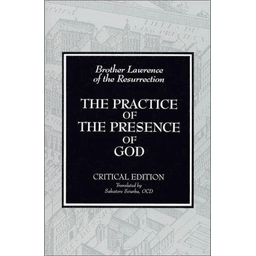 The Practice of the Presence of GodA 17th-century Carmelite kitchen monk’s short, plain talks and letters on staying aware of God in the middle of ordinary work - the smallest devotional classic that keeps outlasting bigger books.The Treasury of DavidSpurgeon spent two decades on a verse-by-verse commentary on all 150 Psalms - his own exposition, centuries of collected commentators, and notes for preachers - and the result is still the first book many turn to when they open the Psalter.All of GraceSpurgeon's short 1886 book explaining salvation by grace through faith - written for the anxious and the seeking, given away by the millions, and still the booklet people press into a searching friend's hands.The Bruised ReedRichard Sibbes built an entire book out of half a verse - "a bruised reed he will not break" - and four centuries on it is still the tenderest page the Puritans ever wrote.
 HumilityAndrew Murray's twelve-chapter meditation on humility as the root of every virtue - a hundred-page Victorian classic that readers across traditions still reach for when self keeps getting in the way.