- Starting price
- Free (public domain)
- Free tier
- Yes
- Platforms
- Print · Kindle · Web (free) · Abridged editions
- Developer
- Various / Public domain
- Launched
- 426
- Updated
- May 31, 2026
The verdict
The City of God is the book that taught the West to read history theologically - the contrast of two loves, two cities, running from creation to judgment. It is genuinely free in the public domain, and it is also immense and digressive, with long stretches on Roman religion that take orientation. Almost no one reads all twenty-two books straight through, and you do not have to. Pick a modern translation, start with the famous passages, and lean on an abridgement or a guide for the rest.
Try The City of God ↗Opens newadvent.org
The City of God has quietly become the book that everyone in the Western tradition quotes and almost no one finishes. Augustine wrote it slowly, between roughly 413 and 426 AD, in the aftermath of a catastrophe: in 410 the Visigoths under Alaric had sacked Rome itself, the eternal city, the unconquered center of the world - and a wave of educated pagans blamed the disaster on Christianity. Rome had abandoned the old gods who had made her great, the argument ran, and the old gods had abandoned Rome in return. Augustine, by then an aging bishop in North Africa, set out to answer the charge. The book that resulted runs to twenty-two books and well over a thousand pages, and it became one of the foundational works of Christian thought.
It is not a tidy book. It does not move in a straight line. It does not stay on one subject for long. It does not behave like a treatise with a thesis and a conclusion. The first ten books are largely a demolition of pagan religion and philosophy - answering the specific charge about Rome, then arguing more broadly that the old gods never delivered earthly prosperity or eternal happiness anyway. The last twelve turn constructive, tracing the origin, history, and destiny of two "cities" - not literal places but two communities of people sorted by what they love. Many readers come for the famous philosophy of history and get lost in book after book on Roman deities they have never heard of.
The good news is that The City of God is public domain. You can read the whole thing free at New Advent, CCEL, or Project Gutenberg right now. The harder questions - the ones this review spends real time on - are which translation to pick up, whether to read the full text or a good abridgement, and how to navigate the long fifth-century detours into Varro, Cicero, and the Roman pantheon without giving up in book four. Get those choices right and the book opens. Get them wrong and it joins the shelf of admired, unread classics.
✓ The good
- The founding text of Christian philosophy of history - the idea that history has a shape and a direction running from creation to final judgment traces in large part to this book
- Genuinely public domain - you can read the complete text free at New Advent, CCEL, or Project Gutenberg, in clean and readable English
- The 'two cities' framework is one of the most durable images in Western thought - quoted by Catholic, Orthodox, and Protestant writers, and the seed of Reformed two-kingdoms theology and Catholic political thought alike
- Books 11-22 read as sustained constructive theology - creation, the angels, the origin of the two cities, human history, death, resurrection, judgment, and the final peace
- A primary source for late-antique religion and philosophy - Augustine preserves Varro and other lost Roman authors at length, which is part of why classicists still read it
- Translation options for every reader - Dyson (Cambridge) for accuracy, Bettenson (Penguin) for the most-assigned readable default, Babcock (New City) for the modern scholarly standard
- Abridgements exist and are legitimate - a good one-volume condensation lets you read the argument without the thousand pages
✗ Watch out
- Immense and digressive - twenty-two books and 1,000-plus pages, with long stretches that wander far from the main argument
- The first ten books assume deep familiarity with Roman religion, gods, festivals, and authors most modern readers have never encountered
- Many readers stall in the anti-pagan books (especially 2-7) before reaching the constructive theology that begins in Book 11
- Translation choice matters more than usual - an old or stiff edition makes a hard book much harder
- Fifth-century references to Roman history, politics, and philosophy take orientation; without notes, much of the early material is hard to follow
- Not a quick or devotional read - this is a long, demanding work that rewards a study plan, not a weekend
Best for
- Readers ready for one foundational, full-length work of early Christian thought
- Anyone interested in the Christian philosophy of history or political theology
- Pastors, teachers, and small-group leaders building a serious classics shelf
- Students of late antiquity, Roman religion, or the history of ideas
Avoid if
- You want a short book you can finish in a weekend
- You bounce off long historical and philosophical digressions
- You want a verse-by-verse Bible study rather than a sweeping work of theology and history
- You are not willing to use an abridgement, a guide, or footnotes to navigate the Roman material
What The City of God is
The City of God (Latin De Civitate Dei) is a work of Christian apologetics, philosophy, and theology in twenty-two books, written by Augustine of Hippo between roughly 413 and 426 AD. Its immediate occasion was the sack of Rome by Alaric's Visigoths in 410 and the resulting pagan charge that Rome fell because she had abandoned her ancient gods for Christianity. Augustine answers that charge at length in the first ten books, then turns in the last twelve to a positive account of two "cities" - the City of God and the earthly city - traced from their origin in creation through human history to their final ends.
The two cities are not places but communities defined by love. As Augustine puts it, two loves built two cities: the love of self, even to contempt of God, builds the earthly city; the love of God, even to contempt of self, builds the City of God. The two are intermingled in this world and will only be finally separated at the last judgment. That framework - history as the unfolding story of these two loves toward two destinies - is what makes the book a philosophy of history and not merely a defense of Christianity against one accusation.
Why the two cities still shape how the West reads history
Before The City of God, the dominant way to read history in the Roman world was cyclical or fortune-driven: empires rose and fell, the gods were appeased or angered, and the wheel turned. Augustine cut against all of it. He argued that history has a single shape and a single direction - it begins at creation, runs through the long intermingling of the two cities, and ends at the judgment where they are separated forever. That linear, purposeful reading of history became one of the deepest assumptions of Western thought, carried by writers who never opened the book and inherited the framework secondhand.
The two-cities image also became common property across traditions that otherwise disagree sharply. Catholic political theology drew on it for centuries. The Reformed two-kingdoms and Lutheran two-governments traditions trace much of their framing to it. Orthodox readers engage Augustine more cautiously as a Western Father, but the contrast of loves resonates widely. The book survives all these uses because its central move is not a partisan one: it is the claim that the things people build are shaped by the things people love, and that there are finally only two directions love can run. Different traditions take that in different directions. The text is large enough to hold them.
Books 1-10: the answer to 'who broke Rome?'
The first ten books are Augustine's response to the pagan accusation that abandoning the old gods caused the fall of Rome. He opens by pointing out something his accusers had passed over: when the Goths sacked the city in 410, the Christian churches were honored as places of refuge, and many pagans survived precisely by sheltering in them. He then goes on the offensive. The gods of Rome, he argues across books two through seven, never actually delivered what was claimed for them - they did not guarantee earthly prosperity, they did not protect Roman morals (which collapsed under their watch), and the philosophers who defended them privately did not believe the public cult. Books eight through ten take on the most serious pagan philosophy of the day, the Platonists, crediting them where Augustine thinks they got close to the truth and parting with them on the worship of intermediary spirits.
This is the section that loses most modern readers, and it is worth understanding why before you start. Augustine is arguing with people whose worldview was saturated in Roman religion - he names hundreds of gods, cites the lost antiquarian Varro at length, and assumes you can follow allusions to festivals and rites and authors no longer widely read. To a fifth-century audience this was the live, urgent half of the book; to a twenty-first-century reader it can feel like a tour of a religion that no longer exists. A good edition's footnotes carry you through it. An abridgement trims it. Either way, the payoff is that Augustine clears the ground here so the constructive argument of the second half can be built.
Books 11-22: the two cities from creation to judgment
Then the book turns constructive, and the famous material begins. Book eleven starts at the beginning - creation, the angels, the first division between those who turned toward God and those who turned away. From there Augustine traces the two cities through the whole sweep of biblical history: the line of Cain and the line of Seth, the patriarchs, Israel and the prophets, the coming of Christ, the church in the world. He reads the Old Testament narrative as the slow unfolding of the City of God within the history of the earthly city, the two always intermingled, never fully separable until the end. The final books turn to last things - death, the resurrection of the body, the last judgment, the misery of the lost, and, in the luminous closing book, the eternal peace and the endless Sabbath of the saints.
These twelve books are where the book earns its place. The philosophy of history, the theology of the two loves, the long meditation on peace as the goal of every creature, the closing vision of the city at rest - this is the Augustine that later centuries read, quoted, and built on. The structural challenge is simply that you have to get here. Readers who know to expect a hard, digressive first half and a constructive, soaring second half tend to make it; readers who open to Book one expecting the philosophy of history straightaway often put the book down in the Roman gods. Knowing the shape in advance is half the battle.
The reading decision: full text, abridgement, or translation
More than with most classics, how you read The City of God matters as much as that you read it. The complete text is free in the public domain - the Marcus Dods (1871) translation at New Advent, CCEL, and Gutenberg is complete and accurate, if older in its English. For a modern paperback of the full work, Henry Bettenson's Penguin Classics translation is the balanced default: readable, widely assigned, around twenty dollars, with a helpful introduction. R. W. Dyson's Cambridge translation is the scholarly choice when accuracy and apparatus matter most, and William Babcock's two-volume New City Press edition is the modern critical standard with the fullest notes.
The other real choice is whether to read the whole thing at all. There is no shame in an abridgement here - the long anti-pagan books are exactly what most one-volume condensations trim, and a good abridgement (the Image/Doubleday edition is a common one) preserves the argument and the famous passages while cutting the fifth-century material that stalls new readers. Many people read an abridgement first, then go back to the full text for the books that gripped them. If you want the complete experience, read Bettenson with its notes and give yourself a study plan rather than a deadline. If you mainly want the philosophy of history and the two cities, an abridgement is a perfectly honest way in.
Pricing
Public domain editions
Free
New Advent, CCEL, and Project Gutenberg carry the complete text in the Marcus Dods (1871) translation. Older English, but fully readable, complete, and free - the way most people first read it online.
Bettenson (Penguin Classics)
~$20
Henry Bettenson's translation with David Knowles's introduction - the readable, widely assigned one-volume paperback. The balanced default for most first-time readers who want the full text in print.
Dyson (Cambridge)
~$45
R. W. Dyson's translation in the Cambridge Texts series - the scholarly choice when accuracy and apparatus matter. Heavier and pricier, the one to own for serious study.
Babcock (New City Press)
~$70 (two volumes)
William Babcock's translation in the Works of Saint Augustine series - the modern critical standard, with extensive notes across two volumes. The reference edition for libraries and Augustine scholars.
Abridged edition
~$15
One-volume condensations (such as the Image/Doubleday abridgement) cut the long anti-pagan and digressive sections and keep the argument. The realistic way many readers actually finish the book.
The City of God is public domain, which means it is genuinely free. The complete Marcus Dods translation from 1871 is out of copyright and hosted in clean form at New Advent and CCEL, with Project Gutenberg carrying it as well. If your budget is zero, you can read the entire work - all twenty-two books - in a serviceable translation today, at no cost.
For a first-time reader who wants the full text in print, Henry Bettenson's Penguin Classics paperback at around twenty dollars is almost always the right call. It is the balanced default - readable modern English, a genuinely useful introduction by David Knowles, and the version most courses that assign the whole work use. Most readers who want the complete book do not need anything more expensive than this.
Beyond Bettenson, the spend climbs with the apparatus. R. W. Dyson's Cambridge translation runs around forty-five dollars and is the one to own if you are studying the text closely and want the scholarly edition. William Babcock's two-volume New City Press translation, part of the Works of Saint Augustine, runs around seventy dollars for the pair and is the modern critical standard, with the fullest notes - the reference edition for libraries and serious students.
And then there is the abridgement, which for many readers is the smartest purchase of all. A one-volume condensation runs around fifteen dollars, cuts the long Roman-religion sections, and keeps the argument and the famous passages. It is the realistic way a lot of people actually finish the book - and finishing an abridgement beats abandoning the full text in Book four.
Where The City of God falls behind
Sheer length and digression. Twenty-two books and well over a thousand pages, written over thirteen years, with Augustine following tangents wherever they lead. No modern editor would structure a book this way, and the work's size is the single biggest reason admired copies sit unfinished. Many readers are better served by an abridgement than by a full edition they will not complete.
The Roman material assumes a world that is gone. Books two through seven argue against Roman religion in its own terms - hundreds of named gods, lost antiquarian sources, festivals and rites and philosophical schools that meant everything to a fifth-century audience and almost nothing to a modern one. It is not bad writing; it is writing aimed at readers we no longer are. Without good footnotes, much of the early half is genuinely hard to follow.
Translation choice quietly decides the experience. The free Dods translation is complete but reads like the 1870s; an old or stiff edition makes an already demanding book harder than it needs to be. A reader who starts with the wrong text often blames Augustine for what is really a question of edition. Bettenson, Dyson, or Babcock all solve this - but you have to choose.
The famous part is at the back. The philosophy of history, the two cities, the closing vision of eternal peace - the material most people come for begins in Book eleven, more than four hundred pages in. Readers expecting it from the start often stall in the anti-pagan books and never reach the payoff. The structure rewards readers who know the shape going in and frustrates those who do not.
The City of God vs. Confessions vs. Summa Theologica
These are three of the towering works of pre-modern Christian thought, and two of them are by the same author. They do very different things, and choosing between them depends on what you are after.
Different strengths. Confessions is the interior, first-person book - Augustine's own conversion told as a prayer to God, short by classic standards (300-350 pages) and the easiest of the three to love. The City of God is Augustine going outward and large - a public, polemical, panoramic work on history, politics, religion, and last things, far longer and more demanding. The Summa Theologica (Aquinas, thirteenth century) is the systematic synthesis - thousands of short articles in formal disputation covering the whole of theology, vast and rigorous and built on a method that takes its own kind of orientation.
For new readers wanting one Augustine book, start with Confessions - it is shorter, more personal, and the natural door into his mind. Come to The City of God second, when you want his philosophy of history and his account of the two cities, and consider an abridgement for the first pass. The Summa is the most reference-like of the three: almost no one reads it cover to cover, and it is best approached through its famous treatises and a guide. Well-built libraries hold all three because they cover different ground - the inner life, the shape of history, and the architecture of theology - rather than competing for the same shelf.
The bottom line
The City of God is the book that taught the West to read history as the story of two loves moving toward two ends - a foundational work of Christian thought that Catholic, Orthodox, and Protestant readers have all drawn on for sixteen centuries. It is free in the public domain, but its length and its long detours into Roman religion mean the choices you make going in decide whether you finish. For most readers, that means Bettenson's Penguin paperback with a study plan, or a good one-volume abridgement for the first pass. Either way, know the shape: a hard, polemical first half, and then the soaring constructive theology of the two cities in the second. The payoff is in Books 11-22 - read toward it.
Alternatives to The City of God
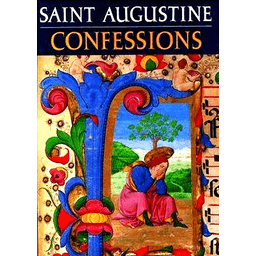 ConfessionsAugustine's interior conversion narrative, written around 400 AD - shorter, more personal, and the natural first door into his thought. The easiest of his major works to love.Summa TheologicaThomas Aquinas's thirteenth-century systematic synthesis of theology and Aristotelian philosophy - vast, rigorous, free in the public domain, and best read through its famous treatises and a guide.
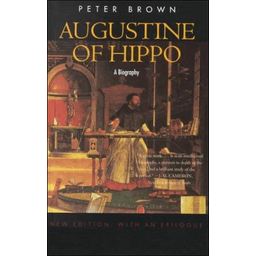 Augustine of HippoPeter Brown's landmark 1967 biography - the modern starting point for understanding the historical Augustine inside his own late-Roman world. Read it alongside the primary texts.
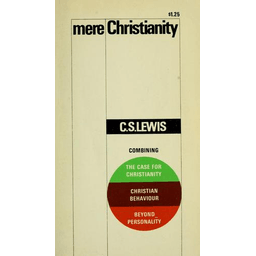 Mere ChristianityC. S. Lewis's wartime broadcasts on shared Christian belief - short, modern, and the easiest entry point to classic Christian thought if the fifth century feels far away.
Frequently asked questions
What is The City of God actually about?
On the surface it answers a specific charge: after the Goths sacked Rome in 410 AD, pagans blamed Christianity for abandoning the gods who had protected the city. Augustine spends the first ten books refuting that. But the larger subject is the two 'cities' - the City of God (those who love God) and the earthly city (those who love self) - traced from creation through history to the final judgment. It became the founding work of the Christian philosophy of history.
Do I have to read all twenty-two books?
No, and most readers do not. The first ten books argue against Roman religion in its own fifth-century terms and are where people most often stall. The constructive theology of the two cities runs from Book eleven on. A legitimate approach is to read a good one-volume abridgement first, or to read the famous later books closely and skim the anti-pagan material. If you want the full text, Bettenson's Penguin edition with its notes is the most navigable.
Which translation or edition should I buy?
For a readable full-text paperback, Henry Bettenson's Penguin Classics translation (around twenty dollars) is the balanced default. For close study, R. W. Dyson's Cambridge edition (around forty-five dollars) is the scholarly choice, and William Babcock's two-volume New City Press translation (around seventy dollars) is the modern critical standard. If you mainly want the argument, a one-volume abridgement (around fifteen dollars) is an honest and efficient way in. The free public-domain text is the older Marcus Dods translation.
Is The City of God Catholic, Orthodox, or Protestant?
It predates those divisions. Augustine wrote it between roughly 413 and 426 AD as a bishop in the early, undivided Western church. Catholic, Orthodox, and Protestant traditions all claim and revere him, and the two-cities framework in particular has shaped Catholic political theology and the Reformed and Lutheran two-kingdoms traditions alike. It is shared inheritance rather than the property of any one tradition.
Why does so much of the book talk about Roman gods?
Because Augustine was answering people who genuinely believed those gods had made Rome great and that abandoning them caused her fall. To a fifth-century audience the long argument against Roman religion (especially Books 2-7) was the urgent, live half of the book. To a modern reader it can feel like a tour of a vanished world. Good footnotes carry you through it, and abridgements typically trim it - but it is there because it was the heart of the controversy Augustine set out to settle.
How long does it take to read?
The full text runs well over a thousand pages depending on edition, so a careful reading is a project of weeks or months, not a weekend - many people read it with a study group over a term. A good one-volume abridgement is far shorter and can be finished in a week or two of steady reading. Plan according to which you choose, and do not expect to power through the full work quickly.
Where should I start with Augustine if not here?
Start with the Confessions. It is shorter (300-350 pages), more personal, and the natural door into Augustine's mind and voice. Come to The City of God afterward, when you want his philosophy of history and his account of the two cities. If you want the historical man behind the books, Peter Brown's biography Augustine of Hippo is the standard modern starting point.
Sources & further reading
More Christian Classics (Pre-1900)
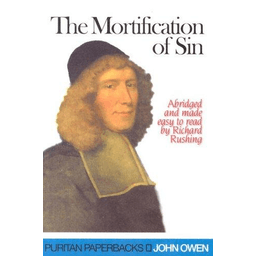 The Mortification of SinThe 1656 Puritan handbook on fighting indwelling sin - still the most rigorous spiritual diagnostic in print, four centuries on.
 The Imitation of ChristA 600-year-old devotional that has outsold almost every Christian book ever written - and still rearranges the modern reader who is willing to sit with it.
 The Practice of the Presence of GodA 17th-century Carmelite kitchen monk’s short, plain talks and letters on staying aware of God in the middle of ordinary work - the smallest devotional classic that keeps outlasting bigger books.The Treasury of DavidSpurgeon spent two decades on a verse-by-verse commentary on all 150 Psalms - his own exposition, centuries of collected commentators, and notes for preachers - and the result is still the first book many turn to when they open the Psalter.All of GraceSpurgeon's short 1886 book explaining salvation by grace through faith - written for the anxious and the seeking, given away by the millions, and still the booklet people press into a searching friend's hands.The Bruised ReedRichard Sibbes built an entire book out of half a verse - "a bruised reed he will not break" - and four centuries on it is still the tenderest page the Puritans ever wrote.