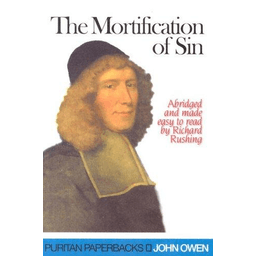
- Starting price
- Free; $13 modernized print ed.
- Free tier
- Yes
- Platforms
- Print · Kindle · Audiobook · Free PDF · Public domain
- Developer
- Banner of Truth (originals); Crossway (Overcoming Sin and Temptation modernized); Christian Focus
- Launched
- 1656
- Updated
- May 24, 2026
The verdict
The most surgically precise book ever written on what it actually feels like to fight a sin you keep losing to. The original 17th-century English is genuinely hard; a modernized edition is the right entry point for almost every first-time reader.
Try The Mortification of Sin ↗Opens ccel.org
The Mortification of Sin in Believers has quietly become the book that serious Christians from very different traditions keep pressing into each other’s hands. Written in 1656 by John Owen - a 36-year-old Puritan pastor who would later become Vice-Chancellor of Oxford under Cromwell - it has outlived its political moment, its denominational moment, and most of the books written alongside it. Four centuries on it is still in print, still cited in sermons most weeks, and still the first recommendation a lot of pastors give to someone wrestling a sin they cannot seem to drop.
It is not a long book. It does not lay out a system. It does not give you techniques. It does one thing: it takes the single sentence in Romans 8:13 - "If by the Spirit you put to death the deeds of the body, you will live" - and squeezes everything out of it across roughly two hundred pages. Owen wants to know who exactly is supposed to be doing the killing, what exactly is being killed, how exactly it is killed, and what the warning signs are that someone thinks they are doing it but is not.
The result is the book that produced the line everyone quotes even when they have never read him: "Be killing sin or it will be killing you." It is also the book that produces the most reliable readerly reaction in Puritan literature - the unsettled sense that someone four hundred years dead just diagnosed you out loud.
✓ The good
- Unmatched spiritual diagnostics - Owen names the moves your own conscience makes when it is trying to dodge conviction
- Anchored to a single text - the whole book is an exposition of Romans 8:13, so the argument never drifts
- The most quoted line in Puritan literature for a reason - "Be killing sin or it will be killing you" actually pays off the more you read around it
- Cross-tradition readership - Reformed, Anglican, Wesleyan, and even Catholic readers cite it for the rigor of its spiritual analysis
- Public domain - the original text is free in dozens of formats, including CCEL, Project Gutenberg, and Monergism
- Short enough to actually finish - somewhere between 150 and 230 pages depending on edition, and built in 14 short chapters
- Modernized editions exist - Crossway’s Overcoming Sin and Temptation and Aaron Renn’s recent paperback both make the prose readable without gutting it
✗ Watch out
- The original 1656 English is genuinely difficult - long Latinate sentences, theological vocabulary, and a sermon structure most modern readers were never taught to follow
- Almost no pastoral hand-holding - Owen assumes you already believe sin is serious and want to fight it; he will not warm you up
- Intense - read carefully, the book is exhausting; readers commonly take it in small doses rather than long sittings
- No application to specific sins - Owen works the spiritual mechanics; he does not give you a chapter on lust, anger, or envy by name
- Audiobook narration is hit or miss - the cadence of 17th-century prose does not always survive being read aloud at modern pace
Best for
- Readers wrestling a sin they keep losing to and want a serious diagnostic
- Pastors and small-group leaders building a backbone of classic spiritual theology
- Anyone who has read Gentle and Lowly and wants the harder companion piece
- Christians who want a public-domain classic they can read for free in any edition
Avoid if
- You are looking for a gentle on-ramp to the Christian life
- You bounce off 17th-century English even in modernized form
- You want a practical workbook with steps, exercises, and journaling prompts
- You are in acute crisis and need pastoral care before sustained theological reading
What The Mortification of Sin is
The Mortification of Sin in Believers is a short theological treatise - really an expanded set of sermons - by the English Puritan John Owen, first printed in London in 1656. Owen wrote it as a working pastor and an Oxford academic during the Cromwellian Interregnum, addressing the question of how a real Christian fights a real sin that keeps coming back. The book runs fourteen chapters and was published when he was thirty-six; it has never been out of print since.
Structurally it is an exposition of a single verse, Romans 8:13. Owen breaks the verse into clauses and works each one in order - who the agents are ("if you"), what the means is ("by the Spirit"), what the action is ("put to death"), what the object is ("the deeds of the body"), and what the promise is ("you will live"). The result is more spiritual surgery than self-help: Owen is interested in what is actually happening inside a believer who is trying, and often failing, to kill a sin.
Why serious readers across traditions still reach for Owen
Most books on the Christian life either flatten sin into bad habits to be managed or inflate it into an identity to be despaired of. Owen does neither. He treats sin the way a careful physician treats a chronic condition - naming the mechanism, mapping the patterns, refusing both panic and complacency. That clinical seriousness is why the book has been picked up by readers far outside the Puritan world. Reformed pastors quote it constantly. Anglicans recommend it in spiritual direction. Wesleyan and holiness writers have drawn on it for centuries. Even Catholic spiritual writers have cited Owen’s diagnostic rigor with approval, even where they would not share his ecclesiology.
What unites those readers is not agreement with every line of 17th-century Reformed theology. It is the recognition that Owen knows what he is talking about. The book’s authority is not borrowed from a tradition; it is earned, sentence by sentence, by the accuracy of its descriptions. When Owen names the move your conscience makes when it is trying to negotiate with a sin you secretly do not want to give up, the response is usually the same: how did he know.
The Romans 8:13 framework: Owen’s spiritual diagnostics
Owen builds the entire book on the structure of Romans 8:13 - "If by the Spirit you put to death the deeds of the body, you will live." Every clause is treated as a load-bearing piece of an argument. The "if" rules out passive Christianity. The "by the Spirit" rules out white-knuckle moralism. The "put to death" rules out polite management of pet sins. The "deeds of the body" specifies the object - not bodies as such, but the concrete acts and habits sin produces through them. The "you will live" supplies the promise and the stakes. Owen will not let any clause be skipped, and he spends multiple chapters on the mechanism of how the Spirit actually works mortification in a believer rather than around them.
Out of that framework comes the diagnostic core of the book: nine signs that a particular sin has fastened deeper than the reader suspects, and detailed counsel for what to do once a sin has been honestly named. Owen is interested in self-deception more than almost any other writer of his era - he keeps catching the reader in the act of preferring vague conviction to specific repentance. For readers used to devotional writing that addresses sin in the abstract, the experience of being addressed in the particular is the book’s signature jolt.
"Be killing sin or it will be killing you" - the line and the logic behind it
The most quoted sentence in Owen - and arguably in Puritan literature generally - is a single line from chapter two: "Be killing sin or it will be killing you." It gets reprinted on coffee mugs and tattooed on forearms, which is a fate Owen would not have predicted and probably not have endorsed. But the line is doing real work in its original setting. It is the hinge of his argument that there is no neutral state in the Christian life with respect to a known sin. You are either actively putting it to death or it is actively putting your spiritual vitality to death. Drift is not available as a third option.
Read in context, the line is less a motivational slogan than a clinical observation. Owen has just argued that sin is not a static enemy you can quarantine but a living principle that grows when ignored. He compares it to a wound that, left alone, does not heal but festers. The reason the quote has survived four centuries is not that it sounds tough; it is that almost every Christian who has tried to leave a sin alone and hope it would fade has eventually discovered Owen was right. The line lands because the diagnosis lands.
Original vs. modernized: which edition to actually buy
The honest review of any 17th-century Puritan work has to address the prose. Owen writes in long, periodic, Latin-inflected sentences with embedded subordinate clauses and theological vocabulary the average modern reader was never taught. Even literate Christians who read widely often find the first chapter slow going. This is not a flaw in the reader - it is a genuine gap between 1656 English and 2026 English, and pretending otherwise has caused a lot of people to give up on Owen after fifteen pages and conclude the Puritans are not for them.
The good news is that several modernized editions now exist and are quite good. Crossway’s Overcoming Sin and Temptation, edited by Kelly Kapic and Justin Taylor, keeps Owen’s original sentences but supplies footnotes, definitions, and editorial introductions that turn the book into something more like a guided reading. Aaron Renn’s 2024 paperback goes further and rewrites the prose into contemporary English while preserving the argument and structure. The Banner of Truth Puritan Paperback sits in between - lightly modernized spelling, but largely Owen’s own sentences. For most first-time readers, Renn or Crossway is the right starting point; the original Banner edition rewards a second reading once you already know what Owen is doing.
Pricing
Free original (public domain)
Free
The 1656 text is in the public domain - CCEL, Project Gutenberg, and Monergism all host clean HTML, EPUB, and PDF versions. Best for readers who can handle Puritan prose unaided.
Banner of Truth paperback
~$13
The classic Puritan Paperback edition - lightly modernized spelling, original sentence structure, compact format. The standard reference copy most pastors own.
Crossway - Overcoming Sin and Temptation
~$25
Mortification of Sin bundled with two companion Owen works (Indwelling Sin and Temptation), edited by Kapic and Taylor with helpful introductions and footnotes. Best for readers who want the full trilogy.
Aaron Renn modernized paperback
~$12
A 2024 word-by-word modernization that keeps Owen’s argument intact but rewrites the prose into contemporary English. The easiest first-time read in print.
Audible audiobook
~$10
Several narrations exist, from straight readings of the original to recordings of modernized editions. Quality varies by narrator more than by edition.
The original 1656 text is public domain and free in every format you would want - CCEL has clean HTML, Project Gutenberg has EPUB and Kindle, Monergism has PDF. If you can handle Puritan prose unaided, you never have to pay for this book.
For most first-time readers the Banner of Truth Puritan Paperback at around $13 is the workhorse copy - small format, lightly modernized spelling, the version most pastors own. It is the edition marked best value here because it is the one most readers will keep on the shelf and return to.
Crossway’s Overcoming Sin and Temptation at around $25 bundles Mortification of Sin with two related Owen works - Indwelling Sin and Temptation - and adds editorial apparatus from Kapic and Taylor. If you suspect you are going to want to read all three, this is the cleaner buy than three separate paperbacks.
Aaron Renn’s modernized paperback at around $12 is the easiest on-ramp in print, rewriting the prose into contemporary English. The Audible audiobook at around $10 is convenient but variable in narration - sample before you commit.
Where The Mortification of Sin falls behind
No application to specific sins. Owen is working at the level of mechanism, not example. Readers expecting a chapter on lust, anger, envy, or addiction by name will not find it. The framework is meant to be applied; it is not pre-applied for you.
Almost no pastoral warmth on the front end. Owen does not coax the reader in. He assumes you already know sin is serious and you already want to fight it. Books like Gentle and Lowly do the pastoral warming-up that Owen skips, which is one reason the two pair so well.
Dated cultural frame. The 1656 context shows in occasional references, examples, and assumptions about church life that no longer translate. Modern editions footnote the worst of these, but the book is unmistakably a 17th-century artifact and never pretends otherwise.
No structured workbook component. There are no journaling prompts, no end-of-chapter questions in the original, no exercises. Some study editions add a discussion guide, but Owen himself supplies argument, not application machinery.
Difficulty curve is real. Even in modernized editions the conceptual density is high - Owen layers distinctions on distinctions, and skim-reading produces almost nothing. Readers who want a book they can absorb in airport-gate sittings will struggle.
The Mortification of Sin vs. The Pursuit of God vs. The Imitation of Christ
These three books often sit on the same shelf and get recommended in the same breath, but they are doing very different things. The Mortification of Sin (1656) is a diagnostic - it works the mechanics of fighting a specific known sin and is at its best when the reader has a particular battle in view. The Pursuit of God (1948) by A.W. Tozer is a meditation on the felt knowledge of God - shorter, warmer, more devotional in cadence, aimed at reawakening hunger rather than diagnosing pathology. The Imitation of Christ (c. 1418-1427) by Thomas à Kempis is a daily devotional in the late-medieval monastic tradition - short readings, contemplative tone, centuries of Catholic and Protestant use.
Different strengths. Owen is the surgeon. Tozer is the spiritual director. à Kempis is the daily companion. A reader who picks up Owen expecting Tozer will find him cold; a reader who picks up Tozer expecting Owen will find him thin; a reader who picks up à Kempis expecting either will find a different genre entirely. The honest recommendation is that serious readers eventually own all three and use them for the work each one actually does.
If you are going to read only one of the three, the choice tracks the question you are actually asking. If the question is "how do I kill this particular sin," Owen. If the question is "how do I want God again," Tozer. If the question is "how do I form a daily habit of meditation," à Kempis. None of the three substitutes for the others, and pretending otherwise tends to disappoint readers in all three directions.
The bottom line
The Mortification of Sin is not the right book for everyone, and it is not the right first book even for many serious Christians. But for the reader who is genuinely tired of losing the same fight to the same sin and wants a writer who will name the dynamics honestly, there is still nothing else in print quite like it. Buy a modernized edition first - Renn or Crossway - read it slowly, expect to be uncomfortable, and keep a pen handy. Then, if Owen has earned your trust, go back to the original. Four hundred years in, the book still works.
Alternatives to The Mortification of Sin
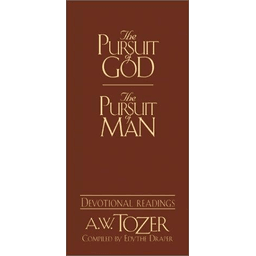 The Pursuit of GodTozer’s 1948 devotional classic on felt hunger for God - warmer, shorter, and more meditative than Owen. The natural companion piece for readers who find Mortification too clinical on its own.
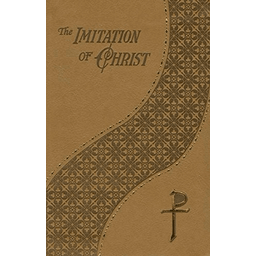 The Imitation of ChristThomas à Kempis’s late-medieval devotional, in continuous use across Catholic, Anglican, and Protestant traditions for nearly six centuries. Short daily readings rather than sustained argument.
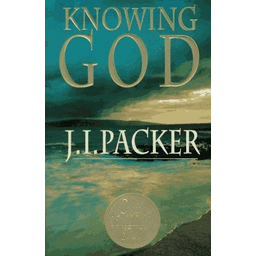 Knowing GodJ. I. Packer’s 1973 classic on the character of God and the shape of the Christian life. Pairs well with Owen as the doctrinal foundation behind the fight Mortification describes.
 Gentle and LowlyDane Ortlund’s 2020 meditation on the heart of Christ for sinners and sufferers - explicitly drawn from Puritan sources including Owen, but with the pastoral warmth Mortification leaves out.
Frequently asked questions
Do I need to read the original 1656 text, or is a modernized edition fine?
For a first reading, a modernized edition is almost always the better choice. Aaron Renn’s 2024 paperback rewrites the prose into contemporary English; Crossway’s Overcoming Sin and Temptation keeps Owen’s sentences but adds editorial footnotes. Once you know what Owen is doing, the original Banner of Truth edition rewards a second pass.
How long does it take to read?
The book is short - somewhere between 150 and 230 pages depending on edition - but it is dense, and most readers take it slowly. A common cadence is one short chapter per sitting over two to three weeks. Trying to read it in two long evenings tends not to work; the prose rewards rereading.
Is Owen only for Reformed readers?
No. Owen wrote within the Reformed Puritan tradition, but the book has been read with appreciation by Anglican, Wesleyan, Lutheran, and even Catholic readers for the rigor of its spiritual diagnosis. Specific theological commitments surface in places, but the diagnostic core of the book speaks across traditions.
Where does the famous quote come from?
"Be killing sin or it will be killing you" appears in chapter two and is the hinge of Owen’s argument that there is no neutral state with respect to a known sin in the Christian life. The line is well known on its own, but it lands harder once you have read the surrounding pages.
Is it really in the public domain?
Yes - the original 1656 text is long out of copyright and freely available from CCEL, Project Gutenberg, Monergism, and others in HTML, EPUB, and PDF. Modern editions (Banner of Truth, Crossway, Renn) have their own editorial copyright on the introductions, footnotes, and any modernized text.
Should I read this if I am in acute spiritual crisis?
Probably not as a first step. Mortification of Sin is a serious diagnostic work and is intense reading. If you are in acute crisis, pastoral care, counseling, and warmer devotional reading (Gentle and Lowly, The Pursuit of God, the Psalms) is usually the better starting point. Owen is best read from a place where you have the spiritual and emotional bandwidth for honest self-examination.
What should I read after Owen?
Two natural next steps. If you want more Owen, the companion treatises Indwelling Sin and Temptation are bundled in Crossway’s Overcoming Sin and Temptation. If you want a pastoral counterweight, Gentle and Lowly explicitly draws on Owen and the Puritans but supplies the warmth Mortification leaves out.
Sources & further reading
More Christian Classics (Pre-1900)
The Imitation of ChristA 600-year-old devotional that has outsold almost every Christian book ever written - and still rearranges the modern reader who is willing to sit with it. The Practice of the Presence of GodA 17th-century Carmelite kitchen monk’s short, plain talks and letters on staying aware of God in the middle of ordinary work - the smallest devotional classic that keeps outlasting bigger books.The Treasury of DavidSpurgeon spent two decades on a verse-by-verse commentary on all 150 Psalms - his own exposition, centuries of collected commentators, and notes for preachers - and the result is still the first book many turn to when they open the Psalter.All of GraceSpurgeon's short 1886 book explaining salvation by grace through faith - written for the anxious and the seeking, given away by the millions, and still the booklet people press into a searching friend's hands.The Bruised ReedRichard Sibbes built an entire book out of half a verse - "a bruised reed he will not break" - and four centuries on it is still the tenderest page the Puritans ever wrote.
 HumilityAndrew Murray's twelve-chapter meditation on humility as the root of every virtue - a hundred-page Victorian classic that readers across traditions still reach for when self keeps getting in the way.