- Starting price
- Free (public domain); ~$50 print set
- Free tier
- Yes
- Platforms
- Print (multi-volume) · Kindle · Web (free)
- Developer
- Various / Public domain
- Launched
- 1885
- Updated
- May 31, 2026
The verdict
The most ambitious devotional commentary on the Psalms in the English language. It is a reference to live with for years, not a book to read in a weekend - and because it is public domain, the full text is free in a browser before you ever spend a dollar on the print set.
Try The Treasury of David ↗Opens spurgeon.org
The Treasury of David has quietly become the book pastors and serious readers reach for first when they sit down with a Psalm. Charles Haddon Spurgeon worked on it for roughly twenty years - the volumes appeared in series between 1869 and 1885 - alongside the relentless weekly preaching at the Metropolitan Tabernacle in London that, by the time he died in 1892, had earned him the durable nickname “Prince of Preachers.” It was, by his own account, the labor he expected to be remembered for.
It is not a quick devotional. It does not give you a verse and a thought for the morning. It does not hand you one author’s polished take and send you on your way. For every one of the 150 Psalms it gives you Spurgeon’s own verse-by-verse exposition, then a second section of “Explanatory Notes and Quaint Sayings” - collected comments harvested from centuries of other writers on the same verses - and then a third section of “Hints to the Village Preacher,” outline-seeds for anyone who has to stand up and teach the text. Three layers, every Psalm, all the way through.
The work runs to something on the order of seven volumes and well over three thousand pages. That scale is the whole proposition and also the main warning: this is a reference, not a cover-to-cover read. The full text has been in the public domain for over a century, so you can read it free at the Blue Letter Bible, CCEL, or Spurgeon Gems, or buy a multi-volume print set for around fifty dollars. The barrier to entry is the sheer size and the Victorian prose, not the price.
✓ The good
- Comprehensive coverage of all 150 Psalms - every verse gets Spurgeon’s exposition, not just the famous chapters, which almost no devotional Psalms book attempts
- Three layers per Psalm - Spurgeon’s own notes, collected quotations from earlier writers, and preaching outlines, so it works as devotional reading, study reference, and sermon prep at once
- Spurgeon’s pastoral preaching voice - the exposition is warm, Christ-centered, and aimed at the heart, not just the lexicon
- An anthology of centuries of commentators - the collected sayings gather Puritan, Reformation, and patristic-era voices you would otherwise never assemble in one place
- Public domain - the complete text is free to read in a browser and free as PDF, in dozens of formats and apps
- Holds up as a lifelong reference - readers return to it Psalm by Psalm for decades rather than reading it once and shelving it
- Genuinely useful to teachers - the “Hints to the Village Preacher” section is a working tool, not filler
✗ Watch out
- Enormous - at roughly seven volumes and 3,000-plus pages, it is a shelf reference to dip into, not a book you read straight through
- Victorian English - Spurgeon’s own prose and especially the older quoted writers can feel dense if you don’t read 19th-century and earlier English for pleasure
- The collected quotations are dated - many of the gathered comments are from centuries-old writers, and the scholarship and idiom show their age
- Reformed Baptist theological frame - Spurgeon’s Calvinism surfaces, especially around election, sovereignty, and assurance
- Print sets are pricey - a full multi-volume set runs around $50 even though the underlying text is free
- No critical or original-language apparatus - this is devotional and homiletical commentary, not a technical Hebrew study tool
Best for
- Pastors and teachers preparing to preach or lead a study through the Psalms
- Readers who want to slow down and study a single Psalm in real depth
- Anyone who loves Spurgeon’s preaching voice and wants it applied verse by verse
- Readers across Reformed, broader evangelical, and liturgical backgrounds drawn to Christ-centered devotional commentary
Avoid if
- You want a short daily devotional rather than a deep verse-by-verse reference
- Victorian and older English actively irritates you and you won’t push through it
- You want a concise modern commentary with maps, charts, and original-language word studies
- You want to read a book cover to cover rather than consult it Psalm by Psalm
What The Treasury of David is
The Treasury of David is Charles Spurgeon’s verse-by-verse commentary on the entire book of Psalms - all 150 of them - built in three parts for each Psalm. First comes Spurgeon’s own exposition, a devotional and pastoral reading of the text verse by verse. Second comes a section of explanatory notes and “quaint sayings,” quotations on the same verses gathered from a wide range of earlier commentators across the centuries. Third comes a set of preaching hints - brief outline ideas for anyone teaching the passage.
It was published serially rather than all at once: the volumes appeared between 1869 and 1885, the fruit of about two decades of work carried alongside Spurgeon’s preaching and pastoral duties at the Metropolitan Tabernacle in London. Assembled, the work fills roughly seven volumes and more than three thousand pages, which is why it has always functioned as a reference set to consult rather than a single book to read end to end.
Why readers across traditions still reach for The Treasury of David
The single biggest practical difference between The Treasury of David and a standard one-volume Psalms commentary is that it gives you three voices at once. You get Spurgeon the preacher, opening each verse devotionally and pointing it toward Christ. You get the chorus of earlier writers in the collected sayings, so a single verse might come with a comment from a Puritan, a remark from a Reformation-era pastor, and an observation from a much older source, lined up side by side. And you get the preaching hints, which turn the whole thing into a working tool for anyone who has to teach.
That layered design is why the book travels. It is read by Reformed Baptists who claim Spurgeon as one of their own, by broader evangelicals who treat him as common heritage, and by Catholic and Orthodox readers who value the Christ-centered devotional substance and the breadth of the collected commentary even where they would frame a specific doctrine differently. It is the thoughtful reader’s companion to the Psalms - warm enough for devotion, deep enough for study.
Spurgeon’s own exposition: the Psalms in his preaching voice
The backbone of the work is Spurgeon’s verse-by-verse exposition. He takes each Psalm in turn, opens it with a short prefatory note on its title and theme, then walks the verses one at a time - naming what the verse shows about God, defending the reading from the text, and turning it toward the reader’s actual life. It is the same craft as his pulpit work: a verse opened like a hand opening on a coin, an argument made plain, the application landed where you live.
This is what keeps the Treasury devotional rather than merely academic. Spurgeon spent his ministry preaching to working-class Londoners, and he writes the way he preached - assuming you are tired, possibly discouraged, and in need of being shown Christ rather than buried in apparatus. The Psalms, with their full range from lament to exuberant praise, suit that voice perfectly; few commentators have matched his ability to make Psalm 23 land fresh or to sit honestly inside the darkness of Psalm 88. Anyone whose job involves producing weekly teaching has mined this exposition for sermon seed-ideas, and plenty of laypeople read it the same way - one Psalm at a time, for the theological backbone it gives the week.
The collected sayings: an anthology of centuries of commentators
The feature that makes the Treasury monumental rather than merely long is the second section under each Psalm - the explanatory notes and quaint sayings. For each verse, Spurgeon (with significant help from his assistants) gathered comments from a wide span of earlier writers, then printed them together beneath his own exposition. The effect is that you are not reading one commentator on Psalm 51; you are reading a conversation across the centuries about Psalm 51, curated onto a single page.
This sounds like a small thing. In practice it is transformative for study. Most readers will never assemble a personal library of Puritan, Reformation-era, and older devotional writers, much less know which ones said something memorable about a given verse - and Spurgeon did that work for you. The trade-off is honest: the collected comments are dated, drawn from writers working centuries ago, and their idiom and assumptions show. But as a way to hear how the church has heard the Psalms over a very long time, gathered verse by verse, the section has few rivals at any price, and none at free.
Hints to the preacher: a working tool for teachers
The third layer under each Psalm is the section Spurgeon titled “Hints to the Village Preacher” - short outline ideas, suggested themes, and angles of approach for anyone who has to stand up and teach the passage. These are not finished sermons. They are seeds: a phrase from a verse paired with a possible structure, a doctrine the verse opens onto, a practical application worth developing. The name reflects Spurgeon’s heart for the under-resourced country pastor who had little library and less time.
For its intended user this section is the difference between an interesting commentary and a daily tool. A teacher working through the Psalms can read Spurgeon’s exposition for substance, scan the collected sayings for a memorable quotation, and then turn to the hints for a way into the sermon - all on the same spread. Lay readers leading a small group use it the same way. It is one of the clearest examples in the work of Spurgeon writing for the person actually doing the work, not for the academy.
Pricing
Free (public domain)
$0
Full text of all 150 Psalms at the Blue Letter Bible, CCEL, and Spurgeon Gems; free PDFs and free web reading across most study sites
Kindle / ebook
~$1-$10
Inexpensive complete-text Kindle editions; some are free, others a few dollars for cleaner formatting and a working table of contents
Paperback (single-volume condensed)
~$20-$30
Abridged or single-volume editions that keep Spurgeon’s exposition while trimming the bulk of the collected quotations - the budget print pick
Print set (multi-volume)
~$50
The full unabridged work across multiple hardcover or paperback volumes - the complete reference for a study or pastor’s shelf
There is no real pricing decision forced on you here. The Treasury of David has been in the public domain for over a century, and the complete text - all 150 Psalms, all three layers - is free to read in a browser at the Blue Letter Bible, CCEL, and Spurgeon Gems, and free as downloadable PDFs across most study sites.
If you want it on a device, inexpensive Kindle editions of the full text run anywhere from free to about ten dollars; the paid ones are buying cleaner formatting and a working table of contents, not the words themselves. A condensed or single-volume print edition - which keeps Spurgeon’s exposition while trimming much of the collected quotation material - typically runs around $20 to $30 and is the budget print pick.
The full unabridged work in a multi-volume print set runs around $50. That is the most expensive option, and the one most useful to a pastor or teacher who wants the complete collected sayings within arm’s reach on a shelf rather than behind a search box.
Most readers do not need the full print set. Start free on the web or in a Kindle edition, and only invest in print if you find yourself returning to it Psalm after Psalm and want it physically open while you work.
Where The Treasury of David falls behind
No original-language or critical apparatus. The Treasury is devotional and homiletical, not technical. You won’t find Hebrew parsing, textual variants, or the kind of word-study tooling a modern exegetical commentary or a piece of Bible software provides. Pair it with a separate study tool if that is what you need for a given verse.
Sheer size works against casual reading. At roughly seven volumes and over three thousand pages, this is not a book you finish; it is a reference you consult. Readers hoping for a tidy one-sitting devotional on the Psalms will find the scale overwhelming, and the condensed editions exist precisely because of it.
The collected quotations have aged. The “quaint sayings” are gathered from writers working centuries ago, and their scholarship, illustrations, and idiom reflect that. The breadth is the gift; the datedness is the cost, and a modern reader will hit comments that feel remote.
Victorian prose throughout. Spurgeon’s own writing is 19th-century English, and the quoted material is often older still. The theology and pastoral insight travel; the long subordinate clauses and archaic vocabulary sometimes don’t, and there is no gently modernized edition of the full work the way there is for some of his shorter books.
Theological frame is explicitly Reformed Baptist. Spurgeon’s Calvinism surfaces around election, sovereignty, and assurance. It rarely dominates the reading of a given verse, but readers from other traditions will notice it, and anyone wanting a deliberately non-denominational Psalms commentary should know it going in.
The Treasury of David vs. Enduring Word vs. a modern one-volume Psalms commentary
These represent the main ways a reader actually approaches the Psalms today, and they do different jobs. The Treasury of David (1869-1885) is the deep, layered, historical option - Spurgeon’s own exposition plus centuries of collected commentary plus preaching hints, all free, all Victorian, all enormous. It is unmatched for breadth and devotional warmth and least suited to quick lookup.
Enduring Word (David Guzik) is the modern free verse-by-verse option that many readers reach for first online. Different strengths. The Treasury is richer and more historical; Enduring Word is more concise, written in plain contemporary English, organized for fast on-screen scanning, and paired with audio teaching. For a reader who wants a clean modern explanation of a Psalm in two minutes, Guzik is the easier door; for a reader who wants to dwell in a Psalm across the church’s long memory, Spurgeon is the deeper room.
A modern one-volume Psalms commentary - the kind in a print series or study Bible - sits between them: condensed, current in scholarship, often with notes on Hebrew structure and historical setting, but without the devotional sprawl or the anthology of older voices. Many serious readers of the Psalms keep more than one of these open at once, because they are less competitors than different lenses on the same 150 chapters. If you want one free, warm, and bottomless companion, the Treasury is the obvious pick.
The bottom line
The Treasury of David is the most ambitious devotional commentary on the Psalms ever written in English - Spurgeon’s own verse-by-verse exposition, an anthology of centuries of commentators, and a working set of preaching hints, across all 150 Psalms. It is best understood as a lifelong reference rather than a book to finish, the Victorian prose and the sheer size are real friction, and the full print set is pricey even though the text is free. But for a pastor preparing to preach the Psalms, or any reader who wants to slow down and study one Psalm in real depth, there is nothing else quite like it - and you can start reading the whole thing for free today.
Alternatives to The Treasury of David
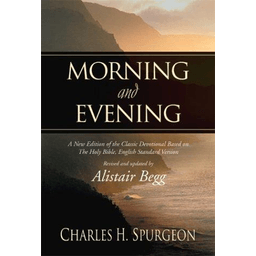 Morning and EveningSpurgeon’s twice-daily devotional - the same pastoral voice in short, year-long readings rather than a verse-by-verse Psalms reference.All of GraceSpurgeon’s short, direct book on grace and faith - the accessible on-ramp to his voice for readers not ready for a multi-volume commentary.
 Enduring WordDavid Guzik’s free verse-by-verse commentary site - concise, modern, and the easiest way to look up a single Psalm quickly.
 Spurgeon: A BiographyArnold Dallimore’s readable life of Spurgeon - the context behind the man who spent two decades building the Treasury.
Frequently asked questions
Is The Treasury of David really free?
Yes. The work has been in the public domain for over a century. The complete text - all 150 Psalms, including Spurgeon’s exposition, the collected sayings, and the preaching hints - is freely available at the Blue Letter Bible, CCEL, and Spurgeon Gems, and as downloadable PDFs. Paid print sets and some Kindle editions are paying for paper, binding, or cleaner formatting, not for the text itself.
Do I have to read all seven volumes?
No, and most readers don’t. The Treasury is designed as a reference: you look up whichever Psalm you are reading, studying, or preaching, and consult Spurgeon’s exposition and the collected notes for that chapter. Very few people read it cover to cover. Treating it as a Psalm-by-Psalm companion rather than a single long book is the way it was meant to be used.
Who was Charles Spurgeon?
Charles Haddon Spurgeon (1834-1892) was a British preacher who pastored the Metropolitan Tabernacle in London for over thirty years. He drew weekly crowds in the thousands, published more than sixty volumes of sermons in his lifetime, and is widely referred to as the “Prince of Preachers.” He stood in the Reformed Baptist tradition, and considered The Treasury of David among his most important works.
What are the “collected sayings” and “hints to the preacher”?
Under each Psalm, the Treasury has three parts. After Spurgeon’s own verse-by-verse exposition comes a section of explanatory notes and “quaint sayings” - comments on the same verses gathered from earlier writers across the centuries. Then comes a set of brief preaching outlines, the “Hints to the Village Preacher,” meant as seed ideas for anyone teaching the passage.
Will The Treasury of David work for non-Reformed readers?
For most readers, yes. Spurgeon’s Calvinism surfaces around election and sovereignty, but the bulk of the work is Christ-centered, verse-by-verse meditation on the Psalms plus an anthology of commentary spanning many writers - substance valued across Reformed, broader evangelical, and even some Catholic and Orthodox devotional reading. Readers from other traditions usually find the framing recognizable even when they would phrase a specific point differently.
Is there a shorter or modern-English edition?
There are abridged and single-volume print editions that keep Spurgeon’s exposition while trimming much of the collected quotation material, which makes the work far more manageable. There is no fully modernized rewrite of the entire Treasury the way there is for some of Spurgeon’s shorter books, so the prose remains 19th-century English. A condensed edition is the easiest entry point for a first-time reader.
Should I use The Treasury of David or a modern Psalms commentary?
It depends on what you want. The Treasury is unmatched for devotional warmth, breadth of historical commentary, and preaching help, and it is free - but it is large and written in older English. A modern one-volume commentary is more concise and current in scholarship. Many readers of the Psalms keep both: Spurgeon for depth and devotion, a modern volume for quick reference.
Sources & further reading
More Christian Classics (Pre-1900)
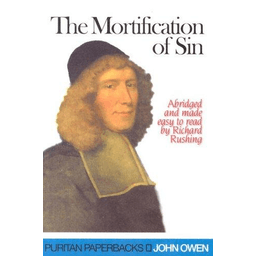 The Mortification of SinThe 1656 Puritan handbook on fighting indwelling sin - still the most rigorous spiritual diagnostic in print, four centuries on.
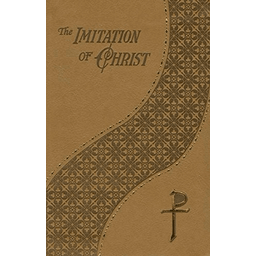 The Imitation of ChristA 600-year-old devotional that has outsold almost every Christian book ever written - and still rearranges the modern reader who is willing to sit with it.
 The Practice of the Presence of GodA 17th-century Carmelite kitchen monk’s short, plain talks and letters on staying aware of God in the middle of ordinary work - the smallest devotional classic that keeps outlasting bigger books.All of GraceSpurgeon's short 1886 book explaining salvation by grace through faith - written for the anxious and the seeking, given away by the millions, and still the booklet people press into a searching friend's hands.The Bruised ReedRichard Sibbes built an entire book out of half a verse - "a bruised reed he will not break" - and four centuries on it is still the tenderest page the Puritans ever wrote.
 HumilityAndrew Murray's twelve-chapter meditation on humility as the root of every virtue - a hundred-page Victorian classic that readers across traditions still reach for when self keeps getting in the way.