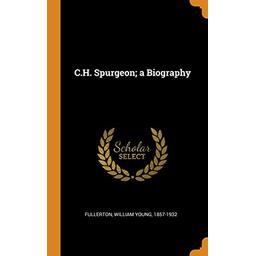
- Starting price
- ~$16 paperback
- Free tier
- No
- Platforms
- Print · Kindle
- Developer
- Banner of Truth
- Launched
- 1985
- Updated
- May 31, 2026
The verdict
Arnold Dallimore's Spurgeon is the warmest, most readable short life of Charles Haddon Spurgeon in print - a devotional biography that moves quickly through the conversion, the crowds, the controversy, and the suffering. It is not the exhaustive scholarly account, and it does not pretend to be. For a first encounter with the Prince of Preachers, it is hard to beat.
Try Spurgeon: A Biography ↗Opens banneroftruth.org
Arnold Dallimore's Spurgeon: A Biography has quietly become the book people hand you when you say you want to learn about Charles Haddon Spurgeon. Published by Banner of Truth in 1985, it runs a little under 250 pages - short enough to finish in a few evenings, full enough to leave you feeling you have actually met the man. Dallimore, a Canadian pastor who spent decades on biography (his two-volume life of George Whitefield is his monument), wrote this one as a distillation: the essential Spurgeon, told warmly, for ordinary readers rather than specialists.
It is a particular kind of biography. It does not bury you in archival apparatus. It does not stop every chapter to litigate a historiographical dispute. It does not assume you already know what the Metropolitan Tabernacle was or why a Victorian Baptist preacher mattered. It walks you through the whole arc - the farmhouse conversion at fifteen, the teenage country pastor, the astonishing rise in London, the sermons printed by the millions, the bitter Down-Grade Controversy near the end, and the lifelong battle with gout and depression that ran underneath all of it - and it does so with obvious affection for its subject.
Spurgeon (1834-1892) is one of the most documented preachers in history. He left behind more published words than almost any English author of his century: a weekly sermon printed and sold around the world, a magazine, commentaries, a pastors' college, an orphanage, and the multi-volume autobiography his wife and secretary assembled after his death. The danger with a figure that large is that the sheer volume buries the person. Dallimore's gift is compression. He takes the mountain of material and gives you the man on top of it.
✓ The good
- Best short entry point in English - if you have never read about Spurgeon, this is the most readable starting place by a wide margin, finishable in a weekend
- Warmly written - Dallimore clearly loves his subject, and the affection makes the book move; you feel you are being introduced to a friend, not handed a file
- Strong on the conversion and the rise - the early chapters, from the snowbound chapel where Spurgeon was converted to the crowds of thousands in London, are the most vivid in the book
- Honest about the depression - Dallimore does not airbrush the lifelong battles with gout, exhaustion, and what Spurgeon openly called his "fits of depression," which is one reason modern readers connect with it
- Good on the institutions - the Pastors' College, the Stockwell Orphanage, and the colportage work get real attention, so you see Spurgeon the builder, not just Spurgeon the orator
- Generous use of Spurgeon's own words - the book is studded with his sermons, letters, and sayings, so you hear the famous wit and warmth directly
- Short and re-readable - under 250 pages, the kind of biography you can lend out and get back read
✗ Watch out
- Admiring rather than critical - Dallimore writes as an advocate; readers who want a probing, warts-considered assessment will find this one consistently sympathetic
- Not the scholarly standard - there is little archival argument and a light apparatus; for footnoted, source-critical work you go elsewhere
- Concise by design - at under 250 pages it compresses a vast life, so episodes a specialist would dwell on get a paragraph
- Assumes some interest in Victorian church history - the world of 1850s-1880s London Nonconformity is sketched, but readers with no feel for the period have more to absorb
- The Down-Grade Controversy is handled briefly - the late conflict that consumed Spurgeon's final years gets a chapter, not the extended treatment a focused study would give it
- Dated in places - a 1985 book about a Victorian, the register occasionally feels a generation removed from a 2026 reader
Best for
- First-time readers who want to meet Spurgeon
- Anyone who reads his sermons or Morning and Evening and wants the life behind them
- Readers who struggle with depression and want his story
- Pastors and students wanting a quick, inspiring overview
Avoid if
- You want the definitive, exhaustively documented scholarly biography
- You want a critical or revisionist assessment rather than an admiring one
- You want a deep dive into the Down-Grade Controversy specifically
- You have no interest in Victorian church history as a backdrop
What Spurgeon: A Biography is
Spurgeon: A Biography is Arnold Dallimore's single-volume life of Charles Haddon Spurgeon (1834-1892), the Reformed (Calvinistic) Baptist preacher who pastored London's New Park Street Chapel and then the purpose-built Metropolitan Tabernacle, where he preached to congregations of several thousand week after week for over three decades. Dallimore moves chronologically: Spurgeon's Essex childhood and conversion at fifteen, his teenage pastorate at Waterbeach, the sudden fame in London, the building of the Tabernacle, the printed sermons that sold by the millions, the founding of the Pastors' College and the Stockwell Orphanage, the Down-Grade Controversy of 1887-88, and his death at fifty-seven.
It is a popular, devotional biography rather than an academic one. Banner of Truth, a publisher specializing in Reformed and Puritan-tradition titles, brought it out in 1985, and it is written for the general reader who wants the story and the spiritual substance of Spurgeon's life without a scholar's apparatus. Dallimore leans heavily on Spurgeon's own sermons, letters, and the autobiography compiled after his death, quoting them at length so that the preacher's voice - famous in his lifetime for plainness, warmth, and wit - comes through on nearly every page.
Why most readers reach for Dallimore first
The single biggest practical difference between Dallimore's Spurgeon and the fuller accounts is length and aim. The primary source on Spurgeon - the autobiography assembled by his wife Susannah and his secretary Joseph Harrald - runs to four large Victorian volumes, and the modern scholarly literature is substantial and still growing. That material is irreplaceable, but it is not what a curious reader finishes on a few weeknights. Dallimore writes to be read straight through. He picks the scenes that carry the story, quotes Spurgeon at the right moments, and keeps the narrative moving from the snowbound chapel of the conversion to the funeral that brought London to a standstill.
The other thing Dallimore does well is keep the man central. Spurgeon was an institution-builder, a publishing phenomenon, and a public combatant, and it would be easy for a biography to drown in the enterprises. Dallimore never loses the person inside them - the boy reading Puritan books in his grandfather's manse, the husband writing tender letters to an often-bedridden wife, the preacher fighting gout and depression while filling a hall of six thousand. For a reader who came to the book because they loved a sermon or a line from Morning and Evening, that focus on the person is exactly the point.
The conversion and the meteoric rise: the book at its best
The opening third of the book is its strongest stretch. Dallimore tells the well-known conversion story with real care: the fifteen-year-old Spurgeon, caught in a snowstorm on a January Sunday in 1850, ducking into a tiny Primitive Methodist chapel where a substitute lay preacher - the regular minister snowed out - fumbled through a sermon on Isaiah 45:22, "Look unto me, and be ye saved." The preacher, running out of material, looked straight at the miserable boy in the back and told him to look to Christ. Spurgeon dated his conversion to that morning for the rest of his life, and Dallimore lets the scene breathe.
From there the rise is almost vertical, and Dallimore captures the velocity. Within a few years the teenage pastor of a country chapel was called to New Park Street in London, a once-great congregation that had dwindled; within months the building could not hold the crowds. The church rented the Surrey Gardens Music Hall and packed in ten thousand, then built the Metropolitan Tabernacle to seat around six thousand and filled it twice every Sunday. Dallimore conveys both the spectacle and the strain - the sermons taken down in shorthand and printed weekly, the fame, the critics, and the catastrophe at the Music Hall in 1856 when a false alarm caused a deadly crush that haunted Spurgeon for years. It is the part of the book readers tend to remember.
Depression, illness, and a faith under pressure
One reason Dallimore's biography has stayed in readers' hands is its honesty about Spurgeon's suffering. For all the crowds and energy, Spurgeon was an unwell man for much of his adult life - recurring gout, rheumatism, and exhaustion that sent him to the south of France for long recoveries - and he spoke, with unusual frankness for a Victorian public figure, about seasons of deep depression. Dallimore traces this thread without sensationalizing it: the disaster at the Music Hall that left a lasting wound, the physical pain that shadowed his later decades, and the spiritual heaviness Spurgeon described from his own pulpit so that struggling believers would not feel alone.
This is where the book quietly connects with modern readers who picked it up for the preaching and stayed for the man. Spurgeon's refusal to pretend that strong faith and a heavy heart cannot coexist has made him a touchstone for Christians wrestling with depression, and Dallimore gives that side of the story room. He shows a preacher who carried real darkness and kept preaching hope anyway - not because the darkness lifted on schedule, but because he had anchored himself to something outside his own moods. Whether or not you came to the book for that theme, it is one of the things you take away from it.
The Down-Grade Controversy and the cost of conviction
The last act of Spurgeon's life was a painful one, and Dallimore devotes a chapter to it. In 1887, in the pages of his magazine The Sword and the Trowel, Spurgeon argued that parts of the Baptist Union were drifting away from doctrines he considered essential - a slide he and his associates called "the Down-Grade." The dispute escalated, Spurgeon withdrew his church from the Union, and the Union responded with a vote of censure. For a man who had been the most celebrated preacher in the English-speaking world, the breach with former friends and the public rancor of his final years were a heavy burden, and many around him believed the strain hastened his decline.
Dallimore presents the controversy as Spurgeon understood it - as a matter of conviction he felt bound to act on - while keeping the treatment brief and biographical rather than turning the book into a history of the conflict itself. Readers who want the full documentary detail of who said what, the wider state of late-Victorian Nonconformity, and the long aftermath in Baptist life will need a focused study; this chapter is a portrait of a man paying a personal price near the end of his road, not an exhaustive account of the dispute. It does, however, set up the close of the book - Spurgeon's death at Mentone in the south of France in January 1892, and the extraordinary public mourning that followed in London.
Pricing
Paperback
~$16
The standard Banner of Truth edition. The copy most readers own and lend out.
Kindle / ebook
~$10
Searchable and highlight-friendly. The cheapest legitimate way to own the full text.
Used paperback
~$5-10
Common at used-book sites and church sales; a 1985 title with a long print run, so copies are everywhere.
Hardcover (where available)
~$22
Less common than the paperback. A nice shelf or gift copy when in stock.
Spurgeon: A Biography is not free, but it is inexpensive. The standard Banner of Truth paperback runs around $16 new - call it the everyday default - and it is the edition most readers end up owning and lending. For a hardback Christian biography from a specialist publisher, that is a reasonable price for a book you may read more than once.
The Kindle edition runs cheaper, usually around $10, and is the most convenient way to own the full text. Highlighting and search are genuinely useful here, because the book is studded with Spurgeon's own quotable lines, and many readers like to mark them as they go. If you read on a phone or tablet, just buy this one.
Because the book has been in print for four decades, used copies are easy to find - often $5 to $10 at used-book sites and church sales. A clean secondhand paperback is the cheapest legitimate route in. A hardcover turns up periodically for around $22 and makes a nice gift or shelf copy, though it is less common than the paperback.
Most readers do not need to overthink the format. The paperback is the balanced default; the Kindle is the value pick if you read digitally. Either way this is a low-cost book, and its brevity means you are unlikely to feel you overpaid.
Where Spurgeon: A Biography falls behind
Not the scholarly standard. Dallimore wrote a popular life, not a documentary one, and the apparatus is light. If you are writing a paper on Spurgeon, your bibliography will want the multi-volume autobiography, the collected sermons, and the more recent academic studies - Dallimore is a fine first read but not a citation of record for serious research.
Admiring throughout. The book is written by an admirer, and it reads like one. That warmth is much of its appeal, but a reader looking for a probing, critical, or revisionist treatment - one that weighs Spurgeon's blind spots as carefully as his gifts - will find this account consistently sympathetic and will want a more analytical biography alongside it.
Brief on the Down-Grade. The controversy that dominated Spurgeon's final years and reverberated through Baptist life afterward gets a single chapter. Dallimore handles it fairly and keeps it biographical, but a reader who wants to understand the dispute itself - the wider theological currents, the personalities, the long aftermath - will need a focused study.
Compression has costs. At under 250 pages covering a life this enormous, episodes that a fuller biography would unfold over a chapter sometimes get a paragraph. Spurgeon's preaching method, his politics, his publishing empire, and his relationships with contemporaries are all sketched rather than explored. That is the trade for readability.
These are real limits, but they are worth knowing about going in rather than dealbreakers. For its actual job - putting Charles Spurgeon in the hands of a general reader in a single sitting or two - the book does exactly what it sets out to do.
Dallimore vs. the Spurgeon autobiography vs. Morning and Evening
These three sit on the same shelf and do very different jobs. Different strengths. Dallimore's Spurgeon is the modern short biography - the outside view, the whole arc told in a few hundred readable pages by an admiring later hand. The Autobiography (compiled after Spurgeon's death by his wife Susannah and his secretary from his own diaries, letters, and recollections) is the primary source - Spurgeon in his own voice, vastly longer, indispensable for depth but far more than most readers will finish. Morning and Evening is not biography at all; it is Spurgeon's own twice-daily devotional, the place to go if you want to sit under his preaching rather than read about his life.
If you are starting from zero and want one book about the man, Dallimore is the right pick. He gives you the most story for the least time, and he is honest about the suffering as well as the success. If you finish him and want to go deeper, the Autobiography is the next step - slower, richer, and in Spurgeon's own words. And if what you really want is to be fed rather than informed, Morning and Evening (which is in the public domain and free to read) is the companion: read Dallimore once to meet the preacher, then read Spurgeon himself every morning and evening.
A good sequence for a serious reader: Dallimore for the life, the Autobiography for the depth and the primary voice, and Morning and Evening or a volume of the printed sermons for the devotional payoff. The biography is the door; the man's own words are the house.
The bottom line
For the reader who wants to actually meet Charles Spurgeon - the snowbound conversion, the crowds of thousands, the printed sermons, the orphanage and the college, the depression carried under the fame, and the painful controversy at the end - Dallimore's biography is still the best single starting place in English. It is short, warm, well-paced, and built around Spurgeon's own words. It is admiring rather than critical, and it is not the scholarly last word. But for a first read, a gift, or a small group that wants to be both informed and encouraged, this compact life has earned its long place in print.
Alternatives to Spurgeon: A Biography
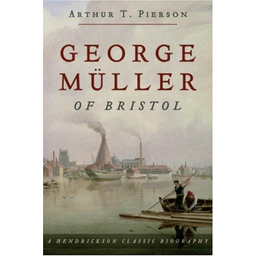 George MüllerThe Victorian contemporary who ran Bristol's orphanages on prayer alone - same era, same evangelical world, a kindred story of faith and institution-building.
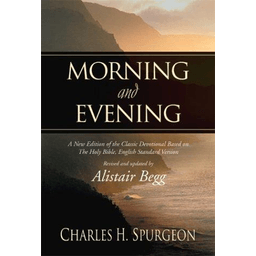 Morning and EveningSpurgeon's own twice-daily devotional, public-domain and free to read - the natural next step once Dallimore makes you want the man's own voice.
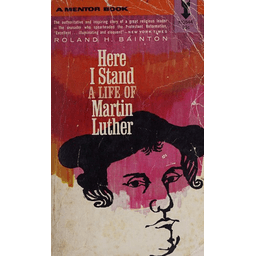 Here I Stand: A Life of Martin LutherRoland Bainton's classic life of Luther - the gold-standard readable biography of a towering reformer, in the same accessible spirit as Dallimore.
 Bonhoeffer: Pastor, Martyr, Prophet, SpyEric Metaxas's bestselling life of Dietrich Bonhoeffer - another popular, narrative biography of a major Christian figure for readers who want the story first.
Frequently asked questions
Who was Charles Spurgeon?
Charles Haddon Spurgeon (1834-1892) was an English preacher who pastored London's Metropolitan Tabernacle, where he preached to several thousand people week after week for more than thirty years. He was a Reformed (Calvinistic) Baptist, and his weekly printed sermons sold by the millions worldwide, earning him the lasting nickname "the Prince of Preachers." He also founded a pastors' college and an orphanage.
Is Dallimore's Spurgeon a good place to start?
Yes - it is probably the best single starting point in English. At under 250 pages it tells the whole arc of Spurgeon's life readably and warmly, leans on his own words, and is honest about his struggles as well as his success. Readers who then want more depth move on to the multi-volume autobiography or the collected sermons.
How is this different from the Spurgeon autobiography?
The Autobiography was compiled after Spurgeon's death by his wife Susannah and his secretary from his diaries, letters, and recollections; it runs to several large volumes and is the primary source in Spurgeon's own voice. Dallimore's book is a modern single-volume biography - far shorter, narrative in style, written by an admiring later author for general readers. Many people read Dallimore first and the autobiography second.
What was the Down-Grade Controversy?
The Down-Grade Controversy was a dispute in the late 1880s in which Spurgeon argued, in his magazine The Sword and the Trowel, that parts of the Baptist Union were moving away from doctrines he considered essential. He withdrew his church from the Union, which then voted to censure him. The conflict consumed his final years, and many believed the strain hastened his decline. Dallimore covers it in a chapter, fairly and briefly.
Does the book deal with Spurgeon's depression?
Yes, and honestly. Spurgeon spoke openly from his own pulpit about seasons of deep depression, and he battled gout, rheumatism, and exhaustion for much of his life. Dallimore traces this thread without sensationalizing it. It is one of the main reasons modern readers - especially those who struggle with depression themselves - connect with the book.
Is this a scholarly biography?
No, and it does not claim to be. It is a popular, devotional biography written for the general reader, with a light apparatus. If you need a heavily documented, source-critical account for academic work, you will want the autobiography, the collected sermons, and more recent scholarly studies. For a first read, Dallimore is ideal.
What should I read after Dallimore?
For Spurgeon's life in more depth, the multi-volume Autobiography is the natural next step. To sit under his preaching directly, read Morning and Evening (free in the public domain) or a volume of his printed sermons. If you enjoyed the genre, Roland Bainton's Here I Stand on Martin Luther and Eric Metaxas's Bonhoeffer are comparable readable biographies of major Christian figures.
Sources & further reading
More Christian Biographies
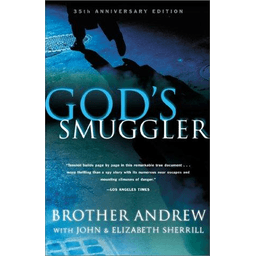 God’s SmugglerThe Dutch missionary’s 1967 memoir about driving a blue Volkswagen Beetle full of Bibles past Soviet border guards - and the prayer that became a generation’s shorthand for trusting God in impossible places.
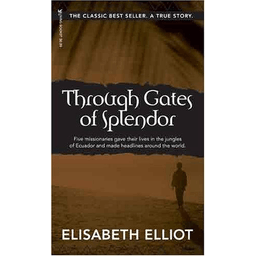 Through Gates of SplendorElisabeth Elliot’s account of five young missionaries killed reaching the Waorani of Ecuador in 1956 - the book that sent a generation toward the mission field, told by one of the widows.
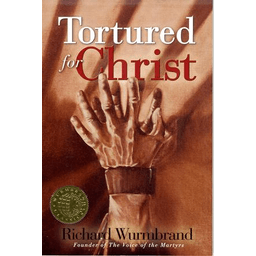 Tortured for ChristThe Romanian pastor’s 1967 account of fourteen years in communist prisons - written in three days after his release, and the book that launched Voice of the Martyrs.
 JoniJoni Eareckson Tada’s account of the diving accident that left her a quadriplegic at seventeen - and the long, unglamorous climb out of despair that followed - told without flinching and without tidy answers.
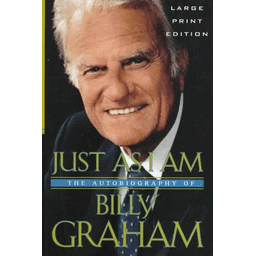 Just As I AmBilly Graham’s own account of a North Carolina farm boy who became the twentieth century’s best-known evangelist - the crusades, the presidents, and the doubts in between.
 The Cross and the SwitchbladeThe skinny country preacher who left rural Pennsylvania for the gang-run streets of 1950s New York - and the conversion of switchblade-carrying gang leader Nicky Cruz that turned one man’s hunch into a worldwide ministry.