- Starting price
- ~$18 paperback
- Free tier
- No
- Platforms
- Print · Kindle
- Developer
- Abingdon Press
- Launched
- 1950
- Updated
- May 31, 2026
The verdict
Roland Bainton’s Here I Stand is still the book most people are handed when they want to know who Martin Luther actually was. It is fast, vivid, built on the sources, and unusually good at making a 16th-century monk feel like a person you have met. Newer scholarship has refined some of its details and it is openly sympathetic to its subject - but as a first life of Luther, more than seventy years on, nothing has replaced it.
Try Here I Stand ↗Opens abingdonpress.com
Here I Stand has quietly become the book the English-speaking world reaches for when it wants to meet Martin Luther. Published in 1950 by the Yale church historian Roland H. Bainton, it has sold well over a million copies, anchored countless college and seminary syllabi, and shaped how several generations of readers - Catholic and Protestant alike - picture the man who, in 1517, posted a list of objections to the practice of selling indulgences and set off a chain of events nobody, least of all Luther, fully intended.
It is a biography with a job to do. Luther is one of the most written-about figures in Western history, and most of the literature is forbidding - German, dense, theological, partisan in one direction or another. Bainton wanted to write a life a general reader could actually finish. So the book reads like narrative history: short chapters, period woodcuts on nearly every spread, Luther’s own earthy voice quoted at length, and a clear arc from a thunderstorm-frightened law student to the most famous outlaw in Europe. It doesn’t bury you in footnotes. It doesn’t assume you can read Latin or German. It doesn’t require you to have a stake in the theological fight to follow the human one.
That accessibility is the book’s genius, and the reason it has outlasted its own scholarship. Bainton wrote it from inside the sources - he reads Luther’s letters, table talk, and treatises in the original and translates them himself, often brilliantly - but he wrote it for someone who had never heard of the Diet of Worms. Catholic and Protestant readers will inevitably bring different sympathies to the events the book recounts, and Bainton, a lifelong Quaker writing in mid-century America, is plainly fond of his subject. We walk through what that means below. None of it changes the fact that for most readers this is still the book that turns Luther from a name on a church-history timeline into a living, shouting, frightened, funny human being.
✓ The good
- The standard one-volume introduction to Luther - for a general reader who wants one book on his life, this has been the default recommendation for over seventy years
- Bainton translates the sources himself - Luther’s letters, sermons, and table talk are quoted directly and vividly, so you actually hear his blunt, earthy, often funny voice
- Genuinely readable - short chapters, a clear narrative spine, and prose that moves; most readers finish it, which is not a given for Reformation history
- Strong on the human drama - the monastic terror, the indulgence controversy, the hearing at Worms, the months in hiding at the Wartburg translating the New Testament all land as story, not lecture
- Beautifully illustrated - the original edition reproduces dozens of 16th-century woodcuts and engravings that put you in Luther’s visual world
- Excellent on Luther’s theology of grace - Bainton explains justification, the bondage of the will, and the priesthood of all believers clearly enough that a newcomer can follow what the fight was actually about
- A durable cultural reference point - the title phrase, drawn from the Worms tradition, is the way most people know Luther at all
✗ Watch out
- A 1950 book - Luther scholarship has moved on in seventy-five years, and specialists have refined Bainton on the Theses, the “tower experience” dating, and whether the door-posting happened quite as legend has it
- Sympathetic in tone - Bainton clearly admires Luther, and a reader wanting a cooler, more critical or a Catholic-perspective account of the same events will feel the lean
- Light on Luther’s harshest later writings - his violent 1525 tract against the rebelling peasants and his late, vicious treatises against the Jews are addressed, but more briefly than a modern reader may want, and with less reckoning than current scholarship brings
- Thin on the wider Reformation - this is a life of one man; the broader movement, the other reformers, and the long political aftermath get little room
- Older translations and conventions - names, spellings, and some historical framing reflect mid-century scholarship and occasionally feel dated
- Not a theology text - it explains Luther’s ideas in service of the story, so a reader wanting systematic depth on his doctrine will need to go further
Best for
- First-time readers who want one book on Luther’s life
- Students starting Reformation-era research
- Book clubs and small groups reading church history
- Anyone who wants Luther’s own voice without learning German
Avoid if
- You want the latest scholarship (read a recent academic biography)
- You want a cool, critical, or Catholic-perspective account of the break with Rome
- You want Luther’s actual theology in depth (read his own works)
- You want the whole Reformation, not one figure
What Here I Stand is
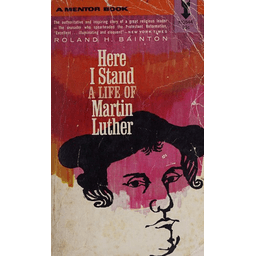
Here I Stand: A Life of Martin Luther is Roland H. Bainton’s single-volume biography of the German monk, professor, and reformer Martin Luther (1483-1546), first published by Abingdon Press in 1950. It follows Luther from his peasant-stock childhood and the thunderstorm vow that drove him into an Augustinian monastery, through his years of spiritual anguish over how a sinner could stand before a holy God, to the 1517 posting of the Ninety-Five Theses against the sale of indulgences, the rapid escalation into a confrontation with Rome, his refusal to recant at the Diet of Worms in 1521, his concealment at the Wartburg where he translated the New Testament into German, and his later decades as a husband, hymn-writer, controversialist, and elder statesman of a movement that had outgrown him.
It is a popular biography, not an academic monograph. Bainton - a respected Yale church historian - wrote it for the general reader, leaning on Luther’s own letters, sermons, and recorded table conversation, which he translates himself and quotes at length. It frames the story as a vivid human and spiritual drama and is richly illustrated with period art. It is published by Abingdon Press, a Methodist trade house, and for decades it was the book assigned when a course needed one accessible life of Luther.
Why general readers still reach for Bainton
The single biggest practical difference between Here I Stand and the academic biographies is that this one keeps moving. The scholarly literature on Luther is enormous, much of it in German, much of it written for people who already know the difference between nominalism and the via moderna. Bainton writes in scenes instead. He puts you in the room - the monastery cell, the lecture hall, the imperial chamber at Worms with the young emperor staring down a monk. He gives you Luther’s own words, in his own register, which turns out to be blunt, funny, anxious, and combative by turns. For a reader who picked the book up because they heard a sermon mention the Ninety-Five Theses, that pacing is the reason they keep reading.
The other thing Bainton does well is make the theology intelligible without making it a lecture. Many readers arrive assuming Luther’s quarrel was mostly about church corruption. The book takes the time to show why it ran deeper than that - why the question of how a person is made right with God, and where authority finally rests, was the thing Luther could not let go. Catholic and Protestant readers will weigh those questions differently, and the book does not resolve them for you. What it does is let you understand what the argument was actually about, so the famous moments stop being slogans and become a story with stakes.
The road to Worms: the book’s most gripping stretch
The heart of Here I Stand is the four-year sprint from the Ninety-Five Theses in October 1517 to the Diet of Worms in April 1521, and it is where Bainton’s gift for narrative is most obvious. He traces the controversy as it accelerates beyond anyone’s control: a Latin list of academic propositions about indulgences, meant for scholarly debate, that gets translated, printed, and scattered across Germany within weeks; the disputation at Leipzig where Luther is maneuvered into denying the authority of popes and councils; the papal bull threatening excommunication, which Luther burns in a bonfire outside Wittenberg; and finally the summons to appear before Emperor Charles V and the assembled estates of the empire. Bainton paces it like a thriller - the tightening pressure, the friends urging caution, the very real possibility that the road ends at a stake.
The climax is the hearing itself, where Luther is shown his books and ordered to recant. The reply that gives the book its title - the declaration that, his conscience being captive to the Word of God, he could not and would not recant, ending in the tradition with “Here I stand, I can do no other” - is handled by Bainton with characteristic care: he notes that the most famous words may be a later embellishment, even as he conveys why the moment became legend. Whether you read that scene as a heroic stand or as the rupture of Western Christendom will depend a great deal on where you start. Bainton’s achievement is to make the decision intelligible - to show you the man, cornered and afraid and certain, so that the moment lands as a human act before it is a partisan one.
Luther’s own voice - translated and turned loose
A second reason the book has lasted is that Bainton, a serious scholar of the period, does his own translating, and he is very good at it. Luther was one of the great prose stylists of his language - coarse, vivid, proverbial, capable of tenderness and of startling crudity in the same paragraph - and a lot of biographies sand that down. Bainton does the opposite. He lets Luther be funny about the devil, savage about his opponents, gentle in his letters to his children, and raw about his own spiritual terrors. The Luther of this book curses, jokes, doubts, and prays in a way that feels uncannily present.
This is also where the book’s real subject comes through. Bainton organizes the later chapters thematically rather than year by year - Luther as translator, as hymn-writer, as husband to the former nun Katharina von Bora, as pastor, as polemicist - and in each the primary sources carry the weight. The translation of the Bible into German, done largely in the months of hiding at the Wartburg and refined for the rest of his life, gets sustained attention as arguably his most lasting work: a rendering that shaped the German language itself. For a reader who wants to know not just what Luther did but what he was like to be around, the quotation-rich method is the whole point.
The harder chapters - and what a modern reader should know
It would be misleading to recommend Here I Stand without naming the parts of Luther’s record that a 21st-century reader has to grapple with, and how the book treats them. Two episodes loom largest. In 1525, when peasants across Germany rose in revolt partly invoking his name, Luther responded with a tract urging the authorities to crush the rebellion without mercy - a document whose ferocity disturbed even contemporaries and contributed to a brutal suppression. And in his final years he wrote treatises against the Jews of shocking violence, recommending the burning of synagogues and the expulsion of Jewish communities - writings that were later seized upon by the Nazi regime and that remain a grave stain on his legacy. Bainton does not hide these. He addresses the peasants’ tract and the anti-Jewish writings within the narrative.
But a reader should know that he treats them more briefly, and more protectively of Luther, than current scholarship does. Bainton tends to contextualize the late anti-Jewish writings as the bitter excess of a sick and disappointed old man, and to move past them relatively quickly. More recent biographers and historians give those texts far more sustained and unflinching attention, and many Lutheran bodies have since formally repudiated them. None of this is a reason to skip Here I Stand - it remains the most readable way into Luther’s life - but it is a reason to read it knowing that on Luther’s worst writings, this 1950 account is a starting point, not the last word, and to pair it with more recent treatment if those questions matter to you.
Pricing
Paperback
~$18
The standard Abingdon Press edition with the woodcut illustrations. The copy most readers own.
Kindle / ebook
~$13
Searchable and highlight-friendly. The cheapest legitimate way to own the full text; some woodcuts render small on phones.
Used paperback
~$4-8
The book is everywhere secondhand - thrift stores, library sales, and used sellers. The way most students get their first copy.
Audiobook
~$20
Recorded editions exist and circulate, though availability comes and goes; check your library’s digital catalog first.
Here I Stand is not free. Used copies are genuinely everywhere - it has been in print and assigned for over seventy years, so thrift stores, library sales, and used-book sellers routinely have it for four to eight dollars. That is how most students still acquire their first copy, and for a book this widely printed there is no shame in buying secondhand.
A new Abingdon Press paperback runs around $18 and is the everyday default. Crucially, it preserves the period woodcuts and engravings that are part of the reading experience - Bainton chose the art deliberately, and a stripped edition loses something. The Kindle/ebook edition, around $13, is the cheapest new option and is searchable and highlight-friendly, which is useful for a quotation-dense book; just know the illustrations render small on a phone screen.
Audiobook editions exist but availability comes and goes, and pricing floats around $20 when you can find it - check your library’s digital lending app (Libby or Hoopla) before paying, since church-history titles often turn up there free.
Most readers do not need anything fancier than the standard paperback. It is the balanced default, it keeps the artwork, and it is the copy you will mark up and lend out.
Where Here I Stand falls behind
Its scholarship is mid-century. Bainton wrote in 1950, and Luther studies have not stood still. Specialists have refined or revised pieces of the standard story - the precise dating of Luther’s breakthrough insight on justification, the exact circumstances of the Theses, even whether the dramatic nailing-to-the-door happened as commonly told. Bainton’s broad picture holds up remarkably well, but on the fine points a recent academic biography will be more current.
It is sympathetic to its subject. Bainton plainly admires Luther, and the book is written from inside that admiration. A reader who wants a more detached or critical assessment - or one written from a Catholic vantage that experiences the same events as a tragic schism rather than a recovery - should know the lean is there and seek a complementary account.
It is light on Luther’s worst writings. The 1525 attack on the peasants and the late treatises against the Jews are present but handled briefly and protectively. Modern scholarship reckons with these texts far more directly, and a reader for whom they matter should pair Bainton with a more recent treatment rather than rely on his framing.
It is narrow by design. This is a life of one man, not a history of the Reformation. The other reformers, the radical movements, the spread across Europe, and the long political settlement that followed get little attention. For the wider story you will need a survey alongside it.
These are real limitations, but they are worth knowing about going in rather than dealbreakers. For its actual job - putting Luther the man in the hands of a general reader - the book still does what it set out to do better than almost anything published since.
Here I Stand vs. The Bondage of the Will vs. a modern Luther biography
These sit on the same shelf and do genuinely different jobs. Here I Stand (Bainton, 1950) is the biography - the outside view, the life story, the human drama, written for a general reader and built on Luther’s own quoted words. The Bondage of the Will (Luther, 1525) is the man in his own voice on his own terms - his fiercest theological work, his reply to Erasmus on grace and the will, and the book to read if you want to argue with Luther rather than read about him. A modern academic biography - the recent lives by Lyndal Roper or Heinz Schilling are the usual recommendations - is the up-to-date scholarly account, more critical in tone and more current on the contested details.
Different strengths. Bainton is the most readable and the best on-ramp - the book you finish, the one that makes you care. The Bondage of the Will is the deep end of Luther’s actual thought, demanding and polarizing and impossible to summarize secondhand. The newer biographies are the most reliable on what scholars now think happened and the most willing to sit with Luther’s darker writings. If you are starting from zero and want one book about his life, it is still Bainton. If you want the theology in his own hand, go to Bondage. If you are writing a paper or want the current consensus, reach for Roper or Schilling.
Catholic and Protestant readers will read all three with different sympathies, and that is to be expected of a subject this consequential. Bainton writes admiringly of Luther; a recent academic biography is cooler; Luther’s own treatise is, of course, the most partisan of the three because it is Luther making his case. A reader who wants to understand the break from more than one angle is well served by reading the life first and then the man’s own words, and consulting a Catholic-authored history for the other side of the table.
The bottom line
For the reader who wants to actually meet Martin Luther - the terrified young monk, the defiant professor at Worms, the translator in hiding, the blunt and contradictory old man - Bainton’s Here I Stand is still the best single starting place in English. It is fast, vivid, built on Luther’s own words, and unusually good at making a distant century feel close. Its scholarship is dated in places, its sympathy for Luther is real, and on his worst writings it is gentler than a modern account would be - so pair it with newer work if those questions matter to you. But as the book that turns Luther from a timeline entry into a person, more than seventy years on, it has more than earned its long life in print.
Alternatives to Here I Stand
 Augustine of HippoPeter Brown’s landmark life of the early-church giant whose theology Luther leaned on - the model of the readable major-figure biography.
 The Bondage of the WillLuther in his own voice - his fierce 1525 reply to Erasmus on grace and the will. The natural next read after the life.
 Spurgeon: A New BiographyArnold Dallimore’s accessible life of the Victorian “Prince of Preachers” - another vivid one-volume portrait of a towering figure.
 Bonhoeffer: Pastor, Martyr, Prophet, SpyEric Metaxas’s bestselling life of the German pastor executed under Hitler - a later chapter in the same Lutheran and German story.
Frequently asked questions
Is Here I Stand still the best biography of Martin Luther?
For a general reader who wants one accessible book on Luther’s life, it remains the most-recommended starting point more than seventy years after publication. For up-to-date scholarship, recent academic biographies by Lyndal Roper and Heinz Schilling are more current and more critical. Many readers do well to start with Bainton for the story and move to a newer biography for the detail.
Where does the title “Here I Stand” come from?
It comes from the words traditionally attributed to Luther at the Diet of Worms in 1521, when he was ordered to recant his writings and refused, declaring that his conscience was captive to the Word of God. The closing line - “Here I stand, I can do no other” - may be a later embellishment of the record, a point Bainton himself notes, but it is the way the moment has been remembered for centuries.
Does the book take a Protestant or a Catholic side?
Bainton writes with evident sympathy for Luther, so the narrative is told largely from inside Luther’s own perspective. He was a church historian aiming at fairness on the facts, but Catholic and Protestant readers will naturally bring different sympathies to events like the break with Rome. Readers who want the other side of the table will want to pair it with a Catholic-authored history of the period.
Does Here I Stand address Luther’s writings against the Jews?
Yes, but briefly and with more leniency than current scholarship. Bainton acknowledges Luther’s late, violent anti-Jewish treatises and tends to frame them as the bitter excess of a sick old man. Modern historians treat those texts far more directly and unflinchingly, and many Lutheran church bodies have formally repudiated them. A reader for whom this matters should read Bainton’s account knowing it is a starting point, not the last word, and consult more recent treatment.
Is the book hard to read?
No. It is one of the more readable works of serious history in print. Bainton writes in short, scene-driven chapters, quotes Luther’s own vivid language constantly, and assumes no prior knowledge or ability to read German or Latin. Most readers finish it without difficulty. A handful of mid-century conventions and older spellings show their age, but the prose itself moves.
What should I read after Here I Stand?
To hear Luther in his own voice, The Bondage of the Will is the classic next step - his fierce reply to Erasmus on grace and the will. For the current scholarly picture of his life, Lyndal Roper’s or Heinz Schilling’s biographies are the usual recommendations. For the broader story, a one-volume history of the Reformation will set Luther among the other reformers and the movement he set in motion.
How long is Here I Stand, and is it illustrated?
The standard paperback runs roughly 400 pages depending on the edition. It is notably well illustrated - the original edition reproduces dozens of 16th-century woodcuts and engravings that Bainton selected to put the reader in Luther’s visual world, and the better print editions preserve them. On ebook and phone screens the illustrations render smaller, so readers who care about the artwork may prefer the print paperback.
Sources & further reading
More Christian Biographies
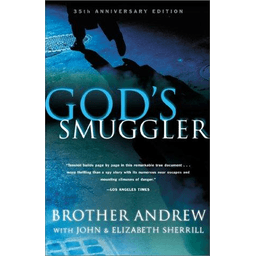 God’s SmugglerThe Dutch missionary’s 1967 memoir about driving a blue Volkswagen Beetle full of Bibles past Soviet border guards - and the prayer that became a generation’s shorthand for trusting God in impossible places.
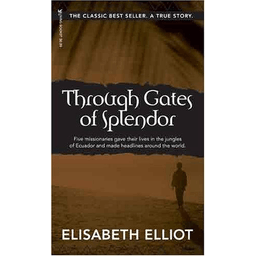 Through Gates of SplendorElisabeth Elliot’s account of five young missionaries killed reaching the Waorani of Ecuador in 1956 - the book that sent a generation toward the mission field, told by one of the widows.
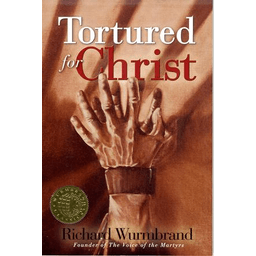 Tortured for ChristThe Romanian pastor’s 1967 account of fourteen years in communist prisons - written in three days after his release, and the book that launched Voice of the Martyrs.
 JoniJoni Eareckson Tada’s account of the diving accident that left her a quadriplegic at seventeen - and the long, unglamorous climb out of despair that followed - told without flinching and without tidy answers.
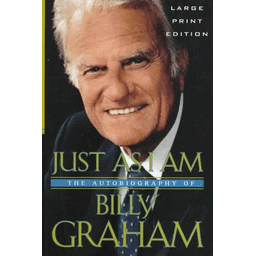 Just As I AmBilly Graham’s own account of a North Carolina farm boy who became the twentieth century’s best-known evangelist - the crusades, the presidents, and the doubts in between.
 The Cross and the SwitchbladeThe skinny country preacher who left rural Pennsylvania for the gang-run streets of 1950s New York - and the conversion of switchblade-carrying gang leader Nicky Cruz that turned one man’s hunch into a worldwide ministry.