- Starting price
- ~$30 paperback
- Free tier
- No
- Platforms
- Print · Kindle
- Developer
- University of California Press
- Launched
- 1967
- Updated
- May 31, 2026
The verdict
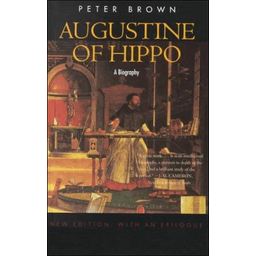
Peter Brown's Augustine of Hippo is the modern biography of Augustine - the book that, in 1967, reset how scholars read him and that historians still cite first. It is the work of a leading historian of late antiquity, written to understand Augustine in his own fourth- and fifth-century world rather than to edify the reader. Dense and long, but unmatched. If you want the historical Augustine, start here; if you want Augustine's own voice, start with the Confessions.
Try Augustine of Hippo ↗Opens ucpress.edu
Peter Brown's Augustine of Hippo has quietly become the book everyone writing about Augustine has to reckon with. First published in 1967 by University of California Press, it is the work that took the most influential theologian in Western Christian history - a man claimed and revered across the Catholic, Orthodox, and Protestant traditions - and set him back inside his actual world: the dusty, fractious, Latin-speaking North Africa of the late Roman Empire. Historians cite it first. Seminary reading lists assume it. It is, by wide consensus, the modern starting point for understanding who Augustine was.
It is also, importantly, a historian's book rather than a devotional one. Brown is one of the founding figures of the modern study of late antiquity, and his aim is to understand Augustine historically - to reconstruct the bishop, the controversialist, the aging man writing letters by lamplight as the Vandals closed in - not to draw spiritual lessons for the reader. It doesn't moralize. It doesn't tell you what to admire. It doesn't read Augustine through the lens of any later church's debates about him. It reads him forward, from inside his own century, with the patience of a scholar who has lived with the sources for decades.
What you actually get is a full-scale intellectual biography of Aurelius Augustinus (354-430): his restless, sensual youth in the provincial town of Thagaste; his years as a teacher of rhetoric in Carthage, Rome, and Milan; his long detour through Manichaeism and Neoplatonism; the famous garden conversion narrated in the Confessions; and then the towering second half of his life as bishop of Hippo Regius, where he produced the body of work - on grace, the Trinity, the City of God, the human will - that would shape all later Western Christianity. The 2000 revised edition adds two substantial epilogue chapters in which Brown revisits his own book in light of newly discovered letters and sermons. The result is the rare academic biography that is genuinely a classic in its own right.
✓ The good
- The definitive modern biography - for sixty years the book scholars across traditions reach for first when they want the historical Augustine
- Written by a master historian of late antiquity - Brown effectively created the field, and it shows in how vividly he reconstructs Augustine's world
- Treats Augustine as a real person in a real place - the provincial ambition, the friendships, the failing health, the besieged city are all here, not just the doctrines
- The 2000 revised edition adds two epilogue chapters reckoning with newly discovered Divjak letters and Dolbeau sermons - Brown revising his own classic in public
- Superb on the controversies - the Manichees, the Donatist schism, and the Pelagian dispute over grace are explained in their actual stakes, not as abstractions
- Prose that rises to literature - Brown writes beautifully, and passages on Augustine's old age and the fall of Rome are quietly unforgettable
- A genuine bridge between disciplines - read with equal profit by historians, theologians, and serious general readers across the Catholic, Orthodox, and Protestant worlds
✗ Watch out
- A serious academic work - dense, long, and assuming real interest in late antiquity; this is not a quick or casual read
- Not a devotional book - Brown studies Augustine historically rather than for edification, so readers wanting spiritual application will need to supply it themselves
- Assumes some background - readers who can't place the Roman Empire, Neoplatonism, or the basic shape of early-church controversy will occasionally feel underwater
- Light on systematic theology - Brown traces how Augustine's ideas developed in context, but this is not the place to learn Augustinian doctrine as a system
- The revised edition's structure shows its seams - the two added epilogue chapters sit after a book written decades earlier, and the join is visible
- Not Augustine's own voice - anyone wanting to actually hear Augustine should begin with the Confessions, not a biography of him
Best for
- Readers who want the historical Augustine, not a hagiography
- Students of late antiquity, early-church history, or historical theology
- Anyone who loved the Confessions and wants the full life around it
- Serious general readers willing to invest in a long, rewarding book
Avoid if
- You want a short or devotional read
- You want Augustine in his own words (start with the Confessions)
- You want a systematic summary of Augustine's theology rather than his life
- You have no prior interest in the late-Roman world and find dense history a slog
What Augustine of Hippo is
Augustine of Hippo: A Biography is Peter Brown's full-length scholarly life of Augustine (354-430), the North African bishop and theologian whose writing shaped the course of Western Christian thought. First published in 1967 and revised in 2000, it runs to roughly 500 pages in its current edition and proceeds chronologically: Augustine's childhood in Roman Thagaste, his education and rhetorical career, his philosophical and religious wanderings, his conversion and baptism in Milan, his return to Africa, and the long, productive, embattled decades as bishop of Hippo Regius until his death as the Vandals besieged the city.
It is a historian's biography, not a confessional or devotional one. Brown - a foundational scholar of what we now call late antiquity - sets out to understand Augustine within his own period and culture: the social world of the late Roman provinces, the intellectual currents of Neoplatonism and Manichaeism, the bitter ecclesiastical politics of Donatist North Africa, and the slow trauma of an empire coming apart. The book studies Augustine; it does not catechize the reader. That historical posture is precisely why it has remained the standard reference across traditions that otherwise read Augustine very differently.
Why historians and serious readers reach for Brown
The single biggest difference between Brown's biography and most books about Augustine is that Brown is not arguing about Augustine - he is reconstructing him. A great deal of writing on Augustine is downstream of later debates: Catholic readers, Orthodox readers, and the various heirs of the Reformation have all claimed him, quoted him, and fought over his legacy on grace, free will, the Church, and the sacraments. Brown brackets almost all of that. His question is the historian's question - who was this man, in this place, at this moment, and why did he think and write as he did? That discipline is rarer than it sounds, and it is why the book sits comfortably on reading lists in traditions that agree on little else.
The other thing Brown does, better than almost anyone, is atmosphere. He makes you feel the heat and ambition of provincial Africa, the intoxication of Augustine's discovery of philosophy, the grind of episcopal administration, the strange intimacy of a man dictating millions of words to secretaries. By the time you reach the final chapters - an old bishop, his life's certainties hardening, the world he knew visibly ending - you are not reading about a doctrine. You are watching a person. That novelistic vividness, married to complete scholarly control of the sources, is the combination that made the book famous and keeps it in print.
A life reconstructed from the inside: Thagaste to Hippo
The spine of the book is a meticulous, chronological reconstruction of Augustine's life from the sources - his own writings above all, but also the letters, sermons, council records, and the early biography by his friend Possidius. Brown moves through the well-known turning points (the pear theft, the years with the Manichees, the mistress and the son Adeodatus, the conversion in the Milan garden, the death of his mother Monica at Ostia) but refuses to let them stay as the stylized set-pieces the Confessions made them. He keeps asking what these episodes meant in their actual social and intellectual setting - what a provincial rhetor's career path really looked like, what conversion to philosophy meant before it meant conversion to Christ, what it cost to give up a marriage arranged for advancement.
What emerges is a far more textured figure than the icon. Brown's Augustine is ambitious, anxious, intellectually voracious, capable of great warmth and great severity, and shaped at every turn by a specific time and place. This matters because Augustine is so often read backward - through the Reformation's debates, through later Catholic and Orthodox reception, through whatever a given reader's tradition needs him to have said. Brown's biography is the corrective: it lets Augustine be a fourth-century North African before he is anyone's theological ancestor, and that historical clarity is exactly what makes the doctrinal afterlife easier to understand.
The controversies, explained in their real stakes
Augustine spent most of his episcopal life in argument, and Brown is unusually good at making those arguments intelligible rather than tribal. There are three great ones. Against the Manichees, the dualist sect Augustine himself had belonged to for years, he worked out his accounts of evil, the goodness of creation, and the will. Against the Donatists - a rival African church born of the persecutions, who held that the validity of the sacraments depended on the holiness of the clergy - he developed his theology of the Church and, more uncomfortably, came to accept the use of state coercion against schismatics. Against Pelagius and his followers, in the long final controversy of his life, he hammered out the doctrines of original sin, grace, and predestination that would echo through Western theology for the next fifteen centuries.
Brown's gift is to show why these fights were not academic. The Donatist schism was about the wounds of persecution and who got to speak for the African church. The Pelagian dispute was about whether human beings can save themselves by effort - a question with enormous downstream consequences that later traditions would answer in markedly different ways. Brown narrates the development of Augustine's positions without grading them against any later orthodoxy. He shows you the man changing his mind, sharpening under pressure, sometimes hardening in ways his admirers regret. The reader is left to weigh the ideas; Brown's job is to make the stakes clear, and he does.
The 2000 epilogue: a classic revising itself
The 1967 book was already a landmark, but the 2000 revised edition is what most readers should buy, because of what Brown added. In the decades after first publication, two extraordinary manuscript discoveries reshaped the field: a cache of previously unknown letters edited by Johannes Divjak, and a set of lost sermons identified by François Dolbeau. These were not minor finds - they opened windows onto Augustine's later years, his pastoral work, and his attitudes toward society that the original biography could not have accounted for. Rather than quietly revise the old text, Brown left the 1967 book largely intact and appended two substantial new chapters reflecting on what the discoveries changed.
The result is unusual and rewarding: a famous scholar in conversation with his own younger self, openly revising a portrait he had drawn thirty years earlier. The new chapters soften some of the original book's edges - Brown's later Augustine is, by his own account, a somewhat warmer and less austere figure than the one he first painted - and they model what mature historical scholarship looks like when the evidence shifts. Readers can see the seam where the new material joins the old, and a few find that slightly disjointed. Most find it the opposite of a flaw: it is one of the few major biographies that lets you watch its author think again, in public, with new documents in hand.
Pricing
Paperback (revised ed.)
~$30
The University of California Press 2000 revised edition with the new epilogue. The copy most readers own and the one citations key to.
Kindle / ebook
~$25
Searchable full text, highlight-syncs across devices - genuinely useful for a book this long and this often returned to.
Hardcover
~$70
Library- and gift-grade. Harder to find new; mostly encountered secondhand or on university library shelves.
Used copies
~$8-15
Earlier 1967 and 2000 printings turn up cheaply at used bookshops and library sales. Fine, but the revised edition is the one to want for the epilogue.
Augustine of Hippo is not free. Used copies of the 1967 and 2000 printings turn up at library sales and secondhand shops for well under fifteen dollars, which is how a lot of graduate students acquire their first one. For the current edition, a new University of California Press paperback runs around $30 - call it the everyday default - and is the revised edition with Brown's two added epilogue chapters, which is the version you actually want.
The Kindle / ebook edition runs a little less, roughly $25, and for a book this long and this often returned to, the search and highlight tools earn their keep. If you read on a tablet or expect to chase a particular argument back through 500 pages, the digital edition is the practical choice.
The hardcover, around $70 and harder to find new, is mostly a library and gift object now. There is no compelling reason for a general reader to pay for it over the paperback.
If budget is the deciding factor, a used copy is entirely fine - just confirm it is the 2000 revised edition before buying, since the older printings lack the epilogue chapters that are one of the book's best features. Most readers do not need the hardcover. The revised paperback is the balanced default and the copy you will mark up and keep.
Where Augustine of Hippo falls behind
Not a devotional read. Brown studies Augustine as a historian studies any major historical figure - to understand him, not to edify the reader. There is no application, no spiritual takeaway, no invitation to prayer. That is the right posture for the book Brown set out to write, but a reader hoping to be moved toward God by Augustine's story will need to bring that to the page themselves, or pair this with the Confessions.
Length and density. At roughly 500 pages of serious intellectual history, this is a commitment. Brown writes beautifully, but he assumes a reader willing to follow long arguments through unfamiliar terrain - the Roman provincial world, Neoplatonic philosophy, the internal politics of the African church. It is not a weekend book and it does not pretend to be.
Assumed background. Brown does not stop to explain the late Roman Empire, the basics of Manichaeism, or who the major players in the fourth-century church were. A reader with some grounding will be richly rewarded; a complete newcomer to the period will occasionally feel they are missing context the author takes for granted.
Not a theology textbook. The book traces how Augustine's ideas emerged from his life and controversies, but it is not organized to teach Augustinian doctrine as a system. A reader who wants grace, the Trinity, or the City of God laid out as settled positions will need a dedicated study of his thought, not a biography.
These are features as much as gaps - Brown wrote a historical biography on purpose - but they are worth knowing going in. If you want the historical Augustine, nothing serves better. If you want something shorter, devotional, or doctrinally systematic, this is not that book.
Augustine of Hippo (Brown) vs. the Confessions vs. Here I Stand
These three books often end up on the same shelf for readers interested in the great figures of Christian history, and they do genuinely different jobs. Different strengths. Brown's Augustine of Hippo is the modern scholarly biography - the outside view, the full historical life, the world Augustine moved through. The Confessions is Augustine's own first-person account of his early life and conversion, written around 397 - the inside view, in his own incomparable voice, and the place to start if you want to actually hear him rather than read about him. Roland Bainton's Here I Stand is the classic biography of Martin Luther - a thousand years later, a different crisis, but the same genre of major-figure life and the natural comparison for a reader who likes a great biography of a pivotal Christian.
If you want the historical Augustine and you are willing to work, Brown is the one - broader, deeper, and more rigorous than any rival, and the standard scholars cite. If you want Augustine himself, read the Confessions first; it is shorter, it is devotional in a way Brown is not, and Brown's biography hits far harder once you have heard Augustine's own telling. If your appetite is really for a gripping biography of a Christian who changed history, Bainton's Luther is the readable companion - more narrative, less dense, a different century and a different temperament.
Augustine himself is honored across the Catholic, Orthodox, and Protestant traditions, which read his legacy in markedly different ways. Brown's biography is the most useful single book precisely because it brackets those later debates and reconstructs the man before any of them existed. The Confessions belongs to all of those traditions equally as a shared inheritance. A good sequence for a serious reader: the Confessions for Augustine's own voice, then Brown for the full historical life, and a focused study of his theology after that if the ideas have caught hold.
The bottom line
Peter Brown's Augustine of Hippo is the gold standard among modern biographies of Augustine, and it has held that place for sixty years for good reason. It is the work of a historian who effectively created the study of late antiquity, and it does something rare - it turns the most influential theologian in Western history back into a flesh-and-blood man in a specific, vividly drawn world. It is long, it is dense, and it is not a devotional book; Brown studies Augustine rather than preaching him. But for any reader who wants to understand who Augustine actually was - before the Catholic, Orthodox, and Protestant traditions each made him their own - this is still the book. Read the Confessions first for his voice; read Brown for his life.
Alternatives to Augustine of Hippo
 ConfessionsAugustine's own spiritual autobiography - the inside view in his own voice, and the natural place to start before reading any biography of him.
 Here I Stand: A Life of Martin LutherRoland Bainton's classic, readable biography of Luther - the major-figure Christian life as gripping narrative, a different century but the same genre.
 Bonhoeffer: Pastor, Martyr, Prophet, SpyEric Metaxas's bestselling life of Dietrich Bonhoeffer - a far more popular, cinematic take on the major-figure biography than Brown's scholarly Augustine.
 Spurgeon: A New BiographyArnold Dallimore's accessible life of the 19th-century preacher Charles Spurgeon - devotional in tone where Brown is strictly historical.
Frequently asked questions
Is Peter Brown's Augustine of Hippo a devotional book or a scholarly one?
It is firmly a scholarly biography. Brown is a leading historian of late antiquity, and his goal is to understand Augustine historically - within his fourth- and fifth-century North African world - rather than to edify or instruct the reader spiritually. There is no devotional application built in. Readers who want Augustine for personal spiritual reading usually start with his Confessions instead and treat Brown as the historical companion.
Should I buy the 1967 edition or the 2000 revised edition?
Buy the 2000 revised edition. Brown left the original 1967 text largely intact but added two substantial epilogue chapters reflecting on the Divjak letters and Dolbeau sermons - major manuscript discoveries that surfaced after first publication and reshaped Augustine scholarship. Those chapters are one of the book's most valuable features, and the older printings don't have them. If you buy used, confirm it's the revised edition.
Do I need to read the Confessions first?
It's not required, but it helps a great deal. The Confessions is Augustine's own first-person account of his early life and conversion, in his own voice. Brown's biography refers to it constantly and reads far more richly once you've heard Augustine tell his own story. A common sequence is the Confessions first for the inside view, then Brown for the full historical life and the second half Augustine never narrated himself.
How long and how difficult is the book?
The revised edition runs roughly 500 pages, and it is a serious read. Brown's prose is genuinely excellent, but he assumes interest in late antiquity and a willingness to follow long arguments through unfamiliar material - Roman provincial society, Neoplatonism, the politics of the African church. Readers with some historical background will find it absorbing; complete newcomers to the period may want a shorter introduction alongside it.
Which Christian traditions claim Augustine?
Augustine is honored and claimed across the Catholic, Orthodox, and Protestant traditions, which read his vast legacy on grace, the will, the Church, and the Trinity in markedly different ways. One reason Brown's biography is so widely used is that it brackets those later debates and reconstructs Augustine as a historical figure in his own time, before any of those traditions developed their distinctive readings of him.
Is this the best biography of Augustine?
By scholarly consensus, yes - it has been the standard modern biography since 1967 and remains the work historians cite first. There are excellent shorter introductions and more theologically focused studies, but for a complete, rigorous, beautifully written life of Augustine in his historical context, Brown's is the book. It is not the best place to learn Augustine's theology as a system, and it is not devotional, but as a biography it is unmatched.
What should I read after Brown's biography?
For Augustine's own voice: the Confessions, and then The City of God if you want his major late work. For his theology laid out more systematically, a dedicated study of Augustinian thought will serve you better than a biography. If your appetite is really for great Christian biography, Roland Bainton's Here I Stand (Luther) and Arnold Dallimore's life of Spurgeon are natural next reads in the genre - both more accessible and more narrative than Brown.
Sources & further reading
More Christian Biographies
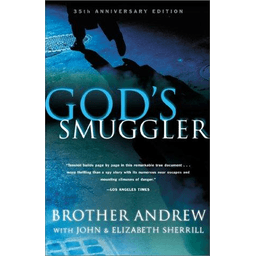 God’s SmugglerThe Dutch missionary’s 1967 memoir about driving a blue Volkswagen Beetle full of Bibles past Soviet border guards - and the prayer that became a generation’s shorthand for trusting God in impossible places.
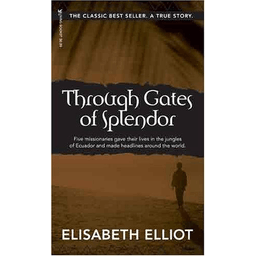 Through Gates of SplendorElisabeth Elliot’s account of five young missionaries killed reaching the Waorani of Ecuador in 1956 - the book that sent a generation toward the mission field, told by one of the widows.
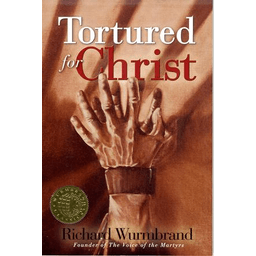 Tortured for ChristThe Romanian pastor’s 1967 account of fourteen years in communist prisons - written in three days after his release, and the book that launched Voice of the Martyrs.
 JoniJoni Eareckson Tada’s account of the diving accident that left her a quadriplegic at seventeen - and the long, unglamorous climb out of despair that followed - told without flinching and without tidy answers.
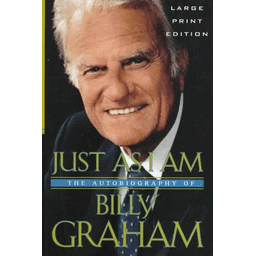 Just As I AmBilly Graham’s own account of a North Carolina farm boy who became the twentieth century’s best-known evangelist - the crusades, the presidents, and the doubts in between.
 The Cross and the SwitchbladeThe skinny country preacher who left rural Pennsylvania for the gang-run streets of 1950s New York - and the conversion of switchblade-carrying gang leader Nicky Cruz that turned one man’s hunch into a worldwide ministry.