- Starting price
- ~$10 paperback
- Free tier
- No
- Platforms
- Print · Kindle · Audiobook
- Developer
- Voice of the Martyrs
- Launched
- 1967
- Updated
- May 31, 2026
The verdict
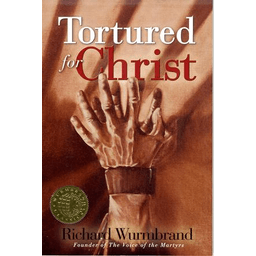
Tortured for Christ is the book that introduced the Western church to the suffering of believers behind the Iron Curtain. It is short, raw, and unbearably direct - less a memoir than a testimony delivered under oath. It does not read like literature. It reads like a man telling you what happened to him and asking you not to forget the people he left behind.
Try Tortured for Christ ↗Opens vom.org
Tortured for Christ is the firsthand account of Richard Wurmbrand, a Romanian pastor who spent roughly fourteen years in communist prisons - three of them in solitary confinement, in a cell underground where he never saw the sun. Arrested in 1948 and again after a brief release, he was finally ransomed out of Romania in 1965 and arrived in the West with a story almost no one there had heard. Two years later, with the help of others, he set it down on paper. The book was reportedly written in three days.
It is not a polished memoir. It does not read like literature, and it was never meant to. There are no carefully built scenes, no novelistic pacing, no authorial distance. What you get instead is the unguarded voice of a man who has just walked out of fourteen years underground and is trying, urgently, to make people who have never suffered understand what suffering for faith actually costs. Some pages are almost unbearable to read. That is the point.
The book did more than describe persecution - it created an institution. Out of the testimony and the speaking tours that followed, Wurmbrand and his wife Sabina founded the organization now known as Voice of the Martyrs, which serves persecuted Christians around the world to this day. Wurmbrand died in 2001; Sabina, herself a prisoner for years, died in 2000. But the small, plain book that started it all is still in print, still given away by the hundreds of thousands, and still doing exactly what it was written to do.
✓ The good
- Foundational text for the persecuted-church awareness movement - it shaped how the entire Western church learned to think about believers under hostile regimes
- Brutally direct and short - under 200 pages, often read in a single sitting, with none of the padding or self-promotion that weighs down many memoirs
- Theologically gentle and broadly received - Catholic, Orthodox, Reformed, Lutheran, and free-church readers all return to it without doctrinal friction
- A firsthand witness, not a secondhand report - Wurmbrand is describing what was done to his own body and what he saw done to fellow prisoners
- Striking on forgiveness - Wurmbrand repeatedly insists he holds no hatred for his torturers, and the passages on loving one’s persecutors are the ones readers most often remember
- Pairs directly with an active ministry - the book leads straight into Voice of the Martyrs, the organization Wurmbrand founded, for readers who want to do something next
- Frequently free or near-free - Voice of the Martyrs has given away enormous numbers of copies, so almost anyone can obtain one at little or no cost
✗ Watch out
- The descriptions of torture are intense - this is not a gentle read, and sensitive readers, younger readers, or anyone in a fragile season should approach it carefully
- Written as testimony and appeal, not as crafted memoir - the prose is plain, occasionally repetitive, and the three-day composition shows in its structure
- The geopolitical frame is mid-Cold-War - the book speaks of the communist bloc as the present reality, and a reader in 2026 needs to hold that historical context in mind
- Light on doctrinal scaffolding - it is a story of endurance and faith, not a systematic treatment of suffering, and readers wanting theology will need a companion volume
- Some statistics and claims are of their era - figures and accounts reflect 1960s sources and the limits of what could be verified from inside a closed regime
- Multiple editions vary - the text has been revised, expanded, and abridged over the decades, so two copies labeled the same may not be identical
Best for
- Christians encountering the persecuted church for the first time
- Readers who loved God’s Smuggler or The Hiding Place
- Small groups and adults studying faith under pressure
- Anyone wanting to understand where Voice of the Martyrs came from
Avoid if
- You are sensitive to graphic descriptions of violence
- You want a polished, literary memoir rather than a raw testimony
- You want a systematic theology of suffering or martyrdom
- You prefer contemporary settings to mid-twentieth-century history
What Tortured for Christ is
Tortured for Christ is a short autobiographical account - under 200 pages in most editions - by Richard Wurmbrand, a pastor of Jewish heritage who came to Christian faith in Romania in the 1930s and led an underground ministry after the communist takeover that followed the Second World War. The book covers his arrest in 1948, the years of imprisonment and torture that followed, his work among fellow prisoners, his eventual ransom to the West in 1965, and his appeal to free-world Christians to remember the believers still behind the Iron Curtain.
It is not the memoir of a single tradition. Wurmbrand’s own background drew on Lutheran and broadly evangelical influences, but the book is written for the whole church, and he describes Catholic, Orthodox, and Protestant prisoners suffering side by side without distinction. First published in 1967, it became the seed of the ministry now called Voice of the Martyrs and has been translated into dozens of languages and distributed in enormous numbers, often at no cost to the reader.
Why readers across every tradition still pick up Tortured for Christ
The single biggest difference between Tortured for Christ and most Christian books is that it is not trying to persuade you of a position - it is trying to make you see something. Wurmbrand had spent fourteen years in places most readers will never go, and he writes like a man who knows the gap between his experience and theirs cannot quite be crossed with words but must be attempted anyway. There is no theological system being defended, no tradition being advocated. There is a witness describing what he saw, and an appeal not to look away.
That is why the book travels so freely. A Catholic reader finds no anti-Catholic asides; an Orthodox reader finds no polemic; a Protestant reader finds no tribal markers. Wurmbrand describes prisoners of every background enduring the same cells and the same interrogations, and the unity he witnessed in suffering is part of what he is reporting. The thoughtful reader’s testimony of persecution - the kind of book that respects you enough to simply tell you the truth and let it do its own work.
The prison account: fourteen years, three of them in solitary
The heart of the book is Wurmbrand’s description of his years in Romanian prisons, including roughly three years in solitary confinement in an underground cell where he saw no other prisoner and almost no daylight. He recounts the interrogations, the beatings, the cold and hunger, and the specific tortures used on him and on fellow believers. He also describes the secret life of faith that continued inside those walls - sermons preached in whispers, the Lord’s Supper taken with smuggled crumbs, prisoners tapping messages of Scripture to one another through the walls in code.
What makes the account land is its refusal to perform. Wurmbrand does not present himself as a hero; he repeatedly says he was weak, that he feared, that others endured more than he did and died without anyone knowing their names. He describes the torture plainly and then moves on, because the suffering is not the point of the story to him - the faithfulness inside it is. That restraint is what keeps the most harrowing pages from tipping into spectacle, and it is part of why the book has endured.
The founding of Voice of the Martyrs: from a prison cell to a global ministry
After Wurmbrand was ransomed out of Romania in 1965 and came to the West, his testimony - including an appearance before a U.S. Senate subcommittee where he reportedly showed the scars on his body - drew attention to the plight of Christians behind the Iron Curtain. Out of that came an organization, originally known by other names and now called Voice of the Martyrs, dedicated to supporting persecuted believers, smuggling Bibles and aid into closed countries, and telling their stories to the free-world church.
This matters because the book is not a closed loop. The ministry it gave rise to is still operating, serving persecuted Christians in dozens of countries far beyond the original Cold War map - across parts of Asia, Africa, and the Middle East where following Jesus still carries real cost. Readers who finish Tortured for Christ often want to respond, and Voice of the Martyrs is the direct bridge from reading the book to acting on it. For many, that is exactly the step Wurmbrand was hoping his readers would take.
A theology of forgiveness: loving the people who tortured you
The thread that surprises most readers is Wurmbrand’s insistence that he did not hate his torturers. He describes prisoners praying for the guards who beat them, and he frames his own years of suffering not as grounds for bitterness but as something he could offer up. He goes further than most readers expect, arguing that the persecutors themselves are people Christ died for, and that the response of the persecuted church should include genuine love for those who inflict the persecution. These are not abstract sentiments in his telling - they are claims made by a man describing his own cell.
That posture is the book’s most quoted and most discussed element, and it is why the testimony has resonated so far beyond its original setting. It does not require sharing every detail of Wurmbrand’s theology to feel the weight of a man who was tortured for years choosing to speak of his torturers without hatred. It is an extraordinarily demanding spirituality, offered without fanfare, and it is the part of the book readers tend to carry with them long after the descriptions of the prison have faded.
Pricing
Paperback
~$10
The standard Voice of the Martyrs edition. The copy most readers buy and pass along.
Free from Voice of the Martyrs
Free
VOM frequently gives the book away to new subscribers and inquirers. The cheapest way in, by design.
Kindle / ebook
~$8
Searchable and portable. Fine for solo reading; the physical copy is the one people tend to lend.
Audiobook
~$15
Roughly four to five hours unabridged. A heavy listen, but the directness carries well read aloud.
50th Anniversary Edition
~$13
Adds context and supplementary material around the original text. The fullest version for adult readers.
Tortured for Christ is unusual among Christian classics in that the cheapest edition is often free. Voice of the Martyrs, the ministry Wurmbrand founded, has distributed enormous numbers of copies and frequently offers the book at no cost to new subscribers and inquirers - a deliberate choice that fits a book written as an appeal rather than a product. If price is the only obstacle, it is essentially not an obstacle.
For those buying a copy, the standard paperback runs around $10 and is what most readers purchase, lend, and replace. The Kindle edition hovers near $8 and is the most portable option, though the physical book is the one people tend to hand to a friend. The audiobook, roughly four to five hours, runs around $15; it is a heavy listen given the subject matter, but the plainness of the prose carries well read aloud.
The 50th Anniversary Edition at around $13 adds context and supplementary material around the original 1967 text and is the version we would point most adult readers toward if they want the fullest experience. One caution worth knowing: the book has been revised, expanded, and abridged across its many printings, so two editions with the same title may differ in length and content.
Most readers do not need to compare editions or hunt for a specific printing. Take the free copy if Voice of the Martyrs offers one, or buy the paperback - the words that matter are the same in every version.
Where Tortured for Christ falls behind
Dated geopolitical frame. The book speaks of the communist bloc as a present and pressing reality, and its map of where Christians suffer is the map of the mid-1960s. A reader in 2026 has to supply the historical context themselves; the persecution it describes is real, but the specific regimes and borders belong to another era. Voice of the Martyrs’ current resources are the natural companion for an up-to-date picture.
Plain, sometimes repetitive prose. Written reportedly in three days by a man who had just left prison, the book reads as testimony, not as crafted memoir. There is little narrative architecture, the chapters can circle back on themes, and the voice is urgent rather than polished. That rawness is part of its power, but readers expecting the literary finish of a worked-over memoir will not find it here.
Light on the inner life. Wurmbrand endured years of solitary confinement and clearly sustained a deep interior faith, but the book rarely pauses to explain how - what he prayed, how he held on, what disciplines carried him through. The spiritual machinery is implied by the testimony rather than taught to the reader.
Claims rooted in their time. Some figures, statistics, and secondhand accounts in the book reflect 1960s sources and the difficulty of verifying anything from inside a closed regime. The firsthand core - what was done to Wurmbrand himself - is the heart of the book; the broader claims are best read as the witness of their moment.
Real gaps, but worth knowing about going in rather than dealbreakers. Tortured for Christ is a 1967 book doing 1967 work - bearing witness urgently to a suffering the West had barely registered. Judging it as a polished memoir or a current geopolitical brief would miss what the book actually is and was always meant to be.
Tortured for Christ vs. God’s Smuggler vs. The Hiding Place
Three books, three of the great twentieth-century testimonies of faith under hostile regimes, and three different vantage points on the same darkness. Tortured for Christ is the prisoner’s book - written from inside the suffering, by a man describing what was done to his own body over fourteen years. God’s Smuggler is the courier’s book - Brother Andrew driving Bibles toward the danger from outside it, in a baby-blue Volkswagen across the Iron Curtain. The Hiding Place is the rescuer’s book - Corrie ten Boom’s family hiding Jews in Nazi-occupied Haarlem and being arrested for it.
Different strengths. Tortured for Christ is the most direct on the experience of imprisonment and torture, and the most demanding on forgiveness. God’s Smuggler is the most readable and the broadest in appeal, built around suspense rather than suffering. The Hiding Place is the most reflective on the weight of suffering one did not choose, and the most carefully written of the three.
If a reader has only one slot, God’s Smuggler is the easiest entry point and The Hiding Place the most literary, but Tortured for Christ is the one that goes furthest into the cost. It is the shortest and the hardest - best read after the other two, or first by a reader who wants the unfiltered thing before anything softer. Together, the three form something close to a survey of what faithfulness under a hostile regime actually looked like in the last century.
The bottom line
Tortured for Christ is not a comfortable book, and it was never trying to be. It is the testimony of a man who spent fourteen years in communist prisons and walked out determined that the church in the free world would not forget the believers still inside. The prose is plain, the descriptions are hard, and the Cold War setting is decades gone - yet the book still does exactly what it set out to do in 1967. If you read it, read it slowly, and let Wurmbrand’s refusal to hate the people who tortured him sit with you. Then look up the ministry it created. That was always the point.
Alternatives to Tortured for Christ
 God’s SmugglerBrother Andrew’s account of smuggling Bibles past the Iron Curtain in a blue Volkswagen. The courier’s view of the same Cold War church Wurmbrand witnessed from inside a prison cell.
 The Insanity of GodNik Ripken’s decades-long investigation into the persecuted church across the closed nations of the modern world. The contemporary successor to Wurmbrand’s testimony.
 Voice of the MartyrsThe ministry Wurmbrand founded. Persecution news, prayer resources, and the direct next step for readers who want to do something after finishing the book.
 The Hiding PlaceCorrie ten Boom’s memoir of her family hiding Jews in Nazi-occupied Haarlem and surviving Ravensbrück. The rescuer’s testimony alongside Wurmbrand’s prisoner’s one.
Frequently asked questions
Who was Richard Wurmbrand?
Richard Wurmbrand (1909-2001) was a Romanian pastor of Jewish heritage who came to Christian faith in the 1930s and led an underground ministry after Romania’s communist takeover. He spent roughly fourteen years in prison for his faith, was ransomed to the West in 1965, and founded the ministry now known as Voice of the Martyrs.
Is Tortured for Christ a hard book to read?
Emotionally, yes. The descriptions of torture and imprisonment are intense and direct, and it is not a gentle read. Mechanically, it is short and plain - under 200 pages, often finished in one sitting. Sensitive readers, younger readers, or anyone in a fragile season should approach it with that warning in mind.
How does Tortured for Christ relate to Voice of the Martyrs?
The book came first. Wurmbrand’s testimony and the speaking tours that followed his release led him and his wife Sabina to found the organization now called Voice of the Martyrs, which supports persecuted Christians worldwide. The ministry still distributes the book widely, often for free.
Is the book still accurate now that the Cold War is over?
The historical setting is fixed in the mid-twentieth century, and the specific regimes it describes are gone. But the book was never a guide to current events - it is a firsthand testimony, and the persecuted church it points to still exists in different countries today. Voice of the Martyrs’ current resources are the natural companion for an up-to-date picture.
What tradition was Richard Wurmbrand from?
His working theology drew on Lutheran and broadly evangelical influences, though his ministry crossed denominational lines. In the book he describes Catholic, Orthodox, and Protestant prisoners suffering side by side, and the testimony is read warmly across the full range of Christian traditions today.
Why does Wurmbrand talk about loving his torturers?
It is one of the book’s central themes. Wurmbrand repeatedly insists he held no hatred for the people who imprisoned and tortured him, describing prisoners who prayed for their guards and framing the persecutors as people Christ died for. Many readers find these passages the most striking and most memorable in the book.
Which edition should I get?
If Voice of the Martyrs offers a free copy, that is the simplest way in. Otherwise the standard paperback (around $10) is what most readers buy. The 50th Anniversary Edition (around $13) adds context and is the fullest version for adult readers. Note that the text has been revised and abridged across printings, so editions can differ in length.
Sources & further reading
More Christian Biographies
God’s SmugglerThe Dutch missionary’s 1967 memoir about driving a blue Volkswagen Beetle full of Bibles past Soviet border guards - and the prayer that became a generation’s shorthand for trusting God in impossible places. Through Gates of SplendorElisabeth Elliot’s account of five young missionaries killed reaching the Waorani of Ecuador in 1956 - the book that sent a generation toward the mission field, told by one of the widows.
 JoniJoni Eareckson Tada’s account of the diving accident that left her a quadriplegic at seventeen - and the long, unglamorous climb out of despair that followed - told without flinching and without tidy answers.
 Just As I AmBilly Graham’s own account of a North Carolina farm boy who became the twentieth century’s best-known evangelist - the crusades, the presidents, and the doubts in between.
 The Cross and the SwitchbladeThe skinny country preacher who left rural Pennsylvania for the gang-run streets of 1950s New York - and the conversion of switchblade-carrying gang leader Nicky Cruz that turned one man’s hunch into a worldwide ministry.
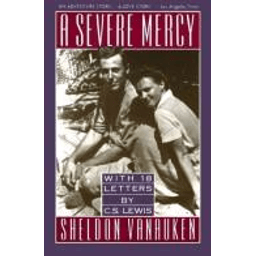 A Severe MercySheldon Vanauken’s memoir of a great love, a shared turn toward faith at Oxford, a friendship with C.S. Lewis, and the early death that gave the book its name - the rare grief memoir that has outlived its decade.