- Starting price
- ~$17 paperback
- Free tier
- No
- Platforms
- Print · Kindle · Audiobook
- Developer
- B&H Publishing
- Launched
- 2013
- Updated
- May 31, 2026
The verdict
The Insanity of God has quietly become the book Christians hand to anyone wrestling with whether faith can survive real suffering. It is part memoir, part travelogue, part oral history of the persecuted church - and it asks one stubborn question, gathered from hundreds of believers in the hardest places on earth: what is it that keeps faith alive when following Jesus costs everything?
Try The Insanity of God ↗Opens bhpublishinggroup.com
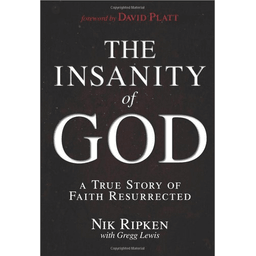
The Insanity of God is the firsthand account of a man who writes under the name Nik Ripken - a pseudonym adopted to protect the believers and the still-active fieldwork the book describes. Ripken and his wife, Ruth, left rural Kentucky as ordinary missionaries and spent years in some of the most difficult places a person can serve, including more than half a decade of relief work in Somalia during its collapse into famine and civil war. Published by B&H in 2013 and written with co-author Gregg Lewis, the book has become one of the most widely read modern accounts of faith under persecution.
It is not a triumphant missions story. It is not a how-to manual. It is not, for long stretches, an easy book to read at all - it opens in the rubble of Somalia, moves through the death of the Ripkens’ own teenage son, and circles a question the author could no longer answer: does the gospel actually work in a place where everything has gone wrong? Ripken comes home emptied out, his faith in pieces, and the rest of the book is the slow, surprising story of how it got put back together - not in a seminary or a sanctuary, but in living rooms and prison memories across the former Soviet bloc, China, and the Muslim world.
What pulls the book out of despair is the decision at its center: rather than abandon the question, the Ripkens set out to ask it of people who had every reason to walk away from faith and didn’t. Over roughly a dozen years they interviewed hundreds of believers who had been imprisoned, beaten, surveilled, and bereaved for following Jesus - and asked them, plainly, why they hadn’t quit. The answers they gave reframed not just Ripken’s theology of suffering but his whole understanding of what faith is for. The book is the record of that reframing.
✓ The good
- A rare honest account of a missionary’s faith breaking - Ripken does not hide the crisis in Somalia or the loss of his son, and the credibility of the whole book rests on that refusal to tidy it up
- Built on extraordinary primary research - roughly a dozen years of interviews with hundreds of persecuted believers across the former Soviet bloc, China, and the Muslim world, told in their own words
- Theologically gentle and broadly received - Catholic, Reformed, Wesleyan, Anglican, and free-church readers all return to it without doctrinal friction, because it reports testimony rather than arguing a system
- Reframes suffering without trivializing it - the believers Ripken interviews are not presented as superhuman; they are frightened, ordinary people, which makes their endurance land harder
- The Russian-prison and house-church chapters are unforgettable - some of the most quietly devastating pages in recent Christian publishing, and the ones readers quote back for years
- Pairs naturally with action - readers who finish it usually want to pray for and support the persecuted church, and the book points clearly in that direction without a hard sell
- A genuine sequel and a film extend it - The Insanity of Obedience carries the argument forward, and the documentary makes the testimonies accessible to small groups who won’t read 320 pages
✗ Watch out
- It sprawls - the book weaves memoir, travelogue, and interview transcript across many countries and years, and some readers find the structure wandering rather than linear
- The pseudonymous, security-shaped telling keeps details vague - names, places, and dates are deliberately blurred to protect people still in the field, which can frustrate readers who want specifics
- Intense subject matter - imprisonment, torture, famine, and the death of a child are all on the page; this is not a light or encouraging-on-every-page read
- Light on doctrinal scaffolding - it is a book about lived faith under pressure, not a systematic theology of suffering or missions, and readers wanting that framework will need a companion volume
- Repetition by design - the interview-driven structure circles the same few questions many times, which is the point but can feel like tread-water to readers who got the thesis early
Best for
- Christians wrestling with whether faith survives real suffering
- Small groups and missions teams studying the persecuted church
- Readers who loved God’s Smuggler or Tortured for Christ
- Anyone whose own faith feels hollowed out and is looking for honest company
Avoid if
- You want a tightly structured, linear narrative
- You want a systematic theology of suffering or missions
- You are not in a season to sit with intense, painful subject matter
- You bounce off first-person spiritual memoir as a genre
What The Insanity of God is
The Insanity of God is a 320-page first-person account, written under the pseudonym Nik Ripken with co-author Gregg Lewis (a longtime collaborator on narrative nonfiction). It tracks an American couple from rural Kentucky through years on the mission field - most pivotally more than six years of relief work in Somalia during its descent into famine and civil war - and the crisis of faith that followed when the gospel seemed to make no visible difference in a collapsing country. The first third is the breaking; the rest is the search for an answer.
That search took the form of roughly a dozen years of interviews. The Ripkens traveled to places where following Jesus had carried a real cost - the former Soviet bloc after decades of state atheism, China, and countries across the Muslim world - and sat with believers who had been imprisoned, watched, and bereaved for their faith, asking them what had kept them in it. The book is structured around those conversations: their testimonies, the questions Ripken brought to them, and what their answers did to his own understanding of faith, fear, and what the gospel is actually for.
Why readers across every tradition still pick up The Insanity of God
The single biggest practical difference between The Insanity of God and most books about persecution is that it does not start with the persecuted. It starts with the author’s own collapse. Ripken comes home from Somalia with his faith in ruins, having buried his son and watched a country starve, and he is honest enough to say so before he says anything else. That honesty is the book’s engine. By the time the persecuted believers speak, the reader is not being lectured by a confident missionary - they are listening alongside a man who genuinely no longer knows the answer.
The book also reads as a work of listening rather than argument. Ripken mostly gets out of the way and lets the believers he interviewed talk - about prison, about surveillance, about loved ones lost, and about why none of it made them quit. Because it reports testimony instead of defending a doctrinal system, Catholic, Reformed, Wesleyan, Anglican, Pentecostal, and non-denominational readers have all claimed it as their own. The thoughtful reader’s book on suffering - the model that respects your questions rather than rushing to resolve them.
Somalia and the breaking: the crisis that the rest of the book answers
The opening movement of the book - Somalia and its aftermath - is where The Insanity of God earns the rest of its pages. Ripken describes more than six years of relief work in a country coming apart: famine, warlords, the daily arithmetic of who could be helped and who could not, and the slow erosion of his confidence that the gospel was doing anything at all in such a place. Threaded through it is the hardest loss in the book, the death of the Ripkens’ teenage son, and the family’s departure from Africa with a question they could not put down: does faith actually work where everything has gone wrong?
What makes this section land is that Ripken does not resolve it quickly, and does not pretend he was strong. He names the doubt directly. He admits he came home emptied out and unsure he still believed what he had spent his life preaching. That refusal to skip to the encouraging part is the reason the book’s later answers carry weight - a reader who has watched the author’s faith genuinely break is far more likely to trust him when he describes how it was rebuilt. The breaking is not a prologue to be hurried through. It is the question the whole book exists to answer.
The interviews: an oral history of the persecuted church
The heart of the book is the testimony Ripken gathered over roughly a dozen years from believers in places where following Jesus had carried a real cost. He and Ruth traveled across the former Soviet bloc - where the state had spent decades trying to extinguish faith - and then into China and the Muslim world, sitting with people who had been imprisoned, surveilled, beaten, and bereaved. The cumulative effect is something close to an oral history: hundreds of ordinary believers, in their own words, describing what it cost them to keep believing and why they did it anyway.
The most quoted material comes from the former Soviet believers, several of whom had spent years in prison for their faith and described those years not as the worst of their lives but, strangely, as among the most vivid. One recurring theme reframes Ripken’s thinking entirely: that persecution is not the opposite of a thriving church but, in these believers’ experience, often the soil one grows in. The believers are never presented as heroes who felt no fear - they are frightened, ordinary people, which is exactly why their endurance is so disarming. That restraint, letting the testimony speak without inflating it, is rarer in this corner of Christian publishing than it should be.
The reframing: a theology of faith built from witness, not argument
The third thing the book does - and the reason it has outlived its release year - is reassemble Ripken’s understanding of faith out of what he heard. He went looking for a technique, a secret, some transferable method that kept the persecuted from quitting. What he found instead was less a method than a posture: a faith oriented not around comfort or visible results but around the presence of Jesus, held onto in the dark and shared at real cost. The believers he interviewed did not endure because they had answers. They endured because they had Someone.
That posture is why the book travels so well across traditions. It does not require the reader to share Ripken’s exact theological vocabulary to recognize the shape of what he is describing. It also turns a hard mirror on the comfortable reader: if faith can survive prison and famine and the death of a child, the book quietly asks, what is the reader’s own faith resting on? It is an extraordinarily portable challenge, and it is the reason the book keeps getting handed to seminarians, missionaries, and grieving believers alike more than a decade after publication.
Pricing
Paperback
~$17
The standard B&H edition. The format most readers buy, lend, and replace when it doesn’t come back.
Kindle
~$10
The cheapest way in. Searchable and highlight-syncs - useful for a book this quotable.
Audiobook
~$20
Roughly fourteen hours unabridged. The interview chapters carry surprisingly well read aloud.
Documentary film
~$15 (DVD / stream)
A feature-length film built around the same testimonies. The right entry point for groups who won’t read the book.
The Insanity of Obedience (sequel)
~$17
Ripken’s follow-up, framed as a discipleship companion. Carries the argument from witness to obedience.
The Insanity of God is one of those books where the cheap edition is genuinely fine and the rest are situational rather than essential. The standard B&H paperback runs around $17 and is what most readers buy, lend out, and end up replacing. It is the version nearly every quotation in print is keyed to, and the one to default to unless you have a specific reason to do otherwise.
Kindle hovers around $10 and is the cheapest way in; the search and highlight-sync are worth more than usual for a book this dense with quotable testimony. The unabridged audiobook runs about $20 for roughly fourteen hours - a real commitment, but the interview chapters carry well aloud, since they were spoken testimony to begin with.
Two extensions are worth knowing about. The documentary film (around $15 to stream or own) is the right entry point for a small group or missions team that won’t get through 320 pages - it puts the testimonies on screen. And The Insanity of Obedience, the sequel (around $17), reframes the same material as a discipleship companion and is the natural next step for readers who finish the first book wanting to do something with it.
Most readers do not need to collect every format. Pick the paperback if you’ll read it, the film if your group won’t, and the sequel only after the first book has done its work.
Where The Insanity of God falls behind
Structure. The book weaves memoir, travelogue, and interview transcript across many countries and many years, and it does not always move in a straight line. Readers who want a tight, linear narrative will feel it wander - the organizing principle is thematic and accumulative, not chronological, and some find that sprawling rather than immersive.
Deliberate vagueness. Because the fieldwork it describes was still active and the believers still vulnerable, the telling is shaped by security: the author writes under a pseudonym, and names, places, and dates are often blurred or generalized. That protective haze is the right call ethically, but it leaves readers who want verifiable specifics holding less than they’d like.
Doctrinal scaffolding. This is a book about faith as it was lived under pressure, not a systematic account of why suffering exists or what missions should be. Ripken stays close to testimony and largely declines to build a formal theology of persecution. That keeps the book broadly readable, but it means it is a starting point on those questions, not an ending point.
Weight. The subject matter is genuinely heavy - famine, imprisonment, and the death of a child are all on the page - and the interview-driven format circles the same hard questions repeatedly. For some readers that repetition deepens the point; for others it can feel like tread-water once the thesis has landed.
Real gaps, but they’re worth knowing about going in rather than dealbreakers. The Insanity of God is doing a specific thing - carrying the reader through one man’s collapse and recovery by way of other people’s testimony - and judging it as a missions textbook or a tidy memoir would miss what the book actually is.
The Insanity of God vs. God’s Smuggler vs. Tortured for Christ
These three are among the most-read accounts of the twentieth- and twenty-first-century persecuted church, and they do genuinely different jobs. The Insanity of God (Ripken, 2013) is the interview book - a broken missionary gathering testimony from hundreds of persecuted believers and rebuilding his own faith from what they tell him. God’s Smuggler (Brother Andrew, 1967) is the adventure book - one man driving Bibles past Iron Curtain border guards and learning to trust God at sixty miles an hour. Tortured for Christ (Richard Wurmbrand, 1967) is the prison book - a firsthand account of imprisonment and torture in Communist Romania, written by the man who endured it.
Different strengths. The Insanity of God is best at the question of how faith survives suffering, because it asks that question of so many people at once. God’s Smuggler is best at the long obedience of repeated small risks. Tortured for Christ is best at the raw, unmediated weight of one man’s own captivity.
If a reader has only one slot and their real question is whether faith can survive when everything falls apart, The Insanity of God is the most direct answer of the three - it was written by someone asking exactly that. God’s Smuggler is the easiest and most thrilling entry point. Tortured for Christ is the most harrowing and the most personal. Read together, the trio is something close to a syllabus on what costly faith has looked like across the last seventy years.
The bottom line
The Insanity of God is the rare book about persecution that begins with the author’s own loss of faith and earns its recovery slowly, in other people’s words. It can sprawl, it stays deliberately vague where lives are at stake, and the subject matter is heavy - but it asks the one question most comfortable readers eventually have to face, and it brings back answers from people who paid to learn them. If you have ever wondered whether faith can survive real suffering, start with the paperback, give it the patience its structure asks for, and let the believers Nik Ripken interviewed do the talking.
Alternatives to The Insanity of God
 God’s SmugglerBrother Andrew’s 10-million-copy memoir of smuggling Bibles past the Iron Curtain. The lighter, more adventurous companion to Ripken’s heavier book.
 Tortured for ChristRichard Wurmbrand’s firsthand account of imprisonment and torture in Communist Romania. The unmediated prison testimony that Ripken’s interviews echo.
 Voice of the MartyrsThe ministry Wurmbrand founded to serve the persecuted church. The natural next step for readers who want to pray for and support believers in hostile places.
 RadicalDavid Platt’s challenge to comfortable Western Christianity. A different angle on the same question Ripken raises about what following Jesus actually costs.
Frequently asked questions
Who is Nik Ripken, and is that his real name?
Nik Ripken is a pseudonym. The author is a longtime missionary who adopted the pen name to protect the persecuted believers he interviewed and the fieldwork the book describes, much of which was still active and sensitive at publication. He wrote the book with co-author Gregg Lewis.
Is the book based on real interviews?
Yes. Ripken and his wife, Ruth, spent roughly a dozen years interviewing hundreds of believers who had faced persecution - across the former Soviet bloc, China, and the Muslim world - asking what had kept them in the faith. Those testimonies are the core of the book.
How heavy is the subject matter?
Heavy. The book covers famine and civil war in Somalia, the death of the author’s teenage son, and many accounts of imprisonment and torture. It is honest and ultimately hopeful, but it is not a light read, and it is best approached in a season when you can sit with difficult material.
What tradition does the book come from?
The author writes from an evangelical missionary background, but the book reports testimony rather than defending a doctrinal system, and it crosses denominational lines throughout. The believers Ripken interviews come from a range of traditions, and the book is read warmly across the full span of Christian readers.
Is there a movie or a sequel?
Both. A feature-length documentary film built around the same testimonies makes the material accessible to groups who won’t read the full book. A sequel, The Insanity of Obedience, carries the argument forward and is framed as a discipleship companion to the first book.
Should I read this or God’s Smuggler first?
If you want the easier, more adventurous entry point, start with God’s Smuggler. If your real question is whether faith can survive genuine suffering, The Insanity of God answers it more directly, because it was written by a man asking exactly that. Many readers eventually read both.
What edition should I buy?
For most readers, the standard B&H paperback at around $17 is the right default. The Kindle edition (around $10) is the cheapest way in. Choose the documentary film if you are leading a group that won’t get through the book, and the sequel only after the first book has done its work.
Sources & further reading
More Christian Biographies
God’s SmugglerThe Dutch missionary’s 1967 memoir about driving a blue Volkswagen Beetle full of Bibles past Soviet border guards - and the prayer that became a generation’s shorthand for trusting God in impossible places. Through Gates of SplendorElisabeth Elliot’s account of five young missionaries killed reaching the Waorani of Ecuador in 1956 - the book that sent a generation toward the mission field, told by one of the widows.Tortured for ChristThe Romanian pastor’s 1967 account of fourteen years in communist prisons - written in three days after his release, and the book that launched Voice of the Martyrs.
 JoniJoni Eareckson Tada’s account of the diving accident that left her a quadriplegic at seventeen - and the long, unglamorous climb out of despair that followed - told without flinching and without tidy answers.
 Just As I AmBilly Graham’s own account of a North Carolina farm boy who became the twentieth century’s best-known evangelist - the crusades, the presidents, and the doubts in between.
 The Cross and the SwitchbladeThe skinny country preacher who left rural Pennsylvania for the gang-run streets of 1950s New York - and the conversion of switchblade-carrying gang leader Nicky Cruz that turned one man’s hunch into a worldwide ministry.