- Starting price
- ~$20 paperback
- Free tier
- No
- Platforms
- Print · Kindle · Audiobook
- Developer
- HarperOne
- Launched
- 1997
- Updated
- May 31, 2026
The verdict
Just As I Am is the closest thing we have to a first-person history of twentieth-century mass evangelism, told by the man who defined it. It is long - Graham lived a long life and met nearly everyone in it - and the presidential chapters slow the spiritual story for some readers. But the boyhood, the conversion, and the founding of the crusades are told with a candor that surprises people who expected a victory lap. If you want one book to understand who Billy Graham actually was, this is it.
Try Just As I Am ↗Opens harpercollins.com
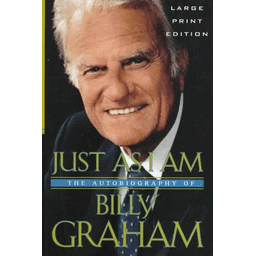
Just As I Am is the autobiography of Billy Graham - by most measures the best-known Christian evangelist of the twentieth century - written across the 1990s and published in 1997, when its author was in his late seventies. The title is borrowed from the nineteenth-century hymn “Just As I Am,” the song his crusade choirs sang during the altar call while thousands of people walked forward to the front of a stadium. It is the phrase most associated with his ministry, and choosing it as the title tells you what the book thinks it is about: not a great man, but ordinary people responding to an invitation.
It is not a theology book, exactly. It does not argue. It does not systematize. It does not try to settle the questions evangelicals were fighting about for most of Graham’s life. What it does instead is narrate - at length, in a plain and measured voice - what it was like to grow up milking cows on a dairy farm outside Charlotte, to be converted at sixteen under a traveling preacher, to stumble into a calling he did not ask for, and then to spend six decades preaching to more people in person than anyone in history while befriending the men who ran the country.
Published by HarperOne in partnership with Zondervan, the memoir ran past seven hundred pages, became a New York Times bestseller, and has stayed in print in paperback, ebook, and audiobook ever since. It is the source most later biographies of Graham draw on, and it is the only full account of his life in his own words. This review is for the reader trying to decide whether the long version - the whole arc, the famous names, the self-questioning Graham allowed himself only in old age - is worth the time.
✓ The good
- The single best first-person account of twentieth-century mass evangelism - Graham was at the center of it for sixty years and tells it from the inside
- Unexpectedly candid for a memoir written near the end of a celebrated life - Graham names his regrets, his naïveté with politics, and the times he got things wrong
- The early chapters are genuinely moving - the Carolina dairy farm, the 1934 conversion, the early stumbling years carry a warmth the famous-people sections sometimes lack
- An accidental history of the American century - Graham knew presidents from Truman to the Clintons and recounts the encounters with a reporter’s eye for detail
- A model of cross-denominational ministry - Graham worked with Catholics, mainline Protestants, evangelicals, and others, and explains plainly why he chose to
- The reflective, measured tone of a man writing in his late seventies gives the later chapters a settled wisdom that a younger author could not have produced
- A primary source on the founding of major institutions - Christianity Today, the Lausanne movement, and his own association are all recounted by their founder
✗ Watch out
- It is long - well over seven hundred pages, and Graham covers many decades and a large cast of figures, so the narrative momentum comes and goes
- The presidential-history sections slow the spiritual story for some readers - chapters on state dinners and foreign trips can read more like a statesman’s memoir than an evangelist’s
- The reflective late-life voice that makes the book wise also makes it measured to a fault in places - Graham rarely lingers, and some episodes a reader wants more on get a paragraph
- Light on the texture of his actual preaching - the book is strong on where and when he preached and thin on the sermons themselves
- The sheer number of names - heads of state, associates, fellow preachers - can blur together for readers who did not live through the events
Best for
- Readers who want twentieth-century evangelical history from a primary source
- Anyone curious who Billy Graham actually was behind the public image
- Students of American religion, media, and public life
- Patient readers who enjoy a long, reflective memoir
Avoid if
- You want a short, fast read - this is a seven-hundred-page life
- You want a theology of conversion rather than the story of one ministry
- You came mainly for the sermons and not the biography
- You have no interest in the political and presidential chapters
What Just As I Am is
Just As I Am is the full-length autobiography of William Franklin “Billy” Graham, written with editorial help and published by HarperOne, in association with Zondervan, in 1997. It runs well over seven hundred pages and moves chronologically from Graham’s 1918 birth on a dairy farm near Charlotte, North Carolina, through his teenage conversion, his education at Bob Jones College, the Florida Bible Institute, and Wheaton College, the breakthrough 1949 Los Angeles tent campaign that made him nationally famous, the decades of stadium crusades that followed on six continents, and his relationships with every U.S. president from Harry Truman to Bill Clinton, closing with reflections written as he entered his eighties.
It is a memoir rather than a history or a treatise. The crusades are the spine of the book, but Graham also recounts the founding of institutions he helped start - the magazine Christianity Today, the Billy Graham Evangelistic Association, and the international Lausanne Congress on World Evangelization - and the controversies he navigated, including his early entanglement with politics and his later regret over some of it. The title comes from the hymn sung at his altar calls, and the recurring image of people walking forward at the invitation runs through the whole book.
Why readers across traditions still reach for Graham’s own account
The single biggest practical difference between Just As I Am and the many biographies written about Graham is that this is the only version in his own voice - the only place he explains, rather than has explained for him, why he made the choices he made. And the choice that shapes the whole book is his decision, early and deliberately, to preach across denominational lines rather than to any single tradition. From the 1950s onward Graham insisted that local crusades be sponsored by the widest possible coalition of churches, and he extends the same hand on the page: he recounts working with Catholics, mainline Protestants, evangelicals, and others without ranking them, and explains his reasoning plainly enough that readers from very different backgrounds can follow it.
That is the quiet engine of the memoir’s long reach. A reader does not have to share Graham’s denomination to find him readable, because Graham spent his career trying not to make people choose a denomination - only to respond to the invitation. The result is a book that has been read and recommended well outside the evangelical world that produced it: by historians of the American century, by readers curious about the man who prayed with presidents, and by Christians of many traditions who simply want the story straight from the source.
The Carolina boyhood and the 1934 conversion
The opening third of the book is its warmest, and for many readers its best. Graham was born in 1918 and raised on a dairy farm on the edge of Charlotte, the oldest of four children in a Reformed Presbyterian household where the workday started before dawn with the cows. He describes the farm in concrete detail - the milking, the chores, the Depression closing in on his father’s business - and he is honest that as a teenager he was restless, fast behind the wheel, and not especially interested in religion. The turning point came in the fall of 1934, when a traveling evangelist named Mordecai Ham held a months-long campaign in Charlotte. Graham went, at first reluctantly, and on one of those nights, at sixteen, he walked forward and committed his life to Christ.
What makes these chapters land is that Graham does not dramatize them. He describes the conversion almost matter-of-factly, then traces the long, uncertain years that followed - the false starts, the school he disliked and left, the slow discovery at the Florida Bible Institute and then Wheaton that he could preach. He recounts his courtship of Ruth Bell, the daughter of medical missionaries to China, who became his wife and, by his own repeated account, the steadier and more theologically grounded of the two. These are the pages where the reader meets the person rather than the institution, and they are the reason many readers who came for the famous-name chapters end up remembering the farm.
The rise of the crusades, from a Los Angeles tent to the world
The heart of the book is the crusade ministry, and Graham dates its real beginning to the autumn of 1949, when a planned three-week tent campaign in downtown Los Angeles stretched to eight weeks after newspapers - by Graham’s account, on the instruction of William Randolph Hearst - began giving it front-page coverage. The crowds swelled, several well-known figures professed conversion, and a regional preacher became a national one almost overnight. From there the book follows the crusades outward: Boston, London’s Harringay Arena for twelve weeks in 1954, New York’s Madison Square Garden for sixteen weeks in 1957, and eventually stadiums across Africa, Asia, Latin America, Europe, and behind the Iron Curtain.
Graham is good on the machinery most accounts skip - the months of local organizing, the choirs, the counselor training, the partnership with thousands of churches in each city, the decision to integrate his crusade seating in the segregated American South in the 1950s, which he recounts as a settled conviction rather than a gesture. He is candid, too, about what the scale cost and what he worried it concealed: whether the people who walked forward stayed, whether the publicity served the message or competed with it. The recurring closing image of each crusade is the same one in the title - the choir singing “Just As I Am” while people leave their seats and come down to the front - and Graham never quite loses his own astonishment that it kept happening.
The presidents, public life, and the regrets of old age
A large portion of the later book recounts Graham’s relationships with the powerful, especially U.S. presidents. He knew every one from Harry Truman through Bill Clinton, and he tells the encounters with a memoirist’s eye - Eisenhower asking about assurance of heaven, the long and complicated friendship with Richard Nixon, prayers in the White House, golf with one president and a hospital visit to another. For readers interested in the intersection of American religion and power, these chapters are a primary source of real value. For readers who came for the spiritual narrative, they are the stretch most likely to feel like a detour, and it is fair to say the pace slows when the cast turns to heads of state.
What rescues the section, and what surprises readers who expected a varnished account, is Graham’s candor about the cost of that proximity. Writing in his late seventies, he is plain that he had at times been naïve about politics, that he regretted letting himself be used or appearing to endorse, and that he had concluded an evangelist should keep a careful distance from partisan power. He does not relitigate the specifics at length - the measured, reflective tone of the late-life writing means he names the lesson more than he dwells on the episode - but the admission is there, unforced, and it gives the autobiography a humility that its length and its famous names might otherwise have buried.
Pricing
Paperback
~$20
The standard HarperOne trade paperback - the full unabridged text and the copy most readers own.
Kindle
~$15
The complete text in digital form. Search and highlighting are genuinely useful in a book this long with this many names and dates.
Audiobook
~$25
Narrated unabridged. A long listen, but the conversational voice suits audio, and it pairs well with a commute spread over weeks.
Hardcover
~$30
Used hardcovers of the original 1997 edition are common and inexpensive; new keepsake printings turn up around this price.
For a book of its size and stature, Just As I Am is inexpensive and easy to find. The standard HarperOne trade paperback runs around $20 new, and because it sold so well in the late 1990s, used hardcovers and paperbacks turn up in church libraries, estate sales, and secondhand shops for a few dollars.
The Kindle edition at roughly $15 is the practical pick for a book this long. With more than seven hundred pages and a cast of hundreds, the ability to search a name or a date and to keep highlights synced across devices is a real convenience rather than a luxury.
The audiobook runs around $25 and is a substantial unabridged listen - many hours - but Graham’s conversational, sermon-trained cadence carries well in audio, and the length is less daunting spread across a few weeks of commuting than it looks on the shelf.
New keepsake hardcovers appear around $30, though the most economical route to a durable copy is simply a used first-edition hardcover, which is plentiful. Most readers do not need a new hardcover; the paperback is the balanced default and the copy most people own.
Where Just As I Am falls behind
Length. At well over seven hundred pages covering eight decades, Just As I Am asks for patience. Graham moves through a great deal of life and a great many people, and the narrative momentum rises and falls - the reader who wants a tight, fast biography will find the long version demanding.
The presidential chapters. The sections on Graham’s relationships with presidents and world leaders are valuable as history but slow the spiritual narrative, and a reader who came primarily for the story of an evangelist may find the state dinners and foreign trips a detour. They are worth knowing about going in.
A measured tone that can underplay drama. The book was written late in life in a reflective, settled register, and that voice - one of its real strengths - also means Graham rarely lingers on the most charged episodes. Readers wanting him to dig into a controversy will sometimes get a single, restrained paragraph instead.
Thin on the preaching itself. The memoir is rich on where and when and with whom Graham preached and comparatively light on the content and craft of the sermons. A reader hoping to understand what he actually said from the platform will need his published sermons or a study of his preaching to fill the gap.
A cast that blurs. The number of named figures - presidents, prime ministers, associates, fellow evangelists - is large, and for a reader who did not live through the events, the names can run together. A companion biography with an index helps if you want to keep everyone straight.
Just As I Am vs. Born Again vs. Surprised by Joy
These three are first-person accounts of conversion and Christian life from very different vantage points, and each does something the others do not.
Just As I Am is the public evangelist’s full-life memoir - the long arc from a Carolina farm to the world stage, told by the man who preached to more people in person than anyone in history. Charles Colson’s Born Again is the dramatic single-conversion story - the Nixon White House aide who came to faith amid the Watergate scandal, went to prison, and founded a ministry to inmates; it is shorter, tighter, and built around one wrenching turn rather than a lifetime. C. S. Lewis’s Surprised by Joy is the intellectual-autobiographical account - the Oxford don tracing, in literary prose, the long inward road from boyhood atheism to belief, focused on the life of the mind rather than a public ministry.
Different strengths. Graham is the best on the scale and machinery of public ministry and on twentieth-century evangelical history from the inside. Colson is the best on a sudden, midlife conversion under public pressure and its aftermath. Lewis is the best on the slow intellectual journey toward faith. If you want the sweep of a movement, start with Graham; if you want a single gripping turn, Colson; if you want the interior story of a mind changing, Lewis. They overlap less than their shared shelf suggests.
The bottom line
Just As I Am is the definitive first-person record of a life that shaped twentieth-century Christianity, and it earns its place by telling that life plainly and, in the end, honestly. It is long, the presidential chapters slow the middle, and the late-life voice is measured where a younger writer might have been vivid - real gaps worth knowing about going in rather than dealbreakers. But the boyhood is warm, the rise of the crusades is genuinely fascinating, and the old man’s candor about his own missteps gives the book a humility that lingers. If you want one book to understand who Billy Graham was and how mass evangelism became what it is, this is still the one to read.
Alternatives to Just As I Am
 Born AgainCharles Colson’s memoir of his conversion amid Watergate and his founding of a prison ministry - a shorter, tighter single-conversion story than Graham’s full-life sweep.
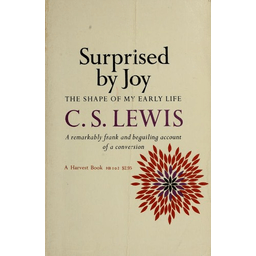 Surprised by JoyC. S. Lewis’s account of his road from atheism to faith - the interior, intellectual autobiography to Graham’s very public one.
 The Hiding PlaceCorrie ten Boom’s wartime memoir of hiding Jews and learning to forgive - another beloved first-person Christian life story, shorter and more intimate.
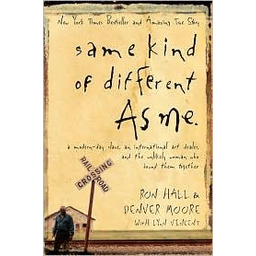 Same Kind of Different as MeThe dual memoir of an art dealer and a homeless man whose lives collide - a modern true story of unlikely friendship and faith, lighter and faster than Graham’s.
Frequently asked questions
Is Just As I Am Billy Graham’s own autobiography?
Yes. It is Graham’s full-length autobiography, written with editorial help and published by HarperOne in 1997, when he was in his late seventies. It is the only complete account of his life in his own words, and it is the source most later biographies of him draw on.
How long is the book?
It is long - well over seven hundred pages in the standard edition. It covers eight decades of Graham’s life, from his 1918 birth on a North Carolina dairy farm through his ministry into the 1990s, so most readers take it in over several weeks rather than a weekend.
Where does the title “Just As I Am” come from?
From the nineteenth-century hymn “Just As I Am,” which Graham’s crusade choirs sang during the altar call as people walked forward to the front of the stadium. The image of responding to that invitation runs through the whole memoir, which is why he chose it as the title.
Does the book cover his relationships with U.S. presidents?
Extensively. Graham knew every president from Harry Truman through Bill Clinton, and a large portion of the later chapters recounts those relationships. They are valuable as history, though some readers find they slow the spiritual narrative. Graham also reflects candidly, late in the book, on having been at times too close to political power.
Did Billy Graham work across denominations?
Yes. From the 1950s onward he insisted his crusades be sponsored by broad coalitions of churches, and he worked with Catholics, mainline Protestants, evangelicals, and others. The memoir explains his reasoning for that approach plainly, which is one reason it has been read across many Christian traditions.
Is it more of a theology book or a story?
A story. Just As I Am is a narrative memoir, not a treatise - it recounts what happened rather than arguing doctrine. Readers wanting Graham’s preaching or theology specifically will get more from his published sermons; this book is the life behind them.
What should I read after Just As I Am?
For another first-person conversion story from public life, Charles Colson’s Born Again is a natural pairing. For the interior, intellectual version of a life changing, C. S. Lewis’s Surprised by Joy fits. For a shorter, more intimate Christian memoir, The Hiding Place by Corrie ten Boom is widely loved.
Sources & further reading
More Christian Biographies
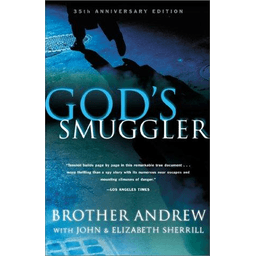 God’s SmugglerThe Dutch missionary’s 1967 memoir about driving a blue Volkswagen Beetle full of Bibles past Soviet border guards - and the prayer that became a generation’s shorthand for trusting God in impossible places.
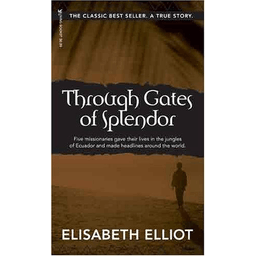 Through Gates of SplendorElisabeth Elliot’s account of five young missionaries killed reaching the Waorani of Ecuador in 1956 - the book that sent a generation toward the mission field, told by one of the widows.
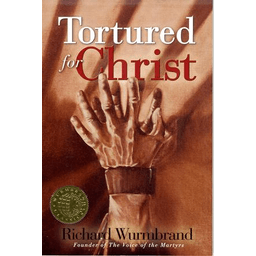 Tortured for ChristThe Romanian pastor’s 1967 account of fourteen years in communist prisons - written in three days after his release, and the book that launched Voice of the Martyrs.
 JoniJoni Eareckson Tada’s account of the diving accident that left her a quadriplegic at seventeen - and the long, unglamorous climb out of despair that followed - told without flinching and without tidy answers.
 The Cross and the SwitchbladeThe skinny country preacher who left rural Pennsylvania for the gang-run streets of 1950s New York - and the conversion of switchblade-carrying gang leader Nicky Cruz that turned one man’s hunch into a worldwide ministry.
 A Severe MercySheldon Vanauken’s memoir of a great love, a shared turn toward faith at Oxford, a friendship with C.S. Lewis, and the early death that gave the book its name - the rare grief memoir that has outlived its decade.