- Starting price
- $11.99 paperback
- Free tier
- No
- Platforms
- Print · Kindle · Audiobook · Audible
- Developer
- Chosen Books / Baker
- Launched
- 1971
- Updated
- May 24, 2026
The verdict
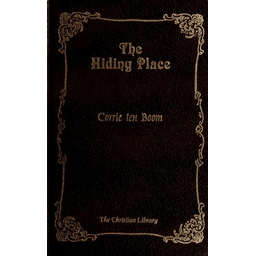
The Hiding Place has quietly become the default Christian memoir of the twentieth century, and for good reason - it is short, it is honest, and it ends with a confrontation between a survivor and her guard that almost no other book attempts. If you read one wartime Christian memoir in your life, read this one.
Try The Hiding Place ↗Opens bakerpublishinggroup.com
The Hiding Place is the memoir of Corrie ten Boom, a Dutch watchmaker’s daughter who, with her father Casper and sister Betsie, turned the upper rooms of their narrow shop-house in Haarlem into a hiding place for Jews during the Nazi occupation of the Netherlands. They were eventually betrayed, arrested, and sent to a series of prisons that ended, for Corrie and Betsie, at Ravensbrück - the women’s concentration camp north of Berlin. Betsie died there. Corrie walked out, by what she always called a clerical error, a week before every woman her age was sent to the gas chamber.
It is not a war book, exactly. It does not strategize. It does not lecture. It does not try to explain the Holocaust. What it does instead is something quieter and more difficult - it lets a seventy-something Dutch woman tell you, in plain sentences co-written with John and Elizabeth Sherrill, what it was like inside the watch shop, inside the secret room behind the false wall, inside the cattle car, inside the barracks. And then what it was like, years later, to shake the hand of a man who had been one of her guards.
Published in 1971 by Chosen Books, the memoir went on to sell well over ten million copies, was adapted into a 1975 film by World Wide Pictures, and has stayed continuously in print for more than half a century. It is one of those rare Christian books that secular readers recommend to each other, and that pastors hand to teenagers, and that grandmothers reread every few years. This review is for anyone trying to decide whether to start - or restart - with this particular copy on the shelf.
✓ The good
- Best-in-class as a Christian wartime memoir - short, plain-spoken, and emotionally honest in a way most books in the genre never reach
- The forgiveness story at the end is one of the most-quoted passages in modern Christian writing - and it earns every line because the preceding two hundred pages are so unflinching
- Co-authored with John and Elizabeth Sherrill - the same team behind The Cross and the Switchblade - which gives it the readability of a novel without sanding off the witness
- The ten Boom family theology is woven in through scene and dialogue, not sermonizing - you feel the faith rather than being lectured about it
- Universally beloved across Christian traditions - read in Catholic high schools, Protestant youth groups, and Latter-day Saint book clubs alike
- Works at almost any reading level - there are Young Readers editions for middle schoolers and study editions for adult small groups
- Endures as a primary source on the Dutch resistance - historians of the Holocaust still cite the ten Boom hiding operation by name
✗ Watch out
- It is a memoir, not a history - dates, names, and chronology are sometimes compressed, and readers who want footnotes will need a companion book
- The first hundred pages are slower than the rest - the pre-war Haarlem scenes are essential setup, but some readers bounce off before the Gestapo arrives
- Some of the visions and dreams Betsie reports are presented at face value - readers who prefer their memoirs strictly empirical may want to know that going in
- The Sherrill co-writing voice occasionally smooths Corrie’s actual Dutch cadence - readers wanting the unfiltered voice should pair it with her later book Tramp for the Lord
- Light on theological framework - it is a witness, not a treatise, so readers wanting doctrine on suffering will need to read it alongside something like Knowing God
Best for
- First-time readers of Christian memoir
- Small groups studying forgiveness or suffering
- High school and college students
- Anyone who has been hurt and is trying to learn how to release it
Avoid if
- You want academic Holocaust history with citations
- You prefer fiction over memoir
- You are looking for a systematic theology of evil
- You cannot currently read about concentration camps without harm - wait, and come back to it
What The Hiding Place is
The Hiding Place is a first-person memoir written by Corrie ten Boom with John and Elizabeth Sherrill and first published in 1971. It runs roughly 250 pages and covers the years from Corrie’s childhood in Haarlem through the German invasion of the Netherlands in 1940, the family’s clandestine work hiding Jews and resistance members behind a false wall in their home, the February 1944 raid that sent them to prison, Corrie’s and Betsie’s deportation to Ravensbrück, Betsie’s death there in December 1944, and Corrie’s release. The final chapters cover her post-war ministry traveling to more than sixty countries speaking on forgiveness.
It is published by Chosen Books, an imprint of Baker Publishing Group, and has been continuously in print for fifty-plus years. The book is the basis for the 1975 World Wide Pictures film of the same name starring Jeannette Clift George, and it has been translated into dozens of languages. The ten Boom family home at Barteljorisstraat 19 in Haarlem is now a museum, and visitors can still climb the narrow stairs and see the hiding place behind the false wall.
Why readers across every Christian tradition keep returning to The Hiding Place
The single biggest practical difference between The Hiding Place and almost every other wartime Christian memoir is that Corrie ten Boom never lets the reader stay in the abstract. She does not write about evil in general. She writes about the lice in the straw of Barracks 28, about the smell, about her sister’s thin face, about the moment a guard’s rifle stock came down on Betsie’s chest. And then she does not let you stay in the suffering either. She drags you, sentence by sentence, to a church basement in Munich in 1947, where a balding man in a gray overcoat walks up to her with his hand out and says: “You mentioned Ravensbrück. I was a guard there.”
That arc - from the watch shop to the camp to the outstretched hand - is the reason readers across every Christian tradition return to this book. Dutch Reformed by upbringing, Corrie writes in a register that Catholics, Latter-day Saints, Orthodox, evangelicals, and mainline Protestants have all received as their own. The theology is rendered through scene, not statement, and the scenes are unforgettable. It is the thoughtful person’s memoir of forgiveness.
The wartime hiding of Jews: the false wall behind the bedroom
Roughly the first half of the book - Books One and Two in the original structure - covers the Haarlem years and the building of the hiding place itself. The ten Booms were Dutch Reformed Christians who had run a watch shop on Barteljorisstraat for three generations. When the German occupation began in 1940 and Jewish neighbors started disappearing, Casper ten Boom, the patriarch, made a decision that Corrie records almost in passing: when asked if he knew he might die for sheltering Jews, he answered that it would be an honor to give his life for God’s ancient people. That sentence functions as the moral pivot of the whole memoir. Everything that follows flows from it.
The Resistance built a hidden room behind a false brick wall in Corrie’s own bedroom on the top floor of the house - about thirty inches deep, accessed by a low sliding panel near the floor. At any given time the family was hiding four to seven people, with a rotating underground railroad moving Jewish neighbors to safer addresses in the Dutch countryside. Corrie writes about the practical detail of it - the fake ration cards, the drill that taught hiders to disappear in sixty seconds, the buzzer system, the meals cooked for double the household - with a matter-of-factness that makes the moral weight land harder. Historians estimate the ten Boom operation saved roughly eight hundred Jews and resistance workers before the betrayal on February 28, 1944.
Ravensbrück, Betsie’s death, and the lice in Barracks 28
After the raid, Corrie and Betsie were held first at Scheveningen, then at the Vught transit camp in the Netherlands, and finally deported in September 1944 to Ravensbrück, the women’s concentration camp ninety kilometers north of Berlin. Their father Casper had already died in a Dutch prison ten days after the arrest, at age eighty-four. The Ravensbrück chapters are the hardest reading in the book, and Corrie does not soften them. She writes about the inspection lines, the cold, the starvation diet, the public humiliations, the watchtower searchlights, the smoke from the crematorium. She also writes about Betsie smuggling in a small Bible and the two sisters holding worship services in their flea-infested barracks because, as Betsie pointed out, the guards would not enter Barracks 28 - the lice kept them out.
Betsie ten Boom died on December 16, 1944, at age fifty-nine. Corrie was released on December 28 - a clerical error, she always said, because every woman her age in the camp was killed in the following week. The chapters that cover Betsie’s final days are written without melodrama, which is what makes them devastating. Betsie’s last recorded words to her sister are about a future home for survivors and former captors alike, a vision Corrie spent the rest of her life building toward in concrete form - first a rehabilitation center in Holland, then a worldwide speaking ministry.
The post-war forgiveness ministry: the former SS guard in Munich
The final chapters of The Hiding Place take place after the war and lay out what became Corrie’s vocation for the next thirty-five years - traveling to more than sixty countries and speaking, in halls and prisons and refugee camps and Sunday morning services, on one subject: forgiveness. The single most-quoted scene in the entire book takes place in 1947, in a church basement in Munich. Corrie has just finished speaking about forgiveness when a balding man in a gray overcoat approaches her with his hand outstretched. She recognizes him immediately. He had been one of the cruelest guards at Ravensbrück - one of the men who had stripped her and Betsie at the shower-room intake.
He did not recognize her. He told her he had become a Christian, that he knew God had forgiven him for the things he had done at Ravensbrück, and he asked her to forgive him too. Corrie writes that she stood there with her hand at her side and could not raise it. She prayed silently - “Jesus, help me” - and felt, she says, something like an electric current pass through her arm, and she shook his hand. “I forgive you, brother,” she heard herself say, “with all my heart.” It is the moment the whole memoir has been building toward, and it is the reason this book has outlived the war that produced it. Forgiveness, Corrie writes, is not a feeling - it is an act of the will, and the feeling follows.
Pricing
Paperback
~$11.99
The standard mass-market edition from Chosen Books - the copy most readers own, and the one most small groups buy in bulk.
Hardcover
~$22
Library-quality binding for readers who want a keepsake edition, or who plan to reread it across decades.
Kindle
~$10
The full text in digital form - highlighting and note-syncing make it a strong pick for study groups working remotely.
Audible / Audiobook
~$15
Narrated unabridged. The reading lends itself well to audio because the Sherrill prose was written to be heard.
Young Readers Edition
~$10
Lightly adapted for middle-grade readers - the camp scenes are handled with age-appropriate restraint without losing the heart of the story.
35th Anniversary Edition
~$15
Includes an updated afterword, family photographs, and supplementary material on the ten Boom Museum in Haarlem.
For a book that has sold more than ten million copies, The Hiding Place is genuinely inexpensive. The standard Chosen Books paperback runs around $11.99 new, and used copies routinely turn up in church libraries and thrift stores for a dollar or two.
The Kindle edition at roughly $10 is the right pick for highlighters and small groups working across cities - verse references and key passages sync cleanly across devices.
The Audible edition at around $15 is unusually well-suited to the source material. The Sherrill prose was written to be read aloud, and a good narrator carries the Dutch cadence in a way the page sometimes flattens.
For middle school and family read-alouds, the Young Readers Edition at about $10 handles the camp scenes with restraint without dodging them - it is the right copy to buy for a twelve-year-old. The 35th Anniversary Edition at $15 adds family photographs and an afterword and is the reread-it-for-life copy.
Where The Hiding Place falls behind
Not a history book. Readers who want footnotes, archival sources, and a strict chronology of the Dutch resistance will need a companion volume - Diet Eman’s Things We Couldn’t Say or a general history of the Dutch occupation will fill in what The Hiding Place leaves between the lines.
Light on theological framework. The book is a witness, not a treatise. Readers wanting a theology of suffering or evil should pair it with something like J. I. Packer’s Knowing God or Dietrich Bonhoeffer’s The Cost of Discipleship - The Hiding Place is what the theology looks like in practice, not the theology itself.
A few unverifiable mystical moments. Betsie ten Boom reports visions and premonitions in the camp - a postwar home in the country, a place of healing for former captors - and Corrie records them at face value. Most readers find these moving; readers who want strictly empirical memoir should know they are there.
The Sherrill voice. John and Elizabeth Sherrill were professional collaborators - the same team behind The Cross and the Switchblade - and the prose carries their fingerprints. It is more polished than Corrie’s own later self-written books. For the unfiltered voice, pair it with Tramp for the Lord.
Pre-war pacing. The opening chapters move slowly through Haarlem family life, and some readers stall before the Gestapo arrives. Push through - the setup is what makes the camp chapters land.
The Hiding Place vs. Bonhoeffer (Metaxas) vs. Through Gates of Splendor
These three books form the standard short list of twentieth-century Christian wartime and martyrdom memoirs read in English-speaking churches, and each does something different.
The Hiding Place is the survivor’s memoir, written in the first person by the woman who lived it. It is short, it is intimate, and it is built around a single hand-shaking moment in a Munich church basement. Eric Metaxas’s Bonhoeffer: Pastor, Martyr, Prophet, Spy is a full-length biography written by a third party four decades after the events - broader in scope, longer in length, heavier on political and theological context, and the standard popular life of the German pastor executed at Flossenbürg in April 1945. Through Gates of Splendor, Elisabeth Elliot’s 1957 account of the five missionaries killed in Ecuador in 1956, sits between them - a third-person narrative written by an insider in the immediate aftermath, with the missionaries’ own journals woven in.
Different strengths. The Hiding Place is the best on forgiveness as a lived practice. Bonhoeffer is the best on the political and theological cost of resistance. Through Gates of Splendor is the best on missionary calling under threat. Most serious readers eventually own all three; if you can only start with one, The Hiding Place is the shortest, the most accessible, and the one with the cleanest emotional arc.
The bottom line
The Hiding Place is the rare Christian memoir that earns its reputation. It is short enough to read in a weekend, plain enough for a teenager, and weighty enough for a seventy-year-old who has been carrying a grudge for forty years to put down changed. Corrie ten Boom is not asking you to admire her - she is asking you to look at what God did through a watchmaker’s family on a narrow street in Haarlem, and then at what He did in a church basement in Munich two years later. If you read one wartime Christian memoir in your life, this is the one. Real gaps for historians, but they are worth knowing about going in rather than dealbreakers.
Alternatives to The Hiding Place
 Bonhoeffer: Pastor, Martyr, Prophet, SpyEric Metaxas’s full-length biography of the German pastor executed by the Nazis - broader scope and heavier on political and theological context than The Hiding Place.
 The Cost of DiscipleshipBonhoeffer’s own classic on what it means to follow Christ - the theology underneath the kind of obedience The Hiding Place narrates in scene.
 Mere ChristianityC. S. Lewis’s wartime BBC broadcasts, gathered into one volume - the closest twentieth-century parallel for accessibility and cross-tradition reach.
 Knowing GodJ. I. Packer’s modern classic on the character of God - a strong theological companion to the lived faith Corrie ten Boom embodies on the page.
Frequently asked questions
Is The Hiding Place a true story?
Yes. It is the first-person memoir of Corrie ten Boom, written with John and Elizabeth Sherrill and published in 1971. The ten Boom family home in Haarlem is now a museum, and the hiding place behind the false wall is still there.
How long is the book?
About 250 pages in the standard Chosen Books paperback. Most readers finish it in a weekend. The Young Readers Edition is shorter and lightly adapted for middle-grade reading.
Is it appropriate for teenagers?
Yes - it is widely assigned in Christian and secular high schools. The concentration camp chapters are handled with restraint but do not dodge what happened. For younger readers there is a Young Readers Edition that is age-appropriate.
What tradition does Corrie ten Boom write from?
The ten Boom family belonged to the Dutch Reformed Church. The book itself is written in a register that has been received and loved across Catholic, Protestant, Orthodox, and Latter-day Saint readers - the theology comes through scene and witness rather than tradition-specific language.
What happened to Corrie’s family?
Her father Casper died in a Dutch prison ten days after the arrest. Her sister Betsie died at Ravensbrück in December 1944. Her brother Willem, also a resistance worker, died after the war from tuberculosis contracted in prison. Corrie was released by what she called a clerical error and lived until 1983.
Is the 1975 film worth watching?
Yes - the World Wide Pictures film starring Jeannette Clift George as Corrie is faithful to the memoir and well-acted. It is best watched after reading the book rather than instead of it.
What should I read after The Hiding Place?
For more from Corrie herself, Tramp for the Lord covers her post-war ministry in her own voice. For wartime context, Eric Metaxas’s Bonhoeffer is the natural pairing. For the theology underneath the practice, Bonhoeffer’s The Cost of Discipleship and J. I. Packer’s Knowing God both fit.
Sources & further reading
More Christian Biographies
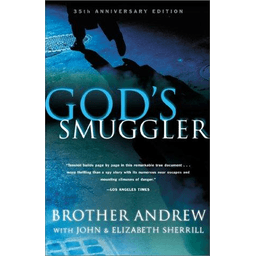 God’s SmugglerThe Dutch missionary’s 1967 memoir about driving a blue Volkswagen Beetle full of Bibles past Soviet border guards - and the prayer that became a generation’s shorthand for trusting God in impossible places.
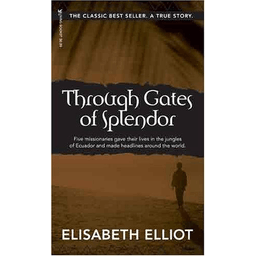 Through Gates of SplendorElisabeth Elliot’s account of five young missionaries killed reaching the Waorani of Ecuador in 1956 - the book that sent a generation toward the mission field, told by one of the widows.
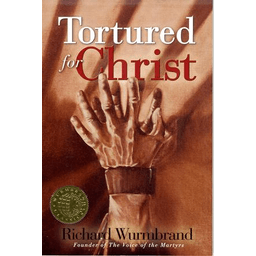 Tortured for ChristThe Romanian pastor’s 1967 account of fourteen years in communist prisons - written in three days after his release, and the book that launched Voice of the Martyrs.
 JoniJoni Eareckson Tada’s account of the diving accident that left her a quadriplegic at seventeen - and the long, unglamorous climb out of despair that followed - told without flinching and without tidy answers.
 Just As I AmBilly Graham’s own account of a North Carolina farm boy who became the twentieth century’s best-known evangelist - the crusades, the presidents, and the doubts in between.
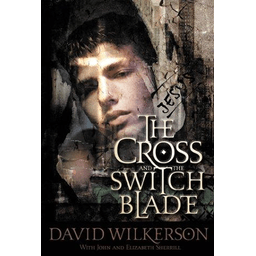 The Cross and the SwitchbladeThe skinny country preacher who left rural Pennsylvania for the gang-run streets of 1950s New York - and the conversion of switchblade-carrying gang leader Nicky Cruz that turned one man’s hunch into a worldwide ministry.