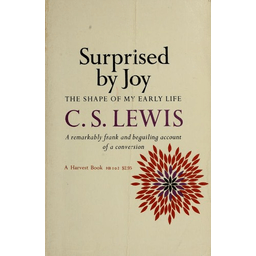
- Starting price
- ~$15 paperback
- Free tier
- No
- Platforms
- Print · Kindle · Audiobook
- Developer
- HarperOne
- Launched
- 1955
- Updated
- May 31, 2026
The verdict
Surprised by Joy is the story behind the storyteller - Lewis explaining, in his own words, how the most influential Christian writer of the 20th century spent half his life as an atheist and what finally changed his mind. It is not a full memoir and it is not an argument; it is the map of one man's interior journey, organized around a recurring pang of longing he calls Joy. Read it after Mere Christianity, not before, and read it slowly.
Try Surprised by Joy ↗Opens cslewis.com
Surprised by Joy is the book people reach for when they have read C.S. Lewis and want to know where he came from. It is his spiritual autobiography - published in 1955, more than a decade after the wartime radio talks that made him famous - and it answers a question every reader of Mere Christianity eventually asks: how did the man who wrote the great modern defense of the faith spend the first half of his life convinced there was no God at all? Lewis tells that story himself, as only a literature don who loved language could.
The book is not a tell-all. It is not a complete life story. It does not march year by year through everything that happened to him. Lewis is explicit about the boundary: he is writing the story of his conversion and nothing more, the path by which a hard-shelled atheist was brought, slowly and against his own preferences, to belief. Births, deaths, friendships, the whole texture of a life - they appear only when they bear on that one thread. Readers expecting a conventional memoir sometimes feel the omissions. Readers who want the interior story get exactly what they came for.
The organizing idea - and the thing that gives the book its title - is what Lewis calls Joy. He does not mean happiness, and he does not mean pleasure. He means a specific, recurring stab of intense longing, an ache for something he could never quite name, triggered in childhood by a toy garden, a few lines of Norse myth, the idea of autumn. The German Romantics had a word for it, Sehnsucht, and Lewis spends the book tracing where that longing came from, what he mistook it for, and where it was finally pointing. It is a quiet, inward, sometimes bookish autobiography - and for the right reader it is the most illuminating thing Lewis ever wrote about himself.
✓ The good
- The definitive first-person account of Lewis's conversion - there is no better source on how the author of Mere Christianity actually came to faith than Lewis explaining it himself
- The concept of Joy (Sehnsucht) is one of Lewis's most original and durable ideas - the book is the fullest place he ever develops it, and readers across traditions find it names something they have felt
- Prose that is among the finest Lewis wrote - the childhood chapters in particular are some of the most vivid descriptive writing in 20th-century English memoir
- Honest about his atheism - Lewis does not caricature his unbelieving years or his unbelieving self; he treats the atheist he used to be with real intellectual seriousness
- A window into a remarkable mind being formed - the books, tutors, and arguments that shaped Lewis are laid out in detail any reader who loves reading will recognize
- Short and self-contained - around 240 pages, and it does not require you to have read anything else by Lewis first (though it rewards those who have)
- Reads beautifully aloud - like most of Lewis, the sentences were built for the ear, and the audiobook holds up
✗ Watch out
- Selective by design - it is heavy on childhood, schooling, and reading, and comparatively light on his adult life, his friendships, and the war; readers wanting a full biography will feel the gaps
- Stops early - the book ends essentially at his conversion in his early thirties, so his later fame, his marriage to Joy Davidman, and his most famous decades are almost entirely absent
- Dense with literary and Oxford references - Lewis name-drops authors, schools, and books constantly, and a reader without that background will hit passages that assume more than they know
- "Joy" is a specific technical term - Lewis uses the word in a precise, unusual sense, and it takes some patience to keep his meaning separate from the everyday one
- Slow in places - the long sections on his boarding-school years and tutors are detailed and unhurried, and a reader who wants the conversion story quickly may find the pacing patient to a fault
Best for
- Readers of Mere Christianity who want to know how Lewis got there
- Anyone drawn to the idea of longing as a clue to meaning
- Lovers of well-made English prose and literary memoir
- Believers and skeptics curious how a serious atheist changed his mind
Avoid if
- You want a complete cradle-to-grave biography of Lewis
- You want his marriage and later life - that story is told elsewhere
- You want an apologetic argument rather than a personal narrative
- You bounce off dense literary references and unhurried mid-century pacing
What Surprised by Joy is
Surprised by Joy is C.S. Lewis's spiritual autobiography, published in 1955 and subtitled "The Shape of My Early Life." It is around 240 pages and has a deliberately narrow subject: not Lewis's whole life, but the inner story of how he lost the faith of his childhood, spent his twenties as a convinced atheist, and was drawn - through reading, argument, friendship, and an unshakable experience of longing - first to belief in God and finally to Christianity. He came to theism in his late twenties and to Christianity a couple of years later, becoming a member of the Church of England, the tradition he stayed in for the rest of his life.
The book is built around what Lewis calls Joy: a sharp, fleeting desire for something beyond the world, first felt in childhood and recurring throughout his life. Much of the narrative is the story of that longing - what set it off, the wrong places he looked for its source, and the slow recognition of what it was actually pointing toward. It is a memoir of the interior life rather than the external one, written by one of the century's finest prose stylists about the years before anyone had heard of him.
Why readers reach for Surprised by Joy
Most conversion stories are told either as testimony - emotional, immediate, light on the thinking - or as argument, where the personal details are just scaffolding for a case. Lewis does neither. He gives you the actual interior process: the books that unsettled him, the tutor who taught him to reason ruthlessly, the friends who kept poking holes in his unbelief, and underneath all of it the recurring ache of Joy that no atheist account of the world could explain. It is a conversion narrated by someone who refused to let himself off the intellectual hook, and who is just as careful describing the atheist he was as the believer he became.
That care is why the book travels across traditions. Lewis is not writing to recruit you into a denomination - he barely discusses church at all, and what little he says about his own move into the Church of England he reports as plain personal fact rather than as a recommendation. Readers from very different backgrounds find the same thing in it: an unusually honest account of how a thoughtful, stubborn person can be moved, slowly and against his own resistance, from unbelief to belief. The story is Lewis's own, and he tells it as his own.
Joy (Sehnsucht): the longing at the center of the book
The whole book turns on a single experience Lewis calls Joy, and it is worth understanding before you start because he uses the word in a precise, unusual sense. He does not mean happiness or pleasure or contentment. He means a sudden, piercing stab of desire for something he cannot name - an ache that is itself somehow more desirable than any ordinary satisfaction. He first felt it as a small child looking at a toy garden his brother had made in the lid of a biscuit tin, then again reading a scrap of Norse poetry, then at the bare idea of "Autumn." The German Romantics called it Sehnsucht. It comes unbidden, it never lasts, and no object in the world ever turns out to be the thing it was reaching for.
Lewis builds the autobiography around chasing this longing to its source. For years he looked in the wrong places - in aesthetic experience, in the occult, in a kind of refined mood-hunting - and each time the thing he grasped turned out to be only an echo of Joy. The slow recognition that the longing pointed past the world rather than to anything inside it is the spine of his conversion, and it later became one of his most repeated arguments: that a desire no earthly thing can satisfy is itself evidence we were made for something beyond the earth. Readers across every tradition report the same jolt of recognition - Lewis has named a thing they had felt their whole lives and never had a word for.
The atheist years, taken seriously
A large stretch of the book is the story of Lewis's unbelief, and one of its quiet strengths is that he does not caricature it. He explains exactly why the young Lewis was an atheist - a universe that looked vast, cold, and indifferent; the sense that religion was wishful thinking; the influence of a brilliant, hard-minded tutor he calls the Great Knock, who trained him to demand evidence and tear loose reasoning apart. He does not present the atheist he was as a fool waiting to be corrected, but as a serious person holding a serious position for serious reasons.
That honesty is what makes the turn convincing. Because Lewis takes his unbelief seriously, its long erosion carries weight: the discovery that the writers he most admired were nearly all Christians, the friends (Tolkien among them) who would not let his objections stand, the dawning sense that his atheism could not account for the very longing that drove his inner life. He describes his final surrender to belief in God in famously reluctant terms - he calls himself the most dejected and reluctant convert in all England - and the reluctance is the point. This is not a man talked into something he wanted to believe. It is a man cornered, step by step, into believing something he had spent years resisting.
The making of a mind: childhood, books, and the shape of a life
Before it is a conversion story, Surprised by Joy is a portrait of how a particular imagination was formed, and the early chapters are some of the finest descriptive writing Lewis ever did. He describes the rambling old house full of books he grew up in, the early loss of his mother, the misery of an English boarding school he hated, and above all the discovery of myth, fairy tale, and the northern legends that lit up his inner world. For anyone who loves reading, these chapters are a deep pleasure - Lewis is describing the exact experience of a child falling permanently in love with books and stories.
This is also where the book's density shows. Lewis assumes a reader at home in English literature and early-20th-century schooling: he names authors, schools, and titles freely, and an unprepared reader will hit passages that lean on more background than they have. It is worth pushing through. The childhood material matters because the longing Lewis is tracing was first kindled here, in a biscuit-tin garden and a few lines of Norse verse - so the forming of the imagination and the story of the conversion turn out to be the same story told from two ends.
Pricing
Paperback
~$15
The standard HarperOne edition. The copy most readers buy and the one quotations are usually keyed to.
Kindle
~$12
Searchable and highlight-syncs across devices - handy for a book this quotable. Roughly tracks the paperback price.
Audiobook
~$18
Multiple narrations exist; Lewis's prose was built for the ear and reads aloud as well as anything he wrote.
Used / secondhand
~$4 and up
Earlier paperback printings turn up cheaply at library sales and used shops - fine if you do not need a current edition.
Surprised by Joy is not free. A new HarperOne paperback runs around fifteen dollars - call it the everyday default - and is the edition most quotations in print are keyed to. Used copies of earlier printings turn up at library sales and secondhand shops for a few dollars, which is how a lot of readers acquire their first one.
The Kindle edition runs a little under the paperback, roughly twelve dollars, and the highlighting syncs across devices - genuinely useful for a book this quotable, since readers tend to mark the passages about Joy heavily. The audiobook runs around eighteen dollars or comes with a membership; Lewis's prose was written for the ear and the descriptive childhood chapters in particular reward being heard rather than skimmed.
There is no elaborate edition ladder here the way there is for Mere Christianity - no widely sold annotated study edition, no gift hardcover that everyone reaches for. For most readers the choice is simply paperback versus ebook versus audio, and it comes down to how you like to read. The paperback is the balanced default and the copy you will mark up and return to.
If you are buying Lewis for the first time, note the reading order: Surprised by Joy makes far more sense after Mere Christianity than before it. As a gift for someone who has not read Lewis at all, the introduction usually lands better than the autobiography.
Where Surprised by Joy falls behind
Not a full biography. Lewis tells you in the first pages that he is writing the story of his conversion and nothing else, and he keeps that promise strictly. Whole regions of his life - his service and wounding in the First World War, the central friendships, the texture of his Oxford career - appear only in passing or not at all. If you want the complete life, this is not the book; a full biography is. Surprised by Joy is the inner story, deliberately narrow.
Stops at the conversion. The narrative essentially ends in Lewis's early thirties, at the moment he becomes a Christian. That means his most famous decades - the wartime broadcasts, the Narnia books, his late marriage to Joy Davidman and the grief that produced A Grief Observed - are outside its frame entirely. Readers who come hoping to learn about the Lewis they already know from those works can be surprised by how early the book leaves him.
Dense literary and Oxford references. Lewis writes as the literature don he was, and he assumes a reader fluent in English letters and the early-20th-century school system. Authors, titles, and institutions go by quickly and without much explanation. Most are not essential to the thread, but a reader without that grounding will hit stretches that feel like inside baseball.
The technical sense of "Joy." The book's central word does not mean what it means in ordinary speech, and Lewis only gradually pins down what he does mean by it. A reader who keeps importing the everyday sense - joy as cheerfulness or delight - will be confused for a while. It rewards patience, but the key term takes some work to hold steady.
Patient, unhurried pacing. The long passages on boarding school, tutors, and reading are detailed and slow by design. A reader who wants the conversion story to arrive quickly may find the early going leisurely. The payoff is real, but the book asks you to travel at its pace.
Surprised by Joy vs. Mere Christianity vs. Confessions
These three are the natural cluster for a reader interested in Lewis and in conversion stories, and they do genuinely different jobs. Mere Christianity (Lewis, 1952) is the argument - the case for the faith, with Lewis's own beliefs in the foreground and his personal story almost entirely offstage. Surprised by Joy (Lewis, 1955) is the story behind that argument - the same author turning inward to explain how he came to hold the faith he defends in the earlier book. Confessions (Augustine, around 400) is the ancient archetype both stand in the shadow of: the original spiritual autobiography, a fourth-century North African bishop narrating his own long, restless road to conversion, addressed throughout to God.
Different strengths. Mere Christianity is the one to start with if you want to know what Lewis believed and why he found it persuasive. Surprised by Joy is the one to read next, when the question becomes how he personally got there and what the journey felt like from inside. Confessions is the deeper and far older well - more theological, more searching, more demanding - and it is the book that essentially invented the genre Lewis is working in. If you read the three in sequence, you move from the argument, to the man behind it, to the fountainhead of the whole tradition of telling these stories at all.
All three are read widely across Christian traditions. Lewis stays on shared ground in both his books and reports his own move into the Church of England as personal fact rather than advocacy. Augustine is claimed and read across Catholic, Orthodox, and Protestant traditions alike as one of the foundational Christian writers. None of the three is the property of a single communion.
The bottom line
Surprised by Joy is the book to read when you have finished Mere Christianity and want to know who was talking. It is Lewis's own account of how a reluctant, hard-minded atheist was drawn back to belief - organized not around an argument but around a lifelong ache he called Joy - and it is written in some of the best prose he ever produced. It is selective, it stops early, and it assumes a reader who loves books. But for anyone who wants the interior story behind the most-read Christian author of the last century, told in his own voice, there is nothing else quite like it.
Alternatives to Surprised by Joy
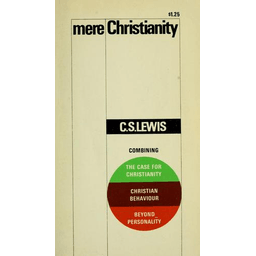 Mere ChristianityLewis's case for the faith and the natural book to read first - Surprised by Joy is the story of how he came to believe it.
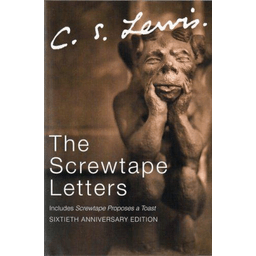 The Screwtape LettersLewis's satirical letters from a senior demon to a junior one - the witty, imaginative side of the same author.
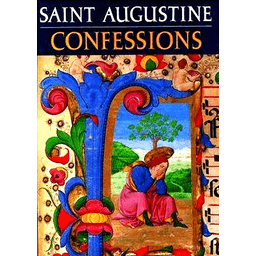 ConfessionsAugustine's fourth-century spiritual autobiography - the conversion-memoir archetype that Surprised by Joy stands in the line of.
 The Reason for GodTim Keller's modern apologetic in the Lewis tradition - for the reader who wants an argument rather than a memoir.
Frequently asked questions
What is Surprised by Joy actually about?
It is C.S. Lewis's spiritual autobiography, focused narrowly on his conversion. He traces how he lost his childhood faith, spent his twenties as an atheist, and was drawn - through reading, argument, friendship, and a recurring longing he calls Joy - back to belief in God and then to Christianity. It is the inner story of how he came to faith, not a full life story.
What does Lewis mean by "Joy"?
Not happiness or pleasure. Lewis uses the word in a precise, technical sense: a sudden, intense longing for something he cannot name, an ache that feels more desirable than any ordinary satisfaction. The German Romantics called it Sehnsucht. Much of the book traces that longing to its source, and the term takes a little patience to hold steady against its everyday meaning.
Should I read this before or after Mere Christianity?
After. Mere Christianity lays out what Lewis believed and why he found it persuasive; Surprised by Joy tells the personal story of how he came to hold those beliefs. The autobiography lands much better once you already know the author, so most readers are best served starting with Mere Christianity.
Is Surprised by Joy a complete biography of C.S. Lewis?
No, and Lewis says so up front. He is writing only the story of his conversion, so large parts of his life - his service in the First World War, his closest friendships, his Oxford career - appear only in passing, and the book ends around his early thirties. His later fame, the Narnia books, and his marriage to Joy Davidman are outside its frame. For the full life you would need a dedicated biography.
Was C.S. Lewis Catholic, Protestant, or something else?
Lewis was a member of the Church of England (Anglican). In Surprised by Joy he reports his move from atheism to theism and then to Christianity as his own personal experience rather than as advocacy for any tradition. His books are read widely across Catholic, Protestant, Orthodox, and Latter-day Saint readers.
Is it a hard read?
The prose itself is clear and often beautiful, but it can be demanding. Lewis assumes a reader comfortable with English literature and early-20th-century schooling, so the literary and Oxford references come fast, and the pacing is patient - the sections on his boarding school and reading are detailed and unhurried. It rewards a slower, attentive read.
Where should I go after Surprised by Joy?
For Lewis specifically: The Screwtape Letters and The Great Divorce show his imaginative side, and A Grief Observed is the late, raw companion piece on loss. For the older tradition the book stands in, Augustine's Confessions is the foundational spiritual autobiography. For an argument-driven follow-up in Lewis's vein, Tim Keller's The Reason for God is a natural next step.
Sources & further reading
More Christian Biographies
 God’s SmugglerThe Dutch missionary’s 1967 memoir about driving a blue Volkswagen Beetle full of Bibles past Soviet border guards - and the prayer that became a generation’s shorthand for trusting God in impossible places.
 Through Gates of SplendorElisabeth Elliot’s account of five young missionaries killed reaching the Waorani of Ecuador in 1956 - the book that sent a generation toward the mission field, told by one of the widows.
 Tortured for ChristThe Romanian pastor’s 1967 account of fourteen years in communist prisons - written in three days after his release, and the book that launched Voice of the Martyrs.
 JoniJoni Eareckson Tada’s account of the diving accident that left her a quadriplegic at seventeen - and the long, unglamorous climb out of despair that followed - told without flinching and without tidy answers.
 Just As I AmBilly Graham’s own account of a North Carolina farm boy who became the twentieth century’s best-known evangelist - the crusades, the presidents, and the doubts in between.
 The Cross and the SwitchbladeThe skinny country preacher who left rural Pennsylvania for the gang-run streets of 1950s New York - and the conversion of switchblade-carrying gang leader Nicky Cruz that turned one man’s hunch into a worldwide ministry.