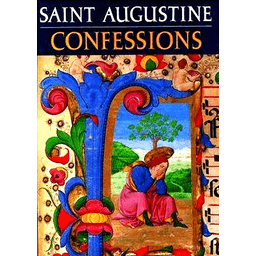
- Starting price
- Free (public domain); $10 print
- Free tier
- Yes
- Platforms
- Print · Kindle · Audiobook · Free PDF · Public domain
- Developer
- Various (Oxford Chadwick, Modern Library Ruden, Penguin, Hackett)
- Launched
- c. 400 AD
- Updated
- May 24, 2026
The verdict
Confessions has quietly become the one ancient Christian book almost every tradition still reads in common. The text is free in the public domain, but the translation you pick will quietly decide whether you finish it - and the Chadwick paperback at around ten dollars is the safest bet for most first-time readers.
Try Confessions ↗Opens ccel.org
Confessions has quietly become the shared inheritance of Western Christianity. Catholics, Lutherans, Reformed Protestants, Anglicans, Eastern Orthodox readers, and Latter-day Saints all draw on it - sometimes for different things, but always for something. Augustine writing in Hippo around 397-400 AD produced the first sustained spiritual autobiography in Western literature, and the conventions he invented (the inward gaze, the prayer addressed directly to God, the conversion-as-story arc) became the default mode for Christian self-writing for the next sixteen hundred years.
It is not an easy book. It does not move in a straight line. It does not stay autobiographical. It does not behave like a modern memoir at any point. The first nine books trace Augustine’s life from infancy through his mother Monica’s death; the final four turn into philosophical and exegetical essays on memory, time, and the opening chapter of Genesis. Many readers love Books 1-9 and bounce off Books 10-13 - which is exactly the wrong way to read the book Augustine actually wrote.
The good news is that Confessions is public domain. You can read it free at CCEL or Project Gutenberg right now. The harder question - the one this review spends real time on - is which translation to actually pick up. Henry Chadwick, Sarah Ruden, Garry Wills, and Maria Boulding each made very different choices, and the translation you start with will quietly determine whether the book lands for you or sits unfinished on the shelf.
✓ The good
- The foundational text of Western spiritual autobiography - every conversion memoir since 400 AD is downstream of this one
- Genuinely public domain - you can read a good translation free at CCEL, Gutenberg, or in dozens of Kindle editions
- Books 1-9 read like a novel - the pear-tree theft, the Milan garden, Monica’s death at Ostia are page-turners by any era’s standards
- The philosophical books (10-13) are still cited by working philosophers - his analysis of time in Book 11 is on most graduate philosophy syllabi
- Translation options for every reader - Chadwick for the balanced default, Ruden for the most jolting freshness, Boulding for prayer, Wills for crisp modern English
- Doctrinally shared ground - Catholic, Reformed, Lutheran, Orthodox, Anglican, and LDS readers all find Augustine engaging on grace, will, memory, and time
- Short by classic standards - most translations run 300-350 pages, far less daunting than Calvin’s Institutes or Aquinas’s Summa
✗ Watch out
- The last four books are a hard pivot - readers expecting more autobiography often stall in Book 10
- Some translations (especially older ones) are genuinely hard going - the wrong edition can kill the book for a new reader
- Cultural references assume a fourth-century North African Roman context - footnotes help, but the learning curve is real
- Free public-domain editions are usually the Pusey or Pilkington Victorian translations - readable, but stiff compared to modern work
- Augustine’s prose style is deeply rhetorical - long sentences, scriptural allusions stacked on allusions, not always linear
Best for
- Readers ready for one foundational pre-modern Christian book
- Anyone interested in the history of conversion narratives
- Philosophy students working on time, memory, or the will
- Pastors, teachers, and small-group leaders building a classics shelf
Avoid if
- You want a quick devotional read you can finish in a weekend
- You bounce off long philosophical asides inside narrative books
- You prefer modern memoir conventions and dislike direct address to God
- You want a strictly verse-by-verse Bible study rather than a theological autobiography
What Confessions is
Confessions is a thirteen-book theological autobiography written by Augustine of Hippo around 397-400 AD, addressed throughout in the second person to God. Augustine, then in his mid-forties and a bishop in Roman North Africa, narrates his life from infancy through his conversion in a Milan garden at age 31, his baptism by Ambrose, his mother Monica’s death at Ostia shortly after, and then - unexpectedly - turns to philosophical meditations on memory, on time, and on the creation account in Genesis 1.
The Latin title “Confessiones” means both confession of sin and confession of praise, and Augustine deliberately uses the word in both senses on every page. It is not a memoir in any modern sense; it is a prayer that happens to contain a life story. That hybrid form - narrative folded inside praise folded inside theology - is what gives the book its strange power and what makes the back four books inseparable from the front nine.
Why every Christian tradition still reads Augustine
Confessions is one of the very few pre-modern Christian books that essentially every Western tradition still claims a stake in. Catholic readers find in Augustine the doctor of grace and the architect of much of medieval theology. Lutheran and Reformed readers see the man Calvin quoted more than any other and the source of much of the Protestant doctrine of grace. Anglicans inherit him through the prayer book tradition. Eastern Orthodox readers engage him more cautiously - he is a Western Father, with all that implies - but still read him on memory, time, and prayer. Latter-day Saint readers often find Augustine on the will, on the restlessness of the human heart, and on the experience of conversion deeply resonant even where they differ from him on later metaphysical questions.
The book survives all these readings because Augustine is doing something more basic than systematic theology. He is showing what it is like, from the inside, to be a human being who is finally honest with God. Different traditions take different things from that, and the text is generous enough to hold them all.
Books 1-9: the conversion narrative that invented the genre
The first nine books are Augustine’s life story - infancy in Thagaste, a restless education at Carthage, the famous theft of pears from a neighbor’s tree (Book 2), the years as a Manichee, the long sexual restlessness (“grant me chastity and continence, but not yet”), the move to Rome and then to Milan, the encounter with Ambrose’s preaching, the wrestling with Neoplatonism, and finally the moment in the Milan garden in 386 AD when he hears a child’s voice chanting “tolle, lege” - take up and read - opens Paul’s letter to the Romans at random, and is converted. Book 9 ends with Monica’s death at Ostia and one of the most luminous passages of mystical prose ever written, the vision they share at the window.
This is the section that invented Western autobiography. Rousseau borrowed the title. Thomas Merton’s Seven Storey Mountain, C. S. Lewis’s Surprised by Joy, every contemporary Christian conversion memoir - they all sit downstream of Books 1-9. The structural innovation is that Augustine refuses to separate the story of his life from prayer to God; the whole narrative is addressed to God in the second person, which gives the book an inwardness no Roman biography before it had attempted.
Books 10-13: memory, time, and Genesis 1
Then the book pivots. Book 10 turns into a meditation on memory - what it is, how it works, where God is found in it - that remains a touchstone for philosophers of mind. Book 11 contains the analysis of time (“What then is time? If no one asks me, I know; if I wish to explain it to one who asks, I know not”) that every modern philosophy of time still reckons with. Books 12 and 13 are sustained exegesis of the opening of Genesis, where Augustine works through creation, the formless deep, light, and the seven days as both literal history and figurative theology.
Many first-time readers stall here, expecting more autobiography. That’s a mistake. Augustine’s argument is that the inner self of Books 1-9 cannot be understood apart from the questions of Books 10-13 - memory is where the self is stored, time is the dimension the self exists in, and creation is the act that made the self possible. The book is one argument, not two genres stapled together. Skipping Books 10-13 is like reading the first half of a great novel.
The translation decision: Chadwick vs. Ruden vs. Boulding
Pick the wrong translation and Confessions stays unfinished on the shelf. Henry Chadwick’s Oxford World’s Classics edition (1991) is the balanced default - accurate, readable, lightly footnoted, the version most college courses assign. If you have no other information and just want one to start with, this is it, and at around ten dollars it is also the cheapest serious option. Sarah Ruden’s 2017 Modern Library translation is the most exciting recent attempt: she deliberately reaches past centuries of pious English to render Augustine’s Latin with startling immediacy - “domine” becomes “Master,” the rhetoric is roughed up, and the book suddenly sounds like a real person wrote it. Some readers love it; some find it jarring.
Maria Boulding’s New City Press translation is warmer and more contemplative - the one to choose if you want to pray Confessions rather than study it. Garry Wills produced an unusually crisp modern English version (and translated individual books - the Childhood, Sin - separately for Penguin), good for readers who prize tightness. The Pusey (1838) and Pilkington (1886) translations are what you will get free on Kindle and CCEL; they are complete and accurate but stiff Victorian English, which is exactly the thing that has killed Confessions for many otherwise willing readers. Spend the ten dollars on Chadwick.
Pricing
Public domain editions
Free
CCEL, Project Gutenberg, Internet Archive, and most Kindle freebies carry the Pusey (1838) or Pilkington (1886) translations. Stiff Victorian English, but the full text and zero cost.
Chadwick (Oxford World’s Classics)
~$10
Henry Chadwick’s 1991 translation - the balanced default. Accurate, readable, lightly footnoted, and the version most undergraduate courses assign. Best entry point for most first-time readers.
Ruden (Modern Library)
~$22
Sarah Ruden’s 2017 translation deliberately strips Confessions of its churchy English and renders Augustine’s Latin with startling immediacy. Polarizing, brilliant, the freshest read on the market.
Boulding (New City Press)
~$25
Maria Boulding’s translation is the one to choose if you want to pray the book rather than study it - warmer, more contemplative, with the addresses to God left in their original second-person intimacy.
Audible audiobook
~$18
Multiple narrated editions exist; the unabridged Simon Vance reading of the Chadwick text is the most-recommended audio version. ~12 hours of listening.
Norton Critical Edition
~$22
Carolyn Hammond’s translation with extensive critical essays, reception history, and contemporary scholarship. The version to own if you’re studying Augustine academically.
Confessions is public domain, which means it is genuinely free. The Pusey and Pilkington translations are out of copyright and widely available at CCEL, Project Gutenberg, the Internet Archive, and in dozens of free or near-free Kindle editions. If your budget is zero, you can still read the whole book in a serviceable translation today.
For a first-time reader, though, the Henry Chadwick Oxford World’s Classics paperback at around ten dollars is almost always the right call. It is the balanced default - accurate to the Latin, readable in modern English, lightly footnoted for the cultural context - and it is the version most undergraduate and seminary courses still assign. Most readers do not need anything more expensive than this.
Beyond Chadwick, the spend curve climbs. Sarah Ruden’s Modern Library translation runs around twenty-two dollars and is worth it if you want the freshest, most provocative rendering on the market. Maria Boulding’s New City Press edition runs around twenty-five dollars and is the one to buy if you intend to pray the book rather than analyze it. The Norton Critical Edition (Carolyn Hammond) is around twenty-two dollars and is the right pick for serious academic study.
Audiobook listeners have several solid options on Audible at around eighteen dollars or one credit; the unabridged Simon Vance reading of the Chadwick text is the most-recommended audio version and runs about twelve hours.
Where Confessions falls behind
The pivot at Book 10 loses readers. Anyone who picks up Confessions expecting a memoir all the way through hits the philosophical books and stalls. Augustine had reasons for the structure, but no modern editor would design a book this way, and the back four books are where most unfinished copies get put down.
The free editions are the wrong introduction. The Pusey and Pilkington translations that dominate the public-domain Kindle and CCEL space are stiff Victorian English, full of “thees,” “thous,” and inverted syntax. They are not bad translations - they are just from a different century’s prose conventions, and they make Augustine sound more remote than he is. Many readers who quit Confessions actually quit the Pusey translation, not the book.
Cultural context is genuinely demanding. Augustine assumes you know fourth-century Roman North Africa, Manichaeism, Neoplatonism, the social geography of Carthage and Milan, and the rhetorical training of a late-antique gentleman. Good editions footnote all of this - Chadwick and the Norton Critical Edition especially - but the learning curve is real, and readers used to contemporary Christian publishing’s frictionless prose will feel the difference.
Augustine’s sentences are long, allusive, and stacked with scriptural quotation. The book is not difficult in the way Aquinas is difficult - it is not technical - but it rewards slow reading. Anyone trying to power through twenty pages a night will probably miss most of what is happening on each page.
Confessions vs. Pilgrim’s Progress vs. Mere Christianity
These three are arguably the most-recommended pre-twentieth-century-and-mid-twentieth-century Christian classics in the English-speaking world, and they do quite different things.
Different strengths. Confessions is the first-person interior account - what it feels like to be a human being honestly addressing God, with conversion narrative, philosophy, and prayer braided together. Pilgrim’s Progress (Bunyan, 1678) is the allegorical journey - Christian leaves the City of Destruction, faces Apollyon, climbs the Hill Difficulty, and reaches the Celestial City. Mere Christianity (Lewis, 1952) is the broadcast apologetic - short, accessible chapters explaining shared Christian belief to a lay audience.
For new readers wanting one entry point, Mere Christianity is the easiest start - short chapters, modern English, no footnotes needed. Pilgrim’s Progress is the most narratively gripping. Confessions is the deepest and the most demanding - the one a serious reader returns to for decades. Most well-built Christian libraries include all three for exactly the reason that they cover different ground rather than competing for the same shelf.
The bottom line
Confessions is the foundational interior text of Western Christianity - the book that invented spiritual autobiography and still anchors how every major Christian tradition thinks about grace, time, memory, and the converted self. It is free in the public domain, but the translation you choose will quietly decide whether the book lands. For most first-time readers, spend the ten dollars on Henry Chadwick’s Oxford World’s Classics paperback; pick up Ruden later for freshness or Boulding for prayer. Then actually read all thirteen books, not just the first nine - the philosophical pivot is the point.
Alternatives to Confessions
 Pilgrim’s ProgressBunyan’s 1678 allegorical journey - the most narratively gripping pre-modern Christian classic in English. Reads like a novel, works for ages 12 and up.
 Mere ChristianityC. S. Lewis’s wartime BBC broadcasts on shared Christian belief. The easiest entry point to classic Christian thought - short chapters, modern English, no footnotes needed.
 Knowing GodJ. I. Packer’s 1973 modern classic on the attributes of God. The standard 20th-century Reformed devotional theology book, widely read across traditions.
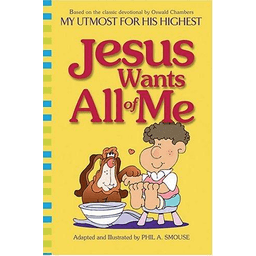 My Utmost for His HighestOswald Chambers’s daily devotional, compiled posthumously in 1927 - the most-read English-language daily devotional of the last century.
Frequently asked questions
Do I really need to read all thirteen books, or can I stop at Book 9?
You can stop at Book 9 and get a complete, moving conversion narrative - many readers do. But Augustine designed the book as one argument: the inner self of Books 1-9 is the thing that Books 10-13 then analyze through memory, time, and creation. Stopping at 9 is like reading the first half of a novel. Read all thirteen if you can.
Which translation should I actually buy?
For most first-time readers, Henry Chadwick’s Oxford World’s Classics paperback at around ten dollars is the right call - accurate, readable, and lightly footnoted. Choose Sarah Ruden (Modern Library) if you want the freshest modern English. Choose Maria Boulding (New City Press) if you want to pray the book rather than study it. Avoid starting with the free Pusey or Pilkington - Victorian prose kills the book for many new readers.
Is Confessions Catholic, Protestant, or Orthodox?
It predates all of those categories. Augustine wrote in 397-400 AD as a bishop in the undivided early church. Catholics, Lutherans, Reformed Protestants, Anglicans, and Orthodox readers all claim him in different ways, and Latter-day Saint readers also engage him on grace, will, and the restlessness of the human heart. Confessions is shared inheritance, not the property of one tradition.
How long does it take to read?
Most modern translations run 300-350 pages. A careful reader can finish it in roughly 12-18 hours of reading time, or about twelve hours on audiobook. Plan four to six weeks if you’re reading slowly with a study group; a couple of focused weekends if you’re reading straight through.
What is the famous “tolle, lege” scene?
In Book 8, in a garden in Milan in 386 AD, Augustine is weeping in spiritual crisis when he hears a child’s voice from a neighboring house chanting “tolle, lege” - take up and read. He picks up the letters of Paul, opens at random to Romans 13:13-14, and experiences his conversion. It’s one of the most famous conversion scenes in Western literature.
Is the philosophical Book 11 on time really that important?
Yes. Augustine’s analysis of time - past as memory, future as expectation, present as attention, all held together in the mind - is still cited by working philosophers and physicists. It’s one of the founding texts of the philosophy of time, and it sits inside a prayer to God, which is part of what makes it so unusual.
Is there a good free audio or text version?
Yes. CCEL (the Christian Classics Ethereal Library) hosts the Pilkington translation in clean HTML; Project Gutenberg has the Pusey. LibriVox has free public-domain audio recordings. The free options are complete and accurate - they’re just in older English. If the Victorian prose bounces you, the ten-dollar Chadwick paperback solves the problem.
Sources & further reading
More Christian Classics (Pre-1900)
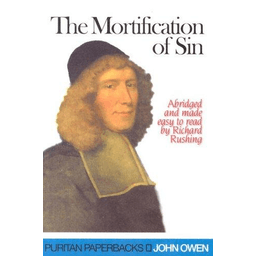 The Mortification of SinThe 1656 Puritan handbook on fighting indwelling sin - still the most rigorous spiritual diagnostic in print, four centuries on.
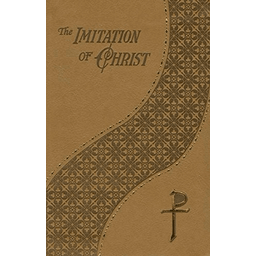 The Imitation of ChristA 600-year-old devotional that has outsold almost every Christian book ever written - and still rearranges the modern reader who is willing to sit with it.
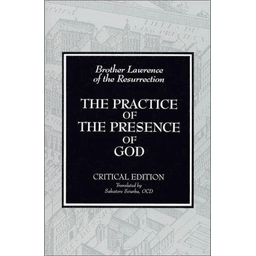 The Practice of the Presence of GodA 17th-century Carmelite kitchen monk’s short, plain talks and letters on staying aware of God in the middle of ordinary work - the smallest devotional classic that keeps outlasting bigger books.The Treasury of DavidSpurgeon spent two decades on a verse-by-verse commentary on all 150 Psalms - his own exposition, centuries of collected commentators, and notes for preachers - and the result is still the first book many turn to when they open the Psalter.All of GraceSpurgeon's short 1886 book explaining salvation by grace through faith - written for the anxious and the seeking, given away by the millions, and still the booklet people press into a searching friend's hands.The Bruised ReedRichard Sibbes built an entire book out of half a verse - "a bruised reed he will not break" - and four centuries on it is still the tenderest page the Puritans ever wrote.