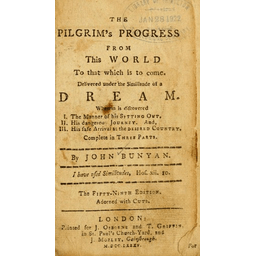
- Starting price
- Free (public domain); $7.99 print
- Free tier
- Yes
- Platforms
- Print · Kindle · Audiobook · Free PDF · Public domain everywhere
- Developer
- Various publishers (Penguin Classics, Crossway, Banner of Truth, Christian Focus)
- Launched
- 1678 (Part I)
- Updated
- May 24, 2026
The verdict
The Pilgrim’s Progress is the rare book that has earned its reputation the hard way - by being read, loved, and re-read by ordinary Christians across four centuries and almost every tradition. The 17th-century prose is genuinely demanding, but the allegory itself is so vivid and so generous that even one careful pass tends to mark a reader for life.
Try The Pilgrim’s Progress ↗Opens ccel.org
The Pilgrim’s Progress has quietly become the rare Christian book that nearly every tradition still owns. Catholics, Orthodox, Reformed, Wesleyan, Pentecostal, Baptist, Anglican, and Latter-day Saint readers have all read it, quoted it, and pressed it into the hands of their children. For roughly two and a half centuries after its 1678 publication it was, by most counts, the most-published book in the English language after the Bible itself - a statistic that is almost impossible to overstate.
It is also, on the surface, a very strange book. It doesn’t teach systematically. It doesn’t argue. It doesn’t modernize. It just walks - a man named Christian, with a burden on his back, leaving the City of Destruction and heading toward the Celestial City, getting stuck in swamps and locked in dungeons and ambushed in fairs along the way. John Bunyan wrote it in a Bedford jail, where he had spent twelve years for the crime of preaching without a license, and the book has the feeling of something hammered out by a man who had no other materials but Scripture, memory, and time.
What this review tries to do is tell you, honestly, what you’re signing up for when you open it in 2026 - what edition to pick, what to expect from the prose, which characters and scenes are the ones people still talk about, and whether the famous Part II (the journey of Christian’s wife Christiana and her children) is worth reading after Part I. The short version: yes, it is still worth it, and yes, the modern edition is a perfectly honorable place to start.
✓ The good
- Universal Christian appeal - read with affection across Catholic, Orthodox, Reformed, Wesleyan, and Latter-day Saint readers for nearly 350 years
- Allegory that actually works - the Slough of Despond, Vanity Fair, the Valley of the Shadow, and Doubting Castle have become part of common Christian vocabulary for good reason
- Unforgettable supporting cast - Faithful, Hopeful, Pliable, Mr. Worldly Wiseman, Apollyon, and Giant Despair are written with the precision of a great novelist, not a tract writer
- Drenched in Scripture - nearly every paragraph echoes a verse, which is why it has functioned as a kind of devotional alongside the Bible for centuries
- Public domain - free PDF, free audio, free Kindle, free everything; no excuse not to try it
- Part II rewards the patient - Christiana’s family pilgrimage adds tenderness, community, and a more domestic spirituality the first half lacks
- Re-reads beautifully - a book most people grow into across decades rather than finish in a week
✗ Watch out
- Genuinely difficult 17th-century English - the original syntax, vocabulary, and punctuation are a real wall for many modern readers
- Theological flavor is unmistakably Puritan - readers from other traditions can still benefit, but expect a Reformed Protestant frame on conversion, assurance, and the moral life
- Pacing is uneven - long stretches of dialogue between Christian and various interlocutors can feel like lectures wedged into the story
- Some allegorical figures haven’t aged well - a few moments around Roman Catholicism and Judaism reflect 17th-century English Protestant polemics and read awkwardly today
- Part II is less famous for a reason - lower stakes and a slower arc than Part I, even when it eventually pays off
- Modernized editions vary widely in quality - some flatten the music of the original badly (yet)
Best for
- Readers willing to slow down for older prose
- Anyone wanting one classic spiritual allegory in their life
- Parents and grandparents reading aloud to older children
- Long-time Christians ready to re-meet familiar metaphors
Avoid if
- You bounce off any pre-1900 English on principle
- You want practical step-by-step Christian living advice
- You expect a fast-moving plot or modern character arcs
- You’re looking for an academic theology textbook
What The Pilgrim’s Progress is
The Pilgrim’s Progress is an allegorical prose narrative - a story in which every character, place, and object stands for something in the Christian life. Part I (1678) follows a man named Christian as he flees the City of Destruction with a burden on his back, crosses the Slough of Despond, climbs the Hill Difficulty, fights the demon Apollyon, walks the Valley of the Shadow, endures Vanity Fair, escapes Doubting Castle, and finally reaches the Celestial City. Part II (1684) follows his wife Christiana, their four sons, and their friend Mercy as they take the same road later, with a guide named Great-heart escorting them past most of the same dangers.
Bunyan was a 17th-century English tinker turned Puritan Baptist preacher who spent twelve years in Bedford jail for refusing to stop preaching without a Church of England license. He wrote Part I during that imprisonment, drawing on the King James Bible, his own conversion struggles, and the rough texture of English working life. The book is short - most editions run 250 to 350 pages - but it has been translated into more than 200 languages and is, by widely accepted counts, the most-published English book of all time apart from the Bible.
Why readers across nearly every tradition still pick it up
The single biggest reason The Pilgrim’s Progress has outlived its century is that it gives the Christian life a shape you can actually picture. Most spiritual writing is abstract - talk of grace, sanctification, perseverance, temptation. Bunyan turns all of that into terrain. You can point to the spot on the map where Christian almost gave up. You can name the giant who locked him in the dungeon. You can describe the fair where Faithful was killed. Once a reader has those images, ordinary Christian experience becomes legible in a new way.
The second reason is harder to measure but easier to feel: the book is generous. Bunyan is a Puritan, and the doctrinal weather of the book is unmistakably 17th-century Reformed, but he writes about doubt, failure, fear of death, and the loneliness of faith with a tenderness that crosses traditions. That’s why Catholic priests have quoted it from pulpits, why C.S. Lewis loved it, why John Wesley abridged it, why African and Asian missionaries translated it before they translated almost anything else, and why it still turns up in Latter-day Saint reading lists. It is, very nearly, the closest thing English-speaking Christianity has to a shared folk epic.
The allegorical journey: from the City of Destruction to the Celestial City
The spine of the book is geography. Christian begins in the City of Destruction, a place doomed to burn, and is told by a man named Evangelist to flee toward a distant light. From there, every step is a place: the Slough of Despond (a marsh of discouragement), the Wicket Gate (the narrow entry to the way), the Interpreter’s House (a series of vivid lessons), the Cross (where the burden falls off his back), the Hill Difficulty, the Palace Beautiful, the Valley of Humiliation, the Valley of the Shadow of Death, Vanity Fair, the Hill Lucre, the Doubting Castle ruled by Giant Despair, the Delectable Mountains, the Enchanted Ground, the country of Beulah, and finally the river crossing into the Celestial City.
What makes this structure so durable is that it isn’t a checklist - it’s a map of recurring experiences. A reader in 2026 who has never opened a Puritan tract still knows, intuitively, what it means to be stuck in the Slough of Despond, or to wander on the Enchanted Ground, or to be locked up by Giant Despair. The journey shape is one of the great storytelling inventions of English literature, and it has quietly seeded the language of pastors, songwriters, novelists (Hawthorne, Twain, Lewis), and ordinary believers ever since.
The unforgettable supporting cast: Faithful, Hopeful, Pliable, Apollyon, Giant Despair
For a book classified as allegory, The Pilgrim’s Progress is full of people who feel astonishingly alive. Pliable starts the road with Christian but turns back at the first swamp. Mr. Worldly Wiseman, the smooth advice-giver, sends Christian on a detour that nearly crushes him. Faithful, his first true companion, is martyred at Vanity Fair in one of the book’s most piercing chapters. Hopeful, who takes Faithful’s place, is the quieter, gentler counterweight to Christian’s heaviness. Talkative is the man who can discuss religion endlessly without ever doing it. Ignorance is the cheerful pilgrim who walks almost the whole road and is turned away at the last gate.
And then there are the antagonists. Apollyon, the dragon Christian fights in the Valley of Humiliation, is one of the most genuinely terrifying figures in English literature. Giant Despair, who imprisons Christian and Hopeful in Doubting Castle and beats them with a crab-tree cudgel, is more psychologically exact than most modern depictions of depression. The judges of Vanity Fair - Lord Hate-good, the jury of Mr. Malice, Mr. Love-lust, Mr. Live-loose - read like a sketch of every show trial in human history. These characters are why the book never feels like a sermon: they’re too well drawn, and Bunyan clearly enjoyed writing them.
Classic vs. modernized: which edition should you actually buy
This is the practical decision most new readers wrestle with, and there’s a genuine trade-off. The original 1678 text is in early modern English - not as far back as Shakespeare, but further than the King James Bible feels to most readers today. Sentences are long. Vocabulary is sometimes archaic (“thou,” “doth,” “hast,” but also harder words like “notwithstanding,” “carriage” meaning conduct, “conversation” meaning lifestyle). The marginal Scripture references Bunyan added are part of the experience but can interrupt the flow. The Banner of Truth and Penguin Classics editions preserve all of this and are the right choice for readers who want the music of the prose intact.
Modernized editions - the Christian Focus updated text, the Crossway illustrated edition, several recent paraphrases - lower that wall. They’re a reasonable on-ramp, especially for teenagers, family read-alouds, or anyone who has tried the original and stalled. The cost is real: some flatten the cadence badly, and a few quietly soften theological edges. The honest recommendation is to start with whichever edition you’ll actually finish, and to know that the audiobook (skilled narrators handle the older prose better than your inner ear will) is a third path that many readers don’t consider but should.
Pricing
Free editions
$0
Full text at CCEL, Project Gutenberg, and free Kindle - the book has been public domain everywhere for over a century
Paperback
~$7.99
Standard mass-market paperbacks from Penguin Classics, Dover, and others - cheap, durable, fine for a first read
Hardcover (Banner of Truth)
~$22
The classic Reformed-press edition; preserves the original text with the marginal Scripture references Bunyan wrote in
Audible audiobook
~$15
Multiple narrations; a good first encounter for readers who find the prose hard on the page
Illustrated edition
~$18
Editions with classic woodcut or watercolor art - a beautiful way to read aloud to children or to gift
Modernized English edition
~$12
Updated-language editions from publishers like Christian Focus or Crossway - lower the prose barrier, with some loss of music
The Pilgrim’s Progress is fully public domain, which means the cheapest serious edition you can find is also a perfectly legitimate one. Full text is free at CCEL, Project Gutenberg, and as a no-cost Kindle download. There is genuinely no financial reason not to try it.
A standard paperback (Penguin Classics, Dover, various Christian publishers) runs around $7.99 - useful if you want to mark it up. The Banner of Truth hardcover at around $22 is the durable shelf edition with Bunyan’s original marginal Scripture references intact, and it’s the one most pastors recommend if you only want to own one copy for life.
Audible editions cluster around $15 and are often the unlock for readers who find the prose hard on the page - a good narrator turns the long sentences back into the spoken cadences Bunyan wrote them in. Illustrated editions (around $18) are the right gift for a confirmation, baptism, or graduation. Modernized-English editions around $12 are the on-ramp for younger readers or anyone returning after a stalled attempt.
Most readers do not need more than one edition. The reasonable pattern is: start with whatever’s free, fall in love (or don’t), and only then decide whether a nicer hardcover is worth $22 to you.
Where The Pilgrim’s Progress falls behind
Pacing for the modern attention span. The book is short by 17th-century standards but long by 2026 standards - and Bunyan loves to stop the action for several pages of dialogue between Christian and a new character (Talkative, By-ends, Ignorance) about a point of doctrine. These passages are some of the most theologically rich in the book, but they read like lectures dropped into the road trip. Readers expecting a steady narrative momentum will sometimes find themselves stalling.
Some 17th-century polemics that haven’t aged. A handful of moments - the giants Pope and Pagan, certain swipes at Roman Catholic practice, a few passing remarks about Jewish characters - reflect the religious controversies of post-Reformation England and read awkwardly today. Most modern editions either footnote these moments or quietly note them in introductions. None of them are central to the story, but they’re there.
A single doctrinal frame. The Pilgrim’s Progress is a Puritan book, and its understanding of conversion, assurance, and perseverance is shaped by 17th-century Reformed theology. Readers from Catholic, Orthodox, Wesleyan, Pentecostal, and Latter-day Saint backgrounds have always read it with appreciation - the human experiences it describes translate across traditions - but it should not be mistaken for a tradition-neutral text.
Part II’s dimmer spotlight. Christiana’s journey in Part II is genuinely good - warmer, more communal, more attentive to family and weakness - but it lacks the raw urgency of Christian’s solo flight. Many readers never finish it, and many editions sell Part I alone. The book’s reputation rests almost entirely on the first half.
Allegory itself, as a form, is out of fashion. Modern readers are trained on psychologically realistic fiction, and the move from “this is a character” to “this is also a concept” can feel mechanical at first. Bunyan does it better than almost anyone, but the form takes some adjustment for first-time readers.
The Pilgrim’s Progress vs. The Imitation of Christ vs. Confessions
These three are the most-read pre-modern Christian books in the English-speaking world, and they’re doing very different things. Augustine’s Confessions (c. 400 AD) is autobiography - the dramatic interior story of one extraordinarily intelligent man’s conversion, told as direct address to God. Thomas à Kempis’s The Imitation of Christ (c. 1418) is a devotional manual - short meditative chapters on humility, suffering, and union with Christ, designed to be read in small daily portions. Bunyan’s The Pilgrim’s Progress (1678) is allegorical narrative - the Christian life dramatized as a journey with characters, dangers, and a destination.
Different strengths. Confessions is the deepest - it goes farther into the human heart than the other two, and it has the literary and intellectual force of one of the great minds of late antiquity. The Imitation of Christ is the most portable - it’s built to be opened anywhere and read for five minutes, and millions of Catholic, Orthodox, and Protestant readers have used it that way for six centuries. The Pilgrim’s Progress is the most accessible to ordinary readers - it’s a story, which means it carries you, and its images become tools you keep using long after you close the book.
If you only ever read one, pick by temperament. Pick Confessions if you want to think hard. Pick The Imitation of Christ if you want a quiet daily companion. Pick The Pilgrim’s Progress if you want a map. Many readers eventually read all three, and there’s a strong argument that this trio is the closest thing to a shared canon Western Christianity has outside the Bible itself.
The bottom line
The Pilgrim’s Progress is one of those rare books whose reputation is fully earned. The 17th-century prose is a real wall, the pacing wanders, and the Puritan frame is unmistakable - these are not small things. But almost every reader who pushes through comes out the other side carrying a vocabulary they didn’t have before: Slough of Despond, Vanity Fair, Doubting Castle, Celestial City. For a free book in the public domain, the worst case is you bounce off after a chapter; the best case is you find a companion for the rest of your life. That asymmetry is why it has lasted, and why it will keep lasting.
Alternatives to The Pilgrim’s Progress
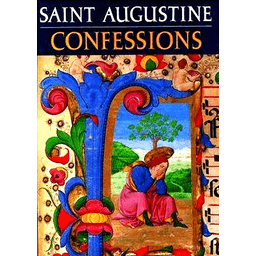 ConfessionsAugustine’s 4th-century autobiographical prayer - the deepest of the great pre-modern Christian classics and an obvious next read for anyone moved by Bunyan.
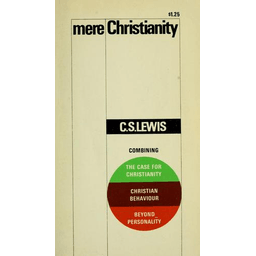 Mere ChristianityC.S. Lewis’s most-read book and a natural modern companion to Bunyan - different form, similar aim of describing the shared Christian life in language ordinary people can use.
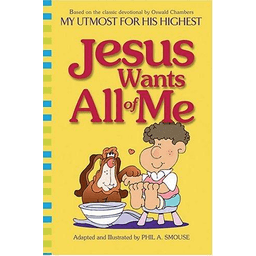 My Utmost for His HighestOswald Chambers’s daily devotional - if The Pilgrim’s Progress is the journey told as story, this is the journey told one paragraph a day for a year.
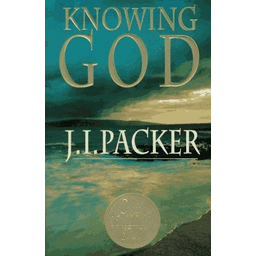 Knowing GodJ.I. Packer’s modern classic on the character of God - a clear-prose theological companion that pairs naturally with Bunyan’s allegory for readers who want the doctrine laid out plainly.
Frequently asked questions
Is The Pilgrim’s Progress hard to read?
Honestly, yes - the 17th-century English is a real adjustment. Sentences are long, vocabulary is sometimes archaic, and Bunyan inserts marginal Scripture references throughout. Most readers find the first 30 pages the steepest. A modernized edition or a good audiobook narration lowers the wall considerably without losing the substance.
Should I read Part I only, or both parts?
Start with Part I - that’s where almost all the famous scenes and characters live. Part II (Christiana’s journey) is warmer and more communal and well worth reading once you’ve loved Part I, but many readers never get to it and that’s fine. Editions sold as “The Pilgrim’s Progress” alone usually mean Part I only.
Is it a Protestant book? Can readers from other traditions still enjoy it?
It is unmistakably a Puritan book - Bunyan was a 17th-century English Baptist preacher and the theological frame reflects that. But it has been read with appreciation across Catholic, Orthodox, Reformed, Wesleyan, Pentecostal, and Latter-day Saint readers for centuries. The human experiences of doubt, temptation, weariness, and hope translate across traditions, which is the main reason it has lasted.
Which edition should I buy?
If you want the original prose, the Banner of Truth hardcover (around $22) is the standard. For a cheap first try, any Penguin Classics or Dover paperback (around $7.99) is fine. For a modernized version, Christian Focus and Crossway publish updated-English editions around $12. The full text is also free at CCEL and Project Gutenberg.
Is it appropriate for children?
Older children and teens often love it, especially as a read-aloud or in an illustrated edition. Some scenes - Apollyon, the Valley of the Shadow, Faithful’s martyrdom at Vanity Fair - are intense and not aimed at young children. There are also abridged children’s adaptations (Dangerous Journey is the best-known) designed for ages 8 and up.
Why is it considered so important?
Two reasons. First, the historical fact: for roughly two and a half centuries it was the most-published book in English after the Bible, and it has been translated into more than 200 languages - a reach almost no other Christian book has matched. Second, the literary fact: its allegorical map of the Christian life (Slough of Despond, Vanity Fair, Doubting Castle, Celestial City) became part of the shared vocabulary of English-speaking Christianity in a way nothing else has.
Did Bunyan really write it in jail?
Yes. John Bunyan spent twelve years in Bedford jail (1660-1672) for preaching without a Church of England license. Part I was largely written during that imprisonment, though it wasn’t published until 1678, six years after his release. Part II followed in 1684. He died in 1688.
Sources & further reading
More Christian Classics (Pre-1900)
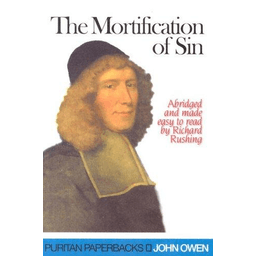 The Mortification of SinThe 1656 Puritan handbook on fighting indwelling sin - still the most rigorous spiritual diagnostic in print, four centuries on.
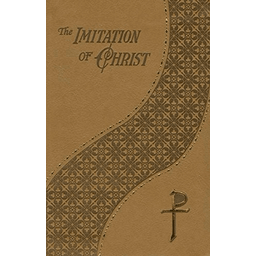 The Imitation of ChristA 600-year-old devotional that has outsold almost every Christian book ever written - and still rearranges the modern reader who is willing to sit with it.
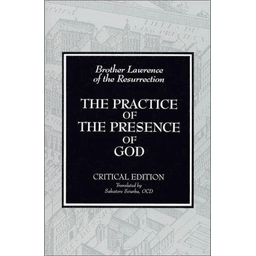 The Practice of the Presence of GodA 17th-century Carmelite kitchen monk’s short, plain talks and letters on staying aware of God in the middle of ordinary work - the smallest devotional classic that keeps outlasting bigger books.The Treasury of DavidSpurgeon spent two decades on a verse-by-verse commentary on all 150 Psalms - his own exposition, centuries of collected commentators, and notes for preachers - and the result is still the first book many turn to when they open the Psalter.All of GraceSpurgeon's short 1886 book explaining salvation by grace through faith - written for the anxious and the seeking, given away by the millions, and still the booklet people press into a searching friend's hands.The Bruised ReedRichard Sibbes built an entire book out of half a verse - "a bruised reed he will not break" - and four centuries on it is still the tenderest page the Puritans ever wrote.