- Starting price
- Free (public domain)
- Free tier
- Yes
- Platforms
- Print · Kindle · Audiobook · Free (public domain)
- Developer
- Various / Public domain
- Launched
- 1895
- Updated
- May 31, 2026
The verdict
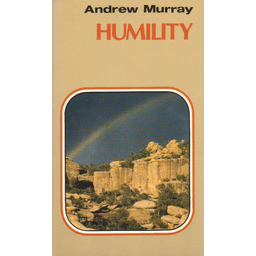
Humility has quietly become the one short book Christians reach for when they suspect pride is the problem underneath the problem. Twelve brief chapters, roughly a hundred pages, and the most concentrated treatment of lowliness in modern devotional English - convicting by design, and free in the public domain.
Try Humility ↗Opens ccel.org
Humility has quietly become the book people return to when they have run out of patience with themselves. It is barely a hundred pages. It has one subject. And yet pastors, spiritual directors, and ordinary readers across very different traditions keep recommending it for the same reason - they cannot find anything else that says this particular thing this directly. Andrew Murray set out to argue that humility is not one virtue among many but the soil all the others grow in, and the absence of self is not a spiritual nicety but the whole shape of the life Jesus actually lived.
The book did not begin as a treatise. Murray was a Dutch Reformed pastor in South Africa - prolific, pastoral, and shaped by the late-19th-century holiness movement that swept through English-speaking Christianity. He had written on prayer, on abiding, on the inner life. Humility, published in 1895, distilled a lifetime of that pastoral concern into its smallest and sharpest form. It does not argue with skeptics. It does not survey the field. It does not flatter the reader. It works through one theme, chapter by chapter, until the reader has nowhere left to hide.
What you actually get is twelve short meditations - on humility in the life of Jesus, in his teaching, in his disciples, in daily life, in holiness, in faith, in death to self, in happiness, in exaltation. Each runs six to ten pages. The voice is earnest, devotional, and unmistakably Victorian: long sentences, capitalized abstractions, the cadence of a man who read his King James Bible until it shaped his prose. It is meditation rather than instruction, and it is the kind of small book that takes an afternoon to read and a much longer time to finish.
✓ The good
- Short and concentrated - twelve chapters, roughly a hundred pages, readable in an afternoon and re-readable for years
- Single-minded by design - the entire book stays on one theme (humility as the root of holiness), which is exactly why readers reach for it
- Widely shared across traditions - the themes of humility and dying to self are common ground, and readers from Reformed, Wesleyan, Catholic, and other backgrounds quote Murray appreciatively
- Free in the public domain - the full text is available at no cost through CCEL and similar archives, with cheap print and ebook editions everywhere
- Christ-centered throughout - Murray keeps returning to the lowliness Jesus actually displayed rather than to humility as a general virtue or self-improvement technique
- Convicting in a way most devotional writing avoids - Murray does not soften the cost, and readers who want to be told the truth rather than encouraged keep coming back to it
- Pairs naturally with study or group reading - the short chapters map cleanly onto a twelve-session plan
✗ Watch out
- Very short and single-themed - if you want range or a survey of the spiritual life, this is one note held for a hundred pages, not a chord
- 1890s devotional prose - long sentences, capitalized abstractions ("the Self," "the Creature"), and a Victorian cadence that some readers find heavy going
- Intense, convicting tone - Murray presses hard on self and pride, and some readers find the relentlessness wearing rather than freeing
- Repetitive by design - the same point is approached from twelve angles, which is the method, but it can read as circling for readers who grasp it early
- Mid-and-late-19th-century language throughout - "man" for humanity, "he" as the generic pronoun, and assumptions of its era
- Light on practical scaffolding in the original - no discussion questions, no exercises, no application steps (modern editions sometimes add them; the public-domain text has none)
Best for
- Readers who suspect pride or self is the root issue and want it named directly
- Long-time Christians wanting a short, severe re-read rather than a survey
- Small groups or individuals wanting a twelve-session devotional classic
- Readers across traditions looking for shared ground on humility and dying to self
Avoid if
- You want range and variety rather than one theme held for a hundred pages
- You bounce off 1890s devotional prose and need a modern conversational voice
- You find an intense, convicting register heavy rather than helpful
- You want a step-by-step disciplines manual with exercises and prompts
What Humility is
Humility is a short devotional book by Andrew Murray, first published in 1895 and continuously in print since, arguing that humility - the absence of self and the lowliness Christ displayed - is the root of every other virtue and the essence of holiness. It is brief, often around a hundred pages, and divided into twelve short chapters. Each takes up humility from a different angle - in the life of Jesus, in his teaching, among his disciples, in daily life, in holiness, in faith, in death to self, in happiness, in exaltation - and most chapters move from a Scripture passage into a sustained meditation.
The book is a devotional meditation rather than a systematic argument. Murray was a Dutch Reformed pastor in South Africa whose writing was also shaped by the Keswick or "higher life" movement of the late 19th century, with its emphasis on consecration, surrender, and the deeper interior life. That background colors the book's vocabulary and emphases. The themes themselves - humility, self-denial, dying to self - are widely shared across Christian traditions, which is part of why the book has traveled well beyond the movement that produced it.
Why readers keep returning to this small, single-minded book
The single biggest practical difference between Humility and the wider devotional shelf is that Murray refuses to broaden. Most spiritual writing covers ground - prayer, Scripture, community, calling, suffering - and humility, if it appears at all, gets a chapter. Murray inverts that. He treats humility as the one thing, the root the rest grows from, and then spends the entire book pressing on it from every side. The book is an argument made by its own form: if humility really is foundational, then a hundred pages on nothing else is not narrow but proportionate.
That single-mindedness is the draw. A reader who has half-suspected that pride sits underneath their other struggles finds, in Murray, a writer willing to say it plainly and to stay on it long enough to land. He keeps the focus on Jesus throughout - humility not as a self-improvement project but as the actual shape of the life Christ lived, the lowliness he chose. Readers from different traditions who would not agree on much of the surrounding theology tend to nod at the same paragraphs here, because the lowliness of Christ and the death of self are common ground, and Murray writes about them with unusual intensity.
Twelve short chapters: the architecture that makes it convicting
Murray's structure is deceptively simple. Twelve chapters, each six to ten pages, each taking humility from one vantage point - in the life of Jesus, in his teaching, among his disciples, in daily life, in holiness, in sin, in faith, in death to self, in happiness, in exaltation. Most open with a Scripture passage, build a meditation in sustained prose, and circle back to the same conviction from the new angle. There is no survey, no detour, no chapter that changes the subject. The reader is walked around a single object twelve times.
The economy is the point, and so is the repetition. A chapter takes fifteen minutes to read and considerably longer to absorb, and because each one approaches the same theme freshly, the cumulative effect is less like learning a set of facts and more like being slowly worn down in a particular spot. Some readers grasp Murray's thesis in the first two chapters and find the remaining ten repetitive; others report that the repetition is exactly what does the work, that hearing the same thing said twelve ways is what finally moves it from the head to the will. The short chapters also map cleanly onto a twelve-session reading plan, which is how many groups use it.
The lowliness of Christ and the absence of self
The theme Murray returns to most - and the one most quoted by later writers - is that humility is, at bottom, the absence of self, and that its model is the lowliness Jesus displayed. Murray's diagnosis is that the obstruction between the soul and God is not chiefly ignorance or even obvious sin, but the thick, quiet insistence of self at the center of everything. The self wants to be the subject of every sentence, the reference point of every judgment. Murray argues that humility is not a feeling to work up or a posture to adopt but the simple consequence of God filling the place self used to occupy.
The model, for Murray, is always Jesus. He keeps returning to the same picture: the one who emptied himself, took the form of a servant, and chose the lowest place - not as a temporary tactic but as the permanent disposition of his life. Murray's claim is that this lowliness is not a detail of Christ's character but its center, and that to follow him is to be remade into the same lowliness rather than to admire it from a distance. This is the book's enduring contribution. It refuses to let humility become either a personality trait some people happen to have or a technique for getting along better, and insists instead that it is the shape of the life God is actually forming in a person.
Murray's convicting voice: pressing the reader toward death to self
Murray's tone is the third feature worth naming, because it divides readers. He writes as a pastor pressing hard on a wound he believes needs pressing. The register is earnest, intense, and unrelenting - he does not offer the reader an easy off-ramp, and he does not soften the cost of what he calls death to self. Where much devotional writing aims to encourage, Murray aims to convict, and he stays on the reader long after a gentler writer would have moved to reassurance. He believed humility could not be reached by being told it was pleasant.
That intensity is exactly why the book has both devoted readers and readers who set it down. Some find Murray's relentlessness freeing - the rare writer who will name self-occupation as the real problem and not flinch from it, and who treats the reader as capable of bearing the diagnosis. Others find the same relentlessness heavy, a hundred pages of pressure with little relief. Both reactions are honest responses to what the book is. Murray reads like a man wholly convinced that lowliness is the doorway to everything else, and that conviction carries the prose; whether it lands as conviction or as weight depends a good deal on the reader who picks it up.
Pricing
Free (public domain)
Free
The full text is in the public domain and hosted free through CCEL and similar archives. If you only want the words, you never have to pay.
Paperback
~$6-9
Many editions exist since the text is public domain. Compact, cheap, and the version most people hand to a friend.
Kindle / ebook
Free-$3
Often free or near-free given the public-domain text; some annotated or modernized editions cost a few dollars.
Audiobook
Free-$8
Free recordings exist (LibriVox and others); commercial narrations on Audible run a few dollars. About three hours unabridged.
Updated / annotated edition
~$10-12
Light language modernization and sometimes study questions. Easier for newcomers to the prose; purists prefer the original.
Humility is one of the genuinely free classics. The text is in the public domain, which means the full book is available at no cost through the Christian Classics Ethereal Library and similar archives. If you only want the words, you do not have to pay anything - and because there is no single rightsholder, the free editions are entirely legitimate rather than borderline.
Most readers who buy a copy do so because print editions are cheap. A paperback runs roughly $6-9, and since the text is public domain there are many editions to choose from - which is both a convenience and a small annoyance, since the editions vary in typesetting and quality. The ebook is often free or a couple of dollars, and free audiobook recordings exist (LibriVox among them) alongside commercial narrations on Audible for a few dollars; the unabridged reading runs around three hours.
The one paid option worth weighing is an updated or annotated edition, usually around $10-12, which lightly modernizes Murray's 1890s phrasing and sometimes adds study questions. That can be a real help for a reader who finds the Victorian prose heavy, or for a group that wants discussion scaffolding the original does not provide. Purists prefer the original, where Murray's own cadence is intact.
Most readers do not need a paid edition at all. The public-domain text is complete and free, the book is short, and the only reasons to spend money are a physical copy to mark up, a narrated version for the commute, or modernized language. The free tier is the genuine best value here in a way it rarely is for a book still this widely read.
Where Humility falls behind
Range. This is a hundred pages on one theme, and that is the design rather than a flaw - but it means Humility is not where you go for the breadth of the Christian life. Prayer, Scripture, community, vocation, suffering, neighbor-love: none of it is here except as it touches humility. Read alone, the book can feel airless. It is meant to be one voice in a larger devotional diet, not the whole of it.
The prose. Murray writes in 1890s devotional English - long sentences, capitalized abstractions like "the Self" and "the Creature," and a cadence shaped by the King James Bible. Readers who find that register heavy will find it heavy for the whole book. The updated editions soften it; most readers report adjusting within a chapter or two, but a few never warm to it.
The intensity. Murray's convicting tone is the point, and for some readers it is the gift - but it is also relentless. There is little relief, little lightness, and the pressure on self and pride does not let up across twelve chapters. Readers who find that wearing rather than freeing are not misreading the book; they are simply not the audience for this particular register. Worth knowing going in.
The repetition. The same conviction is approached from twelve angles, which is the method and, for many, the source of the book's power. But a reader who grasps the thesis in the first two chapters can experience the remaining ten as circling. Whether the repetition does the work or wears out its welcome is one of the most reader-dependent things about the book.
Practical scaffolding. The original has no discussion questions, no exercises, no week-by-week plan - it is meditation, not a workbook. The short chapters lend themselves to a twelve-session group reading, but you will be supplying the questions yourself unless you buy an edition that adds them. A real gap for group leaders, but a minor one to know about rather than a dealbreaker.
Humility vs. The Mortification of Sin vs. The Pursuit of God
These three short classics keep company on the same shelf - each a concentrated treatment of the interior life - and readers often ask which to start with. Different strengths. Humility (Andrew Murray, 1895) is the most single-minded and the most devotional: meditation on one theme - humility as the root of holiness, the absence of self, the lowliness of Christ - held for a hundred pages and approached from twelve angles. It is the book to read when you suspect pride is the issue underneath the issue and you want it named directly. Twelve short chapters, an afternoon to read, designed to be re-read slowly.
The Mortification of Sin (John Owen, 1656) is the most rigorous and the most demanding - a 17th-century Puritan's closely reasoned treatise on putting sin to death, diagnostic and unsparing about self-deception. It is the book for disciplined argument rather than meditation, and for readers prepared for dense 1600s prose; it is harder going than Murray on every level, and correspondingly more thorough. The Pursuit of God (A.W. Tozer, 1948) is the most mystical and the most accessible - ten chapters drawing the reader toward encounter with God himself rather than the conquest of a single sin, each closing with a written prayer, in mid-century prose lighter than either Murray or Owen.
A reasonable order for many readers: Pursuit first (to be drawn in), Humility second (to be searched on one specific front), Owen when you want the most rigorous and sustained treatment of dying to self. All three are short by modern standards, and all three reward slow, repeated reading rather than a single pass.
The bottom line
Humility is the rare classic that does one thing and does it without apology. It is short, it is convicting, the themes it presses - lowliness and dying to self - are common ground across traditions, and it refuses to let humility shrink into a personality trait or a self-improvement technique. The single theme, the 1890s prose, and the relentless intensity are real and worth knowing about going in rather than dealbreakers; they are also, for the right reader, exactly the point. It is free in the public domain and cheap in print, and for anyone who suspects self is the obstacle underneath the others, there is no more concentrated treatment of the subject in modern devotional English.
Alternatives to Humility
 The Pursuit of GodA.W. Tozer's ten-chapter wake-up call on knowing God personally. Shorter on argument and longer on encounter - the devotional classic to read when faith has gone flat.
 Knowing GodJ.I. Packer's twenty-two-chapter classic on the character of God. Longer, more teaching-driven, and Reformed-evangelical in frame - depth rather than meditation.
 The Practice of the Presence of GodBrother Lawrence's letters and conversations on staying aware of God in ordinary work. The shortest of the devotional classics, and the gentlest companion to Murray's intensity.
 The Mortification of SinJohn Owen's 17th-century treatise on putting sin to death. The rigorous, demanding counterpart to Murray - argument rather than meditation, and dense Puritan prose.
Frequently asked questions
How long does Humility take to read?
Twelve chapters of roughly six to ten pages each, about a hundred pages total. Most readers finish in a single afternoon if they push, or over a week or two if they take a chapter at a time. The audiobook runs about three hours unabridged. Many readers find it rewards a slow second pass more than a fast first one.
Is Humility really free?
Yes. The text is in the public domain, so the full book is available at no cost through the Christian Classics Ethereal Library (CCEL) and similar archives, and free ebook and audiobook recordings exist as well. Cheap print editions run roughly $6-9, and updated or annotated editions cost a little more, but you never have to pay for the words themselves.
What tradition was Andrew Murray writing from?
Andrew Murray (1828-1917) was a Dutch Reformed pastor in South Africa whose writing was also shaped by the Keswick or "higher life" movement of the late 19th century, with its emphasis on consecration and the deeper interior life. That background colors the book, but its central themes - humility and dying to self - are widely shared across Christian traditions, and readers well beyond Murray's own tradition quote it appreciatively.
Is the book hard to read?
The ideas are simple, but the prose is 1890s devotional English - long sentences, capitalized abstractions, and a cadence shaped by the King James Bible. Readers comfortable with older writing tend to adjust within a chapter; those who prefer a modern conversational voice sometimes find it heavy. An updated edition lightly modernizes the language if the original register is a barrier.
Why do people say Humility is intense or convicting?
Murray writes to convict rather than to encourage. He presses hard on self and pride and does not offer the reader an easy off-ramp, staying on the subject long after a gentler writer would move to reassurance. Many readers find that relentlessness freeing - a writer willing to name the real problem - while others find a hundred pages of it wearing. Both are honest responses to what the book is.
Is Humility a good book for a brand-new Christian?
It can be, but it is not a starter devotional. Murray assumes the reader already has a working Christian frame and is ready to be pressed toward depth on a single demanding theme. A newer believer with some hunger for the interior life will get a great deal from it; one looking for an introduction to the basics is usually better served by something broader and gentler first.
What should I read after Humility?
Common next reads on the same shelf are A.W. Tozer's The Pursuit of God (encounter with God himself), J.I. Packer's Knowing God (the character of God at greater length), and Brother Lawrence's The Practice of the Presence of God (awareness of God in ordinary work). Readers who want a more rigorous treatment of dying to self often move on to John Owen's The Mortification of Sin.
Sources & further reading
More Christian Classics (Pre-1900)
The Mortification of SinThe 1656 Puritan handbook on fighting indwelling sin - still the most rigorous spiritual diagnostic in print, four centuries on. The Imitation of ChristA 600-year-old devotional that has outsold almost every Christian book ever written - and still rearranges the modern reader who is willing to sit with it.The Practice of the Presence of GodA 17th-century Carmelite kitchen monk’s short, plain talks and letters on staying aware of God in the middle of ordinary work - the smallest devotional classic that keeps outlasting bigger books.The Treasury of DavidSpurgeon spent two decades on a verse-by-verse commentary on all 150 Psalms - his own exposition, centuries of collected commentators, and notes for preachers - and the result is still the first book many turn to when they open the Psalter.All of GraceSpurgeon's short 1886 book explaining salvation by grace through faith - written for the anxious and the seeking, given away by the millions, and still the booklet people press into a searching friend's hands.The Bruised ReedRichard Sibbes built an entire book out of half a verse - "a bruised reed he will not break" - and four centuries on it is still the tenderest page the Puritans ever wrote.