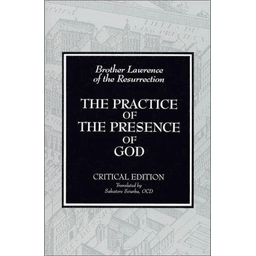
- Starting price
- Free; $8 print
- Free tier
- Yes
- Platforms
- Print · Kindle · Audiobook · Free PDF · Public domain
- Developer
- Various (Whitaker House, HarperOne, Aeterna Press, Carey Brothers updated translation)
- Launched
- 1692
- Updated
- May 24, 2026
The verdict
The shortest book on the spiritual life that anyone keeps recommending three centuries later - a Carmelite lay brother’s conversations and letters about turning ordinary work into continuous communion with God. If you only ever read one slim devotional classic, this is the one most traditions agree on.
Try The Practice of the Presence of God ↗Opens ccel.org
The Practice of the Presence of God has quietly become the favorite of pastors, monks, busy parents, and burned-out professionals who all want the same thing - a way to pray that does not require a quieter life than the one they actually have. It is a tiny book. Most editions clock in under 100 pages. You can read the whole thing in an afternoon, and people who first read it in their twenties tend to still be re-reading it in their sixties.
It is not a systematic theology. It is not a how-to manual. It is not a memoir in any modern sense. What it is, instead, is a compilation - four conversations and fifteen or so letters - gathered by Father Joseph de Beaufort after the death of an obscure French Carmelite named Nicolas Herman, known in the cloister as Brother Lawrence of the Resurrection. Brother Lawrence spent roughly thirty years in a Paris monastery washing pots, peeling vegetables, and repairing sandals. He was not a priest. He was not a theologian. He was a lay brother in the kitchen. And the spiritual counsel he gave from that kitchen has outlived almost everything written by the famous men of his century.
The premise is simple enough to fit on an index card: God is present here, in this moment, in this room, while you are doing this dish - and the whole work of the Christian life is learning to keep gentle, continuous attention on that fact. Brother Lawrence calls it "the practice of the presence of God." It sounds like a small thing. In practice it is transformative, which is why John Wesley quoted it, A.W. Tozer leaned on it, Henri Nouwen recommended it, and Catholic spiritual directors still hand it to new contemplatives the same week Protestant pastors hand it to new converts.
✓ The good
- Tiny and re-readable - under 100 pages in most editions, designed to be opened at any letter and started cold
- Universally loved across traditions - Catholic origin, but Wesley, Tozer, Nouwen, Foster, and modern evangelical pastors all recommend it
- Practical, not abstract - the whole book is about how to pray while doing dishes, not how to construct a theology of prayer
- Public domain - multiple free PDF, ePub, and audiobook versions exist with no compromise in content
- Doctrinally low-friction - almost no sectarian content; the focus is on awareness of God in daily work, which translates across traditions
- Excellent gateway to contemplative reading - if Teresa of Ávila or John of the Cross feels intimidating, this is the on-ramp
- Surprisingly good audiobook - the conversational, letter-shaped structure reads aloud beautifully in a 90-minute listen
✗ Watch out
- Older translations can feel stiff - the 19th-century English used in most free editions takes adjustment
- Repetitive by design - Brother Lawrence makes essentially one point and circles it from many angles; readers expecting variety may grow restless
- No structure or chapter arc - the four conversations and the letters are loosely assembled, not a developed argument
- Catholic monastic vocabulary occasionally surfaces - "mortification," references to the Blessed Sacrament, monastic obedience - which some readers will want context for
- Very thin on practical method - Brother Lawrence describes a disposition more than a step-by-step practice, which can frustrate technique-oriented readers
- Editorial framing varies wildly - Father Joseph’s 1692 commentary, modernized paraphrases, and "spiritual maxims" appendices differ from edition to edition
Best for
- Busy people whose prayer life keeps colliding with their job
- Readers new to contemplative or monastic spirituality
- Anyone burned out on long, complicated devotional books
- Pastors and small-group leaders looking for a cross-tradition classic
Avoid if
- You want a structured, chapter-by-chapter spiritual program
- You bounce off 17th-century devotional vocabulary even in updated form
- You need every reference to be from your own tradition
- You prefer apologetics or theology to first-person spiritual counsel
What The Practice of the Presence of God is
The Practice of the Presence of God is a posthumous compilation, first published in 1692, of the recorded conversations and surviving letters of Brother Lawrence of the Resurrection - born Nicolas Herman around 1614 in Lorraine, France. After a stint as a soldier and then as a footman, he entered a Discalced Carmelite priory in Paris as a lay brother and spent the rest of his life there in unglamorous manual work. He died in 1691. Father Joseph de Beaufort, who had known and interviewed him, gathered four of their conversations together with fifteen or so of Brother Lawrence’s letters and published the slim collection the following year.
The book has two main pieces. The "Conversations" are Father Joseph’s notes from four meetings with Brother Lawrence, written in third-person summary. The "Letters" are first-person spiritual counsel sent to fellow religious, mostly women - direct, warm, often funny. Some editions append a short collection of "Spiritual Maxims" attributed to Brother Lawrence. The cumulative length, even with introductions and notes, rarely exceeds 130 pages.
Why everyday Christians keep coming back to this little book
Most spiritual classics assume a life rearranged around them. The Rule of St. Benedict assumes a monastery. The Imitation of Christ assumes a cloistered reader with structured hours. Calvin’s Institutes assumes a desk and a long evening. Brother Lawrence assumes a sink full of pots. That is the whole appeal. He is not asking you to find a quieter life in order to pray; he is teaching you to pray inside the noisy one you already have. The everyday Christian who reads this book finishes it with permission - permission to treat the commute, the inbox, the diaper change, the spreadsheet as the actual location where the spiritual life happens.
It is also, deliberately, almost technique-free. Brother Lawrence does not give you a method with steps. He describes a disposition: a quiet, continual turning of the heart back toward God in the middle of whatever you are doing, no matter how ordinary, no matter how often you forget. That is the thoughtful person’s antidote to apps with streaks and devotional programs with reading plans - the model that respects your work and your interruptions instead of demanding you escape them.
The "practicing the presence" framework: ordinary work as continuous prayer
The book’s central idea is named in its title and never really departs from it. Brother Lawrence proposes that the goal of the Christian life is not to add prayer to your day as one more block on the calendar, but to learn to remain inwardly aware of God’s presence throughout the day - including, especially, while you are doing things that have nothing obviously religious about them. He is famous for saying he felt closer to God in the clatter of the kitchen than he often did in formal chapel time. He does not denigrate the chapel; he simply refuses to confine God to it. Set hours of prayer remain, in his counsel, important and unbroken. The rest of the day is then meant to become a kind of continuous, low-volume conversation.
In practice, this looks like a habit of brief inward returns - short, wordless turnings toward God whenever the mind drifts, whenever the work pauses, whenever something annoys or delights. Brother Lawrence is realistic about failure: he assumes you will forget for long stretches and tells you that the simple, ungrieved act of remembering again is the practice. This sounds like a small thing. In practice it is transformative - because it removes the dichotomy between "prayer time" and "real life" that most modern Christians inherit by default, and quietly suggests that the dichotomy was never in the Bible to begin with.
Brother Lawrence’s vocation: the kitchen monk, the sandal-repairer, and why the setting matters
It matters enormously that Brother Lawrence wrote from a kitchen and not from a chair of theology. Nicolas Herman was, by his own account, clumsy ("a great awkward fellow who broke everything," he says of himself in the early years) and not naturally suited to the work. He hated the kitchen at first. He spent fifteen years in it before being moved to the sandal-repair shop - small, repetitive, often-painful work for a man whose leg had been damaged in the army. He was a lay brother, which in the Carmelite order of his day meant he was not a priest, did not lead worship, and was not consulted on matters of governance. He served. That was the whole job description.
This biography is doing real theological work in the book. The counsel sounds different - and lands differently - coming from a man whose own life was repetitive, undistinguished, and physically tiring than it would coming from a celebrated preacher. He is not telling overworked readers to pray-while-they-work from a comfortable distance. He is telling them what he himself learned to do over decades at a wet sink. That is why the book travels across centuries and traditions the way it does: it has the unmistakable ring of someone reporting what actually worked, in conditions most of us can recognize.
The translation question: should you read the original Victorian English or a modern rendering?
Because the book is in the public domain, you have an unusually wide field of options - and the choice of translation shapes the reading experience more than first-time readers expect. The classic free editions (CCEL, Project Gutenberg, most $1 Kindle reprints) use a 19th-century English translation with the formal "Thou/Thee" register and longer, more involuted sentences typical of Victorian devotional prose. It is dignified, it is free, and many readers find it deepens the contemplative tone. Other readers find it a wall. Whitaker House’s mass-market paperback lightly modernizes that older base text - useful, but uneven.
For readers coming to Brother Lawrence cold, the Carey brothers’ updated translation (published by Paraclete Press) is widely the easiest on-ramp. It is a fresh contemporary rendering from the French rather than a touch-up of older English, and Brother Lawrence comes through sounding like the warm, plainspoken, slightly self-deprecating man his letters reveal him to be. HarperOne’s Vintage Spiritual Classics edition sits in between - conservative in vocabulary, but with a serious scholarly introduction and beautiful typesetting for readers who want to keep the book on the shelf for thirty years. None of these editions changes the content materially. They change how much friction sits between you and a 17th-century kitchen monk.
Pricing
Free (CCEL / Project Gutenberg)
Free
Full public-domain text in HTML, ePub, Kindle, and PDF. The standard 19th-century English translation. Perfect if you just want to read it tonight.
Whitaker House paperback
~$8
The cheap, ubiquitous mass-market paperback most people own. Lightly modernized English, slim trim size, easy to gift or lose without regret.
Carey Brothers updated translation
~$12
Contemporary, conversational English rendered from the French. The most readable modern version - the one to buy if you want Brother Lawrence to sound like a friend, not a relic.
HarperOne Vintage Spiritual Classics
~$13
The literary edition - handsome typography, scholarly introduction, conservative but readable translation. Best for the bookshelf.
Audible audiobook
~$7
Roughly 90 minutes of narration. The conversational format suits audio surprisingly well; good for a single morning walk.
Padded leather gift edition
~$20
Confirmation, ordination, retreat-gift territory. Same public-domain text, dressed up.
There is no version of this book you have to pay for. Brother Lawrence died in 1691 and the text has been in the public domain almost as long as English-language publishing has existed. The Christian Classics Ethereal Library, Project Gutenberg, and a dozen free Kindle reprints will put the entire book on your phone in under a minute at zero cost.
What you are actually buying, if you spend money, is translation, typography, and binding. The Whitaker House paperback at around $8 is the everywhere-available cheap edition - fine for a first read, fine to give away, lightly modernized. The Carey brothers updated translation at around $12 is the one to buy if you want Brother Lawrence to read like a friend rather than a relic, and it is the version we’d hand a busy modern reader first. HarperOne’s Vintage Spiritual Classics edition at around $13 is the keep-forever literary edition.
Audio is genuinely worth the small cost. The Audible version runs roughly 90 minutes - short enough for a single walk, long enough to absorb in one sitting. Padded leather gift editions hover around $20 and are reliable confirmation, ordination, and retreat-gift territory. Most readers do not need anything beyond the Carey brothers paperback or the free PDF.
As with any public-domain title, watch for low-effort reprints with no editor’s name attached and no introduction - they sometimes contain garbled OCR. If a paperback’s listing does not say who translated it, the safe move is to download the CCEL version free and decide whether you want to upgrade.
Where The Practice of the Presence of God falls behind
No structure, no chapter arc. The book is not built as a developed argument; it is a compilation of four interview-notes and fifteen letters. Readers who prefer Kelly’s A Testament of Devotion or Tozer’s The Pursuit of God will notice the difference immediately - Brother Lawrence circles his one idea without ever organizing it. That is part of the charm for some readers, and a real obstacle for others.
Very thin on practical method. Brother Lawrence describes a disposition more than a technique. If you arrive looking for a structured method of contemplative prayer - breath prayers, lectio divina steps, examen frameworks - you will leave with encouragement but not instructions. Pair the book with something more methodological (Foster’s Celebration of Discipline, for instance) if step-by-step is what you need.
Older translations feel their age. Even setting modernization aside, the 17th-century French sensibility carries vocabulary - "mortification," "creature," "Sovereign Good" - that modern readers may need a footnote to absorb. The Carey brothers and HarperOne editions soften this; the free editions generally do not.
Repetition by design. Brother Lawrence essentially says one thing - return your attention to God, gently, again - and says it from twenty angles. Readers expecting a varied intellectual journey through different topics may grow restless by letter ten. It is meant to be read slowly, even devotionally, not consumed.
Limited theological scaffolding. The book assumes a Catholic monastic context and does not stop to explain it. Sacramental language, references to obedience to superiors, the rhythm of the hours - none of it is foregrounded, but none of it is unpacked either. Most readers across traditions adapt without trouble, but readers wanting an explanatory frame may want to pair it with a short biographical introduction.
The Practice of the Presence of God vs. The Imitation of Christ vs. The Pursuit of God
These three small books are the most commonly recommended short Christian classics in English, and they are usually pitched at the same reader - someone looking for a portable, re-readable devotional anchor. Different strengths. Brother Lawrence is the warmest and the most ordinary; Thomas à Kempis is the most demanding and the most monastic; A.W. Tozer is the most modern and the most pastoral.
The Imitation of Christ, written in the 15th century by a Dutch monk, is longer (roughly 200-300 pages depending on edition), more rigorous, and more aware of its medieval monastic setting. It speaks the language of self-denial and inward conformity to Christ in a register that some modern readers find bracing and others find severe. It is structurally more complete than Brother Lawrence - short chapters, organized themes - and it has been the more widely circulated of the two across five centuries.
The Pursuit of God, A.W. Tozer’s 1948 classic, is the closest in spirit to Brother Lawrence - short, hot, and centered on the same hunger for the felt presence of God in ordinary life - but written in the voice of a 20th-century American pastor rather than a 17th-century kitchen monk. Tozer is more sermonic; Brother Lawrence is more conversational. If you want one short book to start with, Brother Lawrence is the gentlest entry. If you want the most concentrated argument, Tozer. If you want the most demanding and historically weighty, The Imitation of Christ.
The bottom line
Buy it. Read it slowly. Re-read it next year. The Practice of the Presence of God is not the longest, the deepest, or the most theologically developed of the Christian classics, but it is the one almost every tradition keeps quietly recommending - because the question it answers is the one most Christians actually have. How do I pray while I live the life I have? Brother Lawrence answers it from a kitchen sink in 1670s Paris, in under 100 pages, and three centuries later the answer still holds. Start with the Carey brothers updated translation, or grab the free CCEL text tonight.
Alternatives to The Practice of the Presence of God
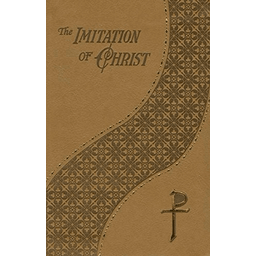 The Imitation of ChristThomas à Kempis’s 15th-century classic - longer, more demanding, and more self-consciously monastic, but the most widely circulated short devotional work in Christian history.
 The Pursuit of GodA.W. Tozer’s 1948 short classic on hunger for the felt presence of God - the closest modern cousin to Brother Lawrence, in a sermonic 20th-century voice.
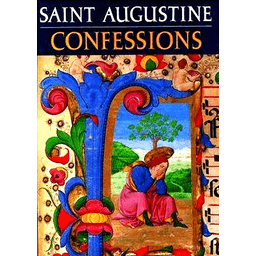 ConfessionsAugustine’s 4th-century spiritual autobiography - longer and more theological than Brother Lawrence, but the original interior conversation with God that every subsequent classic echoes.
 My Utmost for His HighestOswald Chambers’s daily devotional - same single-minded focus on surrender and presence as Brother Lawrence, structured as a 365-day reader for ongoing use.
Frequently asked questions
Who was Brother Lawrence?
Born Nicolas Herman around 1614 in Lorraine, France, he served as a soldier and a footman before entering a Discalced Carmelite priory in Paris as a lay brother. He spent roughly thirty years there, mostly in the kitchen and later in the sandal-repair shop, and died in 1691. He was not a priest or a theologian. The book was compiled and published the year after his death.
Is the book Catholic? Will it work for Protestant or LDS readers?
Brother Lawrence was a Catholic Carmelite, so the setting and a small amount of vocabulary are Catholic. The actual counsel - keep gentle, continuous attention on God in the middle of ordinary work - has been embraced and recommended across nearly every Christian tradition, including by John Wesley, A.W. Tozer, Henri Nouwen, and modern evangelical and LDS readers alike. Almost nothing in the book is tradition-specific in its application.
Which translation should I buy?
For most modern readers, the Carey brothers updated translation (Paraclete Press, around $12) is the easiest on-ramp - it reads in plain contemporary English. The HarperOne Vintage Spiritual Classics edition is a great keep-forever literary edition. The free CCEL or Project Gutenberg text is fine if you’re comfortable with 19th-century English.
How long does it take to read?
Most editions are under 100 pages, and the audiobook runs about 90 minutes. You can finish it in a single afternoon. Most readers, however, return to it slowly over weeks - a letter or two at a time - because it is built for re-reading more than first-time consumption.
Is there a free version?
Yes. The book has been in the public domain for centuries. The Christian Classics Ethereal Library (ccel.org) and Project Gutenberg both host the full text in HTML, ePub, PDF, and Kindle formats at no cost. Several free public-domain audiobook recordings exist on LibriVox as well.
What is "practicing the presence" actually meant to look like day-to-day?
Brother Lawrence describes a habit of brief, wordless inward returns to God throughout the day - short turnings of attention while you work, eat, walk, or pause. He assumes you will forget for long stretches and counsels that the simple, ungrieved act of remembering again is itself the practice. It is a disposition, not a step-by-step technique.
How does it compare to The Imitation of Christ?
Thomas à Kempis is longer, more rigorous, and more self-consciously monastic; Brother Lawrence is shorter, warmer, and more ordinary. Both are short classics worth owning. If you want the gentler entry point, start with Brother Lawrence. If you want the more demanding and historically weightier work, start with The Imitation of Christ.
Sources & further reading
More Christian Classics (Pre-1900)
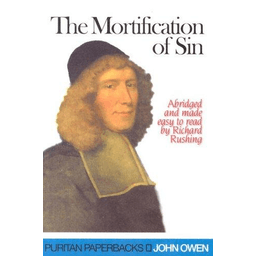 The Mortification of SinThe 1656 Puritan handbook on fighting indwelling sin - still the most rigorous spiritual diagnostic in print, four centuries on.The Imitation of ChristA 600-year-old devotional that has outsold almost every Christian book ever written - and still rearranges the modern reader who is willing to sit with it.The Treasury of DavidSpurgeon spent two decades on a verse-by-verse commentary on all 150 Psalms - his own exposition, centuries of collected commentators, and notes for preachers - and the result is still the first book many turn to when they open the Psalter.All of GraceSpurgeon's short 1886 book explaining salvation by grace through faith - written for the anxious and the seeking, given away by the millions, and still the booklet people press into a searching friend's hands.The Bruised ReedRichard Sibbes built an entire book out of half a verse - "a bruised reed he will not break" - and four centuries on it is still the tenderest page the Puritans ever wrote.
 HumilityAndrew Murray's twelve-chapter meditation on humility as the root of every virtue - a hundred-page Victorian classic that readers across traditions still reach for when self keeps getting in the way.