- Starting price
- Free PDF; $7.99 print
- Free tier
- Yes
- Platforms
- Print · Kindle · Audiobook · Audible · Free PDF (CCEL in some jurisdictions)
- Developer
- Moody Publishers (modern ed.), Christian Publications (original)
- Launched
- 1948
- Updated
- May 24, 2026
The verdict
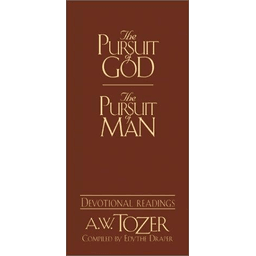
The Pursuit of God has quietly become the one short devotional that almost every tradition keeps in print. Ten chapters, under 130 pages, and the sharpest call to interior depth most readers will encounter in modern English.
Try The Pursuit of God ↗Opens moodypublishers.com
The Pursuit of God has quietly become the favorite of pastors who do not agree on much else. Reformed seminarians quote it. Wesleyan small groups read it. Catholic spiritual directors recommend it. Orthodox monks have been known to keep a copy near the prayer corner. For a book written in 1948 by a self-taught Christian and Missionary Alliance pastor with no seminary degree, that is an extraordinary spread.
A.W. Tozer reportedly wrote the whole thing in a single overnight train ride from Chicago to McAllen, Texas. It does not read like it was edited for a committee. It does not read like it was workshopped. It does not read like it was written to sell. It reads like a man who had been thinking about one thing for thirty years finally sat down and let it come out.
That one thing is the personal knowledge of God - not knowledge about God, which Tozer freely concedes can be acquired from books, but the experiential apprehension of God himself. The book is a series of ten short essays on what stands in the way of that knowledge and what removes the obstruction. It is gentle in tone and severe in implication, and seventy-five years later it is still the book Christians press into one another’s hands when faith has gone flat.
✓ The good
- Short by design - ten chapters, roughly 120 pages; readable in a weekend and re-readable forever
- Doctrinally portable - broadly evangelical with mystical and devotional emphases that travel across Reformed, Wesleyan, Catholic, and Orthodox readers
- Prophetic without being preachy - Tozer diagnoses lukewarm Christianity in the language of a friend, not a scold
- Each chapter ends with a written prayer - pastoral, scriptural, and unusually useful for personal devotion
- Public domain in many jurisdictions - the full text is freely available as a PDF through CCEL where copyright allows
- Wears beautifully - the prose is plain mid-century American, with the cadence of a King James reader; almost nothing has dated
✗ Watch out
- Mid-century male-default language throughout - "man" for humanity, "he" as the generic pronoun
- Light on systematic argument - Tozer assumes his reader already accepts the basic Christian frame and is impatient with apologetic detours
- The "mystical" register can feel foreign to readers raised on purely propositional teaching
- Almost no application scaffolding - no discussion questions, no journaling prompts, no week-by-week reading plan (the modern editions add some, the original has none)
- Some chapters lean on Tozer’s own paraphrase of Scripture rather than a named translation, which can confuse readers tracing references
Best for
- Long-time Christians whose devotional life has gone flat
- New believers ready for something deeper than a 30-day starter devotional
- Pastors and small-group leaders looking for a short, shareable classic
- Readers across traditions who want a book everyone can read together
Avoid if
- You want a step-by-step spiritual disciplines manual with exercises
- Mid-century devotional prose grates on you
- You want a tightly argued systematic theology rather than meditation
- You need a book pitched to absolute beginners with no Christian vocabulary
What The Pursuit of God is
The Pursuit of God is a ten-chapter devotional book on knowing God personally, first published in 1948 by Christian Publications and now kept in print by Moody Publishers. Each chapter is short - between eight and fifteen pages - and ends with a written prayer that gathers the chapter’s argument into something the reader can actually pray.
A.W. Tozer (1897-1963) was a Christian and Missionary Alliance pastor and editor who never attended seminary and read his way into his theology through the Christian mystics, the Puritans, and the King James Bible. He wrote The Pursuit of God on an overnight train from Chicago to McAllen, Texas, asking only for tea and a folding table. The book has never been out of print since.
Why readers across every tradition keep this one in print
The single biggest practical difference between The Pursuit of God and the wider devotional shelf is that Tozer refuses to settle into a tribe. He quotes Augustine and Bernard of Clairvaux. He quotes the Puritans. He quotes the German mystics and the Wesleyan holiness writers and Brother Lawrence. He treats them as fellow travelers rather than as evidence for one team. The result is a book that does not require you to be a Calvinist or an Arminian or a Catholic or anything in particular - only a person who suspects God might be available for direct encounter and wants to know how.
That is rare. Most devotional writing carries the fingerprints of its tradition so clearly that it functions as in-group literature. Tozer’s fingerprints are there too - he was a Wesleyan-leaning evangelical pastor, and it shows - but the book’s register is high enough above the denominational floor that readers from very different traditions find themselves nodding at the same paragraphs. That is what keeps it on Reformed seminary reading lists and in Catholic spiritual direction recommendations and in Orthodox parish bookstores.
Ten short chapters: the architecture that makes it re-readable
Tozer’s structure is deceptively simple. Ten chapters, each between eight and fifteen pages, each on a single theme - the divine pursuit, the recovery of meditation, removing the "veil" of self, apprehending God, the universal Presence, the speaking voice, the gaze of the soul, restoring the creature-Creator relation, the meekness that produces restful sweetness, the sacrament of living. Each opens with a Scripture passage, builds an argument in plain prose, and closes with a written prayer.
The economy is the point. A chapter takes twenty minutes to read and a year to absorb. Most readers do not finish Pursuit and shelve it - they finish it and start it again, more slowly, with a pen. The book is short enough to live with for a season. That is by design: Tozer believed the modern Christian had read too much and pondered too little, and the form of his own book is an argument against the problem he is diagnosing.
The "veil of self" and the recovery of meditation
The two themes Tozer returns to most often - and the two most quoted by later writers - are the "veil of self" and what he calls "the lost art of meditation." The first is his diagnosis: the obstruction between the soul and God is not chiefly intellectual or even moral in the obvious sense, but the thick inner veil of self-reference. The self insists on being the subject of every sentence. Until that veil is rent - and Tozer is clear that only God can rend it, though we must consent - the experiential knowledge of God is muffled even in those who hold all the right doctrine.
The second is his prescription: meditation, by which Tozer means not the emptying of the mind but the slow, prayerful, scriptural pondering of God himself. He laments that twentieth-century Christians had largely forgotten how to do this - they could study the Bible, debate it, defend it, but they could not sit with it. This is the book’s most enduring contribution. Half a century before "lectio divina" became a buzzword across traditions, Tozer was insisting that without meditation the Bible becomes information rather than encounter, and information will not feed the soul.
Tozer’s prophetic voice: calling lukewarm Christians to depth
Tozer’s tone is the third feature worth naming, because it is so rare. He writes as a pastor diagnosing a sickness in his own people, not as a critic standing outside. The diagnosis is severe - he believed mid-century evangelicalism had traded depth for activity, intimacy with God for orthodoxy about God, and the costly inner life for entertaining services - but the voice is grieved rather than contemptuous. He never sneers. He invites.
That is what gives the book its long shelf life. Readers in 2026 still recognize themselves in his pages because the diseases he names - distraction, self-occupation, religious activity as a substitute for God, the substitution of correct ideas for living communion - have if anything intensified. Tozer reads like a man who has seen all of this and still believes the reader is capable of more, and that confidence is itself pastoral. It is the reason people who would otherwise have no patience for a 1948 American Protestant keep finding their way back to the book.
Pricing
Paperback (Moody)
~$7.99
The standard modern reprint. Compact, gift-friendly, and the edition most pastors hand out.
Updated Edition
~$12
Light language modernization with study questions. Useful for small groups; purists prefer the original.
Hardcover
~$18
Cloth-bound gift edition. The version that survives a decade on the nightstand.
Kindle
~$8
Full text with search and highlighting. Same words, lighter bag.
Audible / Audiobook
~$15
About four hours unabridged. Tozer reads well aloud - the cadences were written for the ear.
Bundle with The Knowledge of the Holy
~$20
The two short Tozer classics together. The natural pairing if you finish Pursuit and want more.
The Pursuit of God is one of the rare modern classics that has slipped into the public domain in a number of jurisdictions, which means the full text is available as a free PDF through the Christian Classics Ethereal Library where copyright permits. If you only want the words, you do not have to pay.
Most readers do pay, though, because the paperback is cheap - around $7.99 from Moody Publishers - and small enough to carry. That edition is the natural recommendation: it is the version most pastors hand out, the prose has not been altered, and the price is closer to a coffee than a book purchase.
The Updated Edition (around $12) lightly modernizes some 1948 phrasings and adds small-group questions. Useful for groups; purists prefer the original because Tozer’s sentences were doing real work that the modernization occasionally flattens. The hardcover (around $18) is the gift edition. The Kindle is around $8, and the unabridged audiobook on Audible runs roughly $15 for about four hours - Tozer’s prose was written for the ear and reads beautifully aloud.
If the book lands and you want more, the natural next purchase is The Knowledge of the Holy, Tozer’s 1961 meditation on the attributes of God. Several retailers bundle the two for around $20, which is the most book-for-dollar deal in the modern devotional aisle.
Where The Pursuit of God falls behind
No practical scaffolding for small groups. The original edition has no discussion questions, no journaling prompts, no reading plan. The Updated Edition adds some, but if you want a book engineered for group study with weekly assignments and breakout questions, Pursuit is not it - you will be building the scaffolding yourself.
Mid-century language throughout. Tozer writes "man" for humanity and "he" as the generic pronoun, and the cadence is unmistakably 1948. Readers who find that grating will find it grating for 130 pages. The Updated Edition softens some of this; most readers report adjusting within a chapter.
Light on systematic argument. Tozer is not building a case. He is meditating with the reader and assumes the basic Christian frame is already in place. If you want a closely reasoned defense of the doctrines he is meditating on, you will need to read Pursuit alongside something more structured - Tozer’s own The Knowledge of the Holy, or a systematic theology.
Loose Scripture citation in places. Tozer occasionally paraphrases Scripture or quotes from memory without naming the translation, which can frustrate readers trying to trace a verse. Not a dealbreaker - every quotation is recognizable - but worth knowing if you read with a Bible open.
Almost no engagement with the surrounding world. Pursuit is interior almost to a fault. There is little here on neighbor-love, social ethics, vocation, or public witness. Tozer wrote other books on those themes; in this one, the lens is fixed on the soul before God. Real gap, but worth knowing about going in rather than a dealbreaker.
The Pursuit of God vs. Knowing God vs. My Utmost for His Highest
These three short classics tend to live on the same shelf, and readers often ask which to start with. Different strengths.
The Pursuit of God is the shortest and the most mystical. It is meditation rather than instruction - Tozer is trying to draw the reader into encounter with God, not to teach a doctrine of God. It is the book to read when you sense your faith has gone interior-dry and you want to be moved rather than informed. Ten chapters, weekend-readable, designed to be re-read.
Knowing God by J.I. Packer is the longest and the most teaching-driven. Packer is broader (the character of God, the gospel, the Christian life), more carefully argued, and tied tightly to a Reformed evangelical frame. It is the book to read when you want to understand who God has revealed himself to be in Scripture and what difference that makes. Twenty-two chapters, several-month read, designed to be studied.
My Utmost for His Highest by Oswald Chambers is a daily devotional rather than a continuous book - 365 entries compiled from his lectures by his widow. Wesleyan-holiness in flavor, intense in tone, and meant to be read one page a day for a year rather than straight through. It is the book to read when you want a daily companion that confronts you with the radical demands of discipleship.
A reasonable order for many readers: Pursuit first (to be drawn in), Knowing God second (to be grounded), Utmost as an ongoing daily practice. The three together cover what most Christians want from the devotional aisle - encounter, understanding, and daily formation.
The bottom line
The Pursuit of God is the rare devotional that earns its long shelf life. It is short, it is severe, it is portable across traditions, and it does the one thing most modern devotional writing fails at: it pushes the reader toward God himself rather than toward more information about God. The mid-century language and the absence of small-group scaffolding are real gaps, but they are worth knowing about going in rather than dealbreakers. For under eight dollars - or free as a PDF in some jurisdictions - there is no better introduction to the interior life in modern English, and no devotional classic more likely to be on the nightstand of Christians who do not otherwise agree on much.
Alternatives to The Pursuit of God
 Knowing GodJ.I. Packer’s twenty-two-chapter classic on the character of God. Longer, more teaching-driven, Reformed-evangelical in frame - the natural next read after Pursuit.
 My Utmost for His HighestOswald Chambers’ 365-day devotional compiled from his lectures. Wesleyan-holiness in flavor, designed for one page a day rather than continuous reading.
 Mere ChristianityC.S. Lewis’ wartime broadcasts on the shared core of the faith. The book to read when you want clear-eyed argument rather than meditation.
 ConfessionsAugustine’s fourth-century spiritual autobiography. The original of the genre Tozer is writing in - and still the high-water mark for interior writing.
Frequently asked questions
How long does The Pursuit of God take to read?
Ten chapters of roughly eight to fifteen pages each, about 120-130 pages total. Most readers finish in a weekend if they push, or over two to three weeks if they take a chapter every few days. The audiobook runs about four hours unabridged.
Is it really in the public domain?
Copyright status varies by jurisdiction. In several countries the text has entered the public domain and is hosted as a free PDF through the Christian Classics Ethereal Library and similar archives. In others (notably under current US copyright terms for some editions), the modern reprints remain under copyright. Check the legal status where you live before assuming a free download is permitted.
Did Tozer really write it on a train?
That is the long-standing account, repeated by Tozer’s biographer James Snyder and others: a single overnight ride from Chicago to McAllen, Texas, with a folding table and cups of tea. Tozer was a notoriously fast writer who had been preaching these ideas for years, so the manuscript flowed quickly. Whether every word survived without later editing is debated, but the substance was drafted in that one night.
What tradition is Tozer writing from?
A.W. Tozer was a pastor in the Christian and Missionary Alliance - a broadly evangelical denomination with Wesleyan-holiness and Keswick roots and a strong devotional/mystical emphasis. The book reflects that background but is unusually portable across traditions, with appreciative readers in Reformed, Wesleyan, Catholic, and Orthodox circles.
Should I get the original or the Updated Edition?
The original (around $7.99 in paperback) preserves Tozer’s own sentences and cadence and is what most pastors hand out. The Updated Edition (around $12) lightly modernizes some phrasings and adds small-group discussion questions. Choose the original for solo reading, the Updated for a group that needs scaffolding.
Is this a good book for a brand-new Christian?
It can be, but it is not a starter devotional. Tozer assumes the reader already has a working Christian vocabulary and is ready to be pressed toward depth rather than introduced to basics. A new believer with some hunger for the interior life will get a great deal from it; one looking for "Christianity 101" is better served by something more introductory first.
What should I read after The Pursuit of God?
The two most common next reads are Tozer’s own The Knowledge of the Holy (1961), a short meditation on the attributes of God, and J.I. Packer’s Knowing God, which covers similar ground at greater length and with more teaching structure. Augustine’s Confessions is the longer historical companion piece for readers who want to trace the interior tradition back to its source.
Sources & further reading
More Modern Christian Classics
Knowing GodJ.I. Packer’s 1973 classic on the doctrine of God has sold more than 1.5 million copies and is still the book most pastors hand to laypeople who want theology that goes somewhere - here’s what it actually does and who it’s for. The Cost of DiscipleshipDietrich Bonhoeffer’s 1937 exposition of the Sermon on the Mount, written for pastors training under a regime that wanted them silent - and still the sharpest book in print on what following Jesus actually costs.
 Gentle and LowlyDane Ortlund’s 23 short chapters on Matthew 11:29 have quietly become the most-given new Christian book of the decade - and the reason is not what you’d guess.
 The Holiness of GodR.C. Sproul’s career-defining book on the one attribute of God the church most forgets - and the vision in Isaiah 6 he believed everything else flows from.
 The Weight of GloryThe 1941 sermon many call Lewis's single finest piece of writing - "there are no ordinary people" - gathered with eight other addresses into one slim, uneven, unforgettable collection.
 Life TogetherA 120-page field manual on Christian community, written by a pastor running an underground seminary in the shadow of the Third Reich - and still the book people quote when they finally give up on their fantasy of church.