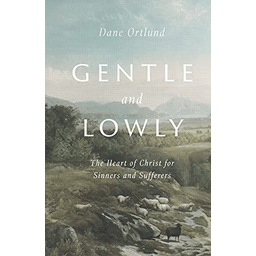
- Starting price
- $19.99 hardcover
- Free tier
- No
- Platforms
- Print · Kindle · Audiobook · Audible
- Developer
- Crossway
- Launched
- 2020
- Updated
- May 24, 2026
The verdict
A short, slow, Puritan-saturated meditation on the heart of Christ that has sold over 1.5 million copies and become a default gift book among Reformed readers - but the appeal reaches far past any one tradition.
Try Gentle and Lowly ↗Opens crossway.org
Gentle and Lowly has quietly become the favorite of pastors, counselors, hospice chaplains, and tired parents who needed a book that did exactly one thing well. Dane Ortlund - Senior Pastor of Naperville Presbyterian Church (PCA) and son of Bible commentator Ray Ortlund - published it in April 2020, the worst possible month for a book launch and, as it turned out, the best possible month for this book. Lockdown hit. People were afraid. The book about Christ’s tenderness toward sinners and sufferers was sitting on shelves the same week the world stopped.
It doesn’t argue. It doesn’t systematize. It doesn’t try to cover the whole Christian life. Each of the 23 short chapters circles back to one verse - Matthew 11:29, "I am gentle and lowly in heart" - and asks what it would mean to actually believe that about Jesus. The book is built like a series of devotional meditations rather than a treatise. You can finish a chapter in seven minutes and then sit with it for the rest of the day.
Sales tell the story. Over 1.5 million copies sold, NYT bestseller, the padded gift edition stacked on church bookstore counters from PCA to non-denominational to Anglican to LDS bookshops carrying it as a gift for grieving members. It is - by a wide margin - the single most-given new Christian book of the 2020s among Reformed evangelicals, and its reach has extended well past that core audience. This review walks through what the book actually does, who it’s for, and where its limits are.
✓ The good
- Single-focus thesis - the entire book meditates on one verse (Matthew 11:29) and refuses to drift, which is rarer than it sounds
- Short chapters that respect the reader’s time - 7-10 minutes each, perfect for daily devotional pacing
- Puritan source-mining done well - Ortlund pulls Thomas Goodwin, Thomas Watson, John Bunyan, and Jonathan Edwards out of dense 17th-century prose and into language a 2026 reader can actually use
- Pastorally calibrated for sufferers - counselors, chaplains, and people in grief have made this the default give-away book of the decade
- Reads aloud beautifully - the audiobook narrated by the author is widely considered better than the print for many readers
- The padded hardcover gift edition is genuinely beautiful - a real factor in why it became the most-gifted Christian book of the recent past
- Doesn’t require theological training - a brand-new reader and a seminary professor get roughly the same thing out of it
✗ Watch out
- Single-focus thesis cuts both ways - if you bounce off the central premise in chapter 1, the next 22 chapters won’t change your mind
- Not a systematic treatment - readers wanting a fuller doctrine of Christ should pair it with something denser like Knowing God or Grudem
- Puritan citations can feel heavy if you’re not used to that prose style - Ortlund modernizes well but the source quotes still appear at length
- Some readers find the emotional register relentless - 23 chapters on tenderness can land as repetitive depending on the season you’re in
- No study questions or discussion guide in the standard edition (the Companion Devotional sells separately)
- Frames Christ’s heart heavily through one verse - a deliberate choice, but worth knowing going in
Best for
- Readers walking through suffering, grief, or burnout
- Pastors and counselors looking for a give-away book for hurting members
- Anyone who has felt distant from God and isn’t sure why
- Small groups wanting a slow, meditative 23-week study
Avoid if
- You want a systematic theology of Christ’s person and work
- You bounce off devotional or contemplative prose styles
- You’re looking for apologetics or evidential arguments
- You prefer modern minimalism to Puritan-flavored writing
What Gentle and Lowly is
Gentle and Lowly is a 23-chapter devotional meditation on one phrase Jesus uses to describe himself - "gentle and lowly in heart" (Matthew 11:29). Each chapter takes a single facet of that idea - Christ’s patience with sinners, his nearness to sufferers, his unchanging affection, his intercession - and works it through scripture, Puritan commentary, and short pastoral application. The book is roughly 224 pages in standard hardcover and reads, by design, slowly.
The structure is meditative rather than argumentative. Ortlund is not building toward a thesis you’ll see in chapter 23 that wasn’t visible in chapter 1. He’s circling. The book’s power is cumulative - by the time you’ve spent a month or two reading a chapter every few days, the central claim has worked its way into how you think about prayer, repentance, and your own failures. That cumulative effect is the whole point.
Why Gentle and Lowly became the give-away book of the decade
The single biggest practical difference between Gentle and Lowly and the hundred other Christian books on tenderness published in the last decade is that Ortlund refuses to add a "but." Most books that start with "Jesus loves you" pivot quickly into "and therefore you must…" Ortlund holds the first claim for 224 pages and never pivots. Readers in grief or shame have noticed.
That’s why pastors, counselors, hospice chaplains, and lay leaders kept buying stacks of the padded gift edition through 2021, 2022, 2023, 2024, and 2025. It became the book you hand someone who just lost a parent, got a cancer diagnosis, left rehab, or walked into your office not knowing why they couldn’t pray anymore. It does the one thing a book in that moment can do - it tells the reader, slowly and at length, that Christ’s posture toward them is not what they’re afraid it is.
The 23-chapter meditative structure: one verse, two months, no shortcuts
The book is built around 23 short chapters, each one a self-contained meditation on a different facet of Matthew 11:29. The chapters are titled simply - "His Very Heart," "The Happiness of Christ," "Able to Sympathize," "He Loved Us Then; He’ll Love Us Now" - and each runs around 8-10 pages. There is no overarching argument that builds across chapters; instead the structure is contemplative, returning to the same center from different angles, the way a hymn returns to its refrain.
In practice this means the book reads at exactly the pace its content asks for. A reader doing one chapter every two or three days finishes in about two months, which is roughly the time it takes for the central claim - that Christ’s deepest disposition toward sinners and sufferers is tenderness, not reluctance - to settle into the way you read scripture and pray. Pastors who use the book in care meetings often hand it out with a simple instruction: one chapter at a time, don’t rush, don’t take notes. The structure does the work.
Puritan source-mining: Thomas Goodwin rehabilitated for 2026
Ortlund leans heavily on the 17th-century Puritans, especially Thomas Goodwin’s 1651 work "The Heart of Christ in Heaven Towards Sinners on Earth," along with Thomas Watson, John Bunyan, and Jonathan Edwards. Goodwin in particular is the spine of the book - Ortlund returns to him repeatedly and credits him in the introduction as the source the whole project grew from. For most readers, Goodwin had been unreachable: the prose is dense, the sentences run long, the typography in surviving editions is brutal. Ortlund does the work of translating without making it feel translated.
The effect has been a small Puritan revival among readers who had never read a word of 17th-century theology before. Crossway has reported a noticeable bump in sales of the Banner of Truth edition of Goodwin’s "Heart of Christ" since Gentle and Lowly came out, and several modern editions of Watson and Bunyan have followed similar patterns. This is the rare popular book that functions as a gateway to its sources rather than a substitute for them - which is roughly what Ortlund seems to have intended.
The padded gift edition phenomenon: why a book becomes a stocking-stuffer
In 2021 Crossway released a padded cloth hardcover gift edition with a ribbon marker and slightly heavier paper. It looked, deliberately, like the kind of book you give someone. Within two years it had become exactly that - the most-given new Christian book of recent memory, displayed on the front table of seminary bookstores, stocked by churches for hospital visits, given by grandparents to grandchildren at confirmation and baptism, slipped into care packages by counselors.
The format matters more than it sounds. The padded edition costs around $25 versus $20 for the standard hardcover, and the difference is mostly tactile - the cover feels like something you keep. Readers who would never normally spend $25 on a book they could buy for $20 routinely buy three or four copies to keep on hand. That economic behavior - buying multiples to give away - is rare among new Christian books and is a large part of why Gentle and Lowly crossed the 1.5 million mark.
Pricing
Hardcover
~$19.99
The standard edition - the one most readers buy and the one most often given as a gift.
Kindle
~$13
Same text, searchable, syncs across devices - the right pick if you highlight and revisit.
Audible / Audiobook
~$15
Narrated by the author. Many readers prefer the audio - the cadence carries the meditative tone.
Padded Gift Edition
~$25
Cloth-wrapped padded hardcover with ribbon marker. The version churches stock for grief and care visits.
Companion Devotional
~$15
A separate 50-day devotional by Ortlund that pairs scripture, reflection, and prayer with the book’s themes.
The pricing is straightforward. The standard hardcover sits around $19.99 retail and is widely discounted at Christian retailers and Amazon - most readers pay $13-15. That’s the version most people buy and the one to start with.
The Kindle edition runs around $13 and is the right pick if you highlight, search, or revisit specific chapters. The audiobook on Audible runs around $15, is narrated by Ortlund himself, and is - for many readers - actually the preferred format. The pacing of the prose is built for being read aloud, and Ortlund’s reading is unhurried in the way the book asks you to be.
The padded gift edition at around $25 is the version churches and gift-givers stock. It is genuinely beautiful, holds up to repeated re-reading, and is the right pick if you’re buying for someone walking through suffering. The Companion Devotional sells separately for around $15 and works as a 50-day follow-on rather than a study guide for the main book.
Most readers do not need the Companion Devotional. Start with the hardcover or the audiobook. Add the Companion later if the book has done what it usually does.
Where Gentle and Lowly falls behind
No systematic doctrine of Christ. Ortlund is not trying to write a treatise on the person and work of Christ, and the book does not function as one. If you want a fuller theological treatment, this is a meditation that sits beside something denser - Knowing God, Grudem, or a serious commentary - not a replacement for it.
Single-verse anchor. The book hangs on Matthew 11:29, and that is deliberate, but it does mean the angle is narrow. Readers wanting a broader picture of Christ - judge, king, prophet, sovereign, the Christ of Revelation 19 as well as the Christ of Matthew 11 - will need to read more widely. Ortlund knows this and doesn’t pretend otherwise.
No discussion guide or study questions in the base edition. Small groups using the book end up writing their own questions or buying the Companion Devotional separately. A built-in discussion section would have made it the default small-group book of the decade as well as the default gift book.
Puritan prose is still Puritan prose. Ortlund modernizes carefully, but the source quotes from Goodwin and Watson appear at length and in their original cadence. Readers allergic to 17th-century English will find those passages slower going than the surrounding chapters.
Emotional register stays in one key. Twenty-three chapters on Christ’s tenderness, read straight through, can flatten the way a meal of nothing but desserts can flatten. The book is best read slowly, in small doses, the way it was designed - not in a weekend.
Gentle and Lowly vs. Knowing God vs. New Morning Mercies
Different strengths, different jobs. Gentle and Lowly is a focused meditation on one facet of Christ’s heart, read slowly over weeks. J.I. Packer’s Knowing God is a 22-chapter systematic walk through the attributes of God - wider in scope, denser in argument, harder to read at the same pace. Paul Tripp’s New Morning Mercies is a 365-day daily devotional - structured for one short reading every morning over a year, with no overarching argument at all.
If you want one book that meditates deeply on Christ’s posture toward sinners and sufferers, Gentle and Lowly is the pick. If you want a fuller theological tour of who God is, Knowing God is broader (the attributes of God, the work of Christ, the doctrine of adoption, prayer, providence, suffering). If you want a year-long daily companion with a fresh entry every morning, New Morning Mercies is built for exactly that and Gentle and Lowly is not.
Most readers end up with all three over time, used differently. Knowing God lives on the reference shelf and gets pulled down for specific topics. New Morning Mercies lives on the nightstand and gets read daily for a season. Gentle and Lowly lives in a stack of copies in the kitchen because you keep giving it away.
The bottom line
Gentle and Lowly is not the right choice for everyone - readers wanting a systematic doctrine of Christ or a brisk read should look elsewhere. But for anyone walking through suffering, anyone tired of trying to earn affection from God, anyone who has felt distant and isn’t sure why, this book has done something that few popular Christian books of the last decade have done: it has stayed in print, stayed on nightstands, and kept getting handed to the next hurting person. The Puritan source-mining is careful, the writing is unhurried, and the central claim is held without flinching for 224 pages. That is the whole reason it sold 1.5 million copies, and it is worth the read.
Alternatives to Gentle and Lowly
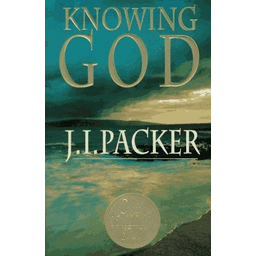 Knowing GodJ.I. Packer’s 22-chapter systematic walk through the attributes of God - broader and denser than Gentle and Lowly.
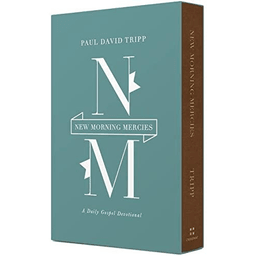 New Morning MerciesPaul Tripp’s 365-day daily devotional - structured for one short reading every morning for a year.
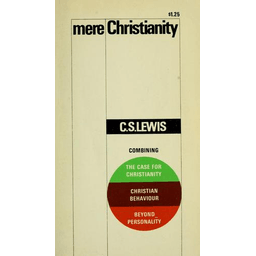 Mere ChristianityC.S. Lewis’s classic introduction to the Christian faith - different genre, but the most-given Christian book of the prior generation.
 My Utmost for His HighestOswald Chambers’s 365-day devotional - a century-old daily classic still given to new believers and seasoned readers alike.
Frequently asked questions
Who is Dane Ortlund?
Dane Ortlund is the Senior Pastor of Naperville Presbyterian Church (PCA) in Illinois and the son of pastor and Bible commentator Ray Ortlund. He holds a PhD in New Testament from Wheaton and previously served as Executive Vice President of Bible Publishing at Crossway. Gentle and Lowly is his best-known book.
What tradition is the book written from?
Ortlund writes from a Reformed, PCA Presbyterian background and draws heavily on the 17th-century Puritans - Thomas Goodwin, Thomas Watson, John Bunyan, and Jonathan Edwards. The central thesis, however - that Christ’s heart toward sinners and sufferers is tenderness - has resonated with readers across Catholic, Orthodox, Wesleyan, Anglican, non-denominational, and LDS audiences. The book itself does not argue for Reformed distinctives.
How long does it take to read?
Most readers finish in about two months reading one chapter every two or three days. The chapters are short - 7-10 minutes each - but they are written to be sat with, not rushed. Many readers find that a faster pace flattens the effect.
Is the audiobook worth it?
Yes, and for many readers it is actually the preferred format. Ortlund narrates the audiobook himself, and his unhurried pacing carries the meditative tone of the prose better than silent reading does for some.
What is the Companion Devotional?
Crossway released a separate 50-day Gentle and Lowly Companion Devotional written by Ortlund. It is not a study guide for the main book - it’s a follow-on volume that pairs scripture, reflection, and prayer with the original book’s themes. Most readers do not need it; pick it up after finishing the main book if the themes have landed.
Is this book a good gift for someone who is grieving?
Yes - this is, by a wide margin, the most common use case. The padded gift edition is what pastors, counselors, hospice chaplains, and lay leaders have been giving to grieving and suffering people throughout the 2020s. It is a meditation on Christ’s nearness to sufferers; it is not an argument or an explanation of suffering.
Do I need any theological background to read it?
No. The book is written so that a brand-new reader and a seminary professor get roughly the same thing out of it. The Puritan source quotes are introduced and contextualized; no prior reading is assumed.
Sources & further reading
More Modern Christian Classics
Knowing GodJ.I. Packer’s 1973 classic on the doctrine of God has sold more than 1.5 million copies and is still the book most pastors hand to laypeople who want theology that goes somewhere - here’s what it actually does and who it’s for. The Cost of DiscipleshipDietrich Bonhoeffer’s 1937 exposition of the Sermon on the Mount, written for pastors training under a regime that wanted them silent - and still the sharpest book in print on what following Jesus actually costs.
 The Holiness of GodR.C. Sproul’s career-defining book on the one attribute of God the church most forgets - and the vision in Isaiah 6 he believed everything else flows from.
 The Weight of GloryThe 1941 sermon many call Lewis's single finest piece of writing - "there are no ordinary people" - gathered with eight other addresses into one slim, uneven, unforgettable collection.
 The Pursuit of GodA.W. Tozer’s ten-chapter wake-up call on knowing God personally - short, severe, and the one devotional Reformed, Wesleyan, Catholic, and Orthodox readers all seem to keep on the nightstand.
 Life TogetherA 120-page field manual on Christian community, written by a pastor running an underground seminary in the shadow of the Third Reich - and still the book people quote when they finally give up on their fantasy of church.