- Starting price
- ~$15 paperback
- Free tier
- No
- Platforms
- Print · Kindle · Audiobook
- Developer
- HarperOne
- Launched
- 1942
- Updated
- May 31, 2026
The verdict
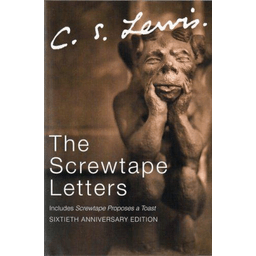
The Screwtape Letters is C.S. Lewis at his most mischievous and arguably his most penetrating. By writing temptation from the inside - a senior demon coaching a junior one - Lewis shows you the small, almost invisible ways a soul drifts, with a wit that has kept the book in print for over eighty years. Read across Catholic, Protestant, Orthodox, and Latter-day Saint shelves alike, it is short, sharp, and uncomfortably accurate.
Try The Screwtape Letters ↗Opens cslewis.com
The Screwtape Letters has quietly become the C.S. Lewis book people quote without realizing they are quoting it. The premise is famous even among those who have never opened it: a senior devil named Screwtape writes a series of letters to his nephew Wormwood, a junior tempter assigned to a single ordinary human - referred to only as "the patient" - and advises him on how to nudge that human, gently and unspectacularly, away from God and toward Hell. The entire moral universe is turned upside down. God is "the Enemy." Hell is "Our Father Below." Virtue is the threat to be neutralized. And because everything is inverted, you spend the whole book reading your own life backwards.
It did not begin as a treatise. Lewis got the idea, by his own account, sitting in church one Sunday morning in 1940, and the letters ran weekly in the Anglican periodical The Guardian before being collected in 1942. The book made Lewis famous on both sides of the Atlantic - it landed him on the cover of Time - and it has never been out of print since. It is not a systematic anything. It doesn't argue. It doesn't define. It doesn't lay out doctrine in any orderly way. It simply lets a devil talk, and trusts you to flinch at the right moments.
What you actually get is thirty-one short letters - most editions add the later standalone essay "Screwtape Proposes a Toast," written in 1959 - narrated entirely in Screwtape's oily, bureaucratic, faintly affectionate-toward-his-nephew voice. The patient lives through the ordinary stuff of a life: an unsatisfying church, an annoying mother, a new set of friends, falling in love, the outbreak of war, and finally death. Screwtape's advice is never to tempt with grand wickedness. It is to keep the patient distracted, vaguely anxious, mildly resentful, and above all comfortable - because, as Screwtape notes, "the safest road to Hell is the gradual one." That single insight is why the book outlives its jokes.
✓ The good
- The inverted perspective is a genuine work of genius - by writing temptation from the tempter's side, Lewis makes you recognize your own self-deceptions in a way a straight sermon never could
- Funny in a way serious Christian books rarely are - Screwtape's exasperated, bureaucratic voice is one of the great comic creations of 20th-century English prose
- Devastatingly observant on small sins - the chapters on distraction, on resentment toward family, on spiritual pride, and on "the safest road to Hell is the gradual one" are quoted constantly for good reason
- Read across every tradition - like all of Lewis, Screwtape is at home on Catholic, Protestant, Orthodox, and Latter-day Saint shelves, because it targets the universal mechanics of temptation rather than denominational distinctives
- Very short and very re-readable - about 175 pages, finishable in an afternoon, and it rewards a return visit at every stage of life
- The full-cast audiobook narrated by John Cleese is widely regarded as one of the best audio recordings of any book - the comic timing is perfect for Screwtape's voice
- Pairs naturally with the rest of Lewis - a frequent second read after Mere Christianity, and an easier on-ramp than his more argumentative work
✗ Watch out
- The inverted voice disorients first-time readers - because "the Enemy" means God and "Our Father Below" means Satan, you have to mentally flip everything, and some readers find the first two or three letters genuinely confusing
- It is satire, not systematic theology - Lewis is dramatizing temptation, not laying out a doctrine of demons, sin, or salvation, and reading it as a literal manual misses the point
- A product of its 1940s setting - the patient's world (wartime England, period assumptions about class, courtship, and women) occasionally feels dated
- The relentless irony can wear on some readers - sustaining a single satirical voice for thirty-one letters is a feat, but a few readers find it tiring before the end
- Lewis himself said it was unpleasant to write - the strain of "thinking like a devil" gives parts of the book a deliberately airless, cynical quality that is the point but is not always comfortable
Best for
- Readers who want Lewis's sharpest insight into everyday temptation and self-deception
- Anyone who finds straight devotional writing too earnest and prefers wit
- Christians of any tradition wanting a short, re-readable classic
- Listeners who would enjoy the celebrated John Cleese full-cast audiobook
Avoid if
- You want a literal, systematic teaching on demons, spiritual warfare, or angelology
- The inverted "everything-means-its-opposite" device sounds more confusing than fun
- You prefer a warm, encouraging devotional tone over sustained irony
- You are looking for Lewis's direct case for the faith - start with Mere Christianity instead
What The Screwtape Letters is
The Screwtape Letters is a 1942 epistolary satire by C.S. Lewis, made up of thirty-one letters from Screwtape, an experienced devil in Hell's bureaucracy, to his apprentice nephew Wormwood, who has been assigned to corrupt one ordinary young Englishman. Most modern editions also include "Screwtape Proposes a Toast," a short companion piece Lewis wrote in 1959. The book has no plot in the usual sense - the patient's life unfolds entirely through Screwtape's commentary on Wormwood's clumsy attempts to ruin it - and it is short, usually around 175 pages depending on edition.
The book is not a confession or a doctrine of any single tradition. Lewis was Anglican, and the moral universe of the letters is recognizably Christian, but the temptations Screwtape recommends - distraction, complacency, wounded pride, low-grade resentment, religious self-congratulation - are the common human experience of nearly every reader. That is why The Screwtape Letters, like the rest of Lewis, is read and loved across Catholic, Protestant, Orthodox, and Latter-day Saint audiences. It is aiming at the machinery of temptation that everyone shares, not at the points where traditions differ.
Why readers still reach for Screwtape
Most books about sin and temptation describe them from the outside, as a preacher would: here is the vice, here is why it is wrong, here is how to resist it. Lewis does the opposite. He puts you behind the desk of the tempter, reading the confidential memos, and the effect is uncanny. When Screwtape coaches Wormwood on how to keep the patient from ever actually praying - encourage him to feel prayerful rather than to pray, keep his attention on his own feelings rather than on God - you recognize the move because you have made it yourself that very week. The satire works because it is a mirror, not a lecture.
And because Screwtape never once mentions a denomination, the mirror works for everyone. A Catholic reader recognizes the temptation to treat Mass as routine. A Latter-day Saint reader recognizes the temptation to let church become social habit. A Protestant reader recognizes the temptation to mistake strong feelings for genuine devotion. Lewis is describing the inside of the human heart under temptation, and the inside of the human heart does not have a denomination. That is the quiet reason the book has stayed on so many different shelves for eighty years - it accuses all of us in exactly the same terms.
The inverted voice: temptation written from the inside
The whole book is built on one audacious device: every word is written by a devil, to a devil, about how to damn a human being. This means the values are systematically reversed. God is referred to throughout as "the Enemy." Hell's leadership is "Our Father Below." A person's repentance is a disaster to be managed; their growing love of God is a crisis. Screwtape's tone is that of a seasoned middle-manager mentoring a green recruit - alternately patronizing, exasperated, and (in the famous late letters) genuinely menacing as Wormwood keeps botching the assignment. Lewis sustains this single inverted voice across all thirty-one letters without ever breaking character.
Why it matters: the inversion is what makes the book do something no straightforward devotional can. Reading advice on how to tempt yourself forces a kind of double vision - you see the trap being laid and realize you have already stepped in it. The very thing that disorients first-time readers (you have to keep translating "the Enemy" back into "God") is also the engine of the book's power. It is harder to dismiss an insight about your own pride when you have just watched a demon explain exactly how to feed it. The technique is why the book has outlived its period jokes and why writers have imitated it, mostly badly, ever since.
"The safest road to Hell is the gradual one"
The central insight of the book is that ruin is rarely dramatic. Screwtape repeatedly warns Wormwood off spectacular sins, because spectacular sins tend to wake a person up. The reliable strategy is the small, gradual, almost invisible drift: keep the patient busy, keep him mildly anxious about the future, keep him faintly resentful of the people he lives with, keep him pursuing a vague sense of being owed something. "It does not matter how small the sins are," Screwtape advises, "provided that their cumulative effect is to edge the man away from the Light and out into the Nothing... the safest road to Hell is the gradual one - the gentle slope, soft underfoot, without sudden turnings, without milestones, without signposts."
Why it matters: this is the line readers carry out of the book for the rest of their lives, and it is the reason the satire is more than entertainment. Lewis is making a serious claim - that most spiritual danger comes not from obvious wickedness but from distraction, comfort, and the slow erosion of attention - and he is making it in a form you cannot argue with, because it is being recommended to you by someone who wants you destroyed. The chapters on noise, on "the Christians who are next to you in the pew," and on keeping the patient focused on an imagined future rather than the present moment are quoted in sermons and devotionals across every tradition precisely because the diagnosis is so hard to deny.
The John Cleese audiobook and the book's afterlife
Few classics have an audio edition as celebrated as Screwtape's. The full-cast recording narrated by John Cleese - yes, of Monty Python - is routinely named among the best audiobooks ever produced, and it is a rare case where the performance arguably improves on silent reading. Screwtape's voice is fundamentally comic: a pompous, self-important, faintly seething bureaucrat, and Cleese's timing lands the satire in a way the page cannot always manage on its own. For listeners who find the inverted device confusing in print, the performance often makes the whole conceit click.
Why it matters: the audiobook is part of why the book keeps reaching new readers, but it also points to something about the work itself - Screwtape is, at heart, a performance. Lewis wrote a character, not a treatise, and the book lives or dies on voice. That afterlife extends well beyond audio: Screwtape has been adapted for the stage (a long-running one-man show), endlessly imitated by other authors, and quoted in everything from pulpits to business books on attention and distraction. "Screwtape Proposes a Toast," the 1959 companion essay included in most editions, extends the conceit to comment on mid-century culture and is worth reading as a coda. The point is that Screwtape escaped the page a long time ago.
Pricing
Paperback
~$15
The standard HarperOne edition, usually including "Screwtape Proposes a Toast." The copy most people own.
Kindle
~$11
Searchable and highlight-syncing - handy for a book this quotable. Roughly a few dollars under paperback.
Audiobook (John Cleese)
~$20
The celebrated full-cast recording narrated by John Cleese - widely considered one of the best audiobooks ever made.
Hardcover / gift edition
~$22
Cloth and annotated editions exist; the natural pick when you are giving it away.
Used paperback
~$3-5
Turns up at every library sale and thrift store - the way most people acquire their first copy.
The Screwtape Letters is not free. Used paperbacks are everywhere - library sales, thrift stores, the back of a friend's shelf - and turn up for three to five dollars, which is how most people get their first copy. A new HarperOne paperback runs around $15, usually bundles in "Screwtape Proposes a Toast," and is the everyday default that nearly every quotation in print is keyed to.
The Kindle edition typically runs a few dollars under paperback, around $11, with highlight-syncing that is genuinely useful for a book this endlessly quotable. As with Mere Christianity, the digital price is set by the Lewis estate's licensing rather than printing economics, so don't expect deep ebook discounts on Lewis titles.
The standout option is the audiobook. The John Cleese full-cast recording runs around $20 (or is included with an Audible membership) and is worth the premium over a generic narration - it is one of the best audio performances of any book in print, and Screwtape's comic voice is tailor-made for it. If you are giving the book as a gift, the ~$22 cloth or annotated hardcover is the natural pick.
Most readers do not need a special edition. The standard paperback is the balanced default and the copy you will lend out and never get back. If you commute or simply respond better to voice, the Cleese audiobook is the one upgrade actually worth paying for.
Where The Screwtape Letters falls behind
The inverted device. The book's great strength is also its steepest entry cost. Because "the Enemy" means God and every value is reversed, first-time readers often spend the opening letters mentally translating, and a few never fully settle into the conceit. It is a deliberate feature, not a flaw - but it is a real on-ramp, and it is the most common reason a reader bounces off the book.
Not systematic theology. Screwtape dramatizes temptation; it does not teach a doctrine of demons, spiritual warfare, the Fall, or salvation in any orderly way. Lewis even warns in his preface against taking the diabolical machinery too literally. Anyone wanting an actual treatment of those subjects will need to look elsewhere - this is a satirical mirror held up to the human heart, not a manual.
A 1940s setting. The patient lives in wartime England, and the book carries period assumptions about class, courtship, and family life. Most of it is invisible because the temptations are timeless, but a 2026 reader will hit occasional details - a reference, an attitude - that feel like artifacts of their decade.
Sustained irony fatigue. Holding one satirical voice across thirty-one letters is a high-wire act, and Lewis pulls it off, but the relentless cynicism of Screwtape's perspective is intentionally airless. A minority of readers find the tone wearing before the final letter, and Lewis himself remarked that the book was not pleasant to write.
The Screwtape Letters vs. Mere Christianity vs. The Great Divorce
These three are the most common starting points in Lewis, and they do very different jobs. Mere Christianity (1952) is the direct argument - Lewis makes the case for the faith in plain, orderly prose meant for a general audience. The Screwtape Letters (1942) is the satirical mirror - it teaches by inversion, dramatizing temptation from the demon's side rather than arguing anything head-on. The Great Divorce (1945) is the imaginative parable - a dreamlike bus ride from Hell to the outskirts of Heaven that dramatizes how people cling to the very things that keep them out.
Different strengths. Mere Christianity is the one to hand a curious skeptic who wants the actual case. Screwtape is the one for a reader who already believes and wants to see their own self-deceptions exposed - it is sharper on the psychology of sin than anything else Lewis wrote. The Great Divorce is the most purely imaginative of the three and the best at making the stakes of small choices feel concrete. If you are starting Lewis from zero, begin with Mere Christianity. If you want his wit and his eye for everyday temptation, Screwtape is the one.
All three are read widely across Catholic, Protestant, Orthodox, and Latter-day Saint audiences, and Screwtape is among the most universally enjoyed because comedy travels and because its subject - the small ways anyone drifts from God - is common ground rather than contested ground.
The bottom line
The Screwtape Letters is the most fun you will have being convicted. Lewis took an audacious idea - let a devil explain how to damn you - and executed it so well that the book has stayed in print, and in people's heads, for over eighty years. It is short, it is wickedly funny, and it sees through your everyday self-deceptions with an accuracy that can sting. Read it as the satire it is rather than the systematic theology it isn't, and it earns its place as one of the great Christian classics of the 20th century. After Mere Christianity, it is the Lewis book to read next.
Alternatives to The Screwtape Letters
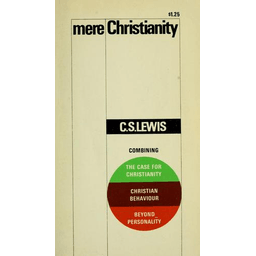 Mere ChristianityLewis's direct case for the faith and the most-recommended modern intro to Christianity - start here, then read Screwtape.
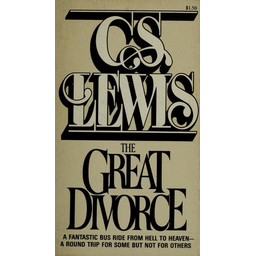 The Great DivorceLewis's dreamlike parable of a bus ride from Hell to Heaven - the imaginative companion to Screwtape's satire.
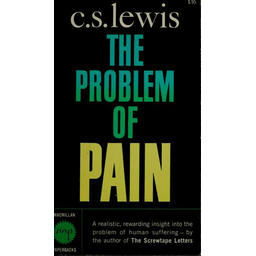 The Problem of PainLewis's measured treatment of why a good God allows suffering - the argumentative counterpart to Screwtape's wit.
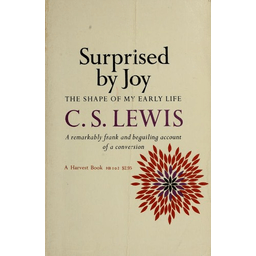 Surprised by JoyLewis's spiritual autobiography, tracing his road from atheism to faith - the personal story behind all the rest.
Frequently asked questions
What is The Screwtape Letters actually about?
It is a satire made up of thirty-one letters from a senior devil named Screwtape to his nephew Wormwood, a junior tempter, on how to corrupt one ordinary human. Because it is written entirely from the demons' point of view, every value is inverted - God is called "the Enemy" - and the reader ends up recognizing their own everyday temptations in Screwtape's advice.
Is The Screwtape Letters hard to read?
The prose is easy, but the device takes adjustment. Because "the Enemy" means God and everything is reversed, first-time readers often need a few letters to settle into the inverted perspective. Once it clicks it reads quickly - most people finish in an afternoon. If the inversion is confusing in print, the John Cleese audiobook makes the conceit much clearer.
Is the book meant to teach literal facts about demons?
No. Lewis himself cautioned in his preface against taking the diabolical machinery too literally. It is satire - it dramatizes the psychology of ordinary temptation, self-deception, and distraction. It is not a systematic teaching on demons, angels, or spiritual warfare, and reading it as a literal manual misses what Lewis was doing.
Do Catholics and Latter-day Saints read The Screwtape Letters?
Yes, widely. Like all of Lewis, the book is read across Catholic, Protestant, Orthodox, and Latter-day Saint audiences. Because it targets the universal mechanics of temptation - distraction, pride, resentment, complacency - rather than any denominational distinctive, readers from every tradition find their own experience reflected in it.
What is "Screwtape Proposes a Toast"?
A short companion piece Lewis wrote in 1959, set at a graduation banquet in Hell, in which Screwtape comments on mid-20th-century culture. It is included in most modern editions and works as a coda to the original letters, though it is more a cultural essay than a continuation of the patient's story.
Which edition or format should I get?
The standard HarperOne paperback (~$15) is the right default and usually includes "Screwtape Proposes a Toast." The one upgrade worth paying for is the audiobook (~$20) narrated by John Cleese, widely regarded as one of the best audio recordings of any book. Used paperbacks are everywhere for a few dollars if budget matters.
Should I read this before or after Mere Christianity?
After. Mere Christianity is the better starting point if you want Lewis's direct case for the faith. Screwtape is the natural second read - it assumes a basic familiarity with the Christian moral picture and then turns it inside out. Many readers go Mere Christianity, then Screwtape, then The Great Divorce.
Sources & further reading
More Modern Christian Classics
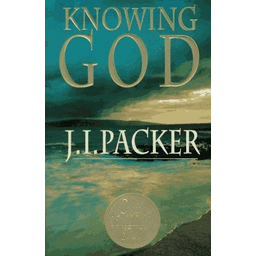 Knowing GodJ.I. Packer’s 1973 classic on the doctrine of God has sold more than 1.5 million copies and is still the book most pastors hand to laypeople who want theology that goes somewhere - here’s what it actually does and who it’s for.
 The Cost of DiscipleshipDietrich Bonhoeffer’s 1937 exposition of the Sermon on the Mount, written for pastors training under a regime that wanted them silent - and still the sharpest book in print on what following Jesus actually costs.
 Gentle and LowlyDane Ortlund’s 23 short chapters on Matthew 11:29 have quietly become the most-given new Christian book of the decade - and the reason is not what you’d guess.
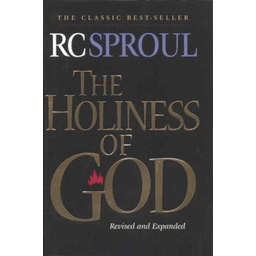 The Holiness of GodR.C. Sproul’s career-defining book on the one attribute of God the church most forgets - and the vision in Isaiah 6 he believed everything else flows from.
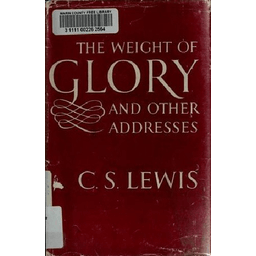 The Weight of GloryThe 1941 sermon many call Lewis's single finest piece of writing - "there are no ordinary people" - gathered with eight other addresses into one slim, uneven, unforgettable collection.
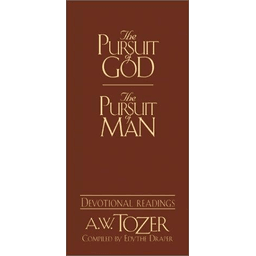 The Pursuit of GodA.W. Tozer’s ten-chapter wake-up call on knowing God personally - short, severe, and the one devotional Reformed, Wesleyan, Catholic, and Orthodox readers all seem to keep on the nightstand.