- Starting price
- ~$15 paperback
- Free tier
- No
- Platforms
- Print · Kindle · Audiobook
- Developer
- HarperOne
- Launched
- 1940
- Updated
- May 31, 2026
The verdict
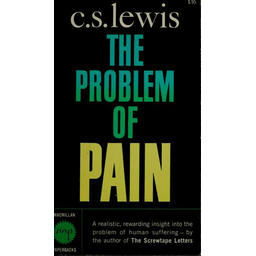
The Problem of Pain is C.S. Lewis's measured, argued answer to the intellectual problem of suffering - written a decade before grief came for him personally. It is the head, not the heart: clear, bracing, occasionally cold, and honest enough to admit where reason runs out. Read it for the argument, then pair it with A Grief Observed for the wound.
Try The Problem of Pain ↗Opens cslewis.com
The Problem of Pain has quietly become the book people reach for when the question of suffering turns from a feeling into an argument. It is not the book you press into the hands of someone at a funeral - Lewis wrote that one later, by accident, in his own grief. This is the earlier, colder, more carefully reasoned volume: his attempt to answer, on paper, the single most common objection to belief in a good God. If He is all-powerful, He could prevent pain. If He is all-good, He would want to. Pain exists. The syllogism is as old as Job, and Lewis takes it head-on.
It was Lewis's first book of theology, published in 1940 while Britain was again at war and suffering was not an abstraction for anyone reading it. He was an Oxford literature don and a relatively new Christian, a former atheist who remembered the force of the objection from the inside. The Problem of Pain does not open with comfort. It does not open with a verse. It does not open with the author's own story. It opens with the argument itself, stated as strongly as any atheist would state it, and then spends the rest of the book working patiently around it.
What you get is a short, dense, eight-chapter treatise: divine omnipotence, divine goodness, human wickedness, the Fall, human pain (two chapters), hell, animal pain, and heaven. The voice is the familiar Lewis - analogies, asides, the occasional dry joke - but the register is more philosophical than Mere Christianity and far more controlled than the raw notebook he would publish two decades later as A Grief Observed. This is Lewis reasoning. The other book is Lewis bleeding. You want both, and most readers find they need them in that order.
✓ The good
- The clearest popular statement of the intellectual problem of evil and a serious, good-faith answer to it - Lewis states the objection as strongly as any skeptic before he replies
- Tackles the hard chapters most modern Christian books avoid - hell and animal pain each get a full treatment rather than a footnote
- Lewis's distinction between God's goodness and a grandfatherly indulgence ("a senile benevolence") reframes the whole question - love that wills your good is not the same as a wish that you be comfortable
- Read across traditions - Catholic, Protestant, Orthodox, and Latter-day Saint readers all cite it, because Lewis argues from reason and shared Christian premises rather than from one communion's distinctives
- Short and re-readable - about 160 pages, dense enough to reward a second pass and a pencil
- The final chapter on heaven is some of the most quoted prose Lewis ever wrote on longing and the "inconsolable secret" every human carries
- A genuine intellectual on-ramp - it treats the reader as someone capable of following an argument rather than someone who just needs reassurance
✗ Watch out
- It is the head, not the heart - Lewis himself later admitted in A Grief Observed that arguing about pain and suffering it are very different things, and this is the argument
- The chapter on animal pain is openly speculative - Lewis says so himself, floating possibilities he cannot prove, and it is the most-criticized section of the book
- Lewis is a layman, not a trained theologian, and says so in the preface - on the Fall, on hell, and on providence he illustrates more than he dogmatically defines
- The register is more demanding than Mere Christianity - the early chapters on omnipotence and goodness ask real philosophical attention, and a reader expecting devotional comfort may find them austere
- Not a pastoral resource for someone in the middle of fresh loss - pointing a grieving person here, rather than to A Grief Observed, tends to land wrong
Best for
- Anyone wrestling with suffering as an intellectual objection to faith
- Skeptics who want the strongest version of the argument answered, not dodged
- Readers of Mere Christianity ready for Lewis on a harder question
- Study groups willing to sit with hell, the Fall, and animal pain honestly
Avoid if
- You are in the acute middle of grief and need comfort, not argument
- You want a pastor's bedside voice rather than a philosopher's
- You want one tradition's settled doctrine of hell or the Fall spelled out
- You bounce off dense mid-century British prose and abstract reasoning
What The Problem of Pain is
The Problem of Pain is C.S. Lewis's 1940 work of theology - his first - addressing the intellectual problem of suffering: how the existence of pain can be squared with belief in a God who is both all-powerful and all-good. It is short, roughly 160 pages, and moves through eight chapters in a deliberate order. Lewis first examines what we actually mean by divine omnipotence and divine goodness, then turns to human wickedness and the Fall, then to the function of human pain across two chapters, and finally to the three subjects most popular books skip entirely: hell, the pain of animals, and heaven.
The book is not a devotional and not a memoir. Lewis writes from reason and from premises he takes to be common Christian ground, which is why he is read and quoted across Catholic, Protestant, Orthodox, and Latter-day Saint settings rather than claimed by any one of them. He is careful in the preface to call himself a layman rather than a theologian and to say he is setting out the problem as he sees it, not handing down doctrine. The result is an argued case, written to be followed and tested, that became the standard popular treatment of the question for the rest of the century.
Why readers reach for Lewis on suffering specifically
Most books on suffering are written to comfort. They reach for the grieving reader, sit beside them, and speak gently. Lewis does something the others mostly will not: he treats pain as an honest intellectual objection that deserves an honest intellectual answer, and he refuses to win the argument by lowering the stakes. He opens by stating the skeptic's case at full strength - a God who could stop suffering and does not is hard to call good - and then declines every cheap escape from it. He will not shrink God's power. He will not redefine pain as an illusion. He works the problem as it actually stands.
That makes the book unusually portable across traditions. A Catholic reader is not asked to dodge anti-Catholic asides; a Latter-day Saint reader is not asked to dodge anti-LDS asides; a skeptic is not asked to grant anything beyond shared premises. Lewis reasons from omnipotence, goodness, and human freedom rather than from one communion's catechism, and he is candid about the points where argument can only take you so far. It is the rare book on suffering you can hand to a doubting philosophy major and a faithful churchgoer with equal confidence that neither will feel handled.
Divine goodness: love is not "a senile benevolence"
The hinge of the whole book is a chapter on what we mean when we call God good. Lewis's claim is that most people, when they object to suffering, are quietly assuming God ought to be a kind of cosmic grandfather - someone whose chief aim is that everybody have a pleasant time. Against that he sets a harder and older idea: that real love wills the genuine good of the beloved, and that the genuine good of a person is not the same thing as their comfort. We do not love a painting by wishing it left as a smudge; we do not love a child by leaving it untrained. Love, Lewis argues, is by its nature demanding, because it cares too much about its object to be satisfied with less than the object's actual flourishing.
From there the book's logic on pain follows. If God's love is the kind that wants its object to become something - whole, true, fully alive - rather than merely to feel content, then a world with no friction, no correction, and no cost would not be a more loving world. It would be a less loving one. Lewis is careful not to make this glib; he knows it can sound like a justification handed down by someone who has never hurt. But the distinction reframes the question that the rest of the book turns on, and it is the move readers across traditions most often say reorganized how they think about suffering.
The hard chapters: hell, the Fall, and animal pain
What sets The Problem of Pain apart from gentler books is that Lewis refuses to skip the chapters that make modern readers wince. He devotes a full chapter to hell, taking up directly the objection that eternal loss is incompatible with a good God, and arguing that the doors of hell are, in a sense, locked from the inside - that God will not finally override a will that has spent itself refusing Him. He gives the Fall its own chapter, framing humanity's break with God as the source from which so much pain flows. He even takes on the suffering of animals, which most theologians leave alone entirely.
These are exactly the points where Christian traditions differ, and Lewis handles them as the layman-apologist he says he is - exploring, reasoning, proposing, never decreeing that one communion's reading is the correct one. His treatment of hell is offered as the best sense he can make of it, not as a settled verdict. His chapter on animal pain he flags himself as frankly speculative, a set of possibilities he cannot demonstrate. That honesty is a feature: readers from different traditions can take the questions seriously, weigh Lewis's reasoning, and reach their own conclusions without feeling that a doctrine has been smuggled past them.
Heaven and the "inconsolable secret"
The book closes on heaven, and it is where Lewis's prose lifts from argument into something closer to music. He argues that every human being carries a desire that nothing in the world ever quite satisfies - a longing he calls the "inconsolable secret," a stab of want triggered by a piece of music, a landscape, a smell from childhood, that points past itself to something we have never actually had. The chapter contends that this unfulfilled longing is not a cruelty but a signpost: if no experience in this world satisfies it, perhaps we were made for another world, and pain is part of what keeps us from settling for less than what we were made for.
It is the most-quoted material in the book and the part most readers carry away. Where the earlier chapters work the problem like a proof, this one widens out and gives the reader something to want. It also quietly answers the book's own austerity: the long argument about why pain might serve God's purposes finds its resolution not in a tidy formula but in a hope big enough to make the argument bearable. Readers across every tradition tend to dog-ear this chapter, and it is the clearest preview of the imaginative Lewis who would later write The Great Divorce.
Pricing
Paperback
~$15
The standard HarperOne edition. The copy most readers own and the one quotations are keyed to.
Kindle
~$10
Searchable, highlight-syncs across devices - useful for a book this quotable and this worth annotating.
Audiobook
~$15
Multiple recordings exist; widely sold on its own or included with an Audible membership.
Hardcover
~$25
Gift-grade edition. The one that survives a few re-reads and lending.
Signature Classics set
~$40
Bundled with Mere Christianity and other Lewis titles - the value pick if you want several at once.
The Problem of Pain is not free. Used paperbacks turn up in thrift stores and library sales for a few dollars, which is how a lot of readers acquire their first copy. A new HarperOne paperback runs around $15 - call it the everyday default - and is the edition most quotations in print are keyed to.
The Kindle edition runs a little under the paperback, around $10, and the highlight-syncing is genuinely useful here: this is a book you will want to mark up, argue with in the margins, and return to. The audiobook runs around $15 on its own or comes included with an Audible membership, and Lewis's measured prose carries well read aloud, though the denser early chapters reward a printed copy you can slow down on.
If you are buying a gift, the ~$25 hardcover is the natural pick and survives the lending it will inevitably get. If you suspect you will read more Lewis - and most people who finish this one do - the Signature Classics box set around $40 bundles it with Mere Christianity and other titles and is the better value. Most readers do not need the box set to start. The paperback is the balanced default and the copy you will reach for again.
Where The Problem of Pain falls behind
The head, not the heart. This is the book's defining limit and Lewis was the first to name it. The Problem of Pain answers suffering as an argument - and answers it well - but it does not sit with the reader who is actually suffering. Lewis discovered this himself when his wife died and he wrote A Grief Observed, a raw notebook that reads almost as a rebuttal of his own earlier confidence. Read alone, this book can feel like being handed a syllogism at a graveside. Pair it with the later book and the gap closes.
The chapter on animal pain. Lewis flags it as speculative himself, and it is the most-criticized section of the book. He floats possibilities - about animal consciousness, about a relationship between humans and the rest of creation - that he cannot demonstrate and does not claim to. Some readers find it the weakest stretch and skim it. It is honest speculation rather than argument, and it is fair to read it as Lewis thinking aloud rather than concluding.
Theological depth and authority. Lewis was a literature professor, not a trained theologian, and says so plainly in the preface. On the Fall, on the doctrine of hell, on the workings of providence, he reasons and illustrates rather than delivering the settled teaching of any one tradition. That is the right call for the book he was writing, and the reason it travels so widely. It does mean The Problem of Pain is a starting point on those questions, not a final word.
The demand on the reader. The opening chapters on omnipotence and goodness are more philosophically taxing than Mere Christianity, and a reader who came for comfort may find them austere or even cold before the book warms toward its close. It rewards patience. But it is worth knowing going in that the payoff chapter is at the end, and the road there runs through some genuinely hard reasoning.
The Problem of Pain vs. A Grief Observed vs. The Reason for God
These three get recommended together on the question of suffering, and they do genuinely different jobs. The Problem of Pain (Lewis, 1940) is the intellectual case - it answers suffering as an objection to belief in a good God, working from reason and shared Christian premises. A Grief Observed (Lewis, 1961) is the same author on the same subject from the opposite end: a raw journal written after his wife's death, in which the man who argued so confidently about pain finds himself doubting, angry, and consoled only slowly. The Reason for God (Tim Keller, 2008) is the broad modern apologetic - it treats suffering as one objection among several (science, exclusivism, hell) in the vocabulary of a contemporary urban skeptic.
Different strengths. The Problem of Pain is the argument - the book to read when the question is intellectual and you want it answered, not soothed. A Grief Observed is the wound - the book to read, or to give, when the question has become personal and a syllogism would be an insult. Keller is the broadest - the book for someone whose doubt about suffering sits alongside several other modern objections at once. If your question is "how can a good God allow pain?" read this one. If you are the one in pain, read A Grief Observed. If suffering is one item on a longer list of doubts, add Keller.
All three are read widely across Catholic, Protestant, Orthodox, and other Christian traditions. The two Lewis titles are the most ecumenical by design, arguing from reason and common ground rather than denominational distinctives. Keller writes from a Reformed Presbyterian perspective but engages broadly and quotes Lewis throughout.
The bottom line
The Problem of Pain is the standard popular answer to the oldest objection to faith, and it earns the standing. Lewis states the problem of suffering as strongly as any skeptic, refuses every cheap way out, and reasons toward an answer that treats the reader as an adult - bracing, honest about its limits, and unwilling to win by making God smaller. It is the head and not the heart, and Lewis knew it; read it for the argument, then read A Grief Observed for the rest. Together they are the best thing one writer has given the English-speaking world on why it hurts to be alive.
Alternatives to The Problem of Pain
 A Grief ObservedLewis's raw notebook after his wife's death - the personal companion to this book's argument, and the one to give someone in fresh grief.
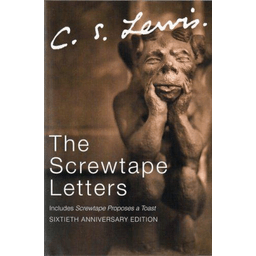 The Screwtape LettersLewis on temptation, told as letters from a senior devil to his apprentice - the imaginative, funnier side of the same theology.
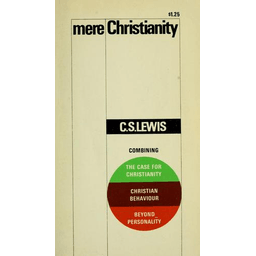 Mere ChristianityLewis's compiled wartime radio talks and the modern world's default introduction to the faith - the natural place to start with Lewis.
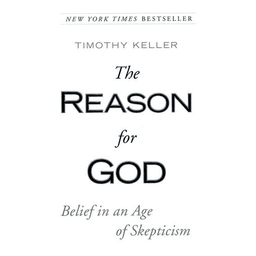 The Reason for GodTim Keller's modern apologetic - engages suffering alongside science, exclusivism, and hell for a contemporary skeptic, and quotes Lewis throughout.
Frequently asked questions
What is The Problem of Pain actually about?
It is C.S. Lewis's 1940 answer to the intellectual problem of suffering: if God is both all-powerful and all-good, why does pain exist? Across eight short chapters Lewis works through divine omnipotence and goodness, human wickedness, the Fall, the function of human pain, hell, animal pain, and heaven. It argues the question rather than offering devotional comfort.
Is this the same as A Grief Observed?
No, and the difference matters. The Problem of Pain (1940) is Lewis reasoning about suffering in the abstract, before he had lost anyone close. A Grief Observed (1961) is the journal he kept after his wife died - raw, doubting, personal. Many readers say you want both: this book for the argument, the later one for the lived experience. They are often read back to back.
Is The Problem of Pain hard to read?
It is more demanding than Mere Christianity. The opening chapters on omnipotence and divine goodness ask real philosophical attention, and a reader expecting bedside comfort may find them austere. The prose is plain English and the book is short (about 160 pages), but it rewards a slow read and a pencil. The final chapter on heaven is the most accessible and the most loved.
What does Lewis say about hell?
He gives hell a full chapter and takes the objection to it seriously, arguing in effect that its doors are locked from the inside - that God does not finally override a will that has spent itself refusing Him. Lewis offers this as the best sense he can make of the doctrine as a layman, not as the settled teaching of any one tradition, and traditions do differ on the question. He leaves room for the reader to weigh it.
Do Catholics, Orthodox, and Latter-day Saints read it too?
Yes, widely. Lewis argues from reason and from premises common to Christians generally rather than from one communion's distinctives, so the book is quoted across Catholic, Protestant, Orthodox, and Latter-day Saint settings. Lewis himself was Anglican, but he wrote as a layman addressing a shared question, which is why readers across traditions find it usable without friction.
Why do critics single out the chapter on animal pain?
Because Lewis flags it as speculative himself. To address why animals suffer, he floats possibilities about animal consciousness and creation that he cannot demonstrate and does not claim to prove. It is the most-criticized section of the book, and it is fair to read it as Lewis thinking aloud rather than concluding. Some readers find it the weakest stretch and move quickly through it.
Where should I go after The Problem of Pain?
For Lewis on the same subject from the heart, read A Grief Observed. For more Lewis generally, The Screwtape Letters and Mere Christianity are the natural next reads, and The Great Divorce extends the imaginative side. For a broader modern apologetic that treats suffering alongside other objections, Tim Keller's The Reason for God is the common follow-up.
Sources & further reading
More Modern Christian Classics
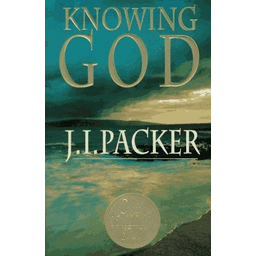 Knowing GodJ.I. Packer’s 1973 classic on the doctrine of God has sold more than 1.5 million copies and is still the book most pastors hand to laypeople who want theology that goes somewhere - here’s what it actually does and who it’s for.
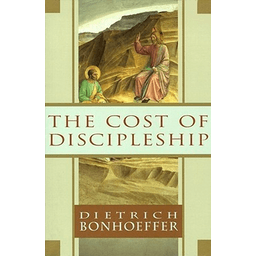 The Cost of DiscipleshipDietrich Bonhoeffer’s 1937 exposition of the Sermon on the Mount, written for pastors training under a regime that wanted them silent - and still the sharpest book in print on what following Jesus actually costs.
 Gentle and LowlyDane Ortlund’s 23 short chapters on Matthew 11:29 have quietly become the most-given new Christian book of the decade - and the reason is not what you’d guess.
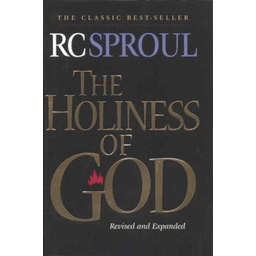 The Holiness of GodR.C. Sproul’s career-defining book on the one attribute of God the church most forgets - and the vision in Isaiah 6 he believed everything else flows from.
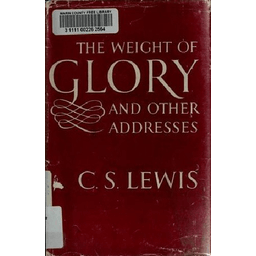 The Weight of GloryThe 1941 sermon many call Lewis's single finest piece of writing - "there are no ordinary people" - gathered with eight other addresses into one slim, uneven, unforgettable collection.
 The Pursuit of GodA.W. Tozer’s ten-chapter wake-up call on knowing God personally - short, severe, and the one devotional Reformed, Wesleyan, Catholic, and Orthodox readers all seem to keep on the nightstand.