- Starting price
- ~$14 paperback
- Free tier
- No
- Platforms
- Print · Kindle · Audiobook
- Developer
- HarperOne
- Launched
- 1961
- Updated
- May 31, 2026
The verdict
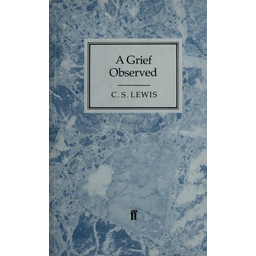
A Grief Observed is the rare book about loss that grieving people of every tradition actually finish. Lewis wrote it for himself, not for a reader, and that is exactly why it works - he records the anger, the doubt, and the panic honestly enough that the bereaved feel met instead of managed. It is very short, it lives in the questions for most of its length, and it is the book many people press into the hands of someone who has just buried someone they loved.
Try A Grief Observed ↗Opens cslewis.com
A Grief Observed has quietly become the book people give the bereaved when they cannot think of anything to say. It turns up on hospice shelves, in funeral-home lobbies, in the small stack a pastor keeps for the family after the service. Catholics give it. Protestants give it. Orthodox readers give it. Latter-day Saints give it. It is one of the few books about loss that grieving people from any background actually finish, because it refuses to reach for consolation too early.
The book did not begin as a book. It began as four notebooks Lewis happened to have lying around the house after his wife, Joy Davidman, died of cancer in 1960. He started writing in them, he says, simply to keep from going mad. It does not preach. It does not comfort. It does not pretend the loss is smaller than it is. It is a man writing down, in real time, exactly what is happening inside him, and discovering on the page that grief is not what he expected.
Lewis published it in 1961 under a pseudonym - N.W. Clerk - because the contents were so raw he did not want it read as the work of the famous apologist who had, years earlier, written a tidy book of answers about suffering called The Problem of Pain. Friends kept recommending the anonymous little volume to him, not knowing he had written it; only after his death in 1963 was it reissued under his own name. What you get is barely a hundred pages, in four short parts that track the same restless man as the floor returns under his feet.
It is, in other words, the lived counterpart to The Problem of Pain. The earlier book reasons about why a good God permits suffering; this one is what happened when the reasoning met the reality of a specific grave. Readers across traditions call it the most honest thing Lewis ever wrote, and it still travels everywhere because honesty does not go out of date.
✓ The good
- The most honest book about grief in wide circulation - Lewis records the anger, the doubt, and the numbness without sanding any of it down, and the bereaved consistently say it is the first thing that made them feel understood rather than handled
- Read and given across traditions - Catholics, Protestants, Orthodox, and Latter-day Saints all hand it to grieving friends, because it stays in the universal human experience of loss rather than in any one denomination’s framing
- Lewis writes about doubt from the inside - he admits, in print, that grief made him wonder whether God was good or even there, which is precisely why readers in crisis trust him when the book slowly turns back toward faith
- Short enough to be read in one sitting - barely a hundred pages, which matters enormously for a reader who has no concentration left and cannot face a long book
- The prose is plain and unguarded - there are no analogies to admire and no arguments to follow, just a clear mind reporting what it sees, which is the right register for the subject
- It earns its turn - the book does eventually move from raw protest toward something steadier and more hopeful, and because Lewis refused to rush there, the arrival lands as true rather than tidy
- Endlessly re-readable at different stages - readers report it says something different at week one, month six, and year five of a loss
✗ Watch out
- It sits in the questions for most of its length - a reader who wants reassurance and answers right now should know that the comfort comes late and arrives quietly, not as a summary on the last page
- It is a personal journal, not a grief how-to - there are no stages, no steps, no exercises, and no checklist for getting through bereavement, so a reader looking for practical guidance will need a different book
- It is very short - about a hundred pages - which some readers find perfectly calibrated and others find leaves them wanting more once the book is over
- The grief is specifically the loss of a spouse - Lewis is mourning his wife, and while the emotional terrain generalizes, a reader grieving a parent, a child, or a friend may have to translate some of the particulars
- The doubt is real and unresolved on the page for chapters at a time - a reader who finds frank questioning of God’s goodness unsettling rather than honest may want to be warned going in
- The early-1960s register shows occasionally - a handful of references and turns of phrase belong to their decade, though far less than in his earlier work
Best for
- Anyone in the early, disorienting weeks after losing someone they loved
- A friend looking for one book to give a grieving person of any background
- Believers whose grief has shaken their faith and who want company in the doubt
- Long-time Lewis readers who want the human counterpart to The Problem of Pain
Avoid if
- You want a step-by-step guide to grieving - this is a journal, not a how-to
- You need reassurance and answers immediately - the comfort here comes slowly
- You find frank doubt about God upsetting rather than honest company
- You are looking for a long, immersive read - this one is deliberately brief
What A Grief Observed is
A Grief Observed is the journal C.S. Lewis kept in the months after his wife, Joy Davidman, died of cancer in 1960, first published in 1961 under the pen name N.W. Clerk and reissued under his own name after his death. It is very short - about a hundred pages - and organized as four loosely continuous sections, originally the four notebooks he wrote in. There is no structure beyond the movement of his own mind: from the first shock and the strange physical symptoms of grief, through anger and doubt and a fear that God had become absent, toward a slower, steadier place where the loss is still total but no longer drowning him.
It is not a treatise and not a confession of faith for any single tradition. Lewis was Anglican, but the book stays inside the universal human experience of bereavement rather than any denominational framework, which is why grieving readers of every background find themselves in it. It is best understood as the lived companion to The Problem of Pain: where that book reasons about suffering in the abstract, this one records what the reasoning felt like when it met an actual grave. That gap between the answer and the wound is the book’s whole subject, and the reason people still reach for it.
Why the bereaved still reach for Lewis
Most books about grief are written to console the reader - to walk them through the stages, to reassure them it gets better, to hand them a framework. Lewis was not writing to console anyone. He was writing to survive, in notebooks he did not initially mean to publish, with no reader to protect from how bad it actually was. That accident of origin is the book’s entire power: because he is not performing comfort, the grieving reader believes him, and belief is the thing every grieving reader is starved for.
The result is a book that bypasses the usual defenses. A reader who has stopped trusting cheerful condolences will trust a man who admits, in print, that he is angry at God and half-afraid God is not there. And because Lewis stays in the shared human experience of loss rather than any tradition’s particular vocabulary, it is the rare grief book that a Catholic priest, a Protestant pastor, an Orthodox friend, and a Latter-day Saint relative can all confidently hand to the same person on the same hard week.
The honesty: a man writing grief in real time
The first thing readers notice is that the book starts nowhere near consolation. The opening lines compare grief to fear - the same fluttering in the stomach - and from there Lewis simply reports. He notices that he is embarrassed when people approach him, unsure whether they will mention his wife or pointedly not. He notices the world has gone flat and unreal, that he keeps reaching for her and finding nothing there. None of it is shaped into a lesson. He is taking notes on himself the way a scientist takes notes on weather, and the result reads less like a book about grief than grief itself transcribed.
This is what makes the book work where gentler books fail. In the early weeks the bereaved are surrounded by people trying to make them feel better - and the effort, however kind, often lands as pressure to recover on schedule. Lewis applies no such pressure, because he is not pretending to be past it. He says the unsayable things: that grief feels like fear, that he does not want sympathy, that he is suspicious of his own tears. A reader in the middle of the same experience reads those admissions and exhales, because someone has finally described the room they are standing in.
The doubt: where the apologist questions his own answers
The most striking thing about A Grief Observed is that the man who once wrote a confident book of answers about suffering here turns and questions every one of them. In the rawest section, Lewis admits the danger is not that he will stop believing in God but that he will come to believe dreadful things about Him - that perhaps God is good in a way so unlike human goodness as to be useless. When he was happy, he notes, he had no trouble feeling God’s presence; now, when he needs it most, he finds a door slammed and bolted. He does not resolve this quickly. He lets it stand for chapters.
That refusal to resolve too fast is precisely why the bereaved trust the book. A grieving reader whose own faith has been shaken often feels the doubt is shameful - that a stronger believer would not feel abandoned. Lewis, of all people, felt abandoned, and said so. When the book later recovers its footing - when he suspects the bolted door was not God’s absence but his own frantic need clouding the view - the turn is believable precisely because he did not skip the dark part to reach it. The doubt is not a detour around the faith. It is the road back to it.
The slow return: how the book earns its hope
As the notebooks go on, something shifts. Lewis notices that the more he wallows in his loss, the less he actually remembers his wife as she was - that intense grief, paradoxically, blurs the beloved rather than preserving her. He begins to recover real memories instead of the idol his sorrow had been building, and stops keeping score against God. The final pages do not announce that the grief is over; he is explicit the wound will be there for the rest of his life. But the panic has drained out of it. He can love her, and trust God, without the two feeling like enemies.
Readers across traditions point to this arc as the reason the book is given rather than just read. A devotional that promised this resolution on page one would be unbearable to a grieving person. Lewis earns it across a hundred honest pages, and because he earns it, the bereaved can follow him on their own schedule. It hands no one a timeline or a technique. It simply demonstrates that the road through the worst of grief does have a far side - and that a person can arrive there without lying about how dark the middle was.
Pricing
Paperback
~$14
The standard HarperOne edition. The copy most people own and the one most often given away.
Kindle
~$11.99
Searchable and highlight-syncing. Useful for a book this quotable, and the easiest to send to someone fast.
Audiobook
~$13.99
A short listen of roughly two hours; widely available, and Lewis’s plain prose carries well read aloud.
Hardcover / gift edition
~$20
A sturdier edition for keeping or giving. The one you might leave with a family after a funeral.
A Grief Observed is not free, and used copies are easy to come by because so many people pass them along after reading. A new HarperOne paperback runs around $14 - call it the everyday default - and is the edition most quotations are keyed to.
The Kindle edition runs a little under the paperback, which makes it the fastest way to get the book to a grieving friend who lives far off. Highlighting syncs across devices, which matters for a book this quotable. The audiobook is a short listen, roughly two hours, and is widely available; Lewis’s unguarded prose carries well read aloud, and for a reader with no concentration left the listening option can be the only one that works.
If you are leaving a copy with a family after a funeral, the sturdier ~$20 hardcover or gift edition is the natural pick - it survives being kept on a nightstand and reread. Most readers do not need it; the paperback is the balanced default and the copy most people end up owning more than once.
Whatever the edition, this is a deliberately short book at a full-length price - worth knowing going in. You are paying for honesty and concision, not page count.
Where A Grief Observed falls behind
No roadmap for grieving. A Grief Observed offers no stages, no steps, and no exercises - it is one man’s journal, not a method. A reader who wants practical guidance through bereavement, or a structure to lean on, will need to pair it with a more instructional book. Lewis shows what grief is, not what to do about it.
Late comfort. The reassurance most grief books front-load arrives here only near the end, and quietly. That is the book’s integrity - it refuses to console before it has been honest - but a reader in acute pain who needs hope on the first page should know the hope is real and is coming, just not immediately.
It is very short. At roughly a hundred pages the book can be read in a single sitting, which is exactly right for some readers and leaves others wanting more once it ends. It is a concentrated dose, not an immersive companion you live inside for weeks.
A spouse-shaped loss. Lewis is grieving his wife specifically, and the texture of the book is the texture of widowhood. The emotional core generalizes to any deep loss, but a reader mourning a parent, a child, or a friend will occasionally have to translate.
Doubt without a bow on it. For long stretches Lewis questions God’s goodness and presence without resolution. Most readers find that honesty steadying; a reader who finds open spiritual doubt distressing rather than companionable should go in expecting it.
A Grief Observed vs. The Problem of Pain vs. Streams in the Desert
These three are the books people reach for around suffering, and they do genuinely different jobs. A Grief Observed (Lewis, 1961) is the lived journal - a hundred raw pages from inside a specific bereavement, with no argument and no schedule, simply one grieving man taking honest notes. The Problem of Pain (Lewis, 1940) is its reasoned twin - the same author, twenty years earlier, thinking carefully and abstractly about why a good and powerful God would allow suffering at all. Streams in the Desert (L.B. Cowman, 1925) is the daily devotional - 366 short readings pairing scripture with poems and journal entries from people who suffered and kept believing.
Different strengths. The Problem of Pain is the one to read before the loss, when you have the bandwidth to think; A Grief Observed is the one to read during it, when you do not. Reading the two together is its own kind of education. Streams in the Desert is the one to keep on the nightstand for the long haul, because its daily form suits a grief that has settled in for months. If you can only hand someone one book in the first week, it is A Grief Observed - it asks nothing of a reader who has nothing left to give.
All three are read widely across Catholic, Protestant, Orthodox, and Latter-day Saint readers. Lewis’s two stay in the shared human and Christian experience of suffering rather than any one tradition’s distinctives, and Cowman’s devotional is similarly broad. None requires the reader to belong to a particular communion.
The bottom line
A Grief Observed is the book to hand someone who has just lost the person they loved most. Lewis wrote it for no one but himself, and that is exactly why it reaches the bereaved when polished consolation cannot - he says the angry, frightened, doubting things out loud, and then, over a hundred unhurried pages, finds his way back toward faith without lying about how dark the road was. It is very short and it lives in the questions for a long time, but that honesty is the gift. If a grieving friend can manage only one book, this is still the one to give them.
Alternatives to A Grief Observed
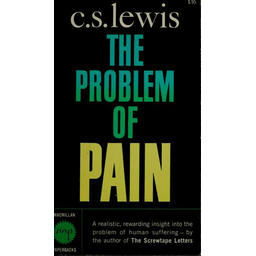 The Problem of PainLewis’s earlier, reasoned treatment of why a good God allows suffering - the companion to read before the loss, where this one is read during it.
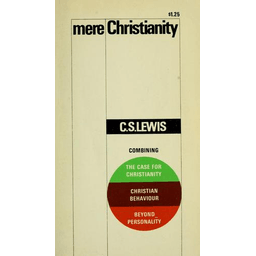 Mere ChristianityLewis’s wartime introduction to the faith - the most-recommended modern starting point, and the natural next Lewis to read.
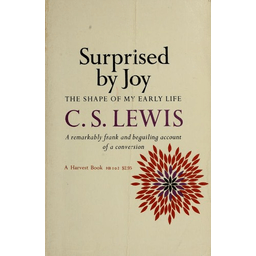 Surprised by JoyLewis’s spiritual autobiography of his journey from atheism to faith - the story behind the man who wrote this grief journal.
 Streams in the DesertThe hundred-year-old daily devotional for seasons of pain and grief - the one to keep on the nightstand for the long months after a loss.
Frequently asked questions
Why was A Grief Observed first published under a pen name?
Lewis published it in 1961 as N.W. Clerk because the contents were so raw and personal that he did not want it read as the work of the famous Christian apologist who had earlier written The Problem of Pain. The pseudonym let him be honest. Friends even recommended the little book back to him, not knowing he had written it. It was reissued under his own name after his death in 1963.
Is A Grief Observed a religious book or a grief book?
Both, inseparably. It is a journal of bereavement that is also a record of what grief did to the author’s faith - the doubt, the sense of God’s absence, and the slow return toward trust. It is not a how-to and not a treatise. It stays in the universal human experience of loss, which is why grieving readers of every background find themselves in it.
Whose death is Lewis grieving in the book?
His wife, Joy Davidman, who died of cancer in 1960. The book was written in the months after her death. The loss it describes is specifically that of a spouse, though readers grieving other relationships find the emotional core translates.
Is it too short to be worth buying?
It is about a hundred pages and can be read in one sitting, which is deliberate - a grieving reader often has no concentration for more. Many readers find the brevity exactly right and return to the book repeatedly at different stages of a loss. Others wish it were longer. You are paying for honesty and concision, not page count.
Do people of different traditions read A Grief Observed?
Yes, widely. Catholics, Protestants, Orthodox, and Latter-day Saints all read it and give it to grieving friends, because Lewis stays in the shared human and Christian experience of loss rather than in any one tradition’s distinctives. It is one of the most commonly given grief books across backgrounds.
Should I read The Problem of Pain or A Grief Observed first?
They do different jobs. The Problem of Pain is the reasoned, somewhat abstract book to read before a loss, when you have bandwidth to think. A Grief Observed is the lived journal to read during one, when you do not. Reading both - the answer and then what the answer felt like against a real grave - is its own education, but if you are in acute grief now, start here.
Where should I go after A Grief Observed?
For Lewis specifically: The Problem of Pain for the reasoned companion, and Surprised by Joy for his own faith journey. For a daily companion through a long grief, Streams in the Desert suits the months after a loss. And Mere Christianity remains the natural next read for anyone wanting Lewis on the faith itself.
Sources & further reading
More Modern Christian Classics
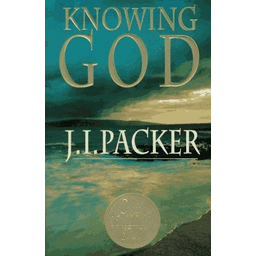 Knowing GodJ.I. Packer’s 1973 classic on the doctrine of God has sold more than 1.5 million copies and is still the book most pastors hand to laypeople who want theology that goes somewhere - here’s what it actually does and who it’s for.
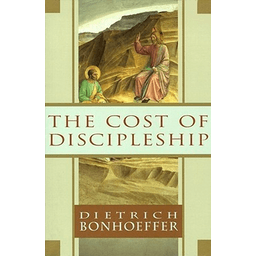 The Cost of DiscipleshipDietrich Bonhoeffer’s 1937 exposition of the Sermon on the Mount, written for pastors training under a regime that wanted them silent - and still the sharpest book in print on what following Jesus actually costs.
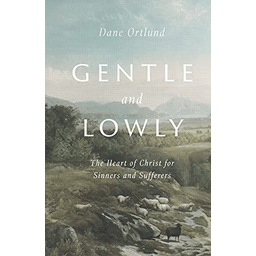 Gentle and LowlyDane Ortlund’s 23 short chapters on Matthew 11:29 have quietly become the most-given new Christian book of the decade - and the reason is not what you’d guess.
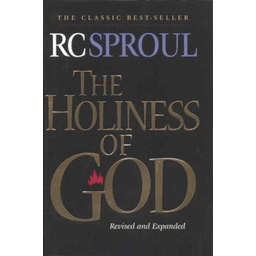 The Holiness of GodR.C. Sproul’s career-defining book on the one attribute of God the church most forgets - and the vision in Isaiah 6 he believed everything else flows from.
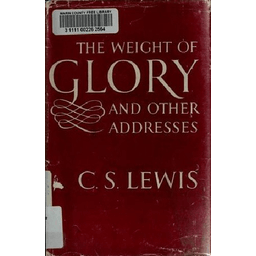 The Weight of GloryThe 1941 sermon many call Lewis's single finest piece of writing - "there are no ordinary people" - gathered with eight other addresses into one slim, uneven, unforgettable collection.
 The Pursuit of GodA.W. Tozer’s ten-chapter wake-up call on knowing God personally - short, severe, and the one devotional Reformed, Wesleyan, Catholic, and Orthodox readers all seem to keep on the nightstand.