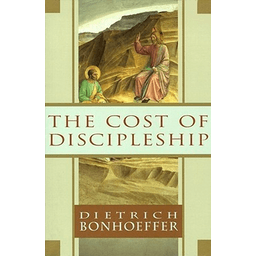
- Starting price
- $16.99 paperback
- Free tier
- No
- Platforms
- Print · Kindle · Audiobook · Audible
- Developer
- Touchstone (Simon & Schuster) - English ed.; Fortress - DBWE critical ed.
- Launched
- 1937 German / 1948 English
- Updated
- May 24, 2026
The verdict
Eighty-plus years after publication, The Cost of Discipleship is still the book most likely to interrupt a comfortable Christian life. The cheap-grace chapter alone has outlived most of the theology written in its century - and the Sermon on the Mount exposition is the reason pastors keep handing it to people who say they want to get serious.
Try The Cost of Discipleship ↗Opens simonandschuster.com
The Cost of Discipleship has quietly become the book that gets pressed into the hands of Christians who say, out loud, that they want to take Jesus more seriously. Pastors give it to new elders. Seminary professors put it on first-year reading lists. Small-group leaders mark up the cheap-grace chapter and photocopy it. It is not the most-cited book of modern Christian writing - that is probably Mere Christianity - but it may be the most quietly transformative.
It does not feel like a 1937 book. It does not feel like a translation. It does not feel like the work of an academic theologian, even though Dietrich Bonhoeffer was one. What it feels like is a young pastor - Bonhoeffer was thirty-one when the German edition appeared - looking directly at a generation of seminary students he is trying to keep faithful while the church around them collapses into nationalism, and asking, with unusual patience, what Jesus actually said about following him.
The book’s German title is Nachfolge - literally, “following,” or “the act of going after.” The English title (added by the first translator, R. H. Fuller) is a description of the book’s argument rather than its name: discipleship has a price, the price is your life, and any Christianity that quietly removes the price tag has stopped being Christianity. That is the thesis. Everything else in the book - and there is a lot of it, including a verse-by-verse exposition of the Sermon on the Mount and a long final section on the church as the body of Christ - is in service of that single, uncomfortable claim.
✓ The good
- The cheap-grace / costly-grace framework - the most quoted, most-photocopied pages in modern Christian writing, and they earn it
- Verse-by-verse Sermon on the Mount exposition - the bulk of the book, and probably the best pastoral reading of Matthew 5-7 in print
- Written under pressure - Bonhoeffer was teaching young pastors at an underground seminary while the state church capitulated to the Nazis; the urgency is on every page
- Cross-traditional appeal - Lutheran in origin, but read seriously by Reformed, evangelical, Catholic, Anglican, and Orthodox readers without much friction
- Short chapters, clear prose - even the critical edition reads like a sermon, not a monograph
- The closing line of chapter 4 - “When Christ calls a man, he bids him come and die” - is one of the most-quoted sentences in Christian writing for a reason
- Available cheaply - the Touchstone paperback is under $17, the Kindle is around $12, and the Audible is well-narrated
✗ Watch out
- Demanding prose - Bonhoeffer is patient but not casual; readers used to lighter devotional writing will need a slower pace
- Translation issue - the popular Touchstone edition uses Fuller’s 1948 translation, which is more readable but compresses Bonhoeffer in places the newer DBWE edition does not
- Confessing Church context can feel distant - the 1930s German state church references occasionally need a footnote the Touchstone edition does not provide
- Lutheran scaffolding - Bonhoeffer’s framing of law and gospel, justification, and sanctification is Lutheran by default, and readers from other traditions will notice (though it rarely blocks the argument)
- No study questions - neither the Touchstone nor the DBWE edition is set up as a group study; you will need to build your own discussion guide
- Polemical edges - the book was written against a specific kind of cultural Christianity in 1930s Germany, and a few passages still read as a punch thrown at a target the modern reader cannot quite see
Best for
- Christians who suspect they have been getting off too easy
- Pastors and small-group leaders looking for a serious Sermon on the Mount text
- Seminary and Bible-college students reading their first 20th-century theology
- Anyone who finished Mere Christianity and wants the next step up in seriousness
Avoid if
- You want a light devotional you can read in five-minute morning bites
- You are looking for a verse-by-verse technical commentary with Greek apparatus
- You want a feel-good book about grace without the “cost” half of the title
- You are brand new to Christianity and have not yet read the Gospels themselves
What The Cost of Discipleship is
The Cost of Discipleship is a book of pastoral theology built around an exposition of the Sermon on the Mount (Matthew 5-7) and a closing meditation on the church as the body of Christ. Bonhoeffer wrote it in 1936-37 while directing Finkenwalde, an underground seminary that trained pastors for the Confessing Church - the wing of the German Protestant church that refused to align with the Nazi state. The lectures that became the book were originally delivered to those young pastors.
In structure it is four parts. Part one lays out the famous distinction between cheap grace and costly grace and then walks through the Synoptic call narratives - the rich young ruler, the disciples leaving their nets, the single-mindedness Jesus asks of those who follow him. Part two is the long Sermon on the Mount exposition - the Beatitudes, the antitheses, the Lord’s Prayer, the parables, chapter by chapter. Part three is on the church’s mission (Matthew 10), and part four is on the visible community of disciples - baptism, the body of Christ, and what Bonhoeffer calls “the image of Christ” formed in the believer.
Why readers across traditions keep coming back to Bonhoeffer
The single biggest practical difference between The Cost of Discipleship and almost every other modern Christian classic is the conditions it was written under. Lewis wrote Mere Christianity from an Oxford study during a war he was not himself fighting in. Packer wrote Knowing God from a teaching post in a stable institutional church. Bonhoeffer wrote Nachfolge in a seminary the German state would shut down within months of publication, knowing - and saying out loud to his students - that following Jesus might cost them their pulpits, their freedom, or their lives. It cost him all three.
That context is why the book travels so well across traditions. Lutheran, Reformed, evangelical, Anglican, Catholic, and Orthodox readers have all claimed Bonhoeffer in turn, and progressive and conservative writers have argued over him for sixty years. The cheap-grace critique is the reason. It is not aimed at one tradition’s doctrine - it is aimed at the universal Christian temptation to keep the comforts of grace while quietly returning the demands of Christ. Almost every serious Christian reader, regardless of tradition, finishes the cheap-grace chapter feeling personally addressed. That is rare, and it is why the book endures.
Cheap grace vs. costly grace: the framework that outlived its century
The book’s opening pages contain the single most-photocopied passage in 20th-century Christian writing. Cheap grace, Bonhoeffer writes, is “the preaching of forgiveness without requiring repentance, baptism without church discipline, Communion without confession… grace without discipleship, grace without the cross, grace without Jesus Christ, living and incarnate.” Costly grace, by contrast, “is the gospel which must be sought again and again, the gift which must be asked for, the door at which a man must knock… it is costly because it costs a man his life, and it is grace because it gives a man the only true life.” The framework is short - under fifteen pages - and the rest of the book is in many ways an extended application of it.
What makes the distinction so durable is that it does not depend on any one tradition’s doctrinal system to land. A Lutheran reader hears it as a recovery of Luther’s actual position against a watered-down Lutheranism. A Reformed reader hears it as a sanctification corrective. An evangelical reader hears it as a rebuke to easy-believism. A Catholic reader hears it as continuous with the long tradition of imitatio Christi. An LDS reader hears it as a serious account of taking up the cross daily. None of those readings are wrong, and Bonhoeffer is not arguing against any of them. He is arguing against the universal human instinct to keep the comforts of grace while quietly setting down the cross - and that is an argument that has not aged.
The Sermon on the Mount: the bulk of the book, and the reason pastors keep teaching from it
More than half of The Cost of Discipleship is a passage-by-passage walk through Matthew 5-7. Bonhoeffer takes the Beatitudes one at a time, then the antitheses (“you have heard it said… but I say to you”), then the teaching on prayer, fasting, possessions, judgment, and the narrow gate. He is not writing a technical commentary - there is almost no Greek, no source-critical discussion, no comparison to Luke’s parallel sermon. What he is doing is asking, line by line, what Jesus is asking of the people in front of him, and refusing to let the text be softened by the standard moves (“this is an ideal,” “this is for a future age,” “this is for monks, not laypeople”).
The result is the rare Sermon on the Mount exposition that does not blunt its edges. Bonhoeffer takes “turn the other cheek,” “do not store up treasures on earth,” and “you cannot serve God and money” and refuses to let them mean less than they say. He does this without becoming a legalist - the costly-grace framework keeps the whole exposition tethered to the gospel - and without becoming an ascetic. It is simply a serious adult reading of a text most readers have heard since childhood, and the cumulative effect, over two hundred pages, is the experience most readers describe as the reason they finished the book changed.
Touchstone vs. DBWE: which translation to actually buy
There are two English versions of this book in print, and the choice between them is real. The Touchstone edition (Simon & Schuster) uses R. H. Fuller’s 1948 translation, lightly revised in 1959. It is the version almost every existing quote is pulled from, including the famous “when Christ calls a man, he bids him come and die.” It is more readable, more compact, and under $17 in paperback. The Discipleship volume in the Dietrich Bonhoeffer Works English (DBWE) series, published by Fortress, is the critical edition - translated by Barbara Green and Reinhard Krauss, with restored material, full editorial apparatus, and Bonhoeffer’s own preface to the first edition. It runs around $25 in paperback and $45 in hardcover.
For a first read, the Touchstone paperback is the right book. The Fuller translation is the one quoted in every sermon and seminary lecture on this material, and the price point makes it the easy recommendation for small groups. The DBWE edition is the right book for a second read - for pastors preaching through it, for seminary students writing on Bonhoeffer, or for anyone who wants the restored passages and the scholarly footnotes. The DBWE is also the one to buy if you are reading Bonhoeffer at length and want the rest of the series (Life Together, Letters and Papers from Prison, Ethics) in matching critical editions on your shelf.
Pricing
Touchstone paperback
~$16.99
The standard English edition - R. H. Fuller’s 1948 translation, revised in 1959. The copy most pastors own and most quotes are pulled from.
Kindle
~$12
Same Touchstone text in ebook form. Searchable, highlightable, syncs across devices - the easiest way to mark up the cheap-grace chapter.
Audible / audiobook
~$15
Well-narrated unabridged audio. Slower going than print because Bonhoeffer’s sentences reward re-reading, but a real option for commute or walking time.
Discipleship (DBWE vol. 4) - paperback
~$25
The Fortress Press critical edition translated by Barbara Green and Reinhard Krauss. Includes Bonhoeffer’s preface, restored passages, and scholarly apparatus.
Discipleship (DBWE vol. 4) - hardcover
~$45
The hardback critical edition. The reference copy for pastors, scholars, and anyone preaching from Bonhoeffer at length.
Nachfolge - German original
~$25
The 1937 German text, available in the Gütersloher critical edition. Worth owning if you read German - Bonhoeffer’s prose rhythm is different from any English version.
There is no free tier - this is a book, not an app - but the Touchstone paperback at around $16.99 is the cheapest serious recommendation, and the Kindle at around $12 is the cheapest entry point full stop.
The Audible edition at around $15 is well-narrated and works fine for a first pass, though Bonhoeffer’s sentences reward re-reading and the audio format does not let you mark them up. Most readers who start with audio end up buying the paperback too.
The Fortress DBWE Discipleship edition at around $25 paperback or $45 hardcover is the scholarly choice - restored text, Bonhoeffer’s original preface, full editorial notes. Worth the upgrade if you are preaching from it, writing on it, or planning to collect the rest of the Dietrich Bonhoeffer Works series.
Most readers do not need the DBWE. The Touchstone paperback is the version every sermon and study guide quotes from, and it is the right copy for a first read.
Where The Cost of Discipleship falls behind
No study guide. Neither the Touchstone nor the DBWE edition ships with discussion questions, leader notes, or a session plan. Small groups using this book have to build their own framework - which is doable, especially around the cheap-grace chapter and the Sermon on the Mount sections, but it is real work the publisher has never done.
Dated historical references. Bonhoeffer assumes his readers know the German state-church situation of 1937 - the Reich Church, the German Christians, the Confessing Church’s stance, the role of Finkenwalde. The Touchstone edition does not annotate any of it. Readers without background in 20th-century German church history will occasionally feel the book is talking past them, and a single-paragraph editorial introduction would have fixed it.
Limited engagement with the Old Testament. The book is almost entirely a Synoptic Gospels exposition with some Pauline supplement. Bonhoeffer’s Old Testament work is in his other writings (the Creation and Fall lectures, the Psalms book). A reader looking for a whole-canon treatment of discipleship will not find it here.
The polemical 1930s edges. A handful of passages are clearly aimed at specific opponents Bonhoeffer was facing in the German state church and can read as more combative than the rest of the book. They are not the bulk of the text, and most readers move through them without losing the argument, but they are there.
Lutheran scaffolding by default. Bonhoeffer’s framing of law and gospel, justification, and the church’s visible community runs along Lutheran lines. Readers from Reformed, Catholic, evangelical, Anglican, Orthodox, or LDS backgrounds will recognize the difference at points; almost none of them find it blocks the argument, but it is the scaffolding.
The Cost of Discipleship vs. Mere Christianity vs. Knowing God
These are the three modern Christian classics most likely to end up in the same recommended-reading list, and they do genuinely different work. Different strengths. Mere Christianity (Lewis, 1952) is the apologetic on-ramp - the book to give someone who is asking whether Christianity is true. Knowing God (Packer, 1973) is the doctrinal soul - the book on the character of God, written for the believer who wants to know who they are following. The Cost of Discipleship is the call - the book that asks the already-convinced reader what following Jesus is actually going to cost them.
Lewis is the most accessible. Packer is the most theologically systematic. Bonhoeffer is the most pastorally demanding. A reader who finishes all three has, in effect, walked the road from “is this true” to “who is this God” to “then what does it cost to follow him.” Most pastors who recommend the trio recommend them in roughly that order.
If you have to pick one, the choice tracks your question. If you are sorting out whether Christianity is reasonable, start with Lewis. If you want to know the God you are praying to, start with Packer. If you are already in and want the next step, start with Bonhoeffer. The Cost of Discipleship is the one most likely to interrupt a comfortable Christian life, which is both its strength and the reason it is the slowest read of the three.
The bottom line
The Cost of Discipleship is the thoughtful Christian’s book on what following Jesus actually costs, and the cheap-grace framework is the most durable critique of comfortable Christianity written in the last hundred years. Buy the Touchstone paperback for around $17 for a first read - it is the version every sermon and study guide quotes from. Upgrade to the Fortress DBWE Discipleship edition later if you find yourself preaching or teaching from it. The book has real gaps - no study guide, dated 1930s references, Lutheran scaffolding by default - but they are worth knowing about going in rather than dealbreakers.
Alternatives to The Cost of Discipleship
 Mere ChristianityC. S. Lewis’s apologetic on-ramp. The book to read first if you are still asking whether Christianity is true; Bonhoeffer is the book to read after.
 Knowing GodJ. I. Packer’s doctrinal classic on the character of God. The natural companion to Bonhoeffer - Packer on who God is, Bonhoeffer on what following him costs.
 My Utmost for His HighestOswald Chambers’s daily devotional, with a similar “take up your cross” seriousness in bite-sized morning entries.
 Bonhoeffer (Metaxas)Eric Metaxas’s biography of Bonhoeffer. The natural follow-up - read Discipleship first, then the biography to see how the book’s argument played out in Bonhoeffer’s own life and death.
Frequently asked questions
Which translation of The Cost of Discipleship should I buy?
For a first read, the Touchstone paperback (Simon & Schuster, R. H. Fuller translation) at around $16.99. It is the version every existing quote - including the famous “when Christ calls a man, he bids him come and die” - is pulled from, and the one almost every sermon and study guide cites. The Fortress DBWE Discipleship edition (Barbara Green and Reinhard Krauss translation) at around $25 paperback or $45 hardcover is the critical edition with restored passages and scholarly notes; upgrade to it if you are preaching from the book or collecting the Dietrich Bonhoeffer Works series.
What is cheap grace, in one sentence?
Bonhoeffer’s shorthand for the preaching of forgiveness without repentance, baptism without discipline, and Communion without confession - grace as a doctrine the church owns and dispenses, detached from the actual cost of following Jesus.
Is The Cost of Discipleship a Protestant book? A Lutheran book? Something else?
Bonhoeffer was a German Lutheran pastor in the Confessing Church, and the book’s framing of law, gospel, and justification runs along Lutheran lines. In practice it has been read seriously across Lutheran, Reformed, evangelical, Anglican, Catholic, and Orthodox traditions, and the cheap-grace critique speaks across all of them - it is aimed at the universal Christian temptation to keep grace while setting down the cross, not at any single tradition’s doctrine.
How long is the book and how hard is it to read?
The Touchstone paperback runs around 320 pages. Bonhoeffer’s prose is patient but not casual - closer to a careful sermon than to a devotional. Most readers find the cheap-grace chapter fast and gripping, the Sermon on the Mount exposition slower and meatier, and the closing sections on the church more demanding. Plan on three to six weeks of unhurried reading.
Where does the famous “come and die” quote appear?
In chapter four, “Discipleship and the Cross.” The full sentence is: “When Christ calls a man, he bids him come and die.” It appears in both the Touchstone and DBWE editions in essentially the same form, and it is the line most readers remember years after closing the book.
Is this book appropriate for small groups?
Yes, with the caveat that no published edition ships with a study guide. The cheap-grace chapter, the Beatitudes section, and the chapters on possessions and on the visible community work especially well for discussion. Plan eight to twelve weeks, build your own questions around two to three chapters per session, and expect that the cheap-grace material alone will fill at least one full meeting.
Do I need to know about Bonhoeffer’s life to read this book?
No - the book stands on its own. But knowing that Bonhoeffer wrote it at an underground seminary the German state shut down within months of publication, was arrested in 1943 for resistance work, and was executed at Flossenbürg in April 1945 changes how the final chapters read. Eric Metaxas’s biography Bonhoeffer is the standard popular follow-up.
Sources & further reading
More Modern Christian Classics
Knowing GodJ.I. Packer’s 1973 classic on the doctrine of God has sold more than 1.5 million copies and is still the book most pastors hand to laypeople who want theology that goes somewhere - here’s what it actually does and who it’s for.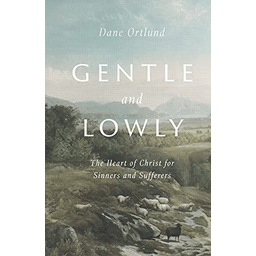 Gentle and LowlyDane Ortlund’s 23 short chapters on Matthew 11:29 have quietly become the most-given new Christian book of the decade - and the reason is not what you’d guess.
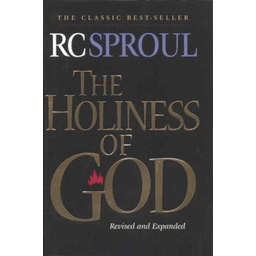 The Holiness of GodR.C. Sproul’s career-defining book on the one attribute of God the church most forgets - and the vision in Isaiah 6 he believed everything else flows from.
 The Weight of GloryThe 1941 sermon many call Lewis's single finest piece of writing - "there are no ordinary people" - gathered with eight other addresses into one slim, uneven, unforgettable collection.
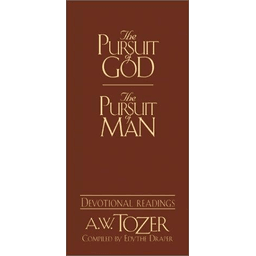 The Pursuit of GodA.W. Tozer’s ten-chapter wake-up call on knowing God personally - short, severe, and the one devotional Reformed, Wesleyan, Catholic, and Orthodox readers all seem to keep on the nightstand.
 Life TogetherA 120-page field manual on Christian community, written by a pastor running an underground seminary in the shadow of the Third Reich - and still the book people quote when they finally give up on their fantasy of church.