
- Starting price
- $22.99 paperback
- Free tier
- No
- Platforms
- Print · Kindle · Audiobook · Audible
- Developer
- Thomas Nelson
- Launched
- 2010
- Updated
- May 24, 2026
The verdict
The most readable popular biography of Dietrich Bonhoeffer in English - a million-plus copies sold, a National Religious Book of the Year, and the basis for the 2024 Angel Studios film. It will move you. Just know that working Bonhoeffer scholars push back on some of its framing, and Eberhard Bethge’s biography is still the academic standard.
Try Bonhoeffer: Pastor, Martyr, Prophet, Spy ↗Opens ericmetaxas.com
Eric Metaxas’s Bonhoeffer: Pastor, Martyr, Prophet, Spy has quietly become the default English-language introduction to Dietrich Bonhoeffer. Published by Thomas Nelson in 2010, it sold more than a million copies, won the ECPA Christian Book of the Year, spent months on the New York Times bestseller list, and - with the 2024 Angel Studios adaptation Bonhoeffer: Pastor, Spy, Assassin - became the version of Bonhoeffer most American readers have actually encountered. For an academic-leaning religious biography, that is an unusual outcome.
It is also a book with a job to do. Metaxas is writing for a popular audience that may know Bonhoeffer only as a quotation on a sermon slide. So the book reads like narrative nonfiction: long scenes, dialogue lifted from letters, cinematic pacing through the 1930s and 40s, and a clear through-line from a privileged Berlin childhood to a Flossenbürg prison yard in April 1945. It doesn’t read like a dissertation. It doesn’t bury you in German theological footnotes. It doesn’t assume you already know the difference between the Reichskirche and the Confessing Church - it walks you through it.
That accessibility is the book’s genius and, depending on who you ask, also its problem. Bonhoeffer scholars - most prominently Clifford Green, Victoria Barnett, and the editors of the Dietrich Bonhoeffer Works English edition - have argued that Metaxas, an American evangelical, sometimes reads Bonhoeffer too neatly through a contemporary American evangelical lens, flattening some of the Lutheran theologian’s actual complexity. That debate is worth taking seriously, and we walk through it below. None of it changes the fact that for most readers, this is still the book that turns Bonhoeffer from a name on a poster into a person.
✓ The good
- Best popular-level entry point in English - if you have never read about Bonhoeffer, this is the most readable starting place by a wide margin
- Cinematic conspiracy and martyrdom narrative - the final third of the book, covering the Abwehr plot and Flossenbürg, reads like a thriller without losing its weight
- Strong contextual history - Metaxas does real work explaining the German church struggle, the Aryan paragraph, and why the Confessing Church mattered
- Compelling primary-source quotation - the book is built around Bonhoeffer’s own letters, sermons, and Ethics fragments, so you actually hear his voice
- Excellent audiobook - Malcolm Hillgartner’s narration is widely praised and makes the 600+ pages move quickly
- Multiple formats and a Young Readers Adaptation - the same story scales from middle school to seminary
- A genuine cultural moment - paired with the 2024 film, this is the version of Bonhoeffer most book clubs and small groups are currently reading
✗ Watch out
- Scholarly pushback on framing - working Bonhoeffer specialists argue Metaxas underplays the more dialectical, distinctly Lutheran side of Bonhoeffer’s theology
- Author’s voice is present - Metaxas editorializes more than a strict academic biography would, which some readers love and others find intrusive
- Light on the prison theology - the famous Letters and Papers from Prison material gets less interpretive room than the conspiracy narrative
- Not the academic standard - if you are writing a paper, Eberhard Bethge’s biography is still the citation of record
- Long - at 600+ pages it is a commitment, even at its pace
- No primary engagement with German-language scholarship - the bibliography leans English, which is fine for general readers but a real limitation for serious study
Best for
- First-time readers of Bonhoeffer
- Book clubs and small groups
- Anyone who saw the 2024 Angel Studios film
- High school and college students starting research
Avoid if
- You want the definitive scholarly biography (read Bethge)
- You want Bonhoeffer’s own theology in his own words (read Discipleship)
- You dislike narrative-history pacing in biography
- You want a strictly neutral, voice-free academic tone
What Bonhoeffer: Pastor, Martyr, Prophet, Spy is
Bonhoeffer: Pastor, Martyr, Prophet, Spy is a single-volume narrative biography of Dietrich Bonhoeffer (1906-1945), the German Lutheran pastor and theologian who helped lead the Confessing Church’s resistance to Nazi co-option of German Protestantism, joined the Abwehr conspiracy against Hitler, and was executed at Flossenbürg concentration camp two weeks before its liberation. Metaxas builds the book in six parts, moving from Bonhoeffer’s privileged Berlin upbringing through his theological training, pastorates in Barcelona, London, and Finkenwalde, ecumenical work, the Abwehr years, imprisonment at Tegel, and death.
It is a popular biography, not an academic one. It is written for the general reader, leans heavily on Bonhoeffer’s own letters and writings (often quoted at length), and frames the story as a moral and spiritual drama with a clear protagonist and a clear evil. It was published by Thomas Nelson, a Christian trade press, and won the ECPA Christian Book of the Year for biography in 2011. The 2024 film Bonhoeffer: Pastor, Spy, Assassin from Angel Studios is loosely adapted from it.
Why general readers prefer Metaxas
The single biggest practical difference between Metaxas’s biography and the standard academic accounts is that this one keeps moving. Bethge’s biography - the gold standard - runs over a thousand pages of dense theological and archival work, and was written by Bonhoeffer’s closest friend and literary executor. It is irreplaceable, but it is not what most people will finish on a commute. Metaxas writes in scenes. He sets you in a room. He gives you weather and furniture and the look on someone’s face. For a reader who picked up this book because they heard a sermon quote about cheap grace, that pacing is the reason they keep reading.
The other thing Metaxas does well is context. Many readers come to Bonhoeffer assuming the German church simply collapsed under Hitler. The book takes the time to explain why that is too simple - the rise of the Deutsche Christen, the Aryan paragraph applied to clergy, the Barmen Declaration, the founding of the Confessing Church, the role of the ecumenical movement, and the specific reasons Bonhoeffer eventually concluded that prayer and preaching alone were not going to be enough. By the time the conspiracy narrative starts, you understand what kind of person could end up there.
The conspiracy and martyrdom arc: the book’s most compelling material
Books 4 through 6 - roughly the second half of the biography - are where Metaxas’s narrative gift is most obvious. This is the section covering Bonhoeffer’s recruitment into the Abwehr (German military intelligence) under his brother-in-law Hans von Dohnanyi, his cover role as a courier passing information to ecumenical contacts in neutral countries, the multiple aborted assassination attempts on Hitler including the July 20, 1944 plot, his arrest in April 1943, two years in Tegel prison writing what became Letters and Papers from Prison, and finally the move to Flossenbürg and his execution by hanging on April 9, 1945, two weeks before American troops liberated the camp.
It is, on the page, a thriller. Metaxas paces it like one - short chapters, intercut timelines, the slow tightening of the Gestapo investigation. But because he keeps quoting Bonhoeffer’s own letters and prison poetry alongside the events, the thriller pacing never collapses into pure spectacle. You finish these chapters understanding both what happened and why a pacifist Lutheran pastor decided that participation in a plot to kill a head of state was, for him, an act of obedience. Whether you ultimately agree with that conclusion is a separate question; Metaxas’s job is to make the decision intelligible, and he does.
Bonhoeffer’s theological development - traced, if lightly
The book also tracks Bonhoeffer’s theological arc: the academic prodigy who finished his doctorate at 21, the year at Union Seminary in New York that exposed him to Harlem’s Abyssinian Baptist Church and reshaped his sense of what the gospel demanded socially, the Finkenwalde years training Confessing Church pastors and producing Discipleship (often translated The Cost of Discipleship) and Life Together, and finally the fragmentary prison theology - “religionless Christianity,” “the world come of age,” the late letters to Eberhard Bethge - that has been argued over ever since.
Metaxas handles the early and middle theology well. The Finkenwalde chapters in particular convey what was at stake in Bonhoeffer’s insistence on disciplined community, daily Scripture, and confession among pastors-in-training. The prison theology gets less interpretive room - partly because it is genuinely fragmentary and resists summary, partly because the conspiracy timeline is competing for the same pages. Readers who want a fuller theological reading of late Bonhoeffer will eventually need to go to Bethge, or to a focused study like Andreas Pangritz’s or Charles Marsh’s Strange Glory.
The scholarly vs. popular biography debate - worth knowing about
It would be misleading to review this book without naming the scholarly conversation around it. Working Bonhoeffer specialists - including Clifford Green, longtime executive director of the Dietrich Bonhoeffer Works English edition project, and historian Victoria Barnett - have published critiques arguing that Metaxas, writing as an American evangelical, tends to read Bonhoeffer through a contemporary American culture-war lens that the historical Bonhoeffer would not have recognized. The specific concerns include downplaying the more dialectical, distinctly Lutheran texture of his theology, overstating the parallels between 1930s German liberal Protestantism and modern American mainline Protestantism, and softening some of the harder edges of Bonhoeffer’s late prison writings.
How much that critique matters depends on what you are reading the book for. If you want a first encounter with Bonhoeffer’s life - the man, the family, the resistance, the death - Metaxas delivers that vividly and is broadly accurate on the facts. If you want a careful theological biography that lets Bonhoeffer stay Lutheran, stay German, and stay genuinely strange to a modern American reader, the standard recommendation remains Eberhard Bethge’s Dietrich Bonhoeffer: A Biography (revised English edition, 2000). Many readers profit from reading Metaxas first and Bethge - or Marsh’s Strange Glory - second. Neither approach is wrong.
Pricing
Paperback
~$22.99
The standard 624-page Thomas Nelson edition. The version most book clubs use.
Hardcover
~$35
Original 2010 hardcover. Still in print; nice for a shelf copy or gift.
Kindle
~$14
Searchable, highlight-friendly, and the cheapest way to own the full text.
Audible
~$25
Malcolm Hillgartner narration, around 22 hours. Frequently included with Audible Plus rotations.
Young Readers Adaptation
~$15
Bonhoeffer’s story condensed and rewritten for ages 12+. Useful for family read-alouds.
Bonhoeffer Abridged
~$16
A shorter single-volume distillation for readers who want the arc without the full 600 pages.
The paperback at around $22.99 is the version most people end up with, and it is the one we would point a first-time reader to. It is the full text, the standard book-club edition, and the format that travels.
The Kindle edition at around $14 is the cheapest legitimate way to own the book, and the search and highlight tools are genuinely useful for a 600+ page biography you may want to return to. If you read on a Kindle or in the app, just buy this.
The Audible edition, around $25 or included in many Audible Plus rotations, is the format we would actually recommend for busy readers. Malcolm Hillgartner’s narration is excellent, the runtime is roughly 22 hours, and the cinematic structure works well in audio.
The Young Readers Adaptation (~$15) and the abridged single volume (~$16) exist for specific use cases - family read-alouds and time-pressed readers, respectively. Most adults should get the full edition; the abridgement does what it says and cuts real material.
Where Bonhoeffer: Pastor, Martyr, Prophet, Spy falls behind
Not the academic standard. If you are citing Bonhoeffer in a seminary paper, your bibliography needs Bethge, the Dietrich Bonhoeffer Works English edition, and probably Marsh - not Metaxas. He himself does not claim otherwise; it is a popular biography and is structured like one.
Light on the late theology. Letters and Papers from Prison contains some of the most influential and most argued-over passages in 20th-century Protestant thought - “religionless Christianity,” the world come of age, the suffering God. Metaxas summarizes more than he interprets here, and a reader who wants to wrestle with what late Bonhoeffer was actually proposing will need a second book.
Author’s voice intrudes. Metaxas writes warmly and editorially. He tells you what to admire and when to be moved. Readers who prefer the author to disappear behind the sources will sometimes feel managed.
English-language sourcing. The bibliography is overwhelmingly in English, which is reasonable for a popular biography but means the book is downstream of - rather than in conversation with - the much larger German Bonhoeffer scholarship.
These are real gaps, but they are worth knowing about going in rather than dealbreakers. For its actual job - putting Bonhoeffer in the hands of a general reader - the book does what it sets out to do.
Bonhoeffer (Metaxas) vs. The Cost of Discipleship vs. The Hiding Place
These three books often sit on the same shelf in church libraries, and they do very different things. Different strengths. Metaxas’s Bonhoeffer is the biography - the outside view, the life story, the historical context. The Cost of Discipleship is Bonhoeffer’s own theology of what it means to follow Christ, written at Finkenwalde in the late 1930s, and is the book to read if you want him in his own voice rather than someone else’s account of him. The Hiding Place is Corrie ten Boom’s memoir of a Dutch family hiding Jewish neighbors and ending up in Ravensbrück - same era, same evil, completely different vantage point: a layperson, a memoir, a story of survival rather than execution.
If you are starting from zero on the German church under Hitler and want one book, Metaxas is the right one. He gives you the most context and the most narrative momentum. If you have read Metaxas and want to go deeper into what Bonhoeffer actually taught, Discipleship is the next step - it is shorter, harder, and the source of most of the quotes you have already heard. The Hiding Place is the companion read: not a substitute for either, but a powerful first-person view of the same moral landscape from a very different person, and the book many readers find they remember most.
A good full sequence for a serious reader: Metaxas for the life, Discipleship and Life Together for the theology, Letters and Papers from Prison for the late questions, and eventually Bethge if you want the definitive scholarly account. The Hiding Place sits alongside that whole stack as a reminder that the resistance was not only pastors and theologians.
The bottom line
For the reader who wants to actually meet Dietrich Bonhoeffer - the man, the family, the church struggle, the conspiracy, the prison cell, the gallows at Flossenbürg - Metaxas’s biography is still the best single starting place in English. It is long, vivid, well-paced, and built around Bonhoeffer’s own words. Scholars have raised legitimate questions about how Metaxas frames the theology, and Bethge remains the academic standard. But for a first read, a book club, or a small group that wants to talk about what costly faithfulness might look like in a serious moment, this book has earned its million-plus copies.
Alternatives to Bonhoeffer: Pastor, Martyr, Prophet, Spy
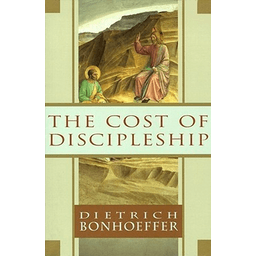 The Cost of DiscipleshipBonhoeffer in his own voice - the Finkenwalde-era classic on what following Christ actually costs. The natural next read after Metaxas.
 The Hiding PlaceCorrie ten Boom’s memoir of hiding Jewish neighbors in Nazi-occupied Holland. Same era, lay vantage point, unforgettable.
 Mere ChristianityC.S. Lewis’s wartime BBC talks turned into the most-read Christian apologetic of the 20th century. A companion read for the same generation.
 Knowing GodJ.I. Packer’s modern classic on the doctrine of God - a sturdier theological diet for readers ready to move from biography into doctrine.
Frequently asked questions
Is Eric Metaxas’s Bonhoeffer biography historically accurate?
On the basic facts of Bonhoeffer’s life - family background, education, pastorates, role in the Confessing Church, involvement in the Abwehr conspiracy, imprisonment, and execution - yes. The scholarly criticism is not that Metaxas gets the events wrong but that he sometimes frames Bonhoeffer’s theology in ways that fit a contemporary American evangelical lens better than they fit a 20th-century German Lutheran. Most general readers will not notice; scholars do.
How is this book different from Eberhard Bethge’s biography?
Bethge’s Dietrich Bonhoeffer: A Biography is the academic standard - written by Bonhoeffer’s closest friend and literary executor, over a thousand pages, theologically rigorous, and built on the German archival sources. Metaxas is a popular biography written for general readers - around 600 pages, narrative in style, cinematic in pacing, and lighter on theological argument. Many readers profit from reading Metaxas first and Bethge second.
Do I need to read this before seeing the 2024 Angel Studios film?
No, but the book is substantially fuller than the film. Bonhoeffer: Pastor, Spy, Assassin (2024) is loosely adapted from the Metaxas biography and compresses, dramatizes, and reorders material. If the film made you want to know what actually happened, the book is the obvious next step - and it covers a great deal the film leaves out, especially around the church struggle and the Finkenwalde years.
Was Bonhoeffer really involved in plots to assassinate Hitler?
Yes. Bonhoeffer was recruited into the Abwehr (German military intelligence) by his brother-in-law Hans von Dohnanyi, used his ecumenical contacts as cover, and was knowingly part of the broader resistance circle that included multiple assassination plots, culminating in the July 20, 1944 attempt by Claus von Stauffenberg. He was arrested in April 1943, before that final plot, but his connection to the conspiracy is what led to his execution at Flossenbürg on April 9, 1945.
How long is the book, and is the audiobook good?
The paperback runs around 624 pages. The Audible edition, narrated by Malcolm Hillgartner, is roughly 22 hours and is widely considered one of the better religious biography audiobooks on the platform. The narrative structure works particularly well in audio.
Is the Young Readers Adaptation appropriate for middle schoolers?
Generally yes - it is written for roughly ages 12 and up, and it does the job of telling Bonhoeffer’s story without the full theological apparatus or the more graphic prison material. Parents reading aloud with younger children may still want to preview the final chapters, which cover his execution.
If I only read one Bonhoeffer book, should it be this one or one of his own?
If you want to know who Bonhoeffer was and what happened to him, read Metaxas. If you want to know what Bonhoeffer actually taught, read The Cost of Discipleship - it is shorter, harder, and in his own voice. Most readers eventually want both. Starting with the biography tends to make the theology hit harder when you get to it.
Sources & further reading
More Christian Biographies
 God’s SmugglerThe Dutch missionary’s 1967 memoir about driving a blue Volkswagen Beetle full of Bibles past Soviet border guards - and the prayer that became a generation’s shorthand for trusting God in impossible places.
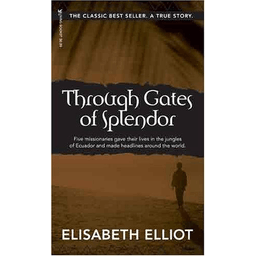 Through Gates of SplendorElisabeth Elliot’s account of five young missionaries killed reaching the Waorani of Ecuador in 1956 - the book that sent a generation toward the mission field, told by one of the widows.
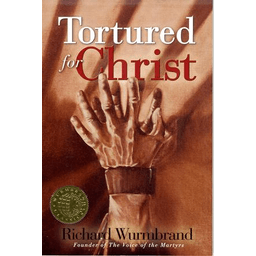 Tortured for ChristThe Romanian pastor’s 1967 account of fourteen years in communist prisons - written in three days after his release, and the book that launched Voice of the Martyrs.
 JoniJoni Eareckson Tada’s account of the diving accident that left her a quadriplegic at seventeen - and the long, unglamorous climb out of despair that followed - told without flinching and without tidy answers.
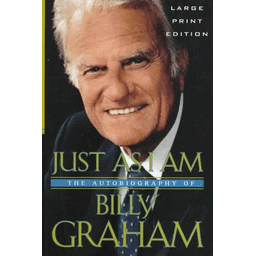 Just As I AmBilly Graham’s own account of a North Carolina farm boy who became the twentieth century’s best-known evangelist - the crusades, the presidents, and the doubts in between.
 The Cross and the SwitchbladeThe skinny country preacher who left rural Pennsylvania for the gang-run streets of 1950s New York - and the conversion of switchblade-carrying gang leader Nicky Cruz that turned one man’s hunch into a worldwide ministry.